Plants of the Underworld
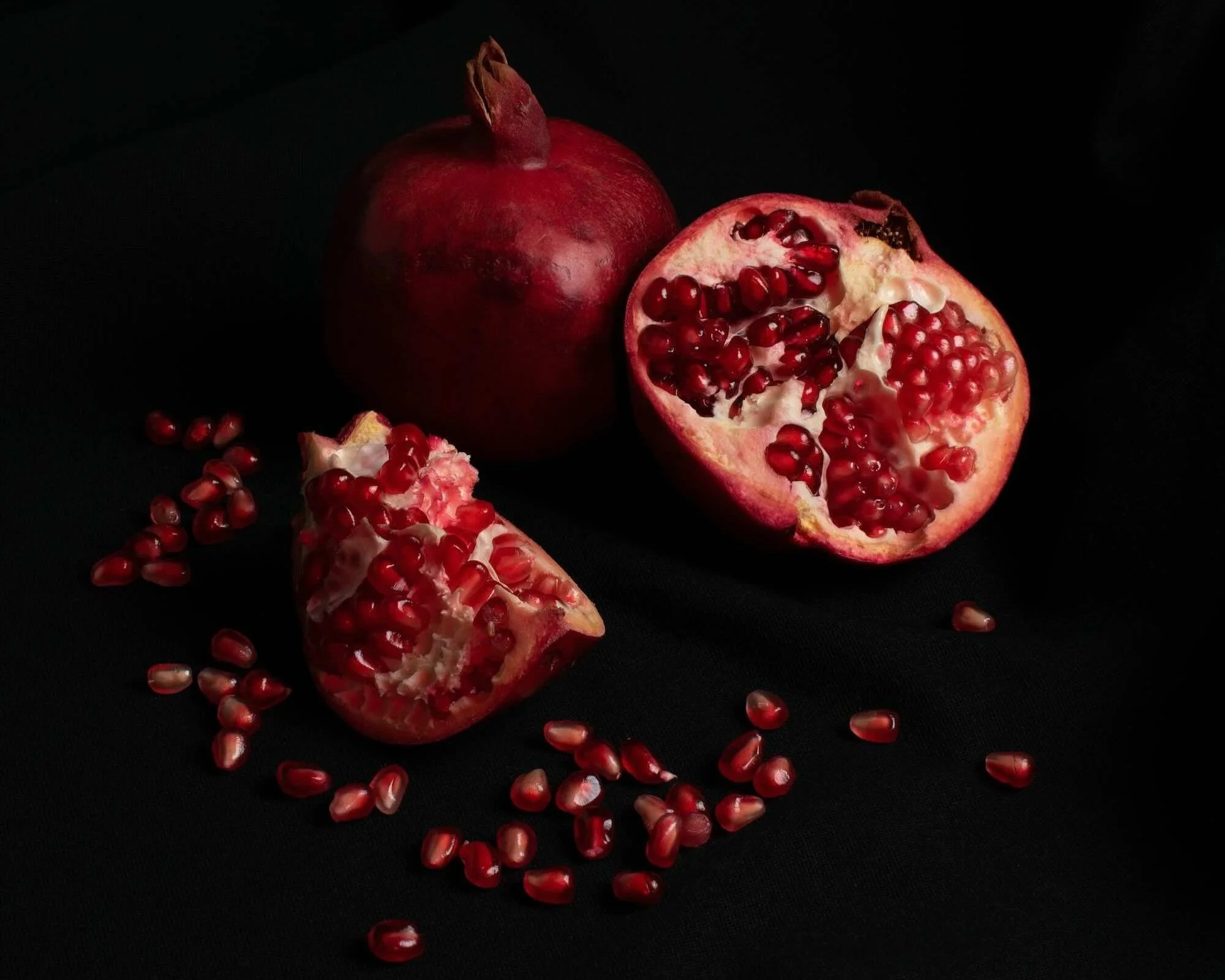
Journey down, into the depths of the earth, to meet the plants of the Greek Underworld — the trees, flowers, herbs, and shrubs that ancient Greek mythology associates with the Realm of the Dead. Along the way, we meet the Underworld rivers and entrances to Hades; learn about the sacred kykeon of the Eleusinian Mysteries; discover a shocking truth about Persephone's connection with the seasons; and meet the botanical allies for navigating through death, grief, and the Unseen Realm.
Listen below or with your favorite podcast provider
APPLE | SPOTIFY | Youtube | Amazon | DEEZER | PANDORA
Scroll down for show notes and the transcript.
Mentioned in this Episode
Other Episodes and Posts
Herbal Mythology Tours in Greece
Episode 4: Persephone and the Descent to Hades
Episode 9: Dionysos and the Vines
Plant Profiles
* Asphodel * Cypress * Grape * Ivy * Narcissus * Pomegranate * Poplar *
Quoted Sources
Dioscorides ‘De Materia Medica’
The Greek Plant World in Myth, Art and Literature by Hellmut Baumann
The Mythology of Plants: Botanical Lore from Ancient Greece and Rome by Annette Giesecke
Additional Reading
“Mapping Tartaros: Observation, Inference, and Belief in Ancient Greek and Roman Accounts of Karst Terrain” by Catherine Connors and Cindy Clendenon. Classical Antiquity, Vol. 35, No. 2 (2016): 147–88. https://www.jstor.org/stable/26362668.
The Immortality Key by Brian Muraresku, or this YouTube video
The Road to Eleusis by Wasson, Hofmann, and Ruck
Find more resources, including links to the original sources, in the books and selected articles section of my Library
Placing the Story
Below is a map of the places mentioned in this episode.
Click the play button to interact with the map
Related Articles


Transcript
You're listening to A Temple Wild: Episode 10: Plants of the Underworld .
Hello and welcome to A Temple Wild, where we rediscover the myths of the ancient Greeks through the plants and landscapes that shaped them.
My name is Mira and as I am recording this, it is October, which means we’ve entered into the autumn season here in the Mediterranean. The Plane trees are dropping their leaves, the Pomegranate harvest has begun, the Ivy is flowering, and the autumn Krokus is blooming.
This is absolutely my favorite time of year in Greece, and yet I also find it to be just a little a bit disorienting, because I grew up in Massachusetts, which is in the northeast United States, and we had four, very distinct seasons. Fall was always my favorite: the ground was blanketed with leaves, the smell of wood smoke filled the air, there was pumpkin picking and apple cider, celebrations of Halloween and honoring the ancestors, and generally the mood was one of harvest and decay as the earth prepared for a snow-covered winter.
But in the Mediterranean, the seasons are a little bit different. There’s still the essence of decay as the deciduous trees and vines begin to drop their leaves, there’s still wood smoke in the air, and preparations for colder temperatures, but there’s also a renewed sense of fertility as the rains have returned and the plants that have been dry all summer start to revive back to life. In fact, there’s another burst of green right now, as small plants pop up from the soil and some of the perennials that were dormant in July through September, begin to flower.
Now it’s this very obvious contrast between life and death, between fertility and mortality, that I find so moving this time of year. It’s one of the main reasons that I love living in this climate as it speaks to me of deep earth mysteries, and the paradox of Nature’s life-death cycle.
So I thought, what better time of year than now to journey down, into the depths of the earth, to meet the plants of the Greek Underworld — those trees, flowers, herbs, and shrubs that the ancients associated with the Realm of the Dead.
Along the way, we’re going to learn about the Underworld itself, including its rivers and where exactly in the Greek landscape we can find entrances to Hades’ realm. We’ll also learn a bit about the Eleusinian and Dionysian Mysteries, I’ll share with you a potentially shocking truth about Persephone’s connection with the seasons, and, of course, I’ll introduce you to some botanical allies for navigating through your own experiences with death, grief, and the Unseen Realm.
This episode is a great companion to Episode 4: Persephone and the Descent to Hades, as well as Episode 9: Dionysos and the Vines, so if you haven’t listened to those two yet, you might want to listen to them first as I’ll be building on many of the concepts and the plants that I introduce you to in those episodes. It’s not essential, but it will definitely add some extra depth to what we explore here.
You’re going to hear me use the word chthonic quite a few times, so I thought I’d start by defining the term. Chthonic is an adjective, it’s attached to the entities — whether they be god, nymph, plant, ritual, or sacred tool — that are associated with the Underworld. “Chthonic” can be a bit of a tongue-twister, and I’ve heard people drop the ch sound at the beginning and simply say “thonic.” But the Greek root of this word is χθόνιος which means “under, in, or beneath the soil.”
Now you could argue that any plant that is sacred to a deity associated with the Underworld would be considered a chthonic plant, but I am going to focus in this episode on three main categories of plants: what I call the Sentinels, the Gatekeepers, and the Guides. This is my own system, it’s a way I’ve come up with to group together and reflect on the sacred plants of the Underworld.
The first group, Sentinels, are the plants that the Ancient Greeks said were seen growing near the portals to the Underworld; they indicate its location almost like a beacon. The second group, Gatekeepers, are the plants that hold the keys to entering the Underworld; they grant passage into the Realm of the Dead. And the final group, Guides, are the plants that either existed in the Underworld or were somehow sacred to the gods that escorted souls — and deities — between the realms; they offer guidance and direction when navigating through the Underworld. Some plants will fall into two or more of those categories, but generally these are the three umbrellas that I use to help me understand and also choose which plants I want to work with in my own ceremonies.
I’ve packed a lot into this episode, and I still don’t feel like I covered everything as deeply as I could have, so be sure to check out the show notes, where I’ve linked to other episodes, plant profiles, a map, and a few extra resources on the topic of the Underworld so you can go even deeper. The plant profiles, especially, offer more detail on the mythology and botany, as well as the ceremonial, medicinal, and culinary properties of each plant including photographs, so I hope you’ll check that out at my website, atemplewild.com.
I don’t have profiles yet for every plant I’ve mentioned in this episode, but I’m working on it. If you’d like to support my ability to make more profiles and episodes like this and other Greek-inspired art, I hope you’ll join as a monthly patron! You’ll gain exclusive access to Alsos, which is the patron portal on my website where I make private posts and share sneak peeks, discounts, and a special newsletter just for patrons. You can find all the details at atemplewild.com/patron.
And one more thing, before we begin our journey into the Underworld, I wanted to let you know about two herbal mythology tours that I am co-hosting in 2024 with Maria Christodoulou, aka the Greek Herbalist. We’re going to be visiting two of my most favorite regions of Greece: the first tour is in Northern Greece, specifically Mount Pangaion (which you’ve heard me talk a lot about on this podcast) and the Rodhopi Mountain Region, and the second tour is in Epirus, including Metsovo, Zagori, and the Oracle of Dodona. We’re going to be hiking, doing hands-on herbal medicine workshops, and ceremonies honoring ancient Greek herbal traditions. Each of the two tours will have a unique focus and introduce you to the sacred plants in Greek mythology and how to apply them to your own practices of self-care.
Now my favorite part about both of these trips is that they are taking place in the autumn, so the first trip to north Greece will be in celebration of the autumn Equinox in September, and the second tour in Epirus will be in mid-October. So if you are like me, and autumn is your favorite season and you’ve always been curious or maybe just recently become curious about Greece in the fall, this is your perfect chance to experience it with us. You can find all the details on my website, at atemplewild.com/tours
So with that, get comfortable, grab yourself a cup tea, and let’s descend into the mythic landscape, and see what kind of plants we meet along the way.
When the gods defeated the Titans and were dividing up the cosmos between them, the three brothers Poseidon, Hades and Zeus drew lots to determine who would rule the three realms. I think we all know how that turned out, with Zeus laying claim to the sky, Poseidon gaining dominion over the sea, and Hades becoming ruler of the Underworld.
But “Hades” is not only the name of the King of the Underworld, but is also the name of the place which he rules. The term, Hades, in Greek ‘Αδης, means “without seeing” or the “unseen” and the realm itself is described as a dark, gloomy place, completely devoid of the sun’s light.
But where exactly is it?
The most ancient sources mention the entrance to this realm as existing at the western edge of the cosmos, on the far reaches of Okeanos (Ωκεανός) the earth-encircling river.
Okeanos (or Oceanus as most people say in English) was a Titan and a freshwater god, which I think is confusing for some people who hear his name and think of the Ocean and saltwater. But in the Greek worldview, Okeanos with his wife Tethys (Τηθύς) were the parents of all freshwater rivers and nourishing springs, as well as rainclouds. This is important to remember, especially when we turn to discussing the entrances to the Underworld, and the plants that we find there.
But before we get to that, I want to mention Tartarus, which was a great pit far beneath the earth where the Titans were cast after the war of the gods, and where the monster Typhon (Τυφῶν) is imprisoned. Later writers, including Plato, would describe Tartarus as a region of Hades where wicked souls would go after death. But the earliest sources don’t give Tartarus this Hell-like description; it’s simply a prison at a cosmic scale, far below the realm of Hades.
Similarly, you might have heard of Elysium (or the Elysian Fields), which were considered a place where heroes and the especially pure would enjoy a utopian afterlife; Hesiod called this the “Isles of the Blessed,” and it’s not clear to me whether these were alternate terms for Hades, or specific regions of Hades. But either way, it was later classical writers who would emphasize the concept of Elysium as a reward for only the virtuous.
Now to be honest, I am not an expert on concepts of the afterlife in ancient Greece, and it all gets a bit complicated, too, when we start introducing the mystery traditions, like the Eleusinian, the Orphic, or the Dionysian Mysteries. But just keep in mind that some of the earliest conceptions of Hades is of a realm where all souls who’ve received a proper burial would go. And Hades would rule over all of them.
I want to be clear: Hades is not the god of Death, he is the god of the Dead, meaning those who have already died. Very important distinction, as Hades was not the one in the realm of the living, harvesting souls. That was actually Thanatos (Θάνατος), the god of peaceful Death, as well as the Keres (Κῆρες), the female spirits of violent Death.
And other than his foray above ground to abduct Persephone, there aren’t many accounts of Hades leaving his realm.
So how exactly did a soul (or ψυχή, from which we get our word psyche), how did those souls get from the land of the living to the land of the dead?
This is where Hermes comes in as the psychopomp (ψυχοπομπός), the guide of souls. As one of the very few gods who could travel between the realms, it was Hermes’s job to escort the souls of the dead to the banks of either the River Styx or the Acheron River, where Hermes would then pass off the souls to Charon (Χάρων), the ferryman who would then take them across the river and into the realm of Hades.
Living mortals very rarely entered the Underworld, but when they did, their journey was called κατάβασις or katabasis which literally means “to go down, or descend.” Some examples include Hercules (Herakles), Theseus, and Orpheus, all of whom were alive and able to pass through the gates of Hades — usually via a cave or a body of water — and then return again to the land of the living.
This journey to the Underworld is different from nekyia (νέκυια), which is the act of necromancy in which the spirits of the dead are called up through ritual temporarily in order to talk to them. Odysseus does this in Homer’s Odyssey, where he travels to the far reaches of Okeanos, the earth-encircling river, and performs a blood sacrifice and scatters Barley at the entrance to the Underworld in order to summon a soul to talk to. But he does not go down to the Underworld.
In the ancient world, there were several oracles of the dead, or necromanteion, where mortals could go to perform rituals and speak to the dead, just like Odysseus. Most of these portals, or gates of Hades, existed in caves or near freshwater sources, one of the most famous ones being located on the Acheron river in Thesprotia (Θεσπρωτία) in northwestern Greece, in modern-day Epirus.
A whole episode could be done just on the Caves, Rivers, and Lakes of the Underworld, and in fact, that might not be a bad idea. But, for today, I will say that there are five main rivers associated with the Underworld, and various writers place those rivers in different regions of Greece.
Those include:
The first one being the River Styx (Στύξ), also known as the River of Unbreakable Oaths, which some writers place in Arcadia in the Peloponnese.
Second is the Lethe (Λήθη), or River of Oblivion or Forgetfulness, which flows in the Underworld.
Third is the Acheron (Aχέρων), or River of Woe or Misery, which is a gorgeous river that I’ve actually been to in modern-day Epirus, in northwestern Greece. (I have some photographs on my website if you’d like to take a look at what the Acheron looks like today).
Fourth is the Cocytus (Κωκυτός), or River of Lamentation or Wailing, which flows into the Acheron River.
And last is the Phlegethon (Φλεγέθων), or River of Fire, which also flows into the Acheron River.
Most of these rivers do exist in the Greek landscape, and as usual you can find a map of all the places I mention in this episode in the show notes on my website, atemplewild.com. But I want to dwell here for just a moment and mention two lakes that are also closely linked with the Underworld.
One is the Acherusian Lake (Άχερουσια), into which the Acheron River flowed. Like the Acheron River itself, different ancient writers place the lake in various areas of Greece and beyond, but the most common is in Thesprotia. Many associate a chasm or cave at that lake as being where Hercules either descended, or ascended, on his twelfth and final labor, to retrieve Kerberos, the guard dog of Hades.
And the second lake worth mentioning is the Alcyonian (Αλκυονία) Lake in Lerna (Λέρνα), most commonly placed in the Argolid region of the Peloponnese. This Lake, according to Pausanias, was said to be where Dionysos went down to Hades to bring up his mother Semele. We’ll return to that myth later in this episode, but I hope by this point, you’re starting to see a theme emerge of freshwater sources, like rivers and lakes, as well as caves being gateways or access points to Hades.
I recently read an academic article that gave me an entirely new perspective on ancient Greek ideas about the Underworld. I’m going to include a link in the show notes where you can read the article for free, but the article is by Catherine Connors and Cindy Clendenon, and its titled “Mapping Tartaros: Observation, Inference, and Belief in Ancient Greek and Roman Accounts of Karst Terrain.”
If you were like me, and you heard the phrase “Karst Terrain” and thought, what the hell is that? You’re not alone. Apparently karst is a geological term used to describe a specific topography of water-soluble rock, such as limestone. Karst terrain is often characterized by rock formations, underground rivers and aquifers, caves and sinkholes, a sinkhole is a depression or hole in the landscape that is caused by the gradual, or sudden, collapse of the surface layer.
In karst landscapes, often a river will just suddenly disappear into the ground, and pop up again somewhere else after having traveled underground for quite a long distance. Lakes, pools, and rivers can have powerful currents and even whirlpools that suck you down, literally, into a subterranean complex of underground rivers and caves. And if these phenomena are also combine with volcanic or geothermal occurrences, the result can be quite magical, producing hot springs or what one might even call a River of Fire.
This article just blew my mind, it introduced me to the idea of geomythology, the way the ancients may have woven in geological and hydrological events and phenomena into their myths. The writers assert that many of the ancient Greek settlements were built on karst terrain, likely to take advantage of the abundance of groundwater, and that the ancient Greeks would have witnessed, and I quote, “hundreds of karst forms such as sinkholes, springs, pits, and caves, as well as other landscape features” (151). These experiences would have informed the ancients’ beliefs about the structure of the cosmos and the way the Unseen Realm, beneath the surface of the earth, was accessed.
So as I said, this article gave me a whole new perspective, so if you have any interest in this topic of geomythology or hydromythology, I highly recommend reading it; again I’ll link to it in the show notes.
I want to emphasize again this connection that the ancient Greeks made between fresh sourcewaters and the Underworld. It may seem strange that such a life-giving force of water would be so connected to the Realm of the Dead. But in a Mediterranean climate – where long, dry, hot summers result in a prolonged drought season — water takes on an even more vital role. When the rains stop and the earth is parched, it can be like a second winter: many plants die back or hibernate, streams evaporate, lessen their flow or even completely run dry, and animals (including humans) need to seek freshwater at a large river or at a natural spring.
At a spring, and in karst terrain in particular, water bubbles up miraculously from underground, and since both the king Hades and his realm are underground, these natural founts could be understood as gifts from the god himself.
Another name for the god of the Underworld is Plouton, meaning “wealth-bringer.” I know that this probably applies to his dark, fertile soil within which all seeds germinate and sprout, thus giving us sustenance, but I also see it as being symbolic of his waters that spring forth from his “unseen” domain to irrigate and resaturate dry earth and thirsty humans.
OK, so what does any of this have to do with plants of the Underworld? Well, if we think about the entrance to the Underworld as being a spring or a river or a lake or somewhere on the edges of Okeanos, then you would probably think that the plants that mark the entrance to the Underworld would be water-loving plants, right?
And so you would be correct.
This brings us, then, to the first group of Underworld plants, what I call the Sentinels. These are the plants, that for me, indicate an entrance to the Underworld, almost like a beacon calling us down and into the dark.
So the first Sentinel plant of the Underworld that I want to talk about is the Poplar which is a fast-growing, deciduous tree in the Willow family found near freshwater rivers and streams. There are two main species of Poplar in Greece, the White Poplar and the Black Poplar, and both species have their own myths that link them to death and to the Underworld.
According to Homer, the Poplar grows in Persephone’s groves at the threshold to Hades’ realm. It is a tree sacred to the God of the Dead, as well as to Herakles in relation to his success in retrieving Kerberos from the Underworld. It’s said that Herakles adorned his own head with a wreath of White Poplar, harvested from along the Acheron River, and those who later offered sacrifices to the hero would similarly crown themselves with Poplar.
I go into much more detail in the plant profile for the Poplar, which I’ll link in the show notes, but this tree is also connected to many stories of metamorphosis and freshwater, particularly the stories of the nymph Leuke and the grieving Heliades.
Like most plants of the Underworld, the Poplar is a liminal tree, existing on the borders. As we’ve learned that wellsprings are portals or doorways to the Unseen Realm, so the Poplar—standing sentinel at the water’s edge—would be an indicator of such a gateway.
Able to survive both flood and drought, the Poplar tree reminds us to seek the Source: to reach deep to the flow of groundwater that nourishes the root of being, and to honor the Underworld as the dark, fertile soil from which all life grows and to which all life returns.
Another plant that stands Sentinel at the gates of the Underworld, which might surprise you, is the Narcissus. You might remember this flower from the very first episode of the podcast, Narcissus and Echo.
The flower is a perennial bulb in the amaryllis and daffodil family that blooms in late winter and early spring. It prefers damp meadows and the banks of streams and rivers, where it can lean close to watch its own reflection in the waters, just like its namesake, the youth Narcissus.
But what I want to highlight here is the role the flower played in Persephone’s abduction to the Underworld. I tell her story in Episode 4: Persephone and the Descent to Hades, but in case you haven’t listened to that episode yet, Hades conspired with Gaia, the great Earth goddess, to create a field of Narcissus flowers in order to lure Persephone away from the watchful eye of her retinue, so that he could then steal her to his subterranean realm.
And so one day, while wandering, Persephone saw the field of Narcissus laid out before her by Gaia. Intoxicated by their fragrance and drawn to their beautiful white petals and golden corona, she wandered away from her company to pick the flowers. Just then, catching her finally alone, Hades arrived, driving a chariot of four black horses, and plucked the goddess from the meadow, dragging her down to the depths without leaving a trace.
Now this story, for me, takes on a whole new meaning now that I’ve been reading about karst terrain and the way the Greeks might have experienced the earth literally opening up, and swallowing down a wandering maiden.
I get chills just thinking about that, the way the myth so literally embodies an experience of the landscape in a way that I’ve never heard anyone speak about before.
And so the Narcissus becomes - to me - a Sentinel, indicating the location of an entrance to the Underworld. Though not typically thought of as a chthonic plant, I’ll make a stronger case in a little bit here for why I think Narcissus should be included in Underworld ceremonies, especially when acknowledging Persephone in her form as Kore, the young maiden who descends into the dark.
As I mentioned, gods and mortals are not typically allowed to pass back and forth between the realms; going to Hades tends to be a one-way journey. So how was Persephone able to pass from the Realm of the Dead, into the Realm of the Living, and back again each year with the seasons?
That brings us now to the second group of Underworld Plants: the Gatekeepers that allow passage to and from the Unseen Realm.
The first Gatekeeper plant is, almost everyone’s favorite, the Pomegranate, a spiny, deciduous shrub or tree, with red-orange tubular flowers that transform into large red fruits that can contain anywhere up to 1400 seeds. Ripening as it does in Autumn, the Pomegranate fruit is a powerful symbol of mortality: it's multitude of blood-red seeds symbolize life-giving fertility, as well as the inevitability of death.
I share more about the deep significance of the Pomegranate tree in Persephone’s journey in Episode 4: Persephone and the Descent to Hades, but it is when Persephone consumes the seeds from this fruit that she is truly transformed from Kore, the young maiden, into the Dread Goddess, equal ruler to Hades as Queen of the Underworld.
Her consuming the Pomegranate seed is a kind of initiation, binding her to Hades and ensuring that she cross the threshold between the living and the dead twice a year.
We’ll return again to Persephone’s seasonal journey later in the episode, but it’s the Pomegranate’s dual nature that holds the most potency for me: on one hand, it’s considered the Fruit of the Dead, included in funerary traditions and honoring the ancestors. But the blood-red seeds and juice are also symbols of fertility and menstruation, and the fruit came to be associated with the goddess of marriage, Hera, and the goddess of love and sensuality, Aphrodite.
This connection between sexual fertility on one hand and death on the other is very interesting, especially in relation to a goddess - Persephone - who by most accounts does not have any children. But we’ll come back to that theme in a moment.
Another Gatekeeper plant of the Underworld, also sacred to the goddess Persephone, is Barley. And although it is her mother, Demeter (Δημητρα), goddess of agriculture, who is most commonly associated with wheat, barley, and other cereals, many depictions show Persephone holding a sheaf of grain. The etymology of her name is "one who strikes or cuts the sheaf of grain," and this points to her importance in the harvest aspect of the Agrarian Cycle.
Barley was one of the primary ingredients in the ancient diet, eaten as cakes and as gruel, and according to Annette Giesecke, was the oldest cultivated grain in Greece. It’s the grain crops, like the Barley, that Demeter refuses to grow when her daughter has gone missing from the Land of the Living, initiating a famine until Persephone is returned from Hades. Barley was also offered and/or burned in various rituals, particularly in the nekyia (νέκυια), or necromantic rites like those performed by Odysseus.
I’ve touched briefly in previous episodes on the Eleusinian Mysteries, which was a yearly festival celebrated in Eleusis, just west of Athens, that involved a series of secret rites honoring Demeter and Persephone and their seasonal connection to the birth-death, sow-and-harvest cycle. There’s also a cave at the sacred site which is believed to be the very Underworld entrance where Persephone would descend and ascend each year with the seasons’ changing.
Initiation in the Eleusinian Mysteries was a once-in-a-lifetime event, involved a series of cleansing and preparation rituals, and those who participated had a visionary experience that forever changed their understanding of mortality and the meaning of death.
There are many theories about what exactly happened at the culminating moment of those mysteries, but as the initiates were sworn to secrecy on punishment of death, we don’t have too much evidence. However, we do know that it involved the ingesting of a Barley beverage called kykeon (κυκεών), a sacred brew described in the Homeric Hymn to Demeter, and which some historians theorize was a consciousness-altering, sacred brew that brought initiates into direct visionary contact with Persephone and revealed to them the true nature of the cosmos.
Other writers do a much better job than me of outlining the evidence for this theory, Carl Ruck being one of them, so I will link to their work in the show notes, but according to this theory, the main ingredients of the sacred brew would probably have been water, a form of Mint, and ergotized Barley. We’ll talk about Mint in just a moment, but let’s focus first on the ergotized Barley theory.
Ergot, or Claviceps purpurea, is a fungus that grows on grains such as barley, wheat, and rye. Ingesting it can cause, among other neurological symptoms, hallucinations, convulsion, and even death. However, ergot is a psychedelic fungus from which LSD is synthesized, and it’s believed that the ancients may have been able to purposefully cultivate the fungus on Barley and then carefully craft a consciousness-altering Barley beer that would induce visions, especially when ingested in the context of a sacred initiation rite like that of the Eleusinian Mysteries.
In episode 9: Dionysos and the Vines, I discuss wine, entheogens, and the consciousness-altering brews of the ancient Greek world at length, As I explain in that episode, in addition to the kykeon (κυκεών) of the Eleusinian Mysteries, there’s strong evidence that the ancient Greeks were also ingesting botanically-infused wines as a means for experiencing ecstatic union with the god Dionysos. Like the kykeon, these sacred brews would have been drunk in a ritual setting that enhanced the effects of the possible herbs, fungi, or venoms that were being ingested, thereby dissolving all boundaries of the self, tearing apart their limited sense of reality, and merging the practitioner with the divine mysteries of the cosmos.
So for that reason, I want to add Dionysos’ Vines to our list of Underworld plants. In fact, any entheogenic herb, mushroom, or venom that blurs the edges of conscious reality and bring us in touch with death, the ancestors, and the ineffable could be considered an Underworld botanical. Because ultimately, that’s what Gatekeepers do: they open the barriers between Life and Death, and put as face-to-face with the paradox of our mortality and our perreniality.
I use the word perreniality instead of immortality, because immortality for me carries a connotation of ascension culture, this idea that we can or should escape or transcend the cyclical nature of life-death and be in some kind of eternal, forever prosperous state. Whereas perenniality, for me, is more about the flow, the cycle, the tidal waters, the perpetual spiral of the cosmos.
Ironically, I just finished reading an amazing book called The Immortality Key by Brian Muraresku, where he explores theories about the Eleusinian Mysteries and the kykeon. I wish that I’d read the book before I did the episode on Dionysos and the Vines, because he includes some amazing references and research in there that I think would have been incredible to add to the Vines episode, but, no matter. I’ve included a link in the show notes for his book, as well as a YouTube video where he sums up his research quite succinctly for those of you who don’t necessarily want to read the whole book. I think his arguments are incredibly compelling.
The only thing I felt was really missing from the book, however, was more talk, or rather any talk, about sexuality in the context of the Mysteries, both Eleusinian and Dionysian, which if you listened to my episode on Dionysos and the Vines, you’ll know that I have a theory about why the Ivy and the Giant Fennel were so important for the maenads.
Now, leave it to me to want to talk about sex, especially in an episode about the Underworld, but I think it’s a little strange to talk about Life-Death Mysteries without also acknowledging the role that sexuality and pregnancy and birth play in the human experience of the life-death cycle.
And so that actually brings me back around to another plant of the Underworld, the other ingredient in the kykeon beverage of the Eleusinian Mysteries: Mint.
There’s some debate about which Mint, exactly, was being used in the sacred brew, but most theories site Pennyroyal, Mentha pulegium. Pennyroyal is an aromatic perennial with beautiful mauve flowers that grows in moist areas, such as beside streams and damp meadows. But Pennyroyal, as all practicing herbalists know, is an emmenegagoue; in other words, it induces menstruation and has been used historically as an abortifacient and as a contraceptive. The ancients definitely knew this, so I find its inclusion in the kykeon really, really interesting.
As a side note, if you intend to use Pennyroyal, just be cautious, as the herb or oil taken in the wrong dosage can lead to nausea, vomiting, and dizziness, and in large enough doses, even organ failure and death.
Speaking of Mint and sexuality in the Underworld, there’s also a myth about Minthe, a nymph of the Underworld River Cocytus, which is the River of Lamentation, who Persephone caught in Hades’s bed and in a fit of jealousy, trampled her underfoot until she transformed into the mint plant.
Most people will say this is the common mint, rather than Pennyroyal, and according to the ancient herbalist Dioscorides, common mint was considered an aphrodisiac, and, I quote, “applied to women before sexual intercourse, it causes inconception” (page 411). Now I’m not suggesting that mint has contraceptive properties, or that you can or should use it that way, but the ancient writers certainly thought that it did.
All of this just raises really interesting questions for me about the Mysteries of Demeter and Persephone, and their role in sexuality in the ancient Greek world, as here we have several chthonic plants with sexual or fertility undertones, some even with contraceptive properties, associated with a goddess who, by most accounts, never has any children.
However, as I mentioned in the episode of Dionysos and the Vines, there are some traditions that say that Dionysos is actually the son of Persephone, which introduces a whole other layer to this whole discussion of sexuality and mortality because of Dionysos’ nature as a fertility god.
In the Orphic Mysteries, which were based on writings ascribed to Orpheus, the poet and musician from Thrace, in northern Greece, Dionysos takes on a chthonic form and is celebrated as Zagreus, the son of Zeus and Persephone. I don’t know very much about the Orphic Mysteries, but I think that same god, Zagreus, is also sometimes associated with Hades, either as Hades himself, or as Hades’ son.
Also, in the context of the Eleusinian Mysteries, we also see Dionysos take on a chthonic form and appear as Iacchus, the son of Demeter or as the son of Persephone.
So as I’ve said before, the mysteries tend to throw a wrench into everything when it comes to understanding the chthonic myths. But the dominant backstory for Dionysos is that his mother was Semele, a mortal princess from Thebes, who died when Zeus revealed his full, divine power to her. In some stories, Dionysos goes down to the Underworld to find his mother and bring her up to Olympos. He’s one of the few gods who have experienced katabasis, (κατάβασις) a successful journey down to the Underworld and back up again.
In his Chthonic form, Dionysos is associated with the Poplar, which we’ve already discussed, as well as with the Fig tree.
And so here we meet the Fig, another Gatekeeper Plant of the Underworld. Called sika (Σύκα) in Greek, the Fig is a deciduous, fruiting tree with large, palmately-lobed leaves and smooth, grey-white bark. Τhe fruit of the tree was, and still is, an important part of the Greek diet, eaten both dried and fresh. And according to Pausanias, the tree was given as a gift by Demeter to Phytalos, a man who offered her hospitality when she was on her search for Persephone.
There is also a lesser-known myth of the Fig involving a chthonic Dionysos. When Dionysos was looking for the entrance to the Unseen Realm, he asked a mortal Prosymnus (or Polymnos depending on the source), to take him into the center of the Alcyonian (Αλκυονία) Lake, which I mentioned at the beginning of this episode, and to show him the way down to the Underworld.
In exchange for doing this for Dionysos, Prosymnus requested payment in the form of sex, and Dionysos agreed. But when the god returned from the Underworld, he learned that Prosymnus had actually died during his absence.
I find this fascinating and also a little sad, as I imagine them kind of passing each other on the way, Dionysos is coming back up and Prosymnus is on his way down, and bummer, because Prosymnus of course he now isn’t going to receive the payment for his service to the god.
So Dionysos, desiring to have sex and yet unable to because his partner is now dead, he goes to a Fig tree, breaks of a branch and whittles it into the shape of a phallus and pleasures himself, all in dedication to Prosymnus. Now this is supposedly an explanation for why a Fig phallus was used in particular chthonic Dionysian rites.
I feel like there is so much to unpack in that specific chthonic story, the least of which is the connection between sexuality and death, and even more interestingly, sexuality that cannot result in pregnancy or birth. Similar to the maenads and Persephone, who are possibly - possiblly, again this is just my theory - experiencing non-procreative sex with some kind birth control, it brings up for me questions about fertility and the creative principle and death, and how all these forces, all these mysteries, are playing out together in the ancient Greek mind.
Before we move on from the Gatekeeping Plants of the Underworld, I want to mention just a few more herbs. These fall into the toxic or poisonous category, and although some of them were used for some kind of medicinal or entheogenic purpose, if ingested in an improper dosage, they will kill you and bring you straight to the House of Hades.
So these are Henbane, Belladona, Mandrake, Poison Hemlock, Leopard’s Bane, Datura, and more. I don’t have much experience or knowledge of these plants, so I’m not going to go into depth in their essence in this episode, but for some reason I had a dream two nights in a row about Aconite, so I want to share just a little bit more about that particular flower with you.
Aconite, (ακόνιτον) also called Monkshood or Wolf’s Bane (Aconitum napellus in Latin), is a hardy, herbacious perennial with gorgeous purple flowers on a stalk reaching about 1 meter or 3 feet in height. It’s highly toxic, even a small amount can kill you, but Aconite was said to grow from the frothing spit of Kerberos (Κέρβερος), the multi-headed dog with serpentine protrusions that guarded the Gates of Hades. According to Pliny the Elder (Natural History 27.2.1), when Hercules retrieved the Hound of Hades from the Underworld during his twelfth labor, and brought him to the Land of the Living, Kerberos’s spit fell to the ground and sprouted the very first Aconite. Pliny also says that when served in warm wine, aconite serves as a counter-poison to a scorpion sting, both toxins effectively neutralizing each other in the body. Now I never plan to test that theory, as even touching Aconite can result in toxic effects.
As I said in Episode 9: Dionysos and the Vines, it’s not necessary to ingest or even touch a plant in order to experience its essence or its wisdom. So definitely, please use your powers of research and discernment when communing with any of these Underworld plants, especially those in the deadly poisonous category.
So we have one more group of Underworld plants to discuss: what I call the Guides, those plants that offer guidance or companionship while in the Underworld itself.
The first of these is Poppy, Papaver somniferum, which is an annual with mauve flowers that give way to a distinctive, smooth capsule. Like the Pomegranate, the Poppy capsule contains a multidude of edible seeds, and has also come to represent the dual nature of fertility and mortality. It’s also interesting to note the similarity in shape of the Poppy capsule to the Pomegranate fruit. It’s from this capsule that a latex is extracted and dried to create opium.
The Poppy is said to grow in the caves of Hypnos, who is the god of sleep and the brother to Thanatos, the god of Death. According to Hellmut Baumann, “when Persephone was taken off by Hades, Demeter soothed her grief with the narcotic juice of the poppy” (pg 69).
I’ll be sharing much more about Poppy in an upcoming episode when we talk about Asclepius and the Dreaming Temple in Epidaurus, but for now, just keep in mind that this somewhat controversial, gorgeous flower is also a guide for navigating the dark and Unseen Realm.
Another Guide in the Underworld is the Asphodel, a hardy, herbaceous perennial with star-like white or yellow flowers growing on a single or branching tall spike. Blooming in early spring, they are often found in large colonies or clusters along the edges of disturbed areas, in fields and sometimes on stony ground.
I speak in more depth of the Asphodel in Episode 4: Persephone and the Descent to Hades, but the Asphodel, to me, looks like a torch, and that brings to mind Hekate, goddess of crossroads and gateways.
In the story of Persephone’s abduction, it was Hekate who took up her torches and went seeking the young goddess in the Underworld. And it was Hekate (a goddess who literally holds the key to the other realms in her hand) who would later open the gate to the Underworld each spring and autumn in order to let Persephone cross the threshold from the land of the living to the land of the dead, and back again, with the Seasons.
It’s easy to imagine branching Asphodels as torches, illuminating the way to and from the Underworld with their glow. Existing as they do on the borders and aligned with the dark and unseen realms, the Asphodel is a powerful ally for traversing unknown territories and navigating contradiction, a guide for the Underworld if ever there was one.
The Asphodel has long been associated with the Underworld. In the Odyssey, Homer described the realm of the dead as an “asphodel meadow,” and many poets (both ancient and modern) interpreted this to mean that the afterlife of the ancient Greeks was a beautiful, lush place full of springtime flowers. But this paradisiacal, flowery afterlife seems at odds with Homer’s other depictions of Hades’ realm as a dark and gloomy place.
However, the Asphodel was also said to be growing alongside the Narcissus, when Persephone was abducted to the Underworld. In fact, there were many springtime flowers blooming in the fields where Persephone was wandering with her retinue when Hades opened up and swallowed her down to the dark. And so I want to talk a little bit about Persephone’s connection with springtime, as her myth is often thought of as an origin story for the seasons.
You might have heard that Persephone goes down to the Underworld in the autumn, spends the winter there while her grieving mother stops the growth of crops, and then Persephone pops up again in the spring and spends the summer above ground, and thus we have an explanation for the seasons.
However, hold onto your seats, this is likely incorrect. What is correct would be that Persephone goes down to Hades in the spring, spends the summer in the Underworld while her grieving mother stops the growth of crops, and then returns to the living in autumn and spends the winter above ground.
In fact, not only do the myths and the historical evidence tell us this, but the Mediterranean landscape itself says the same.
First, if we think about her myth, she is abducted to Hades in early spring when the Narcissus and Asphodel and other early flowers are blooming, and she returns to the land of the living after having eaten a Pomegranate seed, the fruits of which are ripe in early autumn.
Also, if we think of Persephone and Demeter’s festivals: the Thesmorphia, which took place in autumn to celebrate both the harvest and the planting of the grain, as well as the Eleusinian Mysteries, which took place around the fall Equinox, to celebrate her return from the Underworld.
And third, if we just look at the seasonal shifts here in Greece, we’ll notice that winter is actually a time of growth here in the Mediterranean; the life-giving rain (which, remember, is also associated with Okeanos, that earth-circling river that feeds the waters of the Underworld), that rain returns in autumn. And Autumn would be when the winter barley was planted, the seeds being taken out of summer storage and sown into the fertile ground.
I also want to bring Dionysos into the picture again, because if you remember from the Vines episode, when I shared how the Grape and the Ivy create a year-long, ebb-and-flow of growth and decay, I think similarly, Persephone’s story does the same: it puts us face-to-face with this perennial, cyclical paradox between fertility and mortality.
And I’m sorry to bring sex into this again, but if you’ve ever been to Greece in the fall, you’ll notice that for a very short period, the air smells faintly like semen, that’s because of the Carob trees which flower at that time and give off that signature scent. I’m sure that this would not have been lost on the ancients, and so autumn becomes a paradoxical time of both sexuality and growth, just as much as a time for death and decay.
And same with the springtime, when the winter crops would be harvested at the same time that the spring bulbs would be blooming. This brings to mind the Anthesteria, which is a Dionysian festival celebrating the dead when the previous season’s wine vessels were opened, and this festival took place in early springtime, when the Narcissus and Asphodel would be blooming, and Dionysos’ Ivy berries would be ripe.
Now I don’t know about you, but I think all this life-death, seasonality is incredibly beautiful and nuanced. And as I said at the beginning of this episode, this constant contrast between life and death, fertility and mortality, is for me at the very core of the cosmic mysteries.
OK, so the final Underworld plant I want to mention before we wrap up is the Cypress, an evergreen conifer tree with dense, scale-like leaves and ovoid cones. Native to the eastern Mediterranean, the tree is connected with Hades and found in sacred temple groves, as well as near burial grounds, ritual sites honoring the dead, and entrances to the Underworld. Even in modern-day, Orthodox Christian Greece, the tree is still planted at cemeteries and grave sites.
In the Orphic Mysteries, gold tablets, some in the shape of Ivy leaves, were buried with Orphic initiates giving detailed instructions on what to do upon entering the Underworld, specifically looking for a white Cypress growing beside the River Lethe, the river of Oblivion, which was to be avoided, and the River Mnemosyne, the river of memory, which is to be drunk from.
The origin myth of the Cypress tells the story of a youth, adored by Apollo, who accidentally killed his favorite stag, and, desiring to mourn forever, to never forget his stag, was transformed into a Cypress tree. The tree is thus associated with grief, lamentation, and remembrance. Much like the youth’s love for the stag, his grief is an action — an act of devotion for his beloved — as he lives on in his new, tree form.
Many of us have been raised to believe that grief is a feeling or an event — something that happens to us, in stages. We have been taught that grief is something that might last a long time, but there is still this expectation that it will be over at some point, that our grief will (ironically) someday die or come to an end.
But the nature of being human means that we are in a constant dance with death: the death of life (whether it’s a human, an animal, or a plant), the death of identities, the death of relationships, of plans, of dreams. Every passing second is the death of the present moment, and the transforming of what is into what was.
And so grief is the art of attending both life and death — of loving what is and what was — of standing vigil and bearing witness to that which is no more. It’s an act of devotion, of remembrance. It is an act of love.
So much like the Cypress stands vigil on the landscape, evergreen in its presence, so can our mourning — our act of grief — be a way to love and honor that which is no more. Not as a static monument, but as a lamentation — an on-going process of living in the moment, of acknowledging the mortality of that which we love or have loved.
There are other Underworld plants that I could discuss — including Rue, Myrtle, Yew, and more — but I hope this episode offered you a new perspective on the Plants of the Underworld as we met the Sentinels of Poplar and Narcissus, the Gatekeepers of Pomegranate, Barley, Mint, the Nightshades and other entheogens, as well as the Guides of Poppy, Asphodel, and the Cypress.
Thank you so much for coming on this Underworld journey with me today. If you enjoyed this episode, please share it with your community, consider joining as a monthly patron to support my ability to keep making work like this, and, of course, be sure to join my free newsletter, the Parchments, which comes out every New and Full Moon. And you can learn more about joining at atemplewild.com.
Thank you again for joining me in the mythic landscapes; I hope you have a wonderful day and I will see you next time.