Grapevine
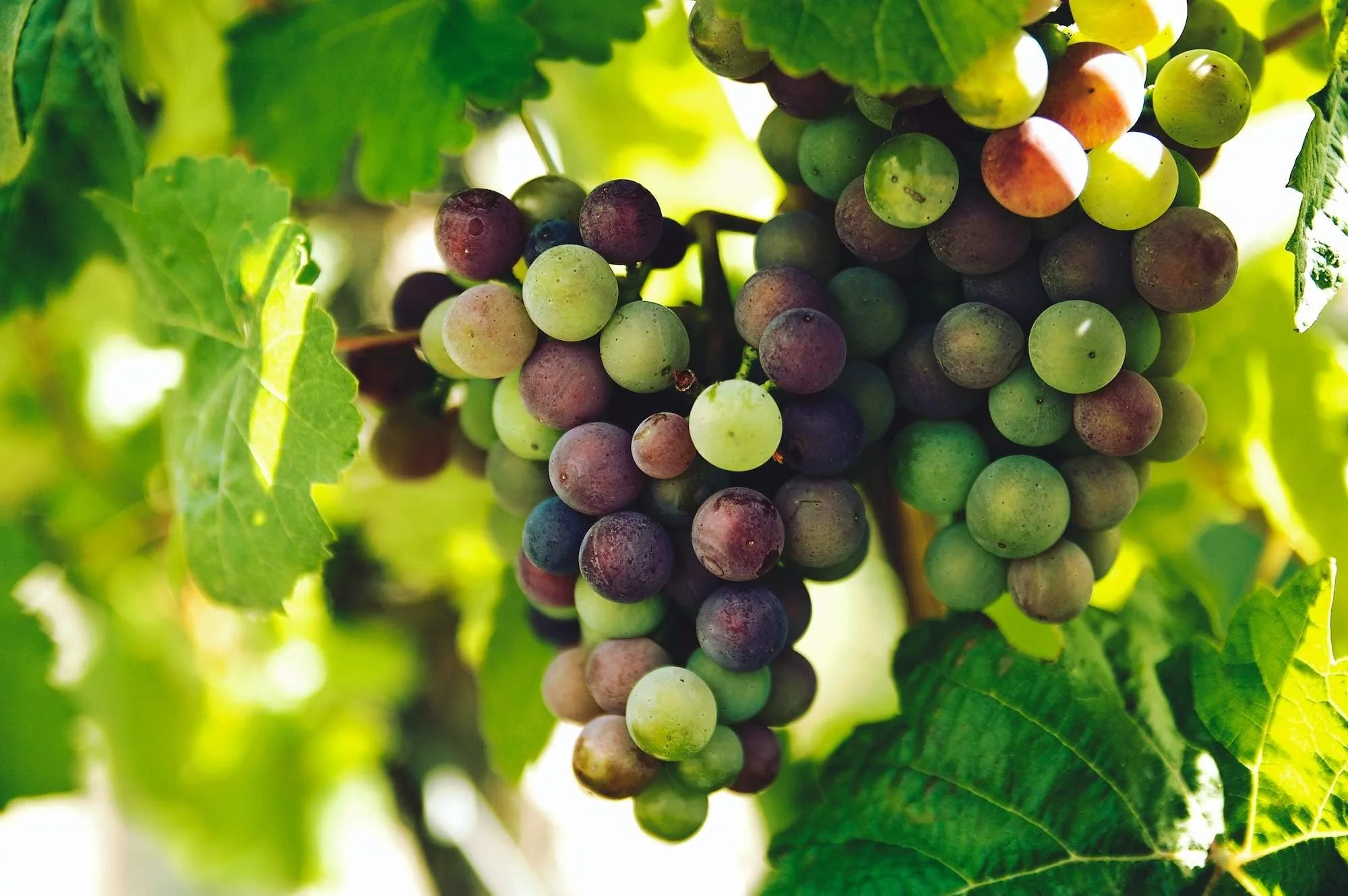
Vitis vinifera
Dissolving of Boundaries — Union — COMMUNION — Fertility — Merriment — Revelry
The Grape is a deciduous, perennial vine with hanging inflorescences that mature into clusters of edible berries. Joyful in its essence, the Grape is a vine of merriment, celebration, and communion. The Grape is also a teacher of fertility, lack of inhibition, and the divine union that results from the dissolving of boundaries. Like most vines, the Grape is sacred to Dionysos who, among many things, is the god of revelry and credited with bringing wine cultivation to the Greeks. The Grape is also sacred to the Satyrs, particularly Silenus and Ambelos, and was featured in Hephaestus’s return to Olympus. As an integral aspect of everyday ancient Greek life, the Grape was enjoyed as food, employed as medicine, and used in sacred rituals. In particular, it’s theorized that wine was the medium for consuming entheogenic or mind-altering herbs or mushrooms, particularly when drunk as part of the Dionysiac mysteries. The Grape is still a vital component of the Greek diet; nearly all parts of the plant are used. Keep reading below to learn more about the Grapevine.
Index
The Grape in the Wild & Garden

LATIN BINOMIAL
Vitis vinifera, with over 5,000 varieties in the wild and cultivation. (Note: There are dozens of other species of Vitis, including those native to North America and Asia. This article concerns only V. vinifera, the Eurasian Grape)
PLANT FAMILY
Vitaceae
COMMON ENGLISH NAMES
Grape, Grapevine, European Grapevine, Eurasian Grapevine
COMMON GREEK NAMES
Σταφύλι, Άμπελος
CHARACTERISTICS
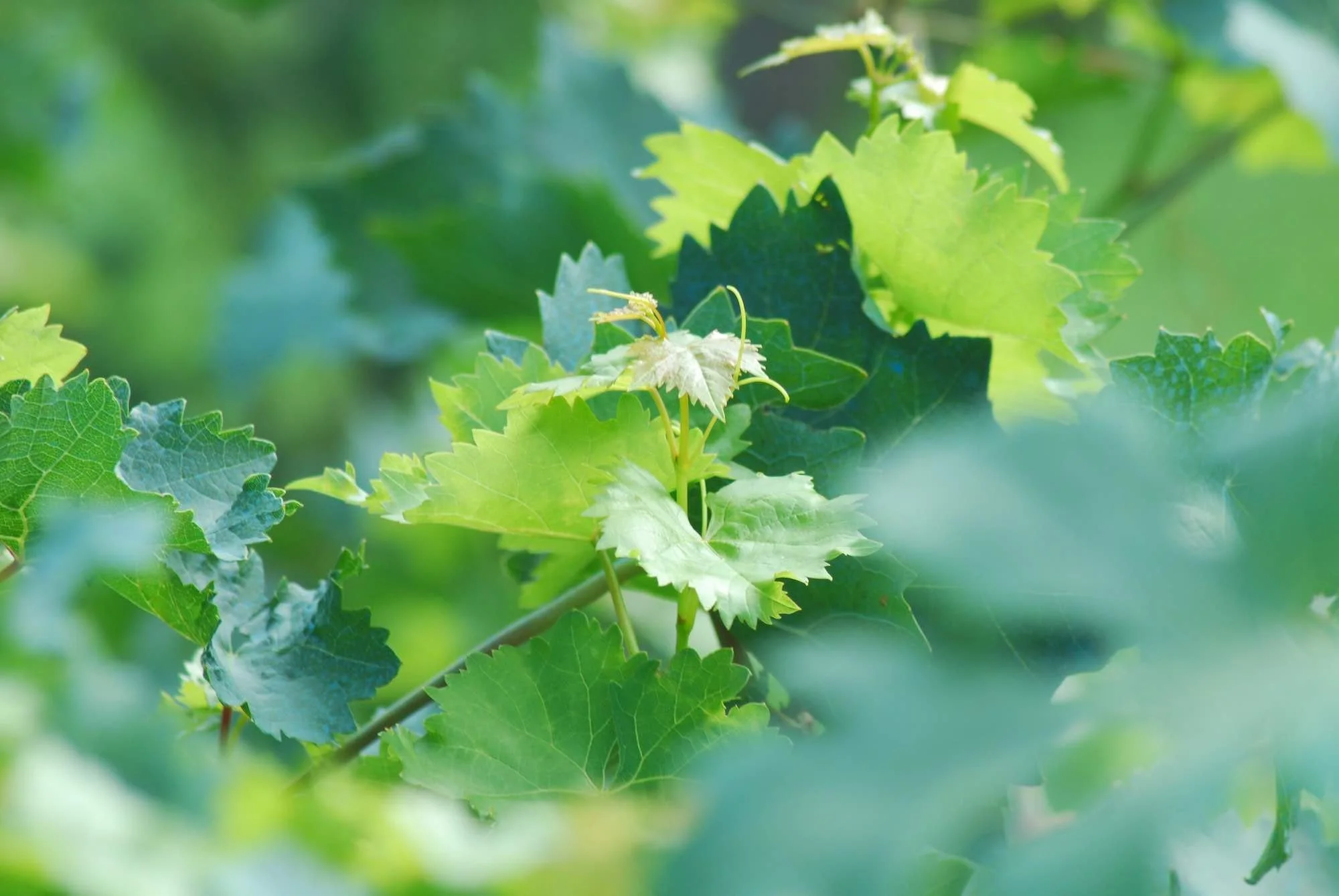
Deciduous, perenial woody climbing vine with hanging inflorescences that mature into clusters of edible berries
NATIVE HABITAT
Mediterranean and Southwest Asia
PREFERRED CLIMATE & CONDITIONS
Full sun to partial shade with well-drained soil and sheltered from cold winds. Hardy to US Zones 6 to 9
TYPICAL HEIGHT AND SPREAD
If left undisturbed, wild vines can reach a height of 15 meters (50 feet) or more, depending on the structure they are climbing. Roots can go as deep as 4.5 meters (15 feet), with the majority being in the top 2-3 meters (6-10 feet).
LEAF and Bloom CHARACTER
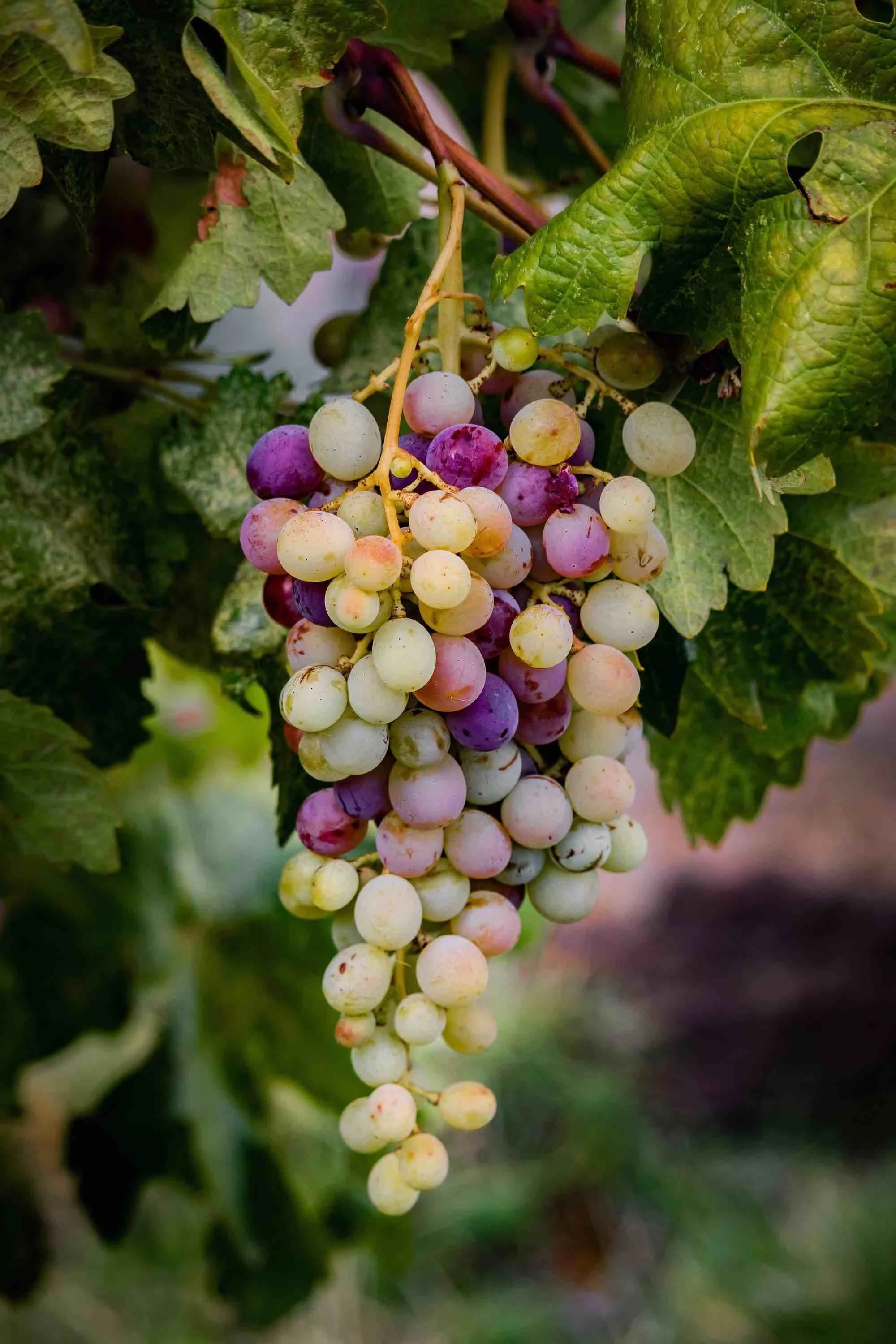
Small green to white flowers in hanging inflorescences bloom in May through June. Wild grape (V. vinifera sylvestris) is dioecious (male and female parts on different plants). Cultivated varieties have perfect flowers (both male and female parts in the same inflorescence) and are self-pollinating.
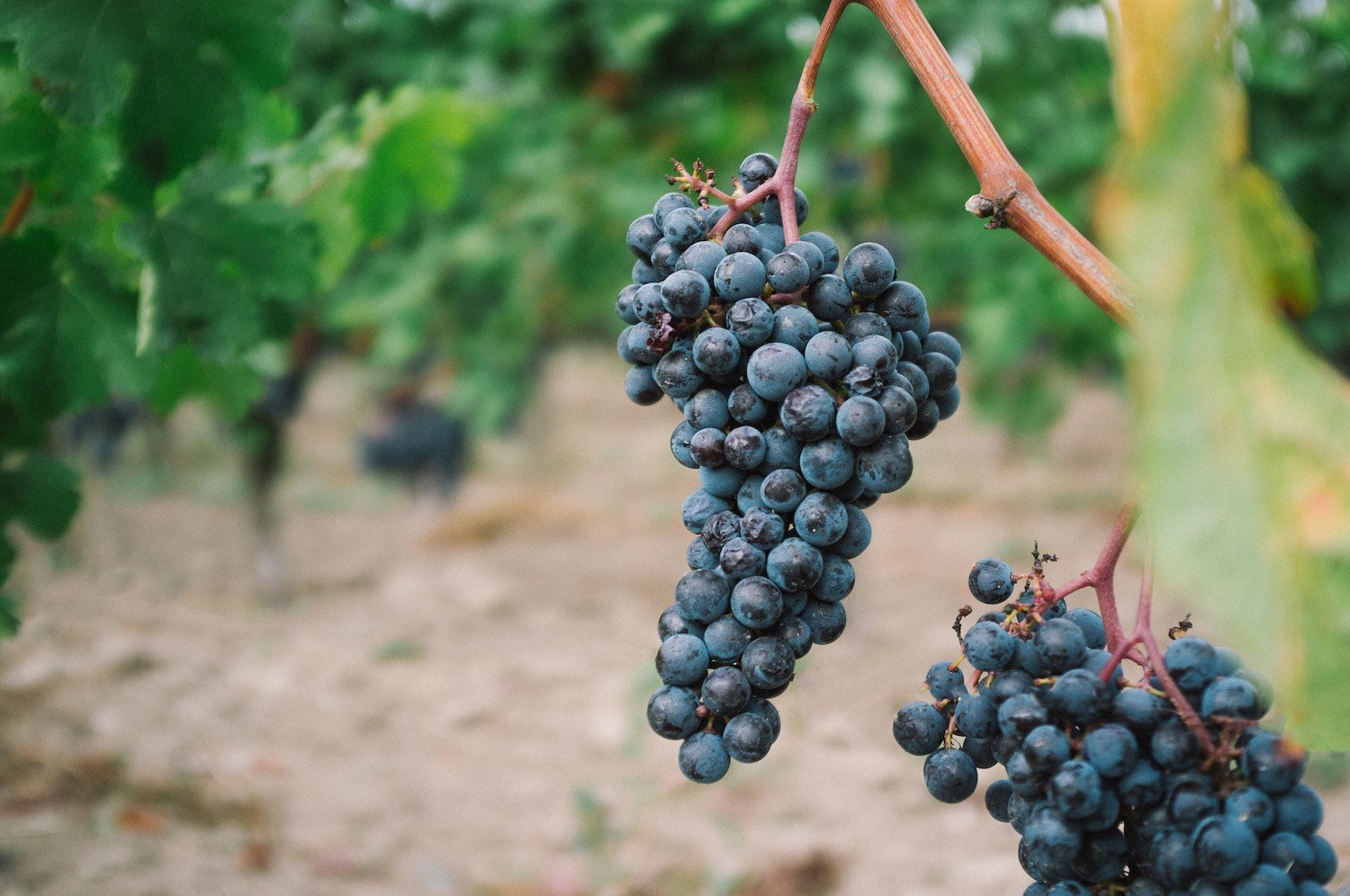
Berries develop in clusters and ripen in August and September, bearing up to 5 seeds per fruit. Fruits differ in shape from ovoid to round and vary in color from green to red to purple to black.
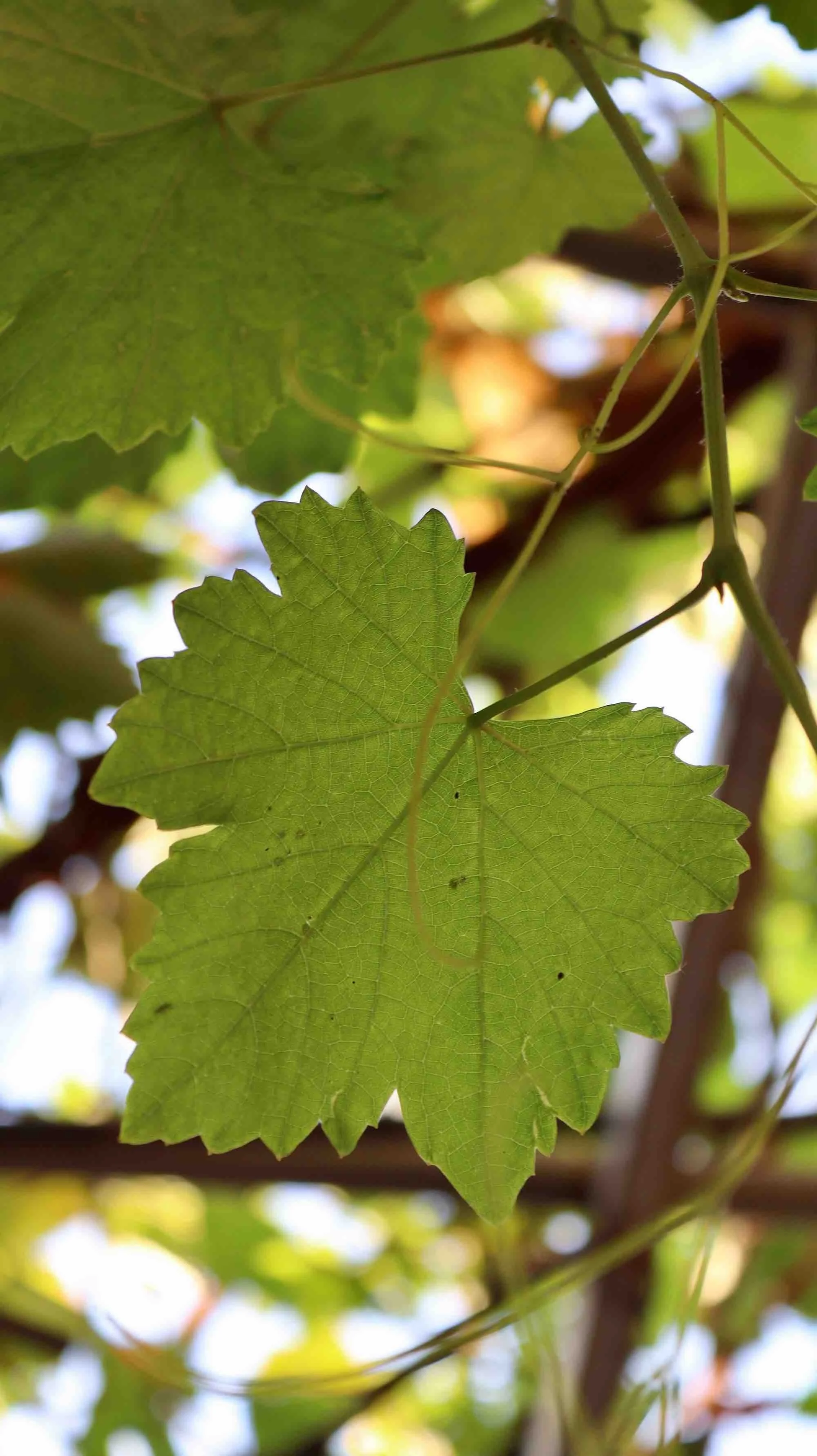
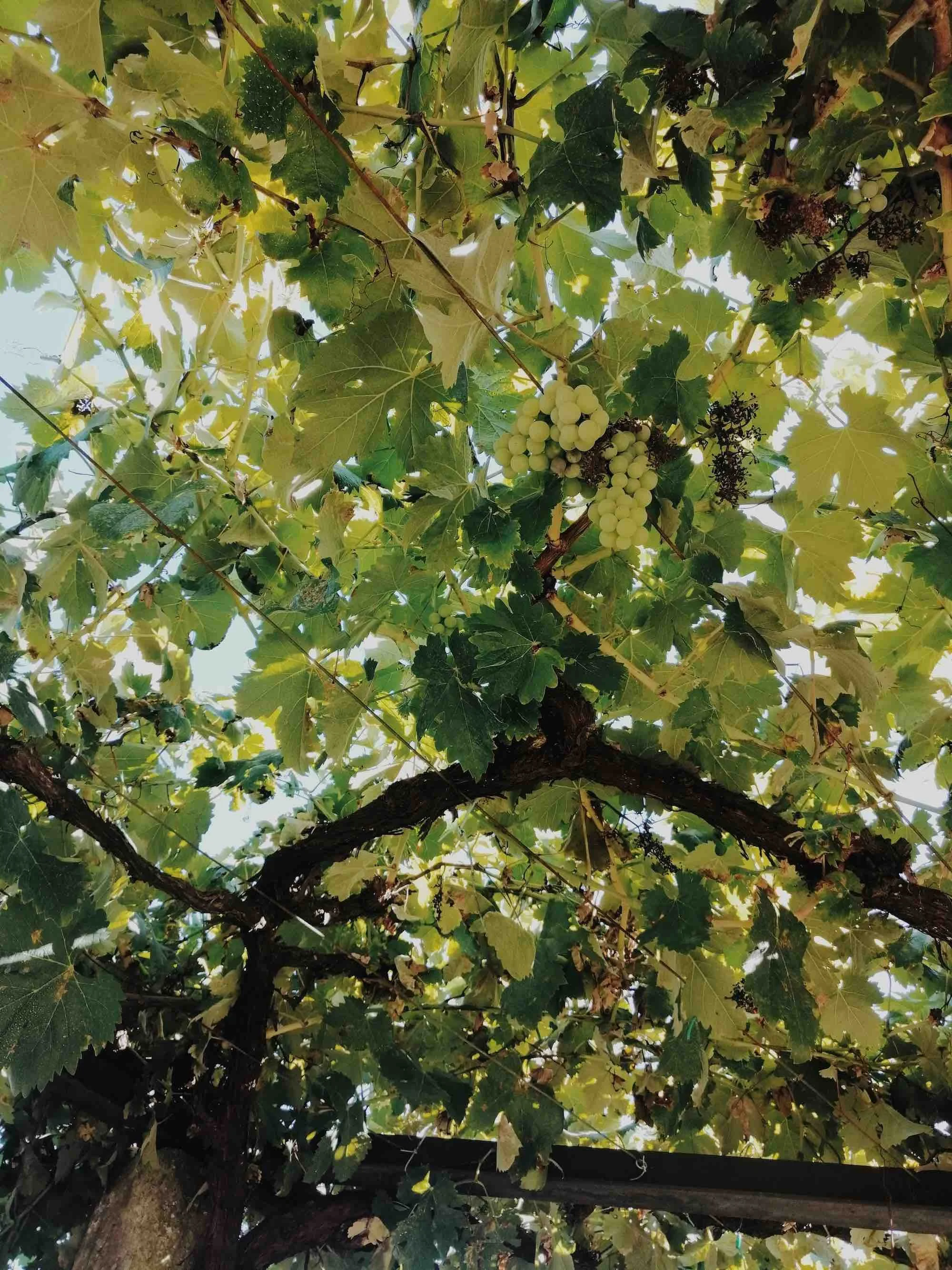
The vine uses tendrils to climb other plants or structures. Stems harden into woody branches with flaky, grey-brown bark.
Care In the Garden
Varieties are chosen based on desired use (either providing shade, beauty, or biodiversity, or for making wine, vinegar, raisins, grape leaves, etc) and on suitability to local growing conditions (available space, climate, soil, sun exposure). New Grapevines should be planted in spring to establish roots before winter; vines are also often grafted onto existing rootstocks. New vines can take up to three years to yield enough grapes for a sizeable harvest, and cultivated vines can be productive for thirty to forty years.
Depending on their purpose, Grapevines are often trained along trellises or arbors and pruned in late winter for shape, shade, and/or productivity. According to Annette Giesecke, in ancient times, Grapes were grown on trellises and steaks from Chestnut and Reed (Arundo donax) as well as on living trees (Elm, Poplar, and Ash).
Grape variety and growing conditions have a large part to play in quality of fruit, with certain varieties being selected for their pulp’s sugar content, seeds’ constituents, and skin’s thickness. Harvest is typically in August and September, depending on the purpose of the fruits. Grapes do not continue to sweeten after harvest.
The most well-known, seedless variety of table Grape – Thompson Seedless — was developed in the USA in the late 1800s to appeal to those who prefer sweet, mild-flavored grapes. But it is often the fruits with seeds that contain many of the health benefits that have long been associated with Grape.
Grapes are prone to various pests and diseases and, unfortunately, this means that many large- and small-scale farmers heavily spray their Grapevines with fungicides and pesticides. The Environmental Working Group (EWG) repeatedly lists Grape as a member of the “Dirty Dozen” — a list of twelve fruits and vegetables with the highest levels of pesticide residue.

The Grape in Greek Mythology

A Krater used for mixing wine with water, showing a Dionysian procession with grapevines and ivy
Dionysos, Maenads, & Satyrs
The Grape is sacred to Dionysos who, among many things, is the god of revelry, wine, and viticulture. The Mysteries of Dionysos include altered states of consciousness via intoxication, frenzied devotion, and ecstatic dance. Dionysos is credited with bringing wine cultivation to the Greeks and visual representations of the god often include Grapevines, clusters of Grapes, and figures holding vessels used for mixing and drinking wine (such as the krater, kylix, and kantharos).
Both Maenads and Satyrs are depicted with Dionysos in scenes of dancing, drinking, music-making, and ecstasy. Maenads (Μαινάδες) are nymphs; their name literally means “raving ones” and they enter divine trance states via intoxication and movement. They are most often depicted bearing a thyrsus (a Giant Fennel stalk wrapped in Ivy), wearing deer or wildcat skin, crowned with Ivy wreaths or bull helms, and handling or donning serpents. They are usually dancing or depicted with heads thrown back and their bodies in ecstatic states, sometimes holding krotala (a type of castanet). Unlike the other nymphs, the Maenads are sometimes said to be humans who are wholly transformed by their frenzied devotion, leaving behind social etiquette and “proper behavior” to become primal and free. An important aspect of the Maenads is sparagmos — their superhuman ability to tear apart wild animals or even other humans — and omophagia — their consuming of raw, bloody meat. Various scholars have theorized what these abilities mean (either as a representation of the crushing and rending of Grapes, the juice running red like blood, or as a connection to the “dying and reviving” god principle as embodied in Dionysos, Orpheus, and Osiris), and whether these descriptions of maenadic behaviour should be taken literally or symbolically. (For more guidance in connecting with the Maenads, I invite you to explore this guide.)
Satyrs (Σάτυροι) are fertility spirits of the wild often depicted as balding men with pug noses, equine ears and tails, and prominent erections. The Satyrs are often carrying drinking cups (a kylix or a kantharos), dancing harmoniously with or harassing Maenads, playing instruments, or supporting a drunken man (usually Silenus).
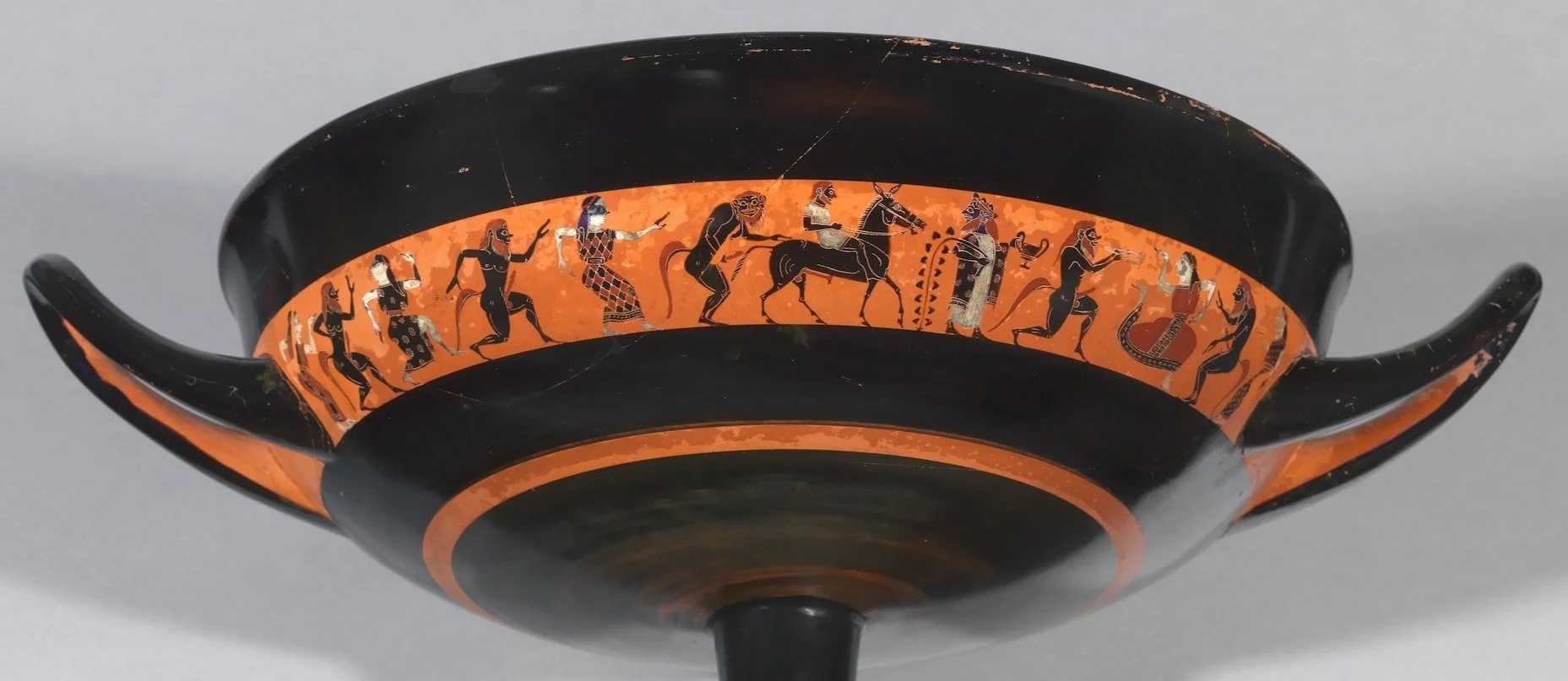
kylix drinking cup, ca. 550 BCE, Image from The Met, Public Domain
Silenus
Silenus or Seilenos (Σειληνός) was the drunken, elder god of wine-making. Often depicted as a bald older man with a potbelly, hairy body, and pug-nose, the etymology of his name links Silenus to the treading of Grapes to make wine.
Silenus was tasked with caring for the infant Dionysos and raised the god with the help of the nymphs of Mount Nysa. He was considered the wisest of Dionysos’ retinue — his drunkenness bestowing prophetic powers — and he is credited with being either the father or grandfather of the Satyrs. Presumably always drunk, he’s often depicted riding on a donkey or being supported by Satyrs.
In one story, Silenus wandered off from Dionysos’ retinue. Drunk and lost, he was found and treated well by King Midas. In gratitude for his hospitality toward the satyr, Dionysos offered to reward the king and Midas requested that everything he touch turn to gold.

Image from Classical Numismatic Group, Inc. http://www.cngcoins.com, CC BY-SA 3.0, via Wikimedia Commons
The Grape and the Donkey
The Donkey was sacred to Dionysos as god of viticulture, and images of the god’s wild retinue often depict a donkey carrying a (presumably drunk) man — usually either Dionysos, Silenus, or even Hephaestus in his Return to Olympos.
Sometimes the donkey is carrying a wine vessel on his erect phallus. In one myth, according to Hyginus’s Astronomica, during Dionysos’s mad wanderings abroad, he was carried across a swamp by a donkey. In gratitude, he granted the donkey the ability to speak. The donkey then challenged Priapos — a god of vegetative fertility with a gigantic phallus — to a contest of who had the larger penis. Priapos killed the donkey (some say by bludgeoning him with his phallus) and Dionysos, in grief and gratitude, placed the donkey in the stars as a constellation.
Hephaestus Returns to Olympos
Although the Grape is not necessarily sacred to Hephaestus, there is an interesting story in which he succumbs to the power of the Grapevine.

Amphora depicting Hephaestus on a donkey surrounded by grapevines. © The Trustees of the British Museum, CC BY-NC-SA 4.0, via britishmuseum.org
As god of the forge and volcanic Fire, Hephaestus (Ήφαιστος) is often associated with the transformative energy of a molten forge. He is crafty and patient; he is responsible for fashioning some of the most important items of the ancient stories and takes his time in delivering his punishment to those that betray him.
In one telling, his mother Hera was so disgusted by his ugliness as a baby that she threw him from Mount Olympus. The violence of his landing on earth resulted in a limp. He was rescued by pirates near the island of Limnos in the north Aegean sea, and it was there that he established his very first forge beneath Mount Moschylos. Angry at being exiled from Mount Olympos, he crafted a golden throne for Hera so that when she sat in it, it held her captive. Ares was tasked with retrieving Hepheastus to free her, but he failed in convincing Hepheastus to come to Mount Olympus. It was Dionysos — who was able to get Hephaestus drunk — who brought the crafty god of the forge back to the mountain of the gods on the back of a donkey. Hephaestus is thus often depicted astride a donkey — presumably drunk — while holding his sacred tools: the blacksmith’s hammer and tongs.
Ambelos, the HAMADRYAD
According to Atheneaus, Ambelos (‘Αμπελος) was the Hamadryad nymph of wild vines, including the Grapevine. The Hamadryades were eight (or more) tree nymphs, children of Oxylos (whose name is connected to the Greek word for Beech tree) and Hamadryas (whose name means “one with tree”).
It may seem strange to include a climbing vine in a list of Dryad tree nymphs, but wild vines are an integral part of the forest as they climb trees to reach the sun. In ancient times, Grapevines were also often cultivated on living trees such as the Elm, Poplar, or Ash.

Image from Classical Numismatic Group, Inc. http://www.cngcoins.com, CC BY-SA 3.0, via Wikimedia Commons
Ampelos and Dionysos
According to Ovid, Ampelos was a young, beautiful satyr whom Dionysos loved. Ampelos was harvesting Grapes from an Elm tree when he fell to his death. (As mentioned above, Grapes often grew on living trees such as the Elm, Poplar, and Ash). Dionysos immortalized Ampelos by placing him among the stars as the Grape-Gather constellation.
In another version of the story, Ampelos — after being coaxed by Ate, the goddess of Delusion and Folly — wanted to ride a wild bull in an attempt to impress Dionysos. As he was riding, he boasted to the Full Moon goddess Selene, “Give me best, Selene, horned driver of cattle! Now I am both – I have horns and I ride a bull!” Selene, being jealous, sent a gadfly to sting and harass the bull, who then threw Ampelos from his back and killed him. Dionysos, upon seeing the dead youth, mourned him and poured ambrosia on his wounds so that when Ampelos transformed into a Grapevine, he would pass the ambrosia on through his fruit — and thus produced the first wine.
“[Dionysos] clothed the breathless body, laid a fawnskin over his shoulder and cold chest…sprinkled roses and lilies upon his body, and hung a garland on his hair of the soonperishing anemone flowers, as for one fallen too early by a cruel blow. In his hand he placed a thyrsus, and covered him with his own purple robe; from his own uncut head he took one lock, and laid it on the body as a last gift and token. He brought ambrosia from Mother Rheia and poured it into the wounds, whence Ampelos when he took his new shape [as a Grapevine] passed the fragrant ambrosia to his fruit.”
Ikarios and Erigone
A man Ikarios was shown the art of viticulture and given a large wineflask by Dionysos, then encouraged to spread the knowledge of the Grapevine throughout Attica. While traveling, Ikarios came across some local shepherds and invited them to drink, but the shepherds imbibed the wine undiluted and fell into a death-like stupor. Their relatives — thinking Ikarios had poisoned them — killed Ikarios.
When the shepherds later awoke and their relatives realized their crime, they hid Ikarios’s body (some stories say by burying it, others by pushing it down a dry well.) But Ikarios’s faithful dog, Maira, discovered his body and led his daughter, Erigone, to his burial place. Distraught over their loss, Erigone hung herself in a nearby tree and Maira jumped to her death in a well.
Dionysos then punished the Athenians, cursing them so that all their young maidens would hang themselves in the same manner as Erigone. After consulting an oracle, the people were instructed to atone for their crime by pouring libations to Ikarios and Erigone, as well as by forming the Festival of Swings, during which young girls would swing from trees and hang masks and dolls from branches in honor of Erigone.
Dionysos then placed Ikarios, Erigone, and Maira as stars in the sky.
The Grape and Wine in Ancient Greek Life

The Grape was integral to everyday life for the ancient Greeks; most parts of the plant were enjoyed as food, employed as medicine, and used in sacred rituals.
Much like today, Grape leaves and fruits were eaten either fresh or dried; Grape vinegar was used as a food, medicine, and preservative; and wine was drunk in social gatherings, as well as offered in libation to the gods. Wine was rarely drunk neat and was instead diluted with water in a 1:3, 2:3 or 3:5 ratio.
As wine and vinegar were both considered to have medicinal value, they were also a common medium for administering herbal remedies, tonics, and spiritual brews. For example, Pine resin was used to seal the inside of ceramic wine vessels (called amphora) but was also added intentionally to fermenting grapes (today, this resin-flavored white wine is called retsina). In addition to Pine, many other herbs were also added to wine, including Honey, Thyme, Rue, Ivy, Valerian, Juniper, Rose, and Myrrh — for flavor, as well as for their medicinal properties.
It is also theorized that wine was infused with entheogenic or mind-altering herbs, venoms, and/or mushrooms in order to commune with the divine, particularly when drunk as part of the Dionysiac mysteries. As Carl A. P. Ruck points out in his article, “Entheogens in Ancient Times: Wine and the Rituals of Dionysus,” ancient Greek wine would have had a maximum potency of about 14%. Yet by ancient accounts, drinking only 400 mL of diluted Greek wine over several hours could result in “complete mental derangement or narcosis” (pg 345). It becomes clear that potent herbs, venoms, and/or mushrooms were likely added before drinking.

A Krater for mixing wine and water showing Dionysus with his retinue, including Silenus, satyrs, and Maenads
After an evening meal, upper class men would often gather in groups to drink together. Called a symposium, this banquet included conversation, poetry, debate, music, and dancing. The Symposium’s leader would determine the wine’s dilution ratio for the night. The water and wine would then be mixed together in a large vessel (krater), then poured from pitchers (oinochoe) into drinking cups (kylix or kantharos), and continuously drunk throughout the night. Drunkenness and debauchery often followed. Other than the flute girl (who played the aulos) and the hetairai (courtesans), women were not allowed to attend.
Back to top
The Grape in Ceremony
Dissolving of Boundaries — Union — COMMUNION — Fertility — Merriment — Revelry
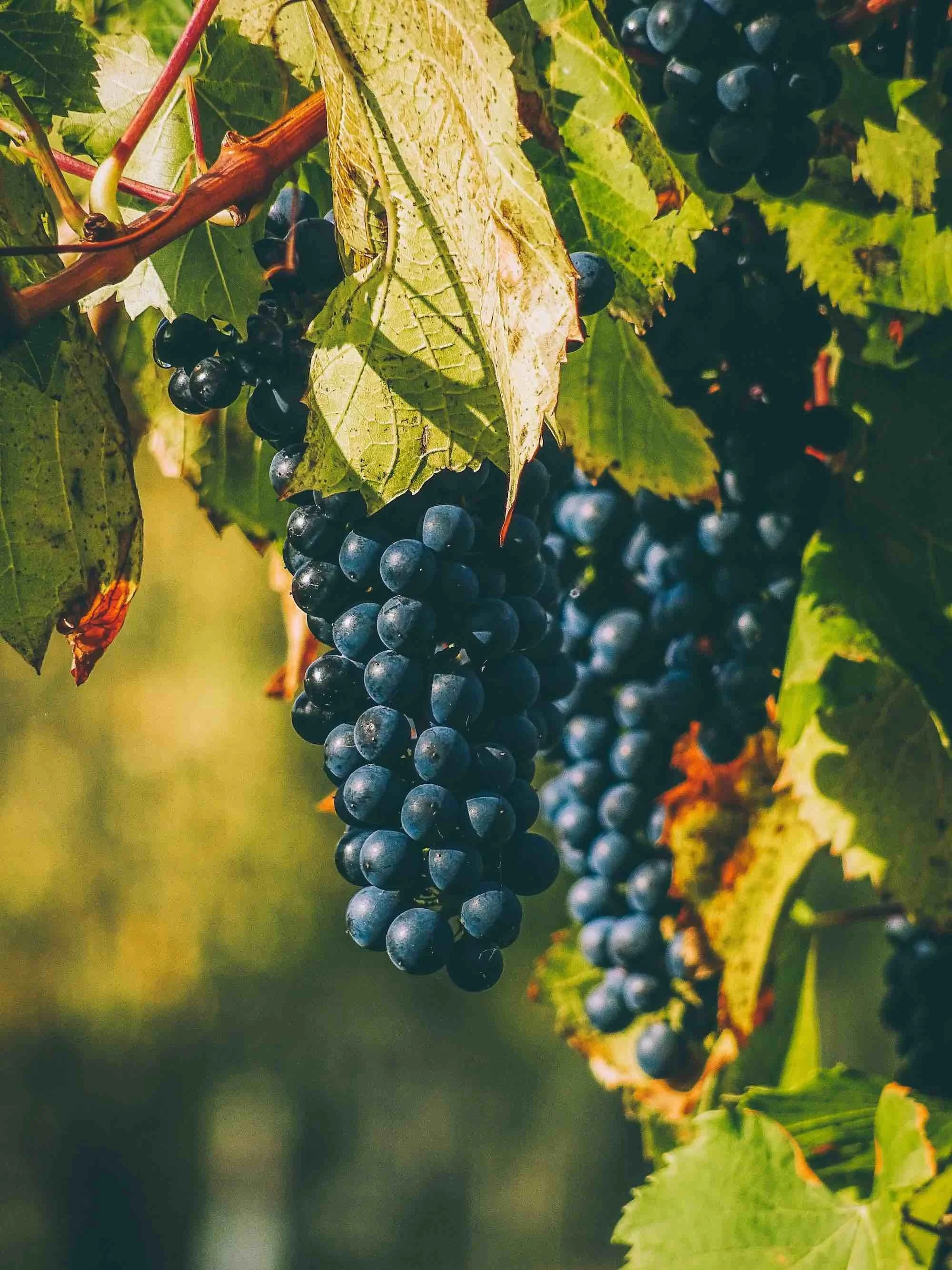
Joyful in its essence, the Grape is a vine of merriment, celebration, and communion. As with Ambelos, who passes holy sweet nectar through his fruit, the divine ambrosia of the Grape is an important source of food, medicine, and sacred union to those who partake of it.
Dying back in winter and being reborn each spring, the deciduous Grape is sacred to Dionysos, a twice-born god whose Mysteries involve ecstatic states, the destruction of social norms, and the dissolution of the self.
Like the Rough Bindweed and the Ivy — which are both also vines sacred to Dionysos — the Grape is a vine that climbs and entwines with a lover’s embrace. As a teacher of the lack of inhibition and the fertility that follows such entwining, the Grape in particular teaches us the wisdom of dissolving boundaries and the immortality achieved through divine union.
An essential aspect of its wisdom is in the ingestion; communing through consumption. For some, wine in particular offers a pathway to divine union. Mind-altering in its own right, it’s theorized that the ancients infused their wine with herbs or mushrooms to achieve ecstatic merging with the divine in their rituals. Red wine, in particular, is emblematic of the blood of the twice-born god and — like the Giant Fennel, another of Dionysos’s sacred plants — Grape wine thus becomes a container or medium through which divine revelation is passed.
Parts Used
fruit, leaves, vines
Safety CONSIDERATIONS
Generally considered safe to use, although wine alcohol requires caution for those with addiction, sensitive stomachs, and other contra-indicated conditions or medications.
Elemental Correspondence
Seasonal Celebrations
Ceremony
Grape can be invited to ceremonies when seeking joyful communion with the divine and to honor the unifying principle that dissolves all boundaries of the self, merging us with the divine mysteries of the universe.
Wear woven crowns of Grape vine or drape your altar with the vines, ripe or dried fruit, or leaves. Prepare dishes of stuffed grape leaves, fresh juice, or sweet puddings such as moustalevria, and consume them in communion with the divine. Craft herb-infused wines, juices, or vinegars to honor the unifying principle of the Grape. Offer beverages in libation, placed in sacred drinking cups, and drink to the Mysteries, to the ancestors, to the vine Nymphs, Maenads, and Satyrs, or to the essence of Dionysos himself.
Especially when combined with Ivy in ritual, the two vines together encourage a joyful communion with the divine. Together, they honor the unifying principle that dissolves all boundaries of the self, tears apart our limited sense of reality, and merges us with the divine mysteries of the universe. Explore altered states of consciousness, whether through meditation, sex, dance, music, sacred theater, or the imbibing of entheogenic substances (which is best navigated with a guide, someone trained in the art of sacred intoxication, especially when ingesting substances like alcohol and entheogenic herbs or mushrooms).
You may also want to consider inviting Rough Bindweed into your ceremony as a means of reestablishing boundaries upon reentry from altered states.
Many of the same practices I suggest in this guide to communing with the Maenads can also be applied to connecting with the spirit of Grape.
Devotion
Whether before your altar or the living vine, recite the following:
Holy Grapevine,
Joyful communion,
destroyer of boundaries,
may your divine ambrosia
dissolve my self
into Wisdom.
Back to top
The Grape in the Kitchen & Apothecary
Parts Used
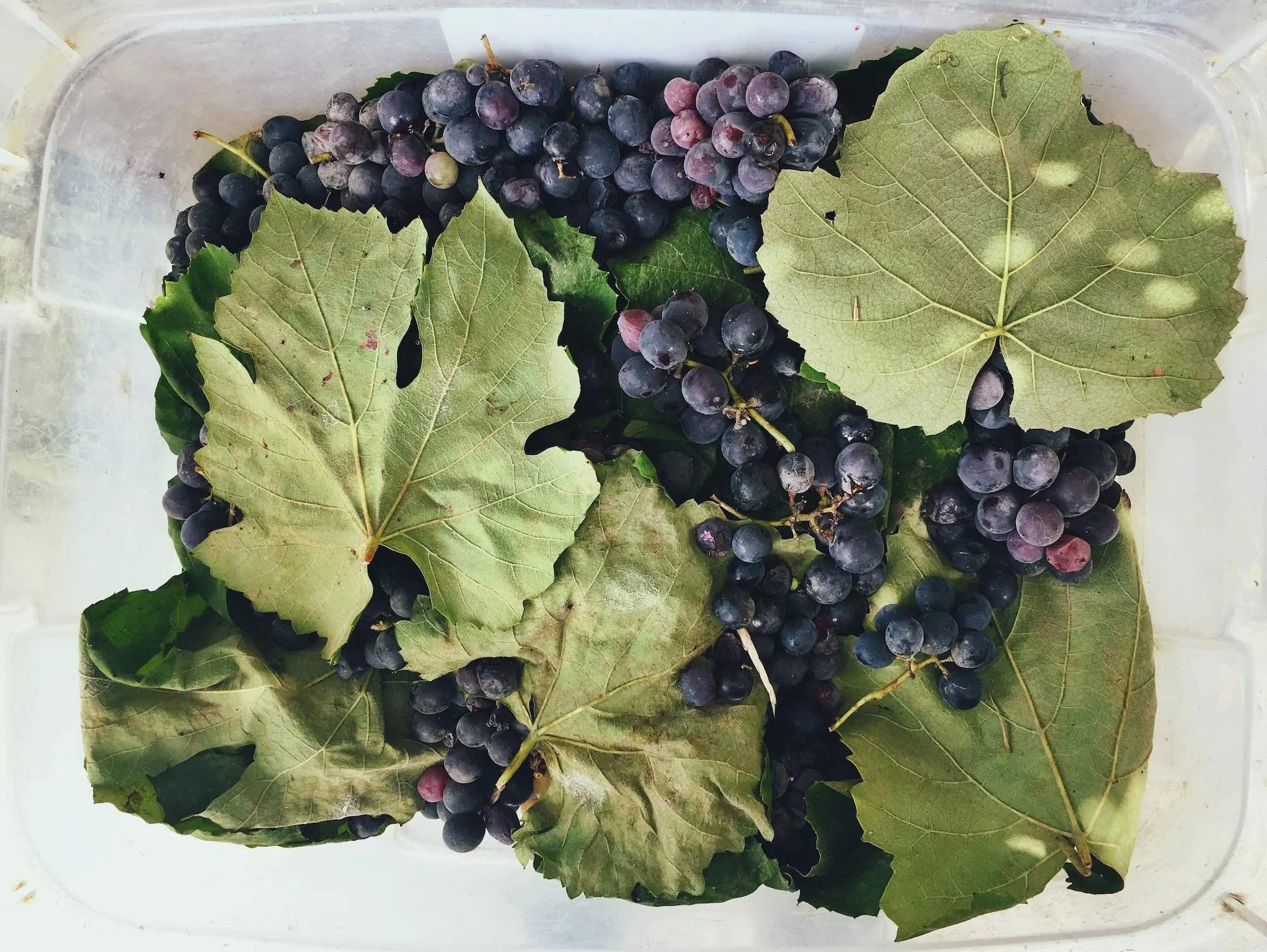
fruit, leaves, tendrils
Culinary Flavor and Use
The Grape has been a vital component of the Greek diet for millenia.
Grape fruits are eaten fresh or dried and processed into wine, vinegar, and juice. Although not typically known for its wines, Greece has a rich history of viticulture, with different regions specializing in particular varieties. One of the most well-known wines outside of Greece is Vinsanto, a sweet wine from Santorini. Many foreigners also know of Retsina (ρετσίνα), a Greek white or rosé wine in which the grapes are fermented with resin from the Aleppo Pine (Pinus halepensis), a tree sacred to the god Dionysos.
Distilled Grape spirits and liquors, such as tsipouro (τσίπουρο) and Cretan tsikouthia (τσικουδιά) or raki (ρακή), are also popular throughout contemporary Greece, though the distillation of alcohol was not known to the ancient Greeks. Rakomelo (ρακόμελο) is a common digestive and wintertime remedy; it is typically made from mixing raki (or somtimes tsipouro), honey, and spices (such as cinnamon or cardamom) and served warm.
Grape must — crushed ripe grapes and juice — is used in various dishes, including moustalevria (μουσταλευριά), a pudding made from flour or semolina and Grape must. Spoon sweets, jams, and jellies can also be made and enjoyed from the fresh Grape.
Dried grapes come in three forms: raisins (from red grapes), sultanas (from white grapes, often treated with a preservative to retain their light color), and currants (from the seedless Grape cultivar “Black Corinth” which has been in cultivation since antiquity). Grape currants (also called Corinth currants or Zante currants) should not be confused with the “black currants” of the Ribes family of flowering shrubs.
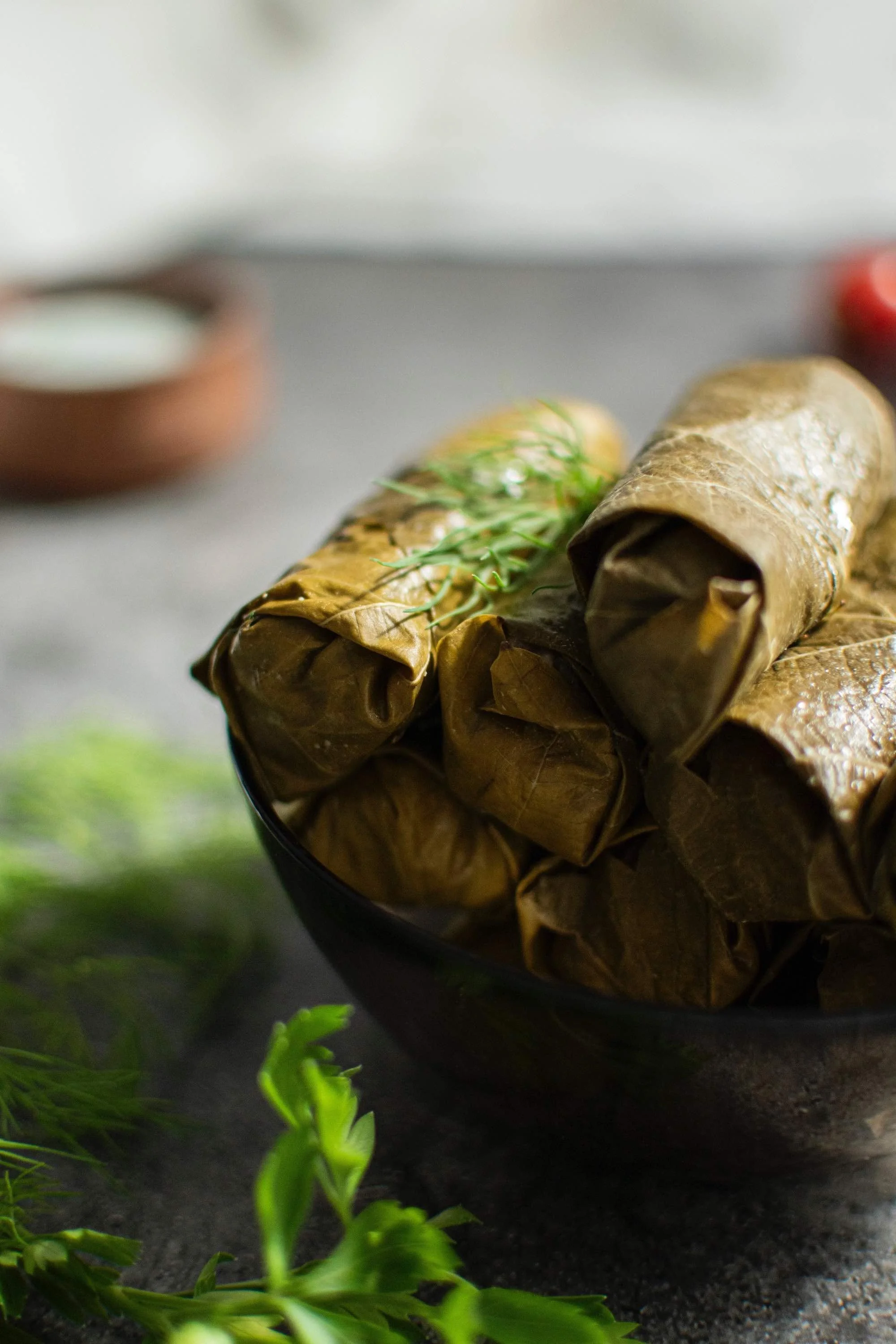
Grape leaves are often preserved by pickling, canning, or freezing. Stuffed Grape leaves are called dolmathakia (ντολμαδάκια) (or dolmas by English speakers); they are traditionally made by wrapping Grape leaves around rice and herbs, such as parsley or dill, and topped with an egg-lemon sauce (αυγολέμονο). Small fatty fish (such as sardines) are wrapped in Grape leaves and grilled or baked.
Dried Grape leaves can also be used as a flour alternative. And Grape tendrils are eaten raw, cooked, or pickled.
Traditional Medicinal Applications
The leaves have traditionally been used to stop bleeding, to treat diarrhea, rheumatism, and arthritis, and as a poultice for tumors. Sap collected from cut vines has been traditionally used for eye and skin conditions, such as eczema or wounds.
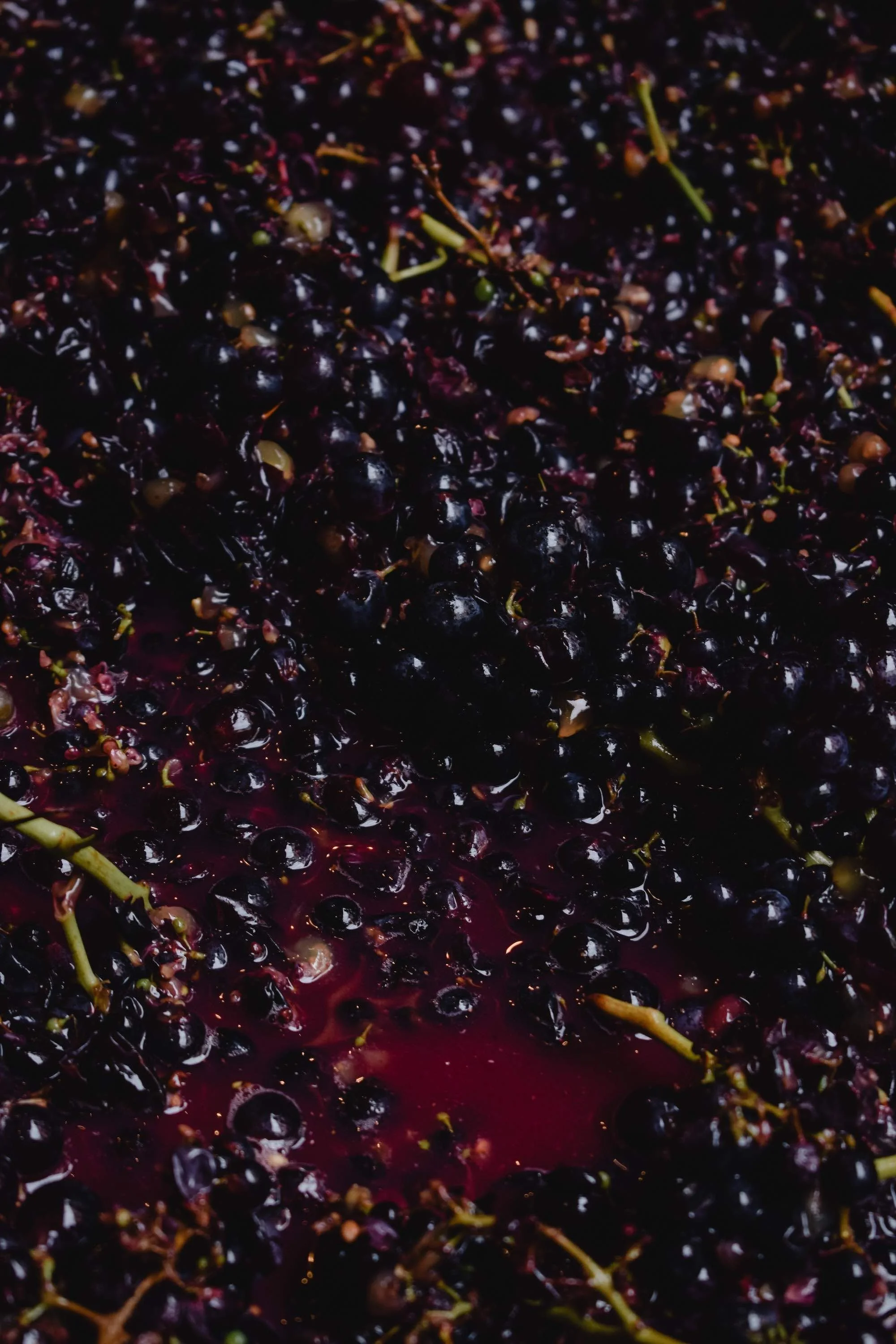
Since ancient times, herbs have been infused in wines and vinegars as a method for ingesting various medicinal elixirs. Red wine is traditionally considered warming, decongesting, and thinning to the blood. White wine is diuretic and energizing. Vinegar is sour and cooling and is often mixed with honey to form an oxymel.
Grape juice is said to aid in digestion. Considered a liver tonic, a Grape diet is also traditionally used to aid in the improvement of liver, kidney, and intestinal function.
NOTE: The most well-known, seedless variety of table Grape – Thompson Seedless — was developed in the USA in the late 1800s to appeal to those who prefer sweet, mild-flavored grapes. But it is often the fruits with seeds that contain many of the health benefits that have long been associated with Grape.
Grapes are prone to various pests and diseases and, unfortunately, this means that many large- and small-scale farmers heavily spray their Grapevines with fungicides and pesticides. The Environmental Working Group (EWG) repeatedly lists Grape as a member of the “Dirty Dozen” — a list of twelve fruits and vegetables with the highest levels of pesticide residue.
Safety CONSIDERATIONS
Generally considered safe to use, although wine alcohol requires caution for those with addiction, sensitive stomachs, and other contra-indicated conditions or medications.


