Rough Bindweed

Smilax aspera
Coupling — Bonding — Boundaries
The Rough Bindweed (also known as Smilax) is a perennial evergreen vine with dark green leaves, spines on the stem, and bright red berries growing in clusters. The vine climbs and entwines with a lover’s embrace, and though the heart was not used by the ancients as a symbol of love as it is today, the heart-shape of its leaves can be a reminder of its sacred wisdom: to tread carefully when entwining with another and to maintain healthy boundaries. The details of their story are sparse, but the myth of the problematic love between Smilax and Crocus serves to remind us of the wisdom of not trying to force incompatible bonding. Sacred to Dionysos, the vine was also believed to be an antidote to poisons and may have been drunk before or after the ingesting of toxic or entheogenic substances. Invite Rough Bindweed into your ceremonies to reestablish boundaries after ecstatic union and joyful communion. Keep reading below to learn more about Rough Bindweed.
Index
The Rough Bindweed in the Wild & Garden

Muséum de Toulouse, CC BY-SA 3.0, via Wikimedia Commons
LATIN BINOMIAL
Smilax aspera
PLANT FAMILY
Smilacaceae (formerly Liliaceae)
COMMON ENGLISH NAMES
Rough Bindweed, Common Smilax, Smilax, Sarsaparilla
COMMON GREEK NAMES
Σμίλαξ η τραχεία, Αρκουδόβατος, Αρκόβατος
CHARACTERISTICS
Perennial climbing evergreen vine with dark green, leather-like leaves and spines on the stem
NATIVE HABITAT
Mediterranean, Asia, Africa
PREFERRED CLIMATE & CONDITIONS
Found in woodland and scrub areas, along rivers and ravines, in thickets, brambles, and hedgerows up to 1200 meters above sea level. Drought-tolerant. Sun and partial shade. Hardy to US Zone 11.
TYPICAL HEIGHT AND SPREAD
Vine reaches a length of 2 to 30 meters (6.5 to 98 feet)
LEAF and Bloom CHARACTER
Heart- or dart-shaped leaves with tendrils. Dioecious (male and female flowers are found on different plants) hanging inflorescence of fragrant, pink-white flowers in August through November. Bright red berries containing 1-3 seeds ripen in bunches, turning dark red and then black with age. Flowers provide nectar for bees; berries provide food for birds, who disperse the seeds.
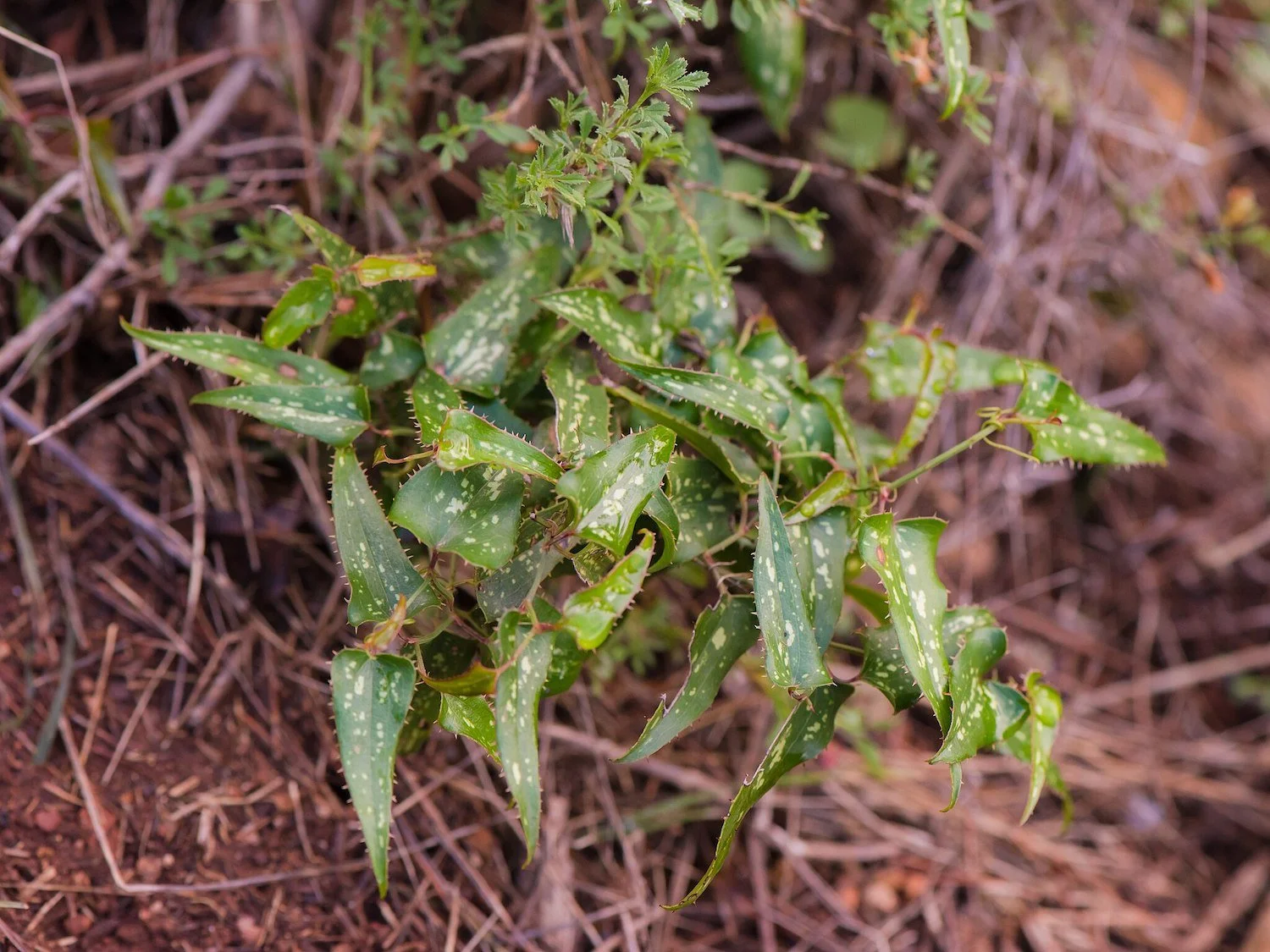
Photo by Christian Ferrer, CC BY-SA 4.0, via Wikimedia Commons
Care In the Garden
Propagate by seed or cuttings. Provide climbing structures, such as trellis or stakes. Pruning is recommended. Highly pest- and fungus-resistant.
SAFETY CONSIDERATIONS
Closely resembles Black Bryony or Black Bindweed (Dioscorea communis, aka Tamus communis), a poisonous vine in the Dioscoreaceae family, as well as the Cynanchum acutum, a poisonous swallowwort vine in the Apocynaceae family.


The Rough Bindweed in Greek Mythology

Smilax aspera. Photo by Uzi Paz Pikiwiki Israel, CC BY 2.5, via Wikimedia Commons
the Metamorphosis of Smilax & Crocus
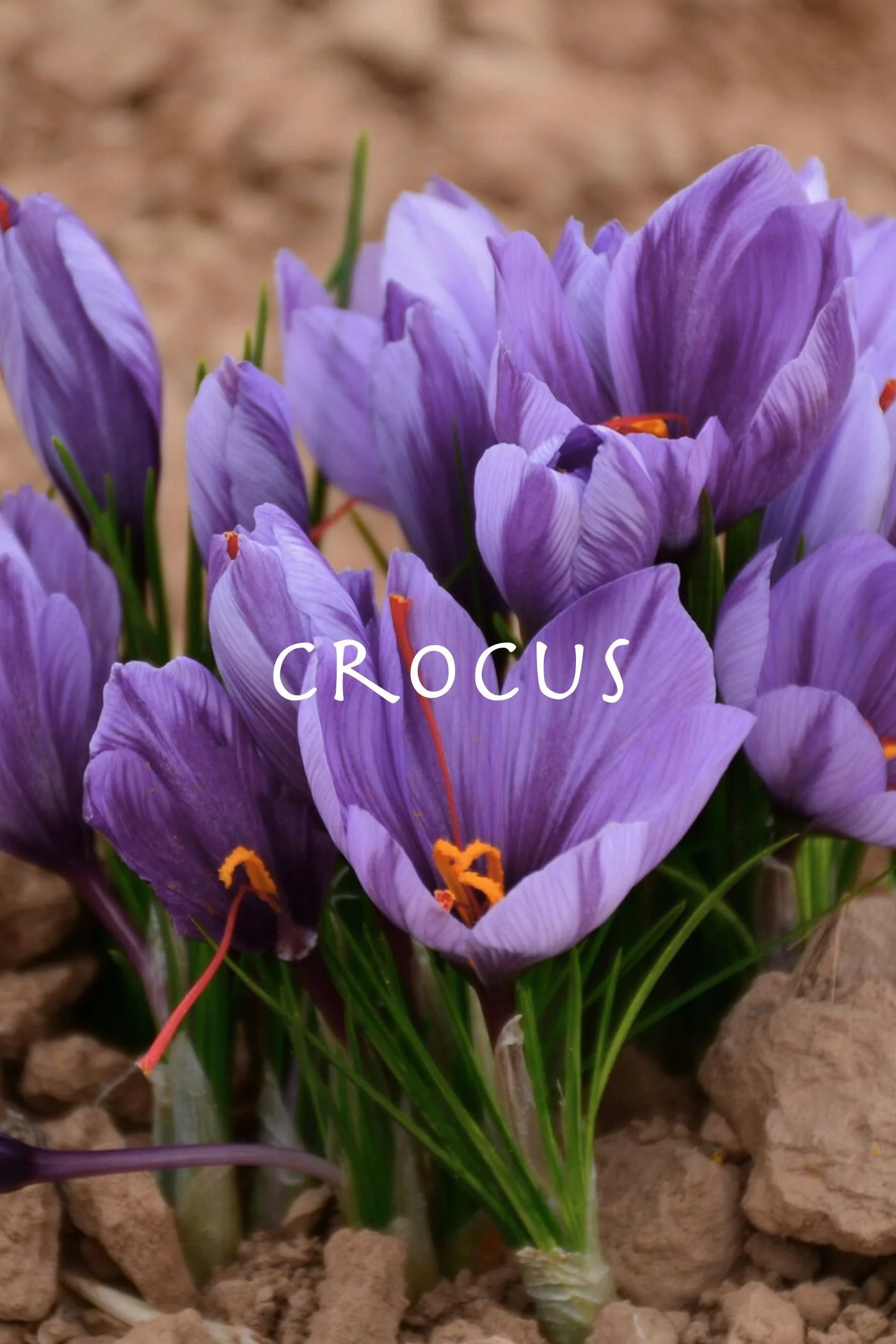
Not much is known about her metamorphosis, but both Ovid and Pliny the Elder tell the story of Smilax, whose unrequited or complicated love for Crocus (Krokos) transformed her into the vine bearing her name. Crocus, who was unsatisfied by his love for Smilax, was also transformed into the short, flowering perennial bulb of the same name.
The Rough Bindweed is an evergreen, climbing vine; the Crocus is a stout, short-lived flower that grows close to the ground. It is easy to understand how a relationship between the two seemingly opposite plants would be problematic.
Dionysos and the Dionysiac Mysteries
Like all vines, the Rough Bindweed is sacred to Dionysos, the god of revelry, sacred madness, and viticulture. The similarity of the Rough Bindweed’s ripe red fruits to the Grape cluster should not be overlooked, and any images of the god and his retinue of Satyrs and Maenads with clusters of berries and heart-shaped leaves may in fact be a combination of his other two sacred vines: the Grape and the Ivy.
It’s also interesting to note that, according to Dioscorides’ De Materia Medica (4-144), a Rough Bindweed decoction was believed to be “an antidote for deadly poisons” and could be “taken as a drink beforehand (or afterwards).”
This would imply to me that people were ingesting poisons intentionally, otherwise, why would they be drinking a decoction “beforehand”?

Photo by Bernard DUPONT from FRANCE, CC BY-SA 2.0, via Wikimedia Commons
The Rough Bindweed in Ceremony
Coupling — Bonding — Boundaries
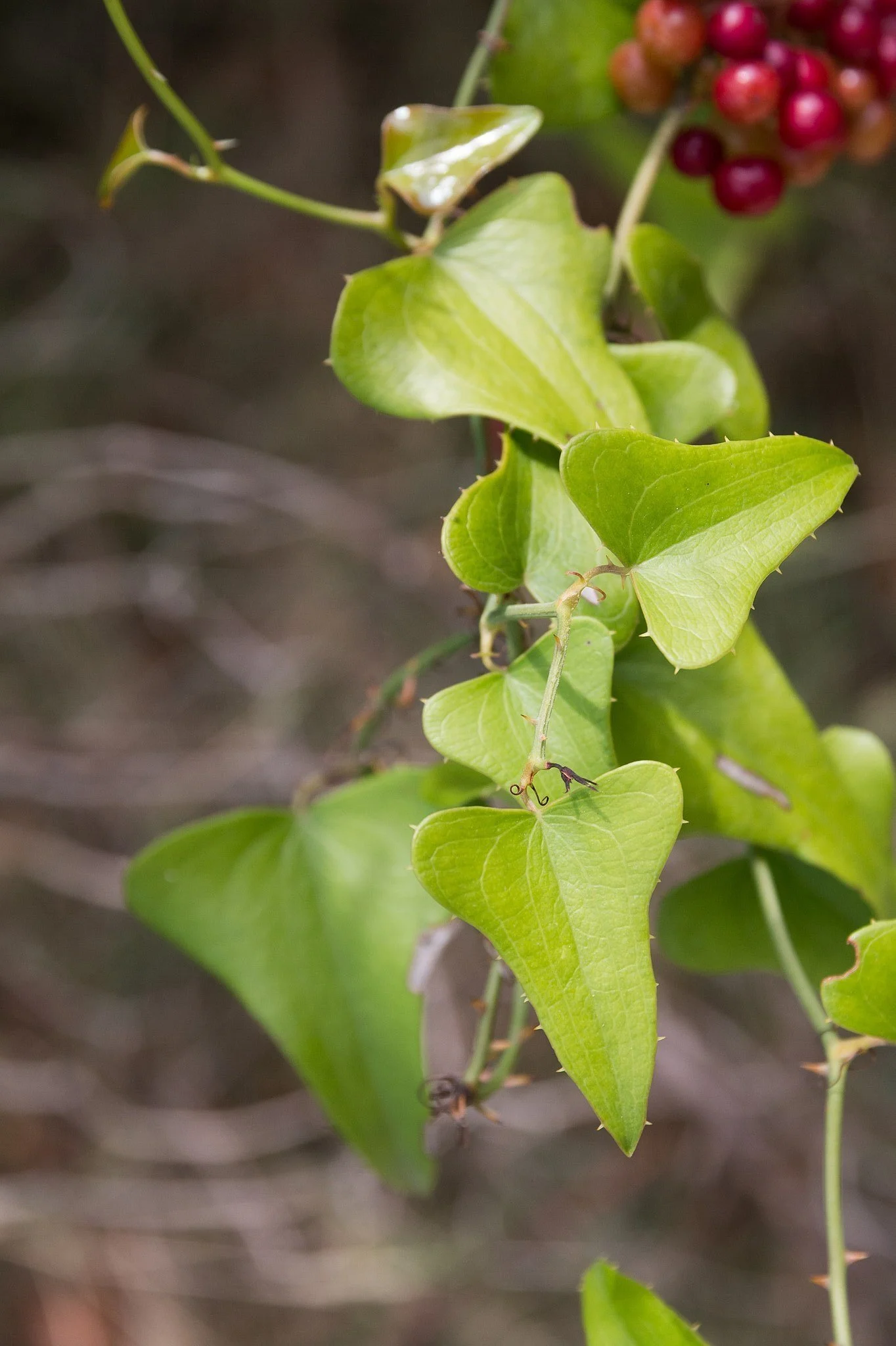
Photo by Daniel VILLAFRUELA, CC BY-SA 4.0, via Wikimedia Commons
Like the Grapevine and the Ivy — which are also sacred to Dionysos — the Rough Bindweed is a vine that climbs and entwines with a lover’s embrace. Though the heart was not used by the ancients as a symbol of love as it is today, the heart-shape of the Rough Bindweed leaves and the evergreen nature of the vine can be a reminder to us of perennial love and bonding.
The wisdom of this vine is in treading the line between entwining with another and maintaining healthy barriers, between holding on and letting go. The similarity of the Rough Bindweed’s ripe red fruits to the Grape cluster should not be missed; similar to the Grape, Rough Bindweed is a vine of union. But while the Grape encourages the dissolution of boundaries in divine communion, the Rough Bindweed teaches us to maintain our boundaries in mortal coupling. The thorny leaf sides and stem are protective edges; it shows us to be careful not to squeeze too hard or we may strangle that which we love.
The details of their story are sparse, but the myth of the problematic love between Smilax and Crocus serves to remind us of the wisdom of not trying to force bonding. The Rough Bindweed is an evergreen, climbing vine; the Crocus is a stout, short-lived flower that grows close to the ground. Sometimes two entities are just not compatible and it is kinder and wiser to let go and move on.
As a vine sacred to Dionysos, its ancient role as an antidote to sacred toxins should also not be overlooked. While Dionysos’ other vines — the Grape and Ivy — teach us the wisdom of dissolving boundaries and entering ecstatic states in order to experience boundless union with the divine (and, by extension, our lovers), the Rough Bindweed teaches us to reestablish boundaries of the self when that ecstatic state “ends” and we must reenter everyday life. (We can take with us all the new, expanded awarenesses that divine ecstasy has given us, while also returning to our shared reality with deeper respect for the role that boundaries play in the cosmos.)
Parts Used
vine, leaves, berries
SAFETY CONSIDERATIONS
Closely resembles Black Bryony or Black Bindweed (Dioscorea communis, aka Tamus communis), a poisonous vine in the Dioscoreaceae family, as well as the Cynanchum acutum, a poisonous swallowwort vine in the Apocynaceae family.
Elemental Correspondence
Seasonal Celebrations
Ceremony
Along with other herbs of love and devotion, invite Rough Bindweed to your ceremonies for coupling and bonding. Celebrate your mortal union with vines of Rough Bindweed gently wrapped around joined hands to remind you and your partner(s) of the importance of right relationship: seeking the balance between entangling, enmeshing love and healthy, protective boundaries.
If seeking a partner, decorate your altar with Rough Bindweed as a reminder to choose wisely and not succumb to the temptation to always dissolve your boundaries in an effort to connect or bond with another. There is balance to be found between embracing and letting go.
Rough Bindweed can also be invited into any ceremonies involving Grape and/or Ivy as a means to reestablish boundaries after ecstatic union and joyful communion.
Devotion
Whether before your altar or the living vine, read the following:
Smilax, vine of coupling,
show me right relationship
that I may maintain my edges
while still losing myself
within love’s embrace.
Back to top
The Rough Bindweed in the Kitchen & Apothecary
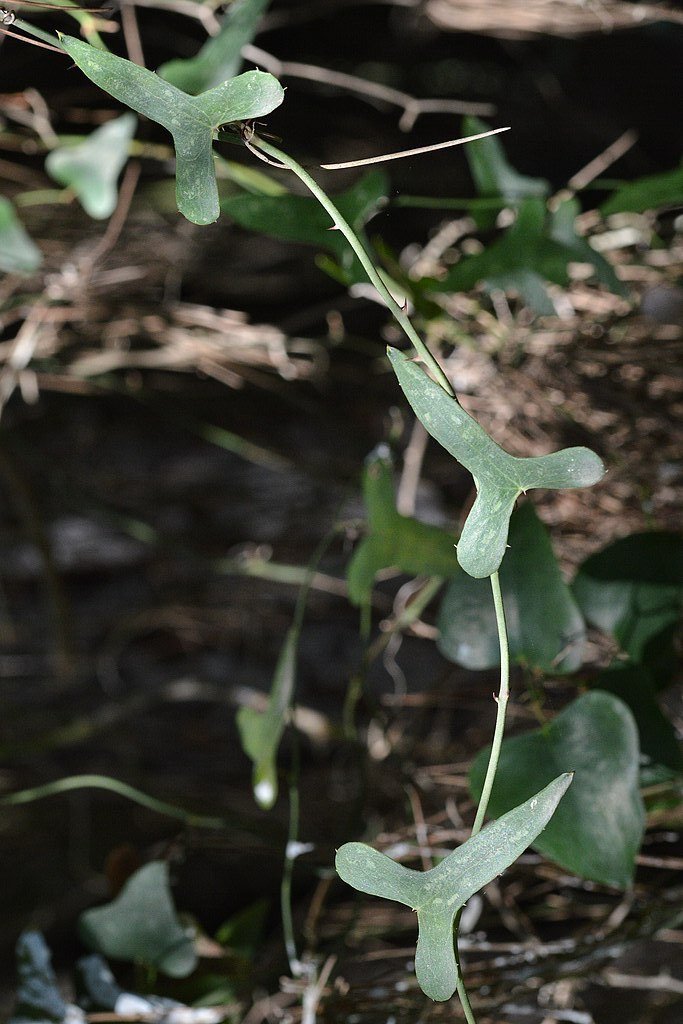
Photo by Ryan Hodnett, CC BY-SA 4.0, via Wikimedia Commons
Parts Used
rhizomes, shoots, tendrils
Traditional Medicinal Applications
The rhizome is traditionally considered diuretic, diaphoretic, alterative, antirheumatic, and tonic. Also used to treat irritated, scaling skin conditions (like psoriasis). Ripe fruits have been traditionally used topically for scabies.
It’s possible Rough Bindweed was also used as an antidote to counter the effects of ingesting poisonous substances in a ritual context, such as the entheogenic concoctions of the Dionysiac Mysteries. According to Dioscorides’ De Materia Medica (4-144), a Rough Bindweed decoction was believed to be “an antidote for deadly poisons” and could be “taken as a drink beforehand (or afterwards).” This would imply to me that people were ingesting poisons intentionally, otherwise, why would they be drinking a decoction “beforehand”?
Culinary Use
Young shoots are cooked and enjoyed much like asparagus.
Safety and Drug Interactions
Rough Bindweed is contraindicated for those with hypertension and diabetes. It closely resembles Black Bryony or Black Bindweed (Dioscorea communis, aka Tamus communis), a poisonous vine in the Dioscoreaceae family, as well as the Cynanchum acutum, a poisonous swallowwort vine in the Apocynaceae family.