Poppy
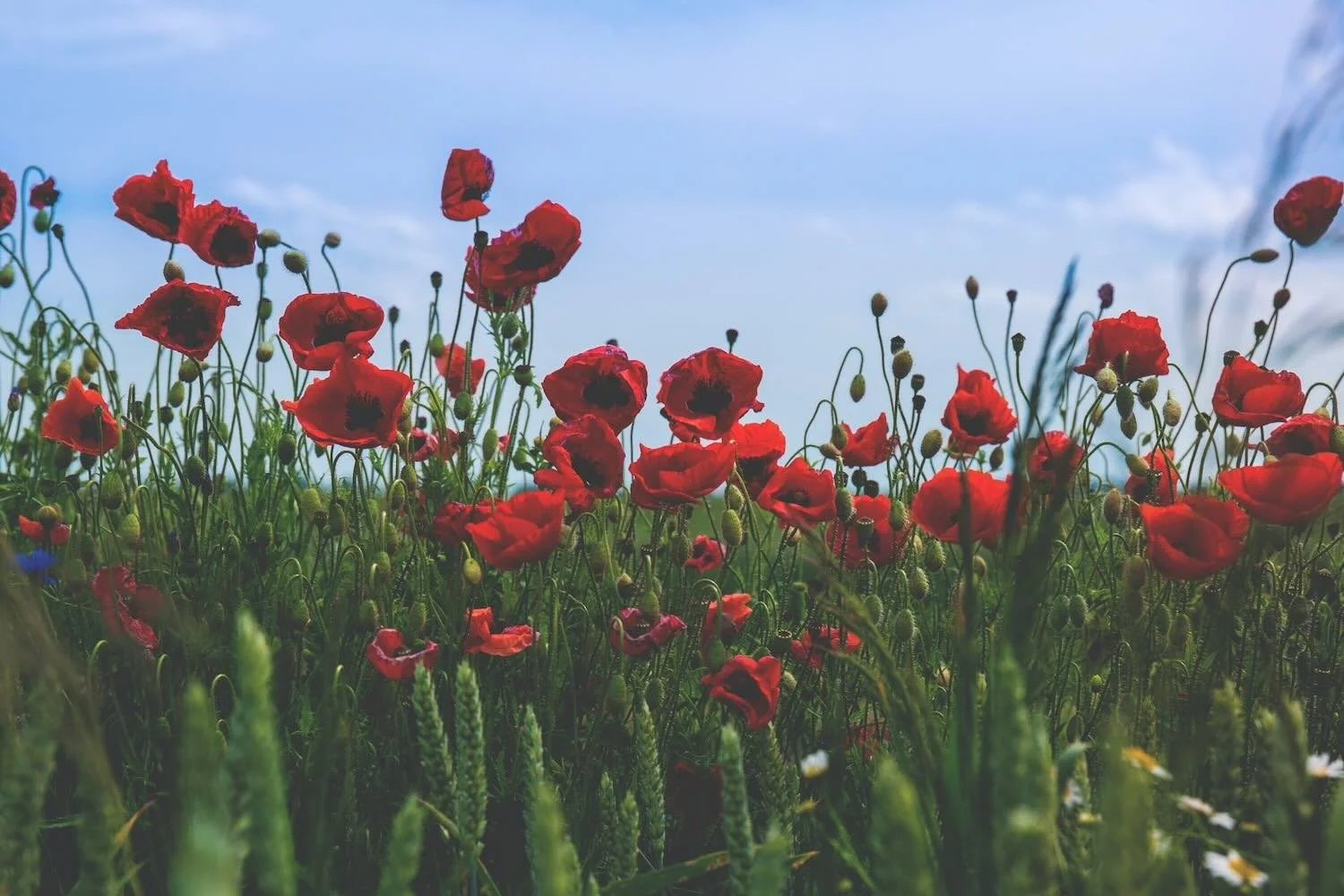
Papaver spp.
Dreaming - Sleep - Oblivion - Euphoria — Fertility - The UnderworlD
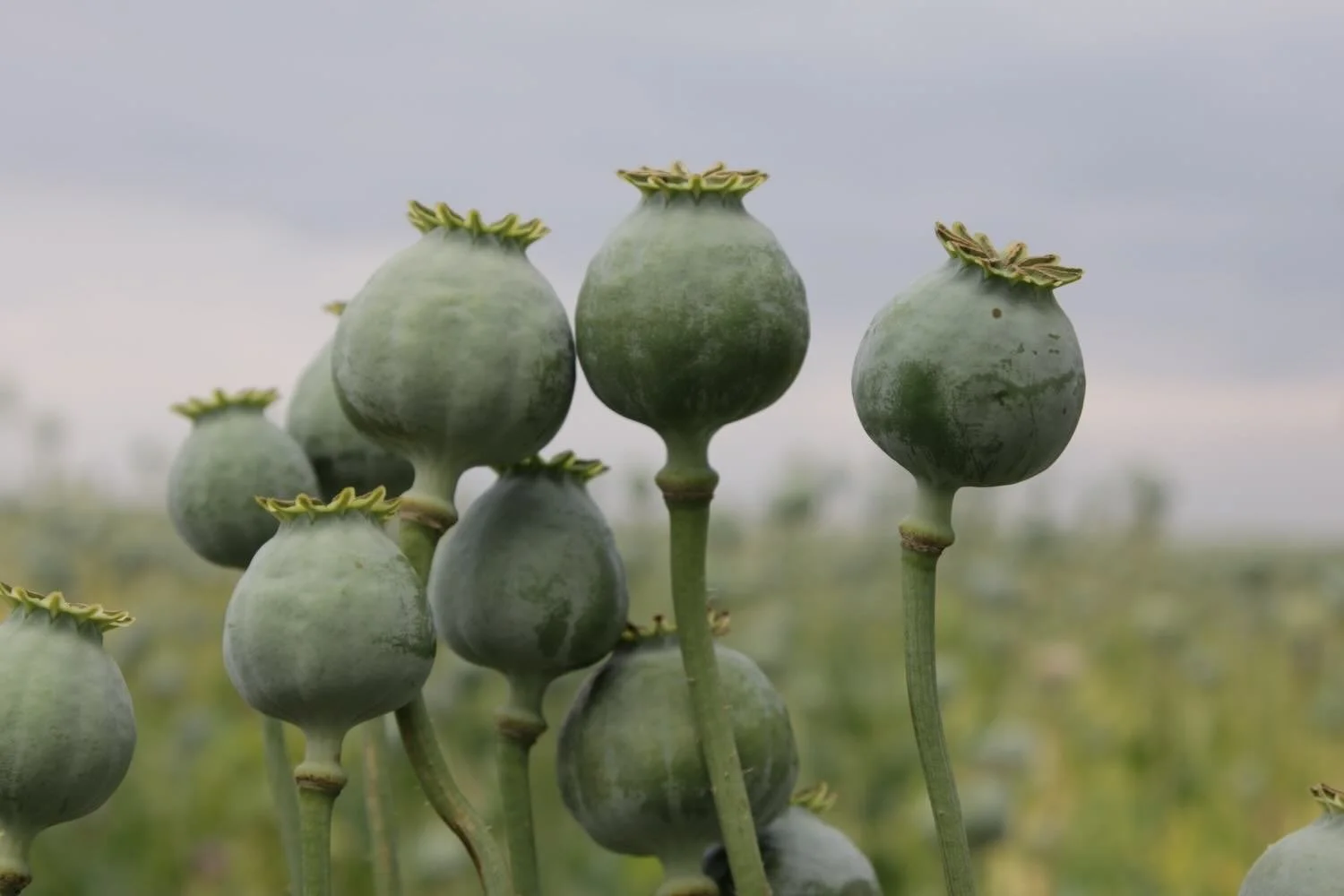
The Poppy is an herbaceous flower that quickly gives way to a distinctive smooth capsule. Several species grow in Greece, including the wild, red Corn Poppy (Papaver rhoeas) and the cultivated Opium Poppy (P. somniferum). Sacred to Nyx, goddess of Night, and Hypnos, god of Sleep, the Poppy was said to grow in the cave of Hypnos where the Underworld River Lethe (Oblivion) flowed. Like the Pomegranate fruit — to which the Poppy capsule bears a striking resemblance — the Poppy capsule contains a multitude of edible seeds and has also come to represent the dual nature of fertility and mortality. Highly controversial and even illegal in some countries, the Opium Poppy in particular has been used since ancient times as a powerful sedative and painkiller, and ingesting Opium (the latex harvested from the P. somniferum capsule) is often accompanied by visions or altered states of consciousness. However, Opium can be highly addictive and an overdose can result in death. For this reason, the Poppy is a chthonic teacher of the importance of cultivating intentional relationships with the forces of Nature. Keep reading below to learn more about the Poppy in ancient Greece.
Index
The Poppy in the Wild & Garden
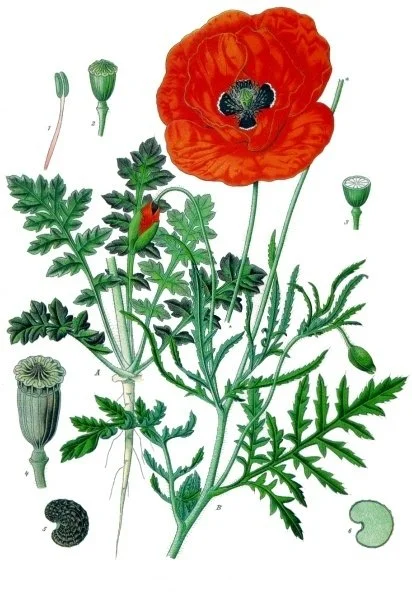
Papaver rhoeas, by Franz Eugen Köhler, Köhler's Medizinal-Pflanzen, via Wikimedia Commons
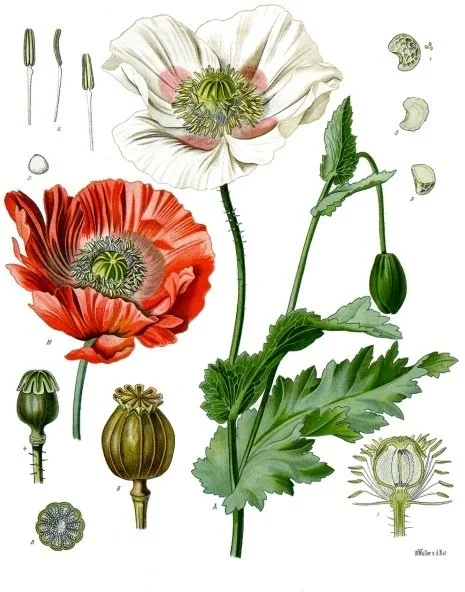
Papaver somniferum, Franz Eugen Köhler, Köhler's Medizinal-Pflanzen, via Wikimedia Commons
LATIN BINOMIAL
Papaver spp. This article will focus mainly on the wild species P. rhoeas (Corn Poppy) — which is widely distributed across Greece — as well as the cultivated P. somniferum (Opium Poppy or Breadseed Poppy) — which is well-known for its medicinal and culinary use
PLANT FAMILY
Papaveraceae
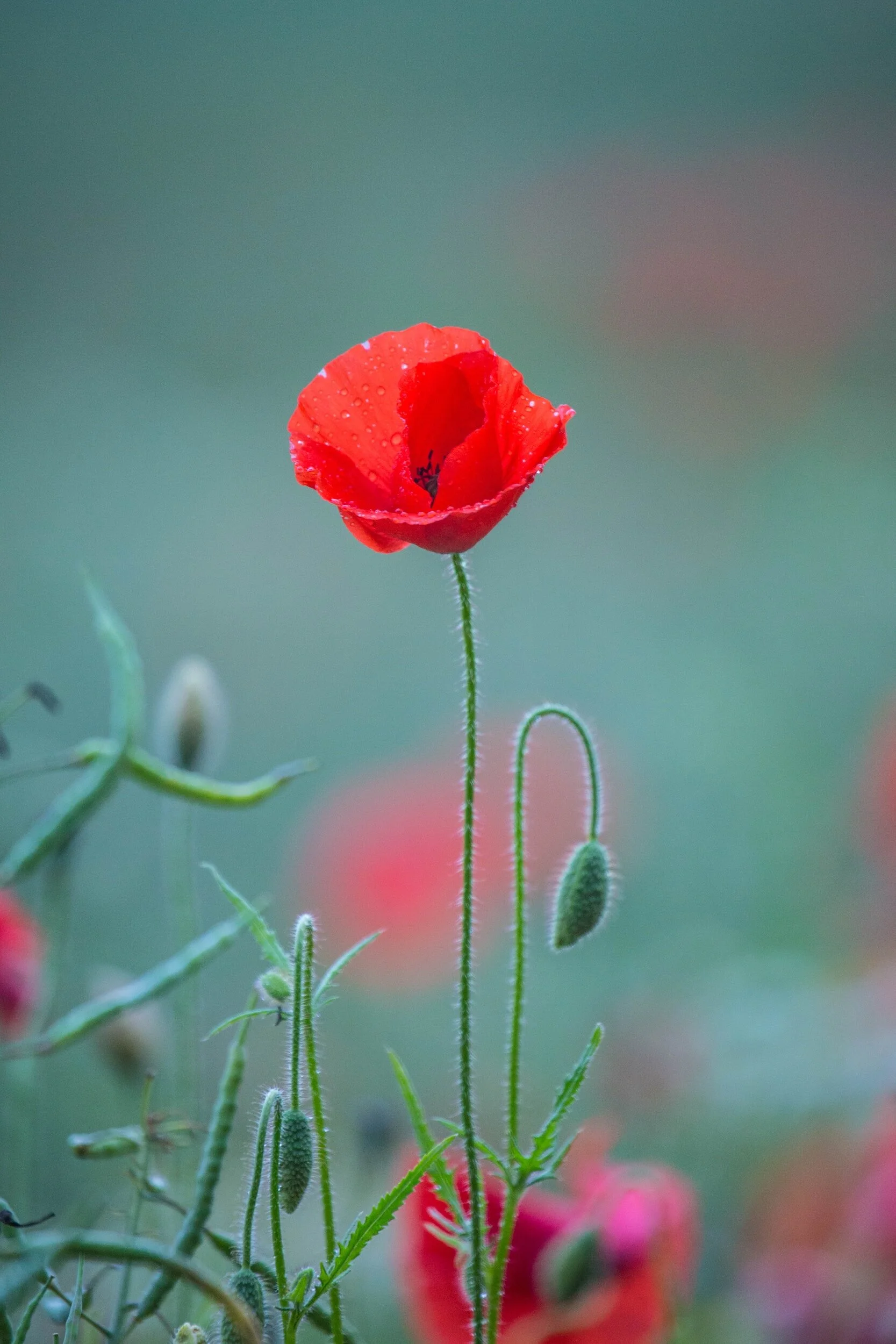
Papaver rhoeas
COMMON ENGLISH NAMES
Corn Poppy or Common Poppy (P. rhoeas); Opium Poppy or Breadseed Poppy (P. somniferum)
COMMON GREEK NAMES
Παπαρούνα, Μήκων, Μήκων η ροιάς (P. rhoeas), Μήκων η υπνοφόρος (P. somniferum)
CHARACTERISTICS
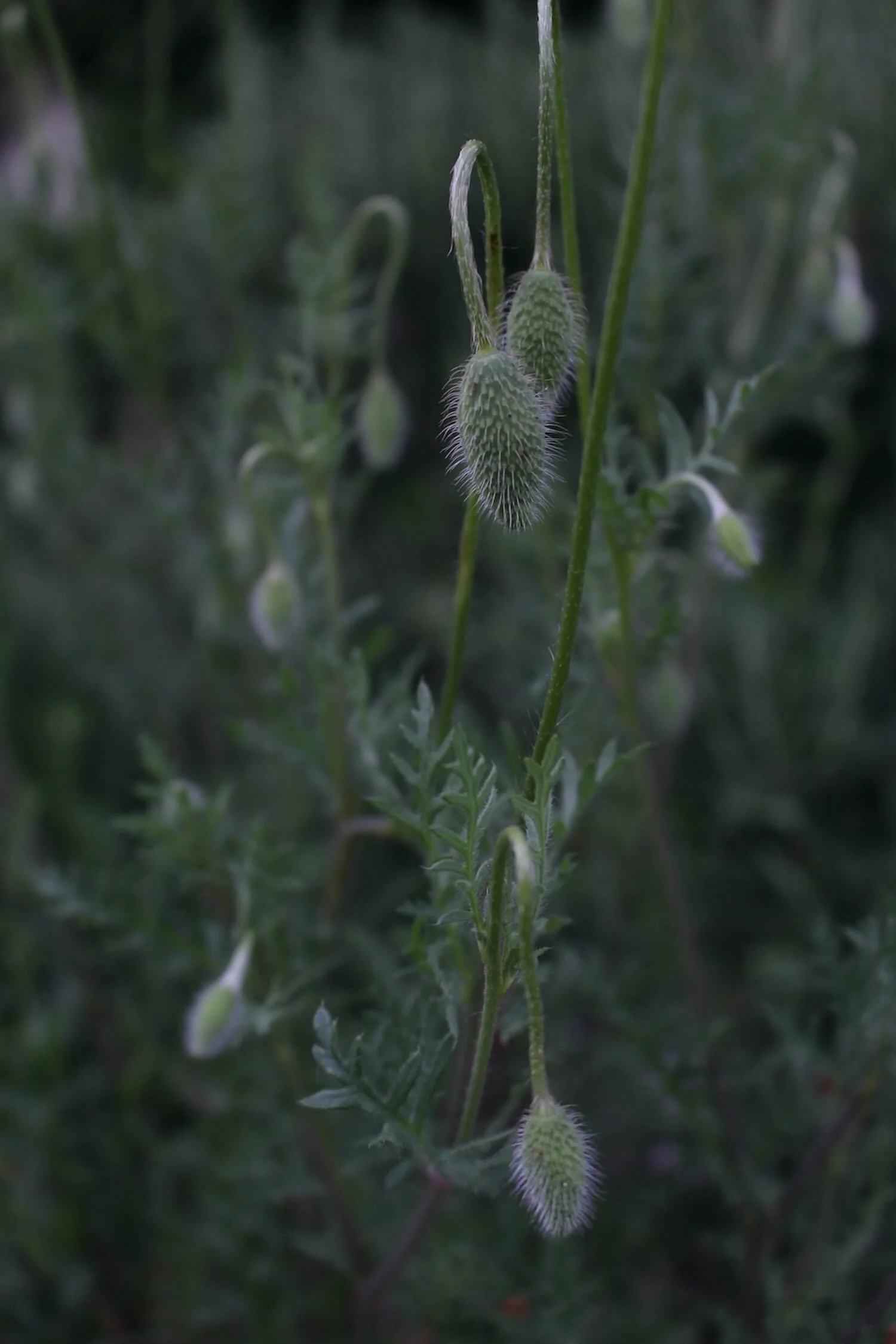
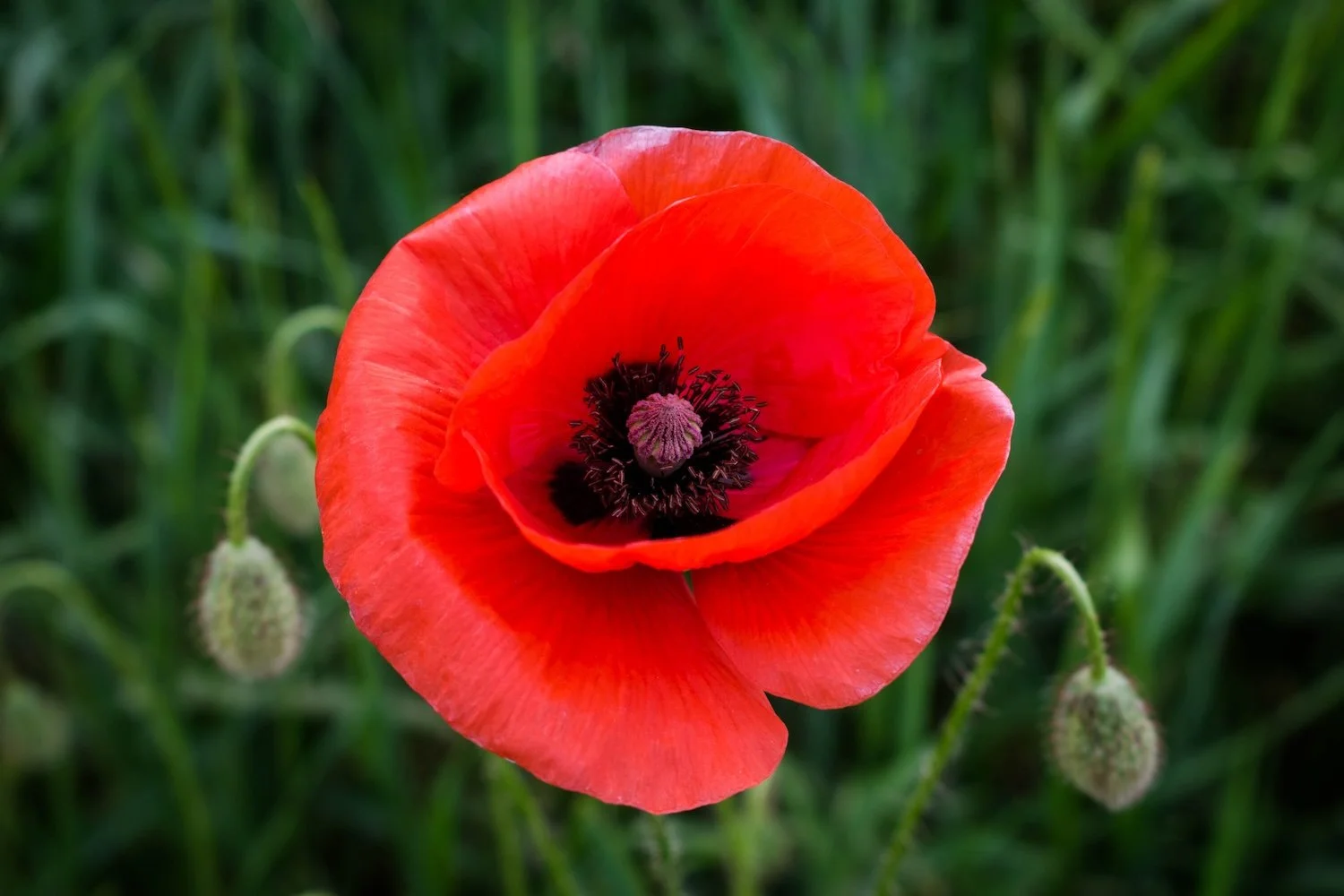
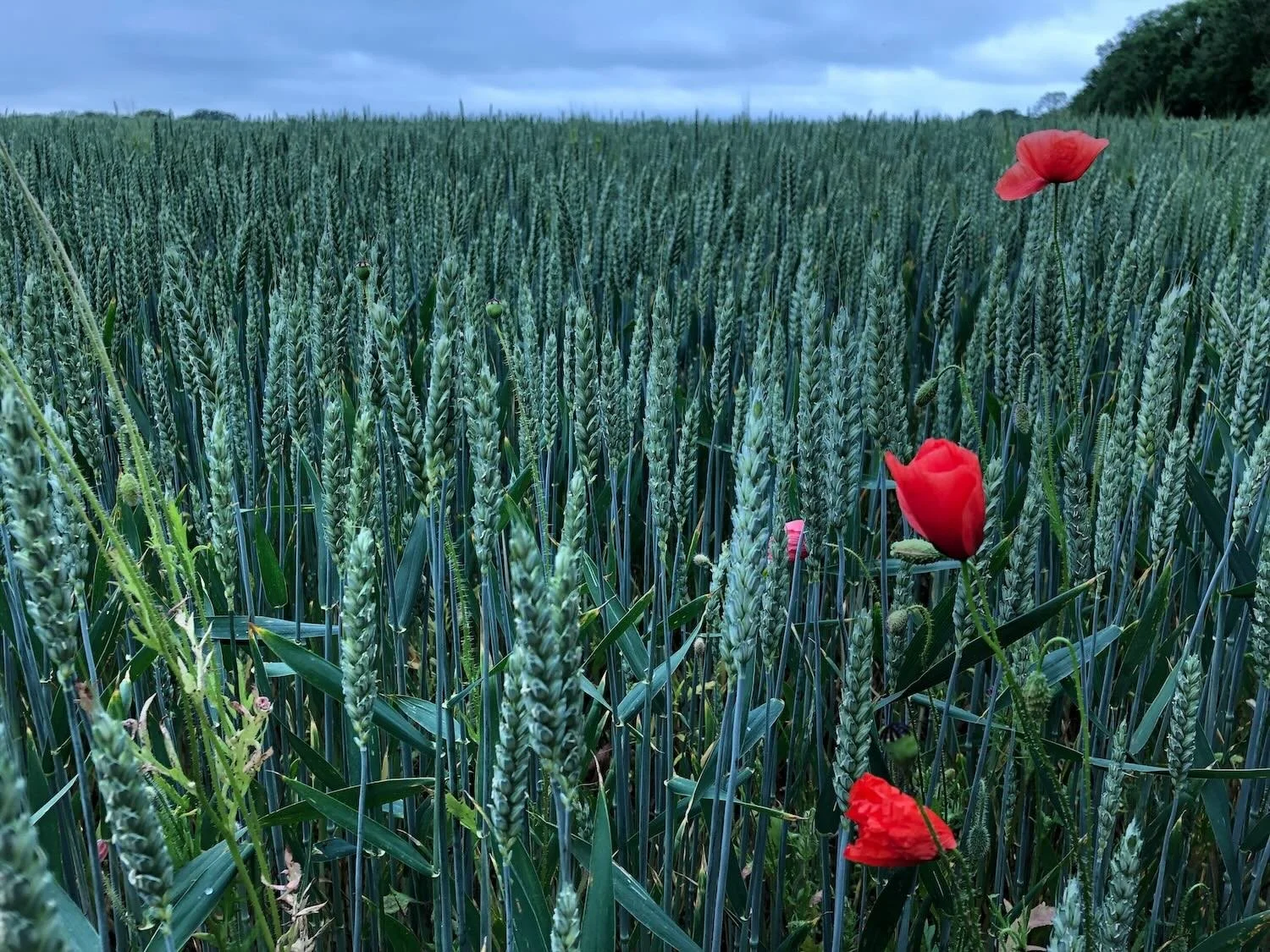
P. rhoeas: herbaceous, drought-tolerant annual wildflower, widely distributed across Greece, with a hairy stalk and a short-lived crimson flower
P. somniferum: grey-green, herbaceous annual cultivated by humans
NATIVE HABITAT
Depends on the species; P. somniferum is thought to be cultivated from a wild species native to the Mediterranean
PREFERRED CLIMATE & CONDITIONS
P. rhoeas prefers full sun with well-drained soil; grows in disturbed and nutrient-poor soils; often found in border areas and in cultivated fields; hardy to US Zones 1-10
P. somniferum prefers full sun; hardy to US Zones 3-8
TYPICAL HEIGHT AND SPREAD
P. rhoeas: growing up to 50 cm (19 in)
P. somniferum: growing up to 1.5 m (5 ft)
BLOOM COLOR AND CHARACTER

P. rhoeas: crimson red flower with four petals; blooms in late spring to early summer; short-lived flower gives way to ovoid capsule containing a multitude of black seeds
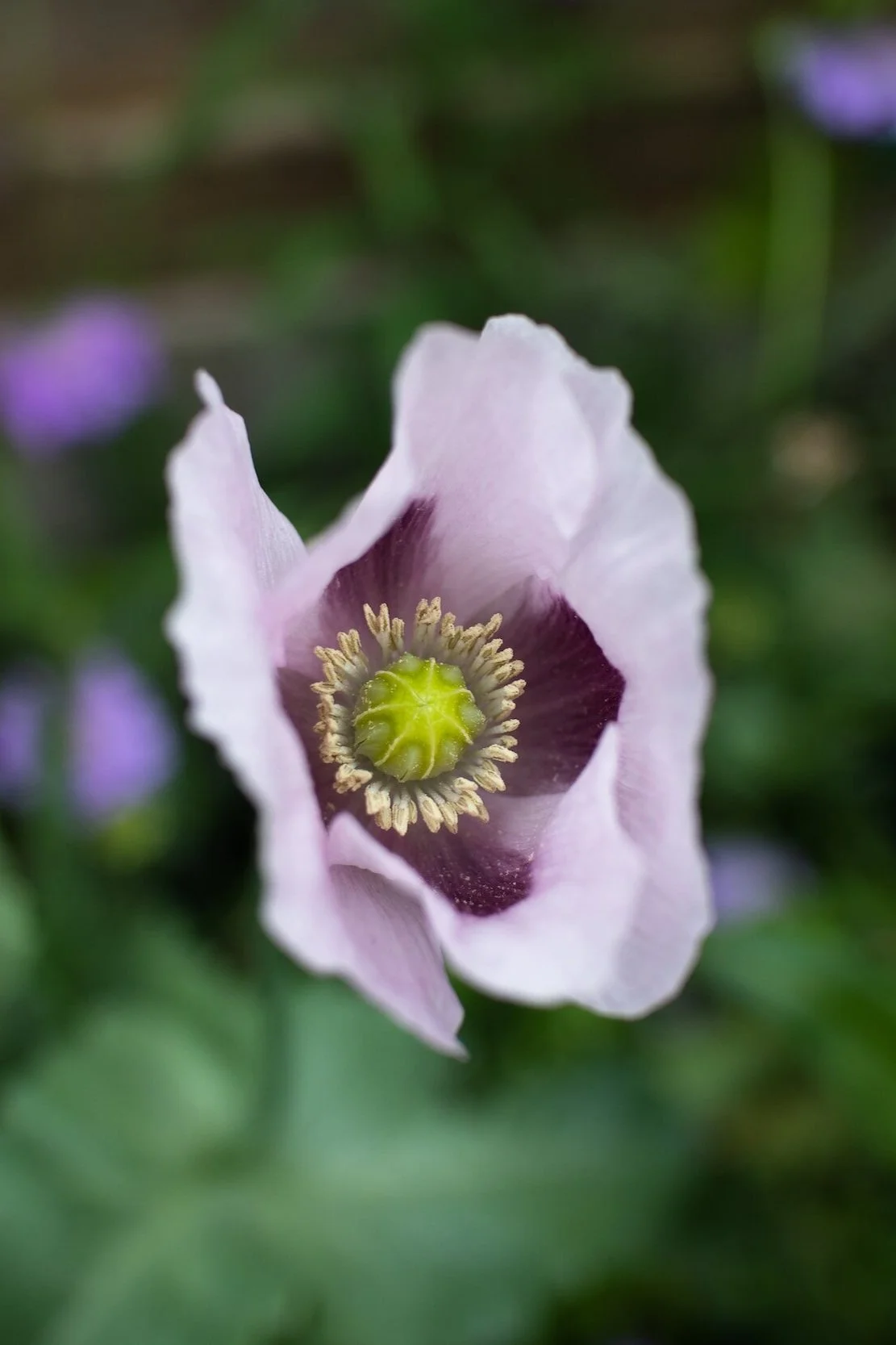
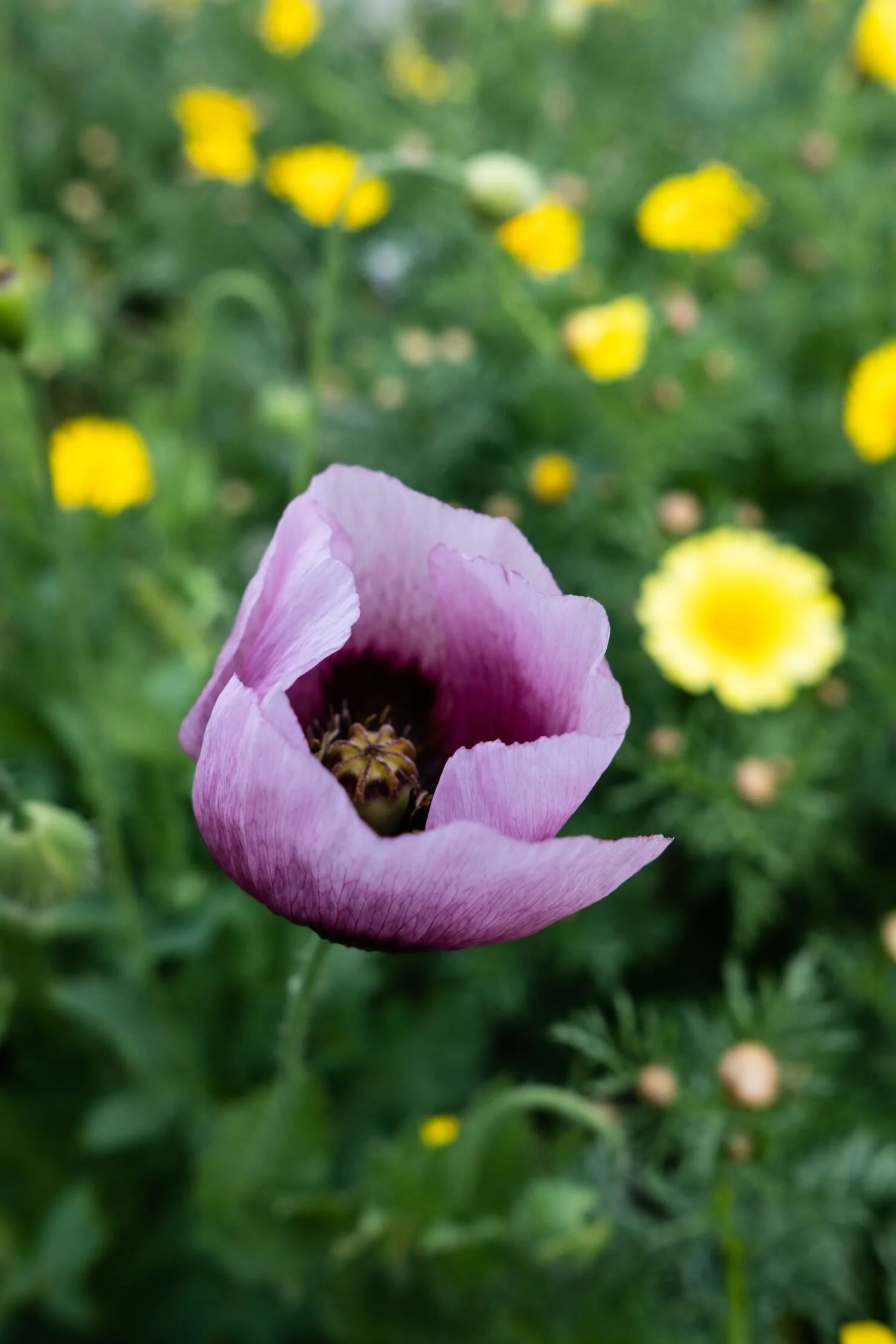
P. somniferum: mauve, red, or white flower with four petals; gives way to smooth, hairless, round capsule; the unripened, fresh capsule is “milked” to harvest opium, while the dried capsule contains hundreds of edible seeds
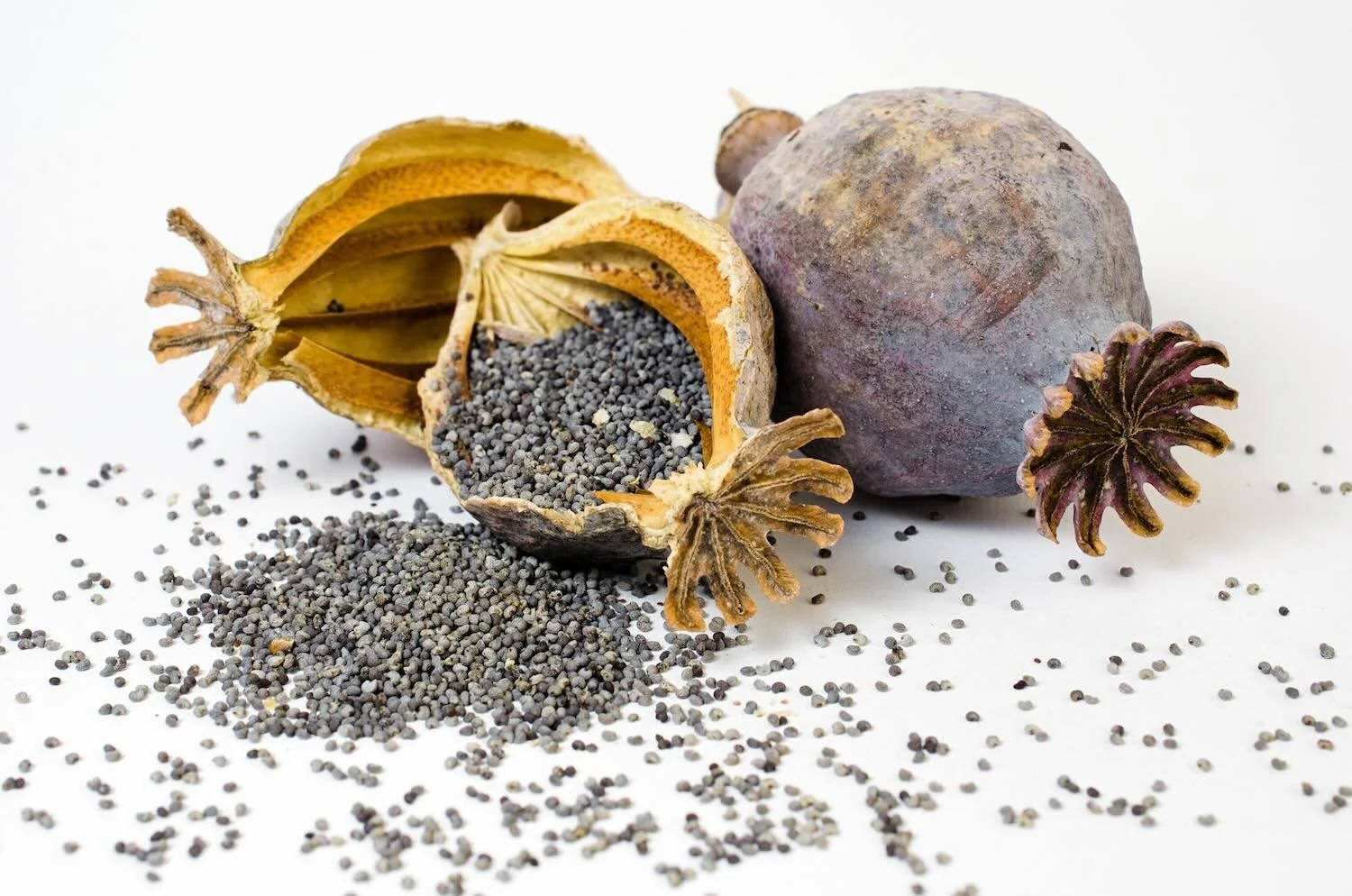
The Poppy capsule has a flat, star-shaped cap. When the capsule is dry, the cap lifts and small holes open along the upper rim to disperse the tiny seeds from within.
Both Poppy species have been bred into a multitude of varieties that boast an array of colors, number of petals, and capsule sizes.
Special Considerations
Although the Poppy has been used for thousands of years in ceremonial, culinary, and medicinal contexts, its growth, harvest, and trade is controversial. Poppy is a sedative and analgesic (painkiller) and ingesting Opium (the latex harvested from the P. somniferum Poppy capsule) induces a euphoric state often accompanied by visions or altered states of consciousness, eases pain, and encourages relaxation and sleep. However, Opium can be highly addictive and overdose can result in death. In some countries, there are legal restrictions on the growth of P. somniferum (regardless of its intended use), on the harvest of Opium, and/or on the possession of Poppy seeds (even for culinary purposes!). For a fascinating exploration on the (often unclear) illegality of P. somniferum in the USA, I suggest reading Michael Pollan’s book, This is Your Mind on Plants.


The Poppy in Greek Mythology

Hypnos, God of Sleep, holds a bowl (perhaps full of Lethe water or Opium?) over a sleeping Ariadne; 400–390 B.C., Red Figure Jar, Museum of Fine Arts Boston
The Poppy in Minoan and Mycenaen Art

Minoan “Poppy Goddess” with 3 poppy capsules in a crown; Heraklion Archaeological Museum
There is evidence of ritual and medicinal use of the Poppy as early as the Bronze Age in Greece, including visual representations of the Poppy capsule on pottery, seals, pins, and more.
One of the most famous items featuring the Poppy is the terracotta “Poppy Goddess” found in Gazi, Crete in the late 1930s. Dated to the Late Minoan period (1400-1100 BCE), the statue features a woman with arms lifted in a ceremonial posture and wearing a crown with three moveable hairpins shaped like Poppy capsules. The sculpture was found with charcoal, as well as items that, according to David Ilan, “might have been used for opium inhalation” (p179).
Other examples of Ancient Greek art suggesting the medicinal or ceremonial use of Poppy include small jugs discovered in Crete — shaped like upside-down, incised Poppy capsules and decorated with a serpent — and a Mycenaen gold signet ring (1450 BCE) that depicts a woman beneath a tree holding 3 poppies.
“Meantime, her clam brow wreathed with poppies, Night drew on, and in her train brought darkling dreams.”
Nyx (Night), Hypnos (Sleep), & the Underworld River Lethe (Oblivion)
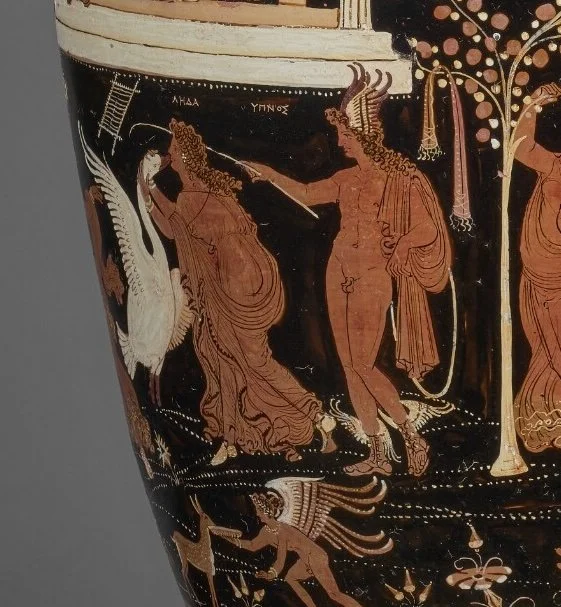
The god of Sleep, Hypnos, bears a wand over Leda; 330 B.C., Red-Figure Loutrophoros, The J. Paul Getty Museum
The primordial goddess of Night, Nyx, is often depicted in a chariot, moving across the sky in her daily journey. According to Ovid, Nyx wore a crown of Poppies.
One of Nyx’s sons was Hypnos, the god of Sleep. In Ovid’s Metamorphoses, the home of Hypnos is an Underworld cave that the Sun never touches. Outside the entrance to his cave grow Poppies and other herbs, but inside it is a silent place, without animals or trees, not a “sound or whisper” from a living thing. And there, beneath a rock, the River Lethe emerges, the Underworld river of Oblivion, “which trickle with soft murmuring amid the pebbles and invite soft sleep”. The god of Sleep himself lies upon an ebony couch with jet-black cushions and around him recline innumerable Dreams (11.708ff).
In pottery and sculpture, Hypnos is often depicted as a beardless youth with wings, either hovering over or perched on a sleeping person, dangling a wand over someone’s head, and/or possibly dripping something onto the sleeper (perhaps Poppy-infused wine or Opium?) from a bowl in his hands. He’s also often depicted with his brother Thanatos, the god of Death, carrying corpses from the battlefield.
“Helen, daughter of Zeus...straightway she cast into the wine of which they were drinking a drug to quiet all pain and strife, and bring forgetfulness of every ill. Whoso should drink this down, when it is mingled in the bowl, would not in the course of that day let a tear fall down over his cheeks, no, not though his mother and father should lie there dead, or though before his face men should slay with the sword his brother or dear son, and his own eyes beheld it. Such cunning drugs had the daughter of Zeus, drugs of healing...”
Helen & Nepenthe, the Drug of Oblivion
It is possible that, in the Odyssey, the drug Helen adds to the wine she serves Odysseus’s friends — nepenthe (νηπενθές) — was either solely made from or included Poppy, the herb of oblivion and euphoria.
Medea & the Sleepless Serpent
In the Argonautica, Medea aids Jason in his quest to steal the golden fleece by casting an herbal charm on the sleepless serpent who guards it. While the specific herbs she uses are not listed, it is possible that Opium was an ingredient in the sleeping draft that she sprinkles with a Juniper branch on the monster to put him to sleep.
“And as he writhed, the maiden [Medea] came before his eyes, with sweet voice calling to her aid sleep, highest of gods, to charm the monster; and she cried to the queen of the underworld, the night-wanderer, to be propitious to her enterprise. And Aeson’s son followed in fear, but the serpent, already charmed by her song, was relaxing the long ridge of his giant spine, and lengthening out his myriad coils, like a dark wave, dumb and noiseless, rolling over a sluggish sea; but still he raised aloft his grisly head, eager to enclose them both in his murderous jaws. But she with a newly cut spray of juniper, dipping and drawing untempered charms from her mystic brew, sprinkled his eyes, while she chanted her song; and all around the potent scent of the charm cast sleep; and on the very spot he let his jaw sink down; and far behind through the wood with its many trees were those countless coils stretched out”
Demeter & the Poppy
Frequently found growing in agricultural fields alongside the life-giving grain, Poppy is sacred to Demeter, the goddess of agriculture. She is often depicted holding a sheaf of grain (Wheat or Barley) and a Poppy capsule.
Poppyseed cakes were often offered to the goddess and, according to Hellmut Baumann, “when Persephone was taken off by Hades, Demeter soothed her grief with the narcotic juice of the poppy” (pg 69).
Aphrodite & the Poppy
In a passage on Aphrodite, Ovid says when she was “first escorted to her eager spouse, she drank that draught” made from pounding poppy with milk and fresh honey (Fasti 4.133ff). And according to Pausanias, the statue of Aphrodite in Sicyon held “in one hand a poppy and in the other an apple” (Description of Greece 2.10.5).

A Temple Wild PodcastAncient Greek Dream Incubation
Meet the Greek gods of Night, Sleep, and Dreams — Nyx, Hypnos, the Oneiroi, Mnemosyne, and more; explore dream incubation ritual as a means for healing and divination as occurred at the temple of Asclepius in Epidaurus and at the Oracle of Trophonios; learn how dreams were connected to the Underworld; and meet one of my favorite flowers of the Greek landscape — the Poppy.
The Poppy in Ceremony
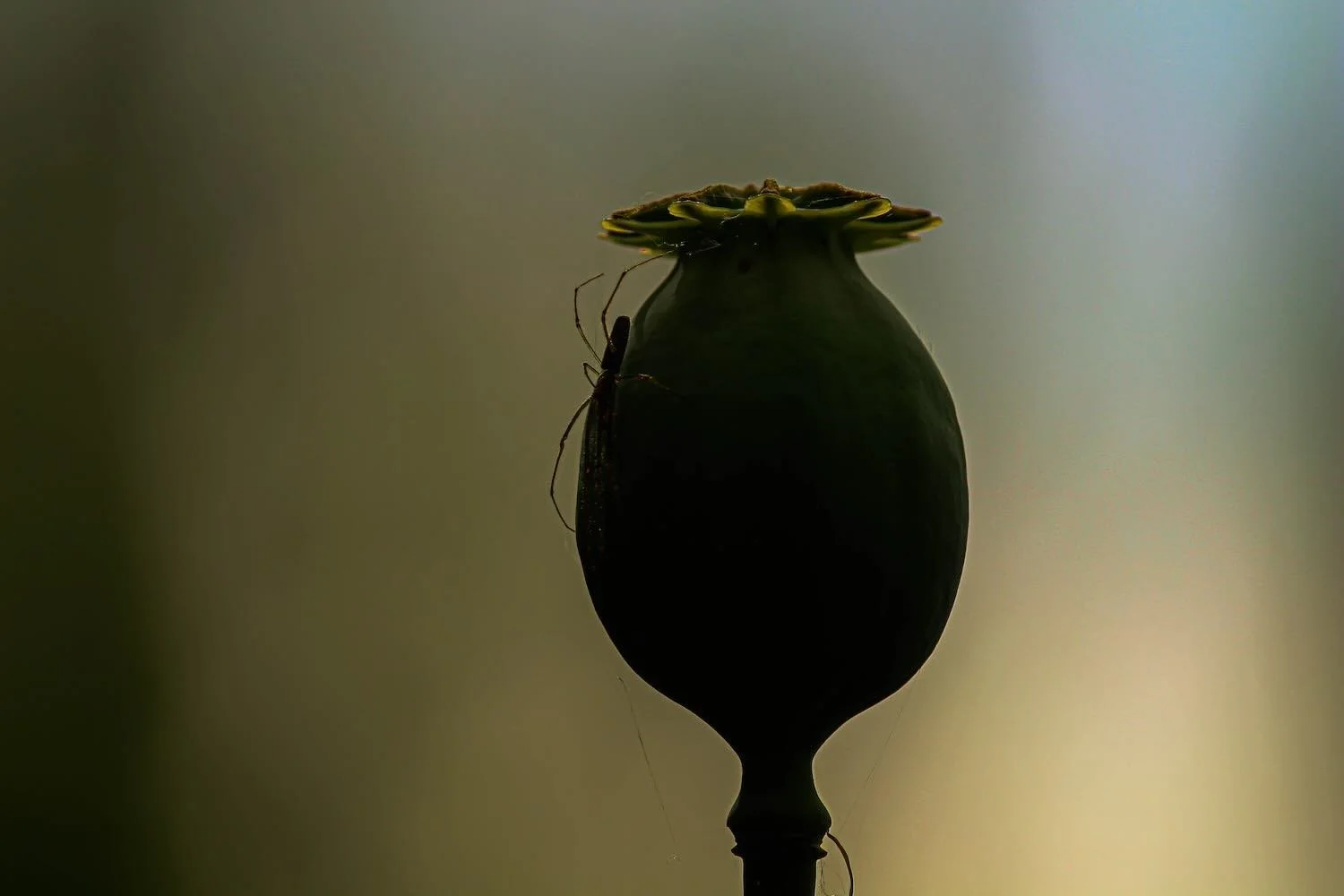
Dreaming - Sleep - Oblivion - Euphoria - Fertility - The UnderworlD
Sacred to the gods of Sleep and Night, the Poppy is an ally for traveling through the Dream realms, particularly where Underworld journeys are concerned. Like the Pomegranate fruit (to which the Poppy capsule bears a striking resemblance), the Poppy capsule contains a multitude of edible seeds and has also come to represent the dual nature of fertility and mortality, especially in its relationship with Demeter and Aphrodite.
This flower has so much to teach us about being in right relationship with Nature. A flower of euphoria and bliss, the Poppy erases the awareness of pain and induces relaxation and sleep (a kind of death without dying). For this reason, its gift to the healing (and surgical) arts has been enormous. However, inappropriate dosage, particularly of the Opium Poppy, can easily lead one to addiction — or even death. Opium has also been historically used by governments and pharmaceutical companies to effectively control whole populations through addiction and economic manipulation. Some countries make it illegal to grow the flower domestically while still profiting from the importation of “medicinal” Opium grown on foreign soil. Putting aside the ridiculous hubris of a government making a plant illegal, anti-Poppy propaganda and the hysteria that ensues (including the destruction of small-scale Poppy farms) does very little to prevent or heal the devastation that Opium and opioid addiction causes individuals and their communities.
I do not say this to scare you away from Poppy, but to instead encourage you to approach the flower with a deep awareness of its gifts and its burdens. Like the forces of fertility and death, Poppy is a flower to be approached with respect and intentionality. Though much of the Poppy controversy is centered around the Opium Poppy (P. somniferum and its varieties), the wild Corn Poppy is an ancestor that holds the same lessons as its more showy cousin.
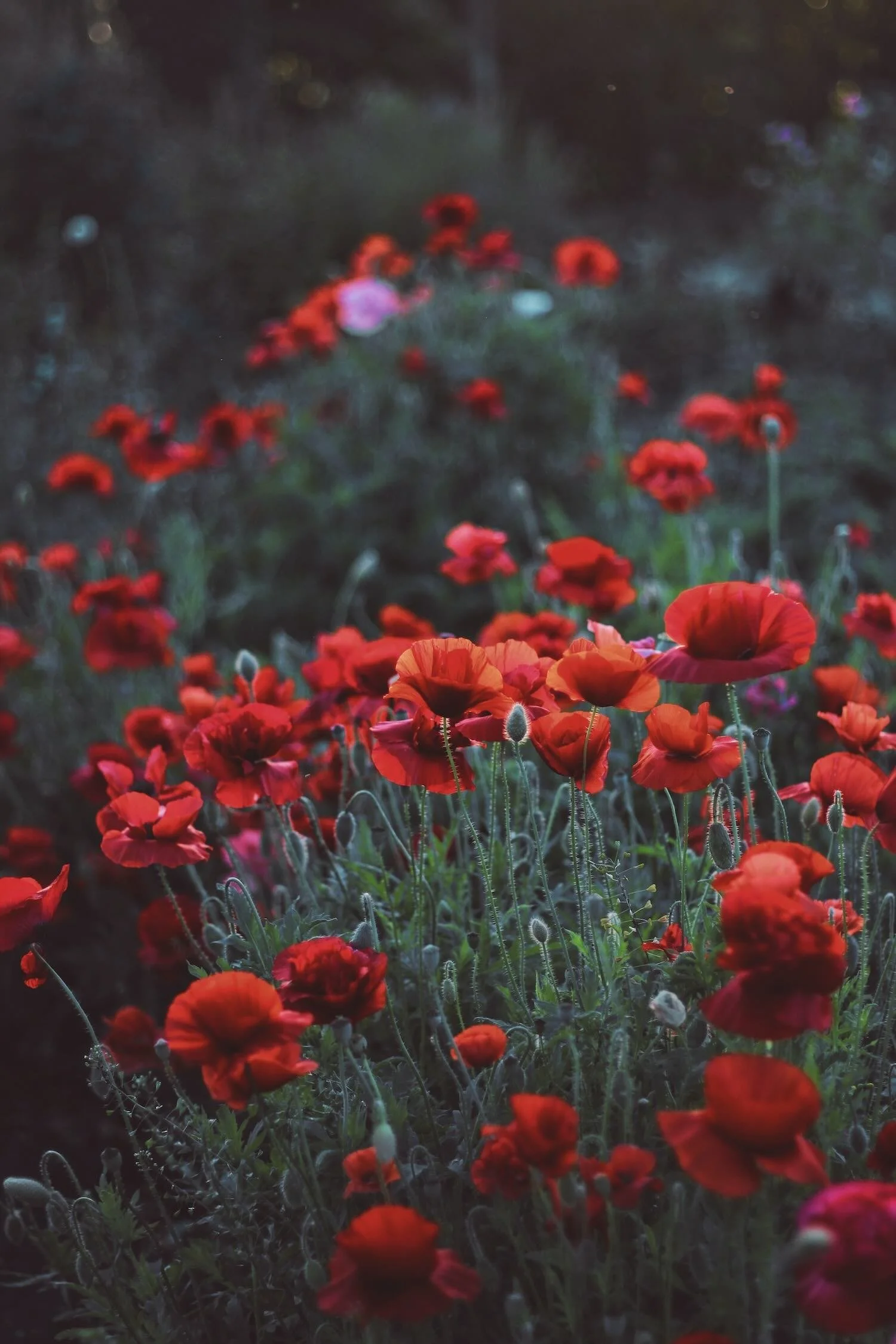
With its blood-red burst in springtime, the Corn Poppy can be invited into ceremony as a guide for the Dream realms, whether for healing or oracular purposes, especially as a chthonic guide.
Parts Used
leaves and stems, capsule, latex, seed
SPECIAL CONSIDERATIONS
As mentioned, Opium, the latex harvested from the P. somniferum Poppy capsule, can be highly addictive. In some countries, there are legal restrictions on the growth of P. somniferum, on the harvest of Opium, and/or on the possession of Poppy seeds (even for culinary purposes). For a fascinating history on the ambiguous illegality of P. somniferum in the USA, I suggest reading Michael Pollan’s book, This is Your Mind on Plants.
Elemental Correspondence
Seasonal Celebrations
CEREMONY
Other than morphine during surgery, I have not used pure Opium latex in a ceremonial (or medicinal) context. However, I have baked Poppyseed cakes, muffins, and breads and experimented with crafting a gentle Dream tea from the seeds (it creates a very oily brew that can be a little nausea-inducing if drunk too quickly).
But my preferred way of communing with Poppy (as I’ve written about in the journal regarding other entheogens) is through meditation and non-ingested communion. Drawing or carving Poppy into ritual tools or on paper, calling upon the flower through poetry or invocation, sitting beside the plant in meditation or ritual, or simply holding Poppy in my mind’s eye as a means to connect before Sleep to encourage Dreaming.
Because one of Poppy’s strengths is inducing night-time oblivion, you may wish to also include Frankincense in your ceremonies to encourage remembrance upon waking as Frankincense is sacred to the goddess of memory, Mnemosyne, and to the sun god, Helios.
Devotion
Whether before your altar or the living flower, read the following:
Poppy, Initiator of Dreams,
Show me your path to Euphoria
That I may know Death without Dying
and pass through the cave of Dreaming
to emerge Whole and Hale and Wise.
Back to top
The Poppy in the Kitchen & Apothecary
Parts Used
leaves and stems, capsule, latex, seed
Culinary Flavor and Uses
In Greece, the Corn Poppy (P. rhoeas) is often sold as a wild green at farmer’s markets in early spring. Eaten steamed or boiled, I think Corn Poppy greens are delicious with lemon! I personally prefer not to eat them raw, as the little hairs can be irritating, so I prepare them in the same way as Nettles: in savory pies (χορτόπιτα), soups, steamed mixed greens, and more.
The seeds of most Poppy species are edible. P. somniferum is commonly called Breadseed Poppy as it’s used in baking cakes, sweets, and breads. In ancient Greece, Poppyseed cakes were offered to Demeter.
The oil from the seeds is also edible.
Decoration
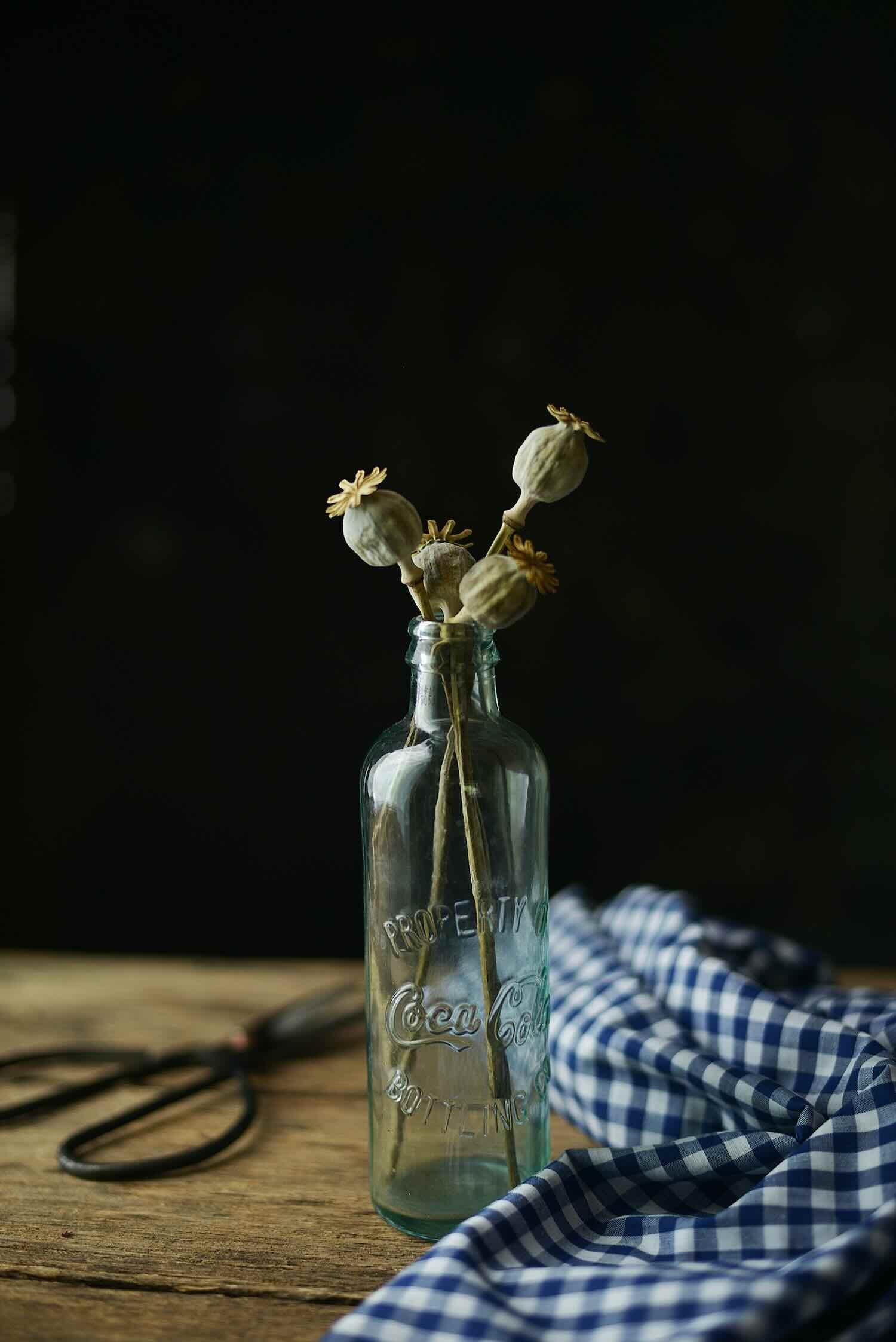
Dried Poppy capsules on their stalk are sometimes available in flower bouquets or as decorative centerpieces (although the legality of this in the USA is ambiguous).
Traditional Medicinal Applications
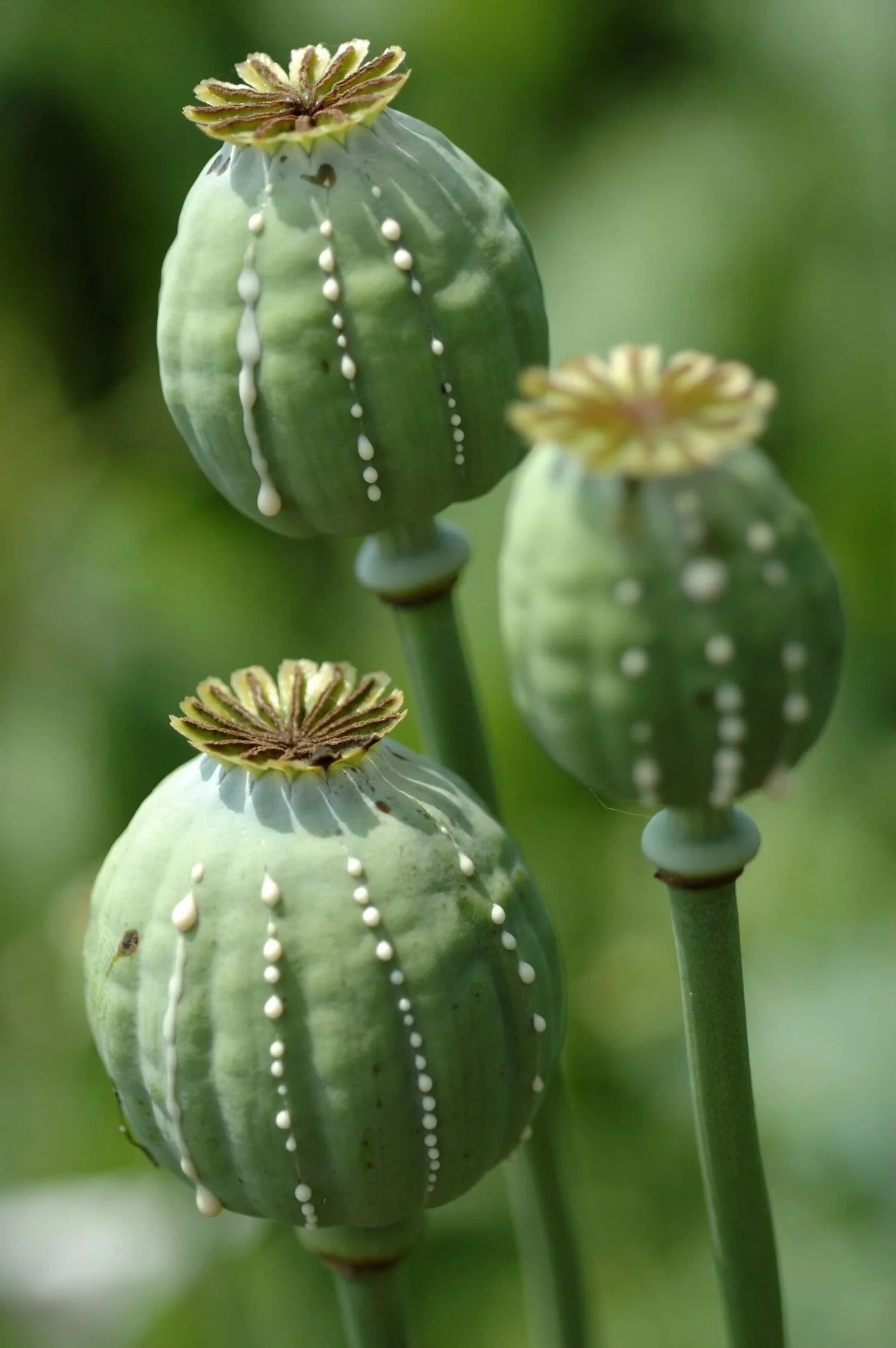
Poppy leaves, whole mature capsules, and seeds have been used medicinally for thousands of years in various medicinal preparations, including decoctions, teas, poultices, infused wines, and more. Fresh, unripened Poppy capsules have also been traditionally scored with a blade and left to bleed or cry; the exuded latex (called Opium or Poppy Tears) is allowed to dry, then harvested and used in similar preparations, as well as inhaled or smoked. Poppy Straw (which is the whole, unscored, dried, mature Poppy capsules and sometimes also the stem and leaves) is also used.
According to Dioscorides, a wine decoction of Poppy capsules was used for sleep, a decoction of their seed used to “loosen the bowels”, and their leaves used for inflammation. He also describes a seed decoction as a topical treatment to induce sleep and suggests a Poppy suppository for the same purpose (De Materia Medica 4.64-5.)
According to Pliny the Elder, “wild poppy boiled in honey is wonderfully serviceable for making throat-cures, and also cultivated poppy is a powerful soporific [i.e. sleep inducer]” (Natural History 18.61.6 ff). But he warns, “if too large a dose be swallowed the sleep even ends in death” (20.76.1 ff).
Today, Poppy is considered a sedative and analgesic (painkiller), with different species and varieties containing varying amounts of active constituents, with P. rhoeas producing much milder effects than P. somniferum. (As with most herbal medicine, much depends on the growing conditions, plant variety, plant parts, preparation, and dosage.)
Ingesting Opium, the latex harvested from the P. somniferum Poppy capsule, induces a euphoric state (often accompanied by visions or altered states of consciousness), eases pain, and encourages relaxation and sleep. However, Opium can be highly addictive and an overdose can indeed result in death; for medicinal purposes, proper dosage is essential. (This video is a short overview on modern herbal applications of Opium.)
Opium contains alkaloids, such as morphine and codeine, that are used in modern medicine as sedatives and analgesics (painkillers). Opium is used to synthesize pharmaceutical drugs, including oxycodone and fentanyl, as well as heroin. The tincture of Opium is called laudanum.
Special Considerations
Although the Poppy has been used for thousands of years in ceremonial, religious, and medicinal contexts, its growth, harvest, and trade is controversial. Opium, the latex harvested from the P. somniferum Poppy capsule, can be highly addictive and overdose can result in death. In some countries, there are legal restrictions on the growth of P. somniferum (regardless of its intended use), on the harvest of Opium, and/or on the possession of Poppy seeds (even for culinary purposes!).
For a fascinating exploration on the (often unclear) illegality of P. somniferum in the USA, I suggest reading Michael Pollan’s book, This is Your Mind on Plants.
Back to top
Related Articles


Further Reading and Selected Sources
Askitopoulou, Helen, Ramoutsaki, Ioanna, and Konsolaki, Eleni. “Archaeological evidence on the use of opium in the Minoan world.” International Congress Series. Vol 1242 (2002): pp 23-29.
Ilan, David. “The Ring-Kernoi and Psychotropic Substances.” The Routledge Companion to Ecstatic Experience in the Ancient World. (2021): pp 173-186.
Inglis, Lucy. Milk of Paradise: A History of Opium.
Pollan, Michael. This is Your Mind on Plants.
Saunders, Nicholas J. The Poppy: A Cultural History from Ancient Egypt to Flanders Fields to Afghanistan.
See my Library for further reading.