Crocus
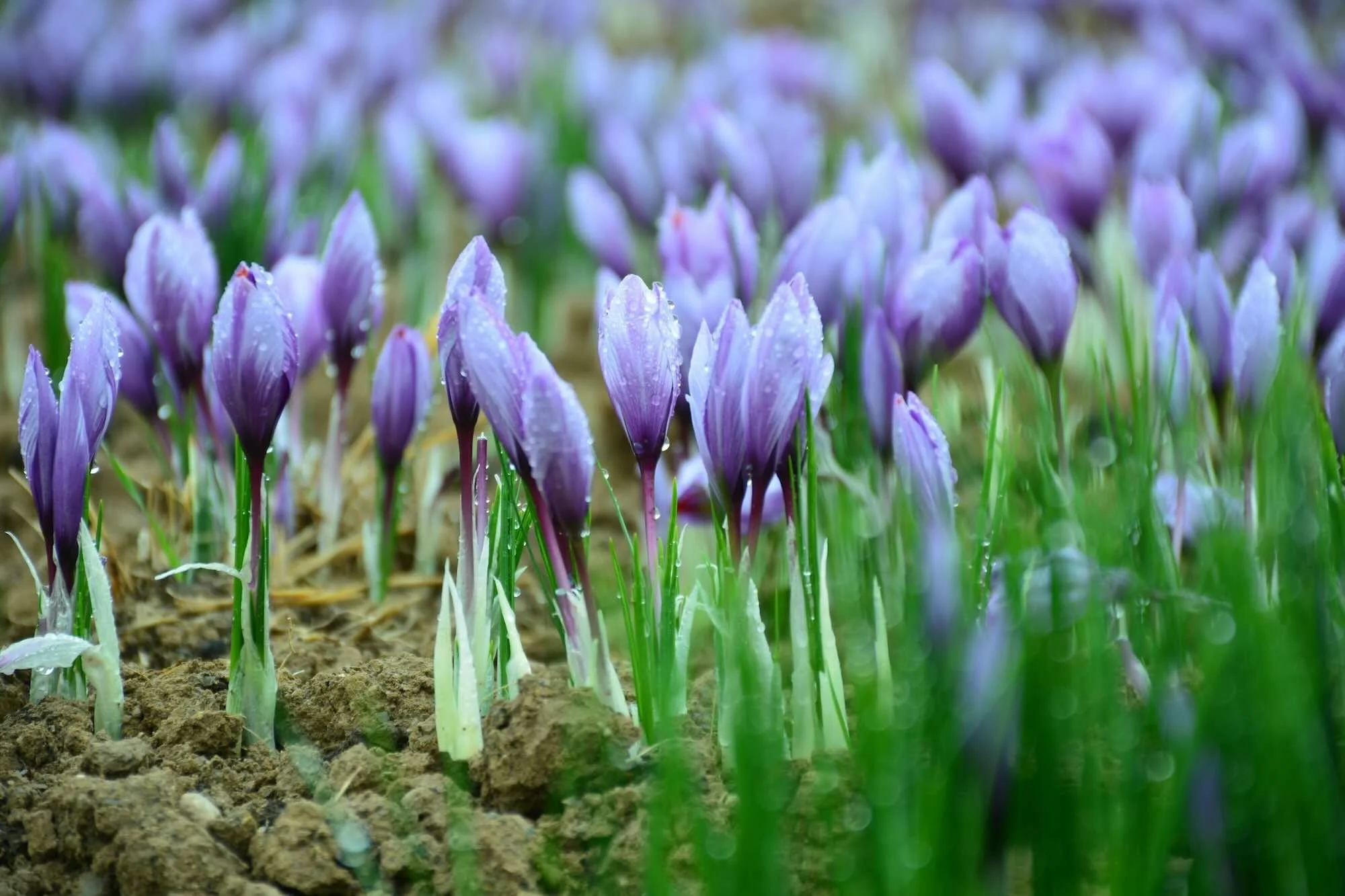
Crocus spp.
Dawning Desire — Aphrodisiac — Coupling
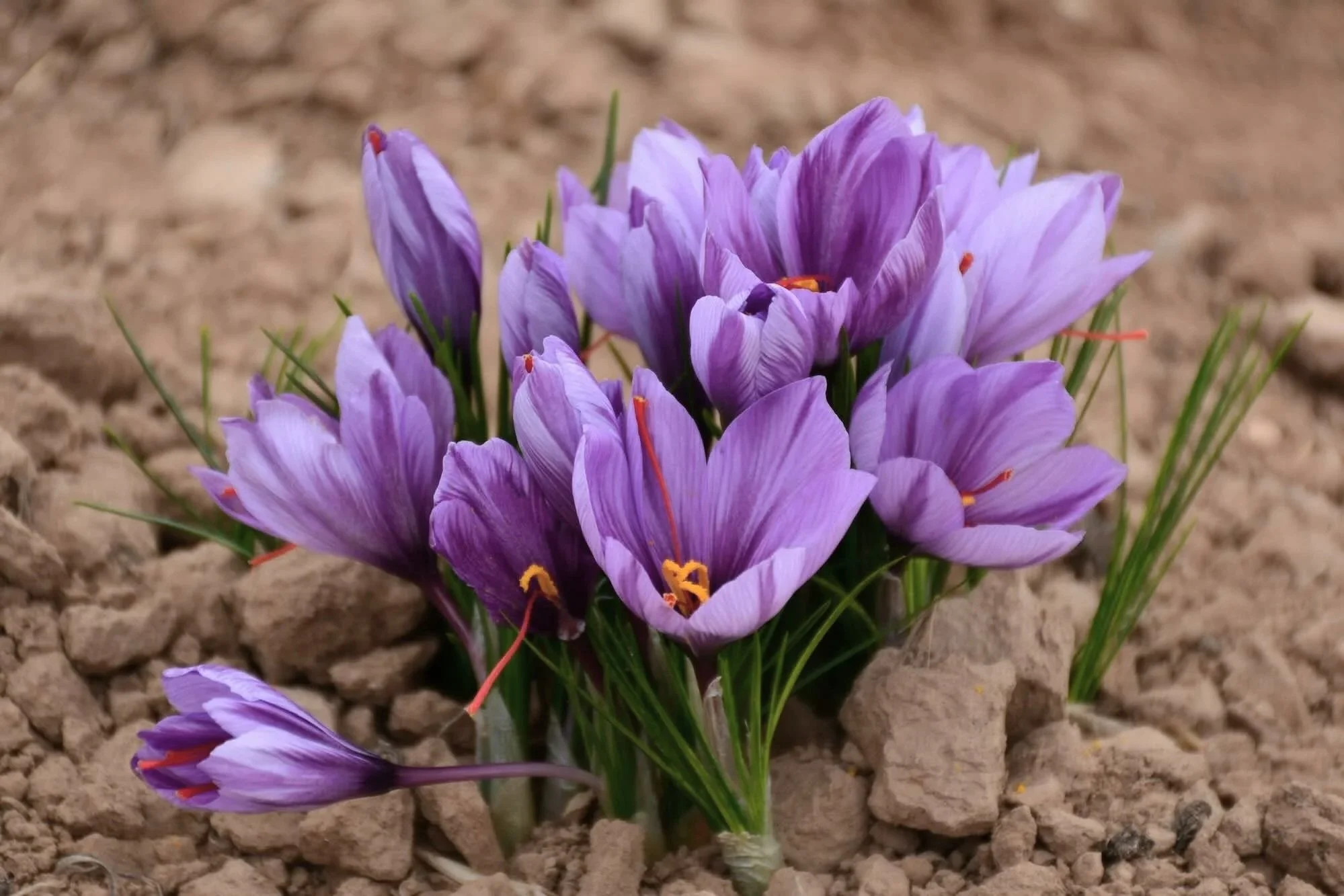
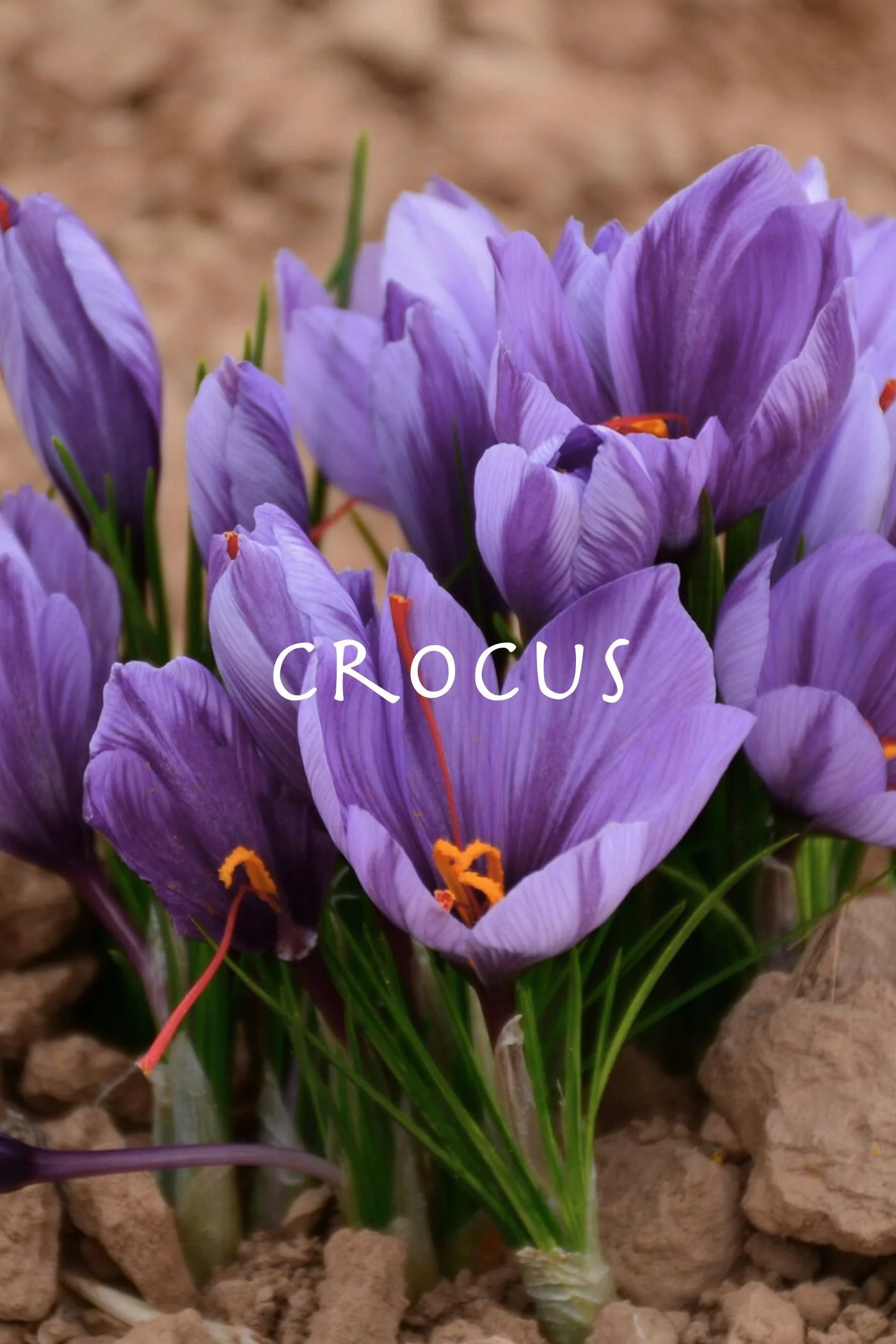
The Crocus is a perennial, low-growing flower which blooms in either Spring or Autumn. Dozens of species exist, but it is the cultivated Saffron Crocus that was of deep cultural significance to the ancient Greeks. Several myths of love and coupling mention the flower, and its spice was included in Greek religious life, female reproductive health, cosmetics, and perfumery. Today, Saffron is used as a nervous system and cardiovascular tonic—lifting the mood, strengthening blood flow (particularly to the pelvis), and improving sexual function. The bright-yellow pigment produced by the blood-red Saffron is a reminder of fertility and the warming dawn of desire. Keep reading below to learn more about the Crocus in ancient Greek myth and culture, and how to invite the Crocus into your own ceremonies and traditions.
Index
The Crocus in the Wild & Garden
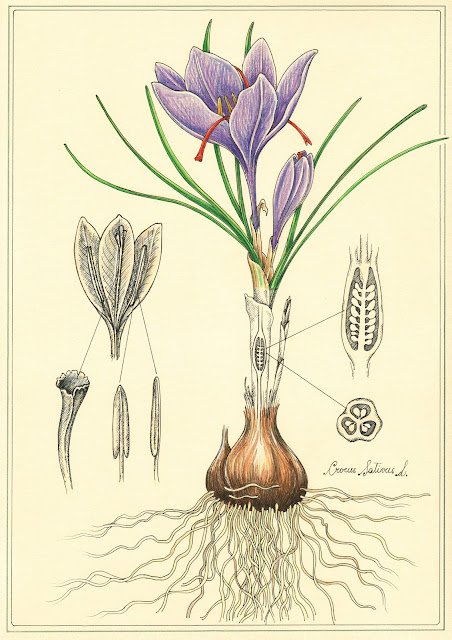
Raffaella Di Vaio, CC BY-SA 3.0, via Wikimedia Commons
LATIN BINOMIAL
Crocus spp. Dozens of species exist, some native to Greece or found in the wild (e.g. C. cartwrightianus, C. boryi, C. laevigatus) and some found only in cultivation (e.g. C. sativus)
PLANT FAMILY
Iridaceae
COMMON ENGLISH NAMES
Crocus, Saffron
COMMON GREEK NAMES
Κρόκος
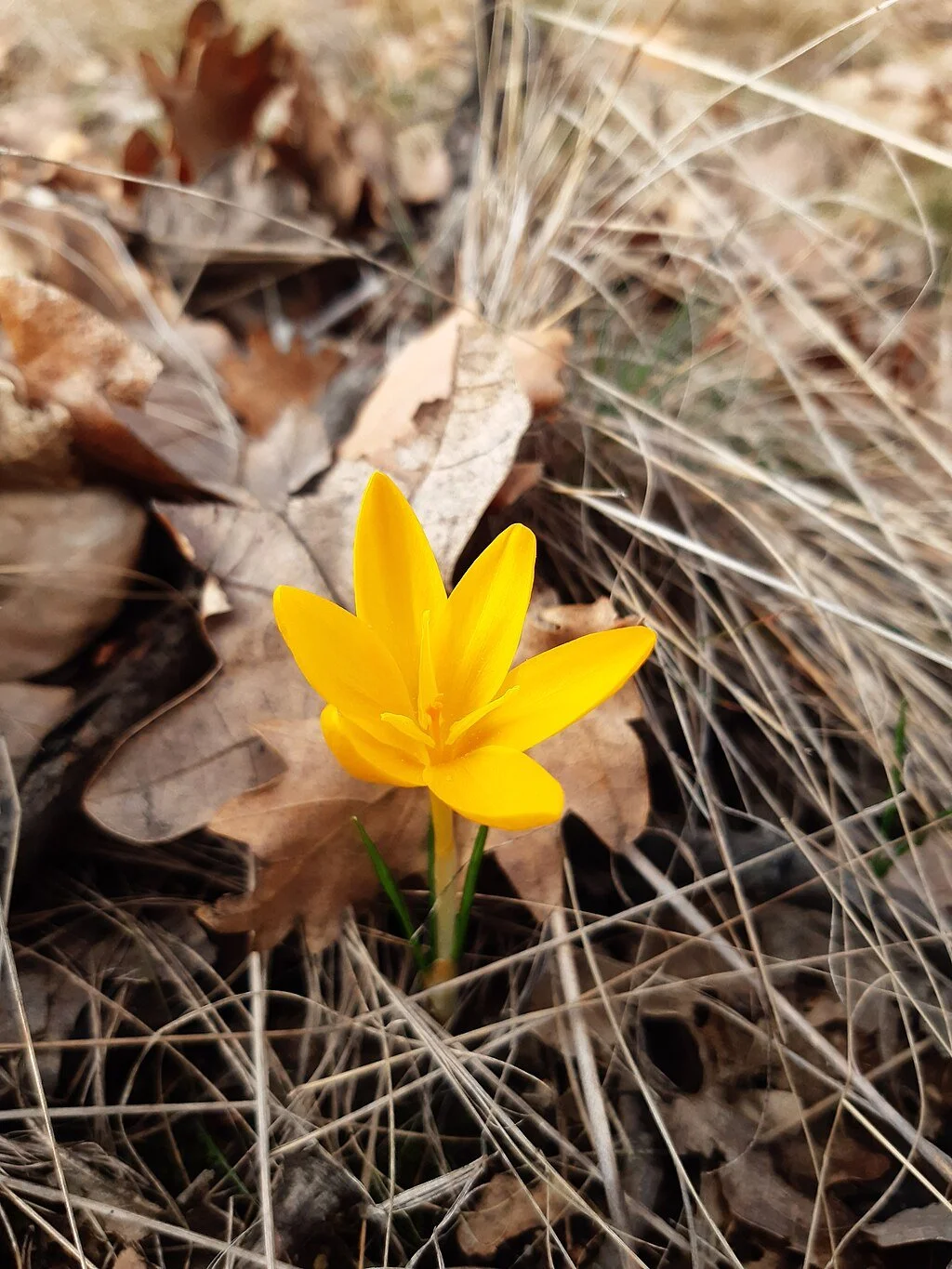
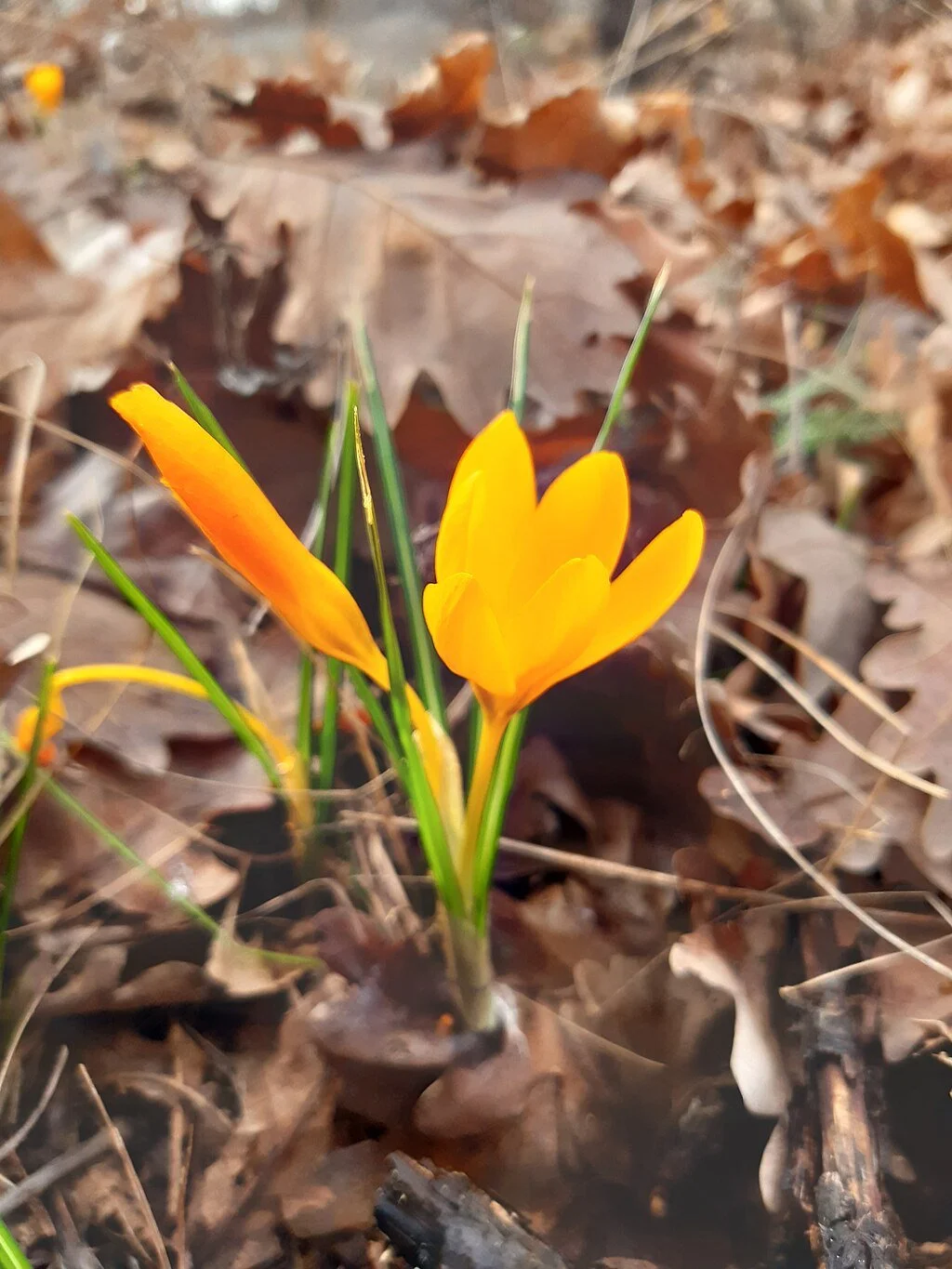
C. flavus, photo by Sdjurovic, CC BY-SA 4.0, via Wikimedia Commons
CHARACTERISTICS
Perennial, low-growing corm of the Iris family; blooms in autumn or spring, depending on the species
NATIVE HABITAT
Mediterranean, Middle East, Asia
PREFERRED CLIMATE & CONDITIONS
Altitude and climate preferences can vary, depending on the species and its preferred blooming cycle (autumn or spring); for example, autumn-blooming Saffron Crocus (C. sativus) prefers mild winters and dry, hot summers
TYPICAL HEIGHT AND SPREAD
7.5–15 centimeters (3-6 inches) tall
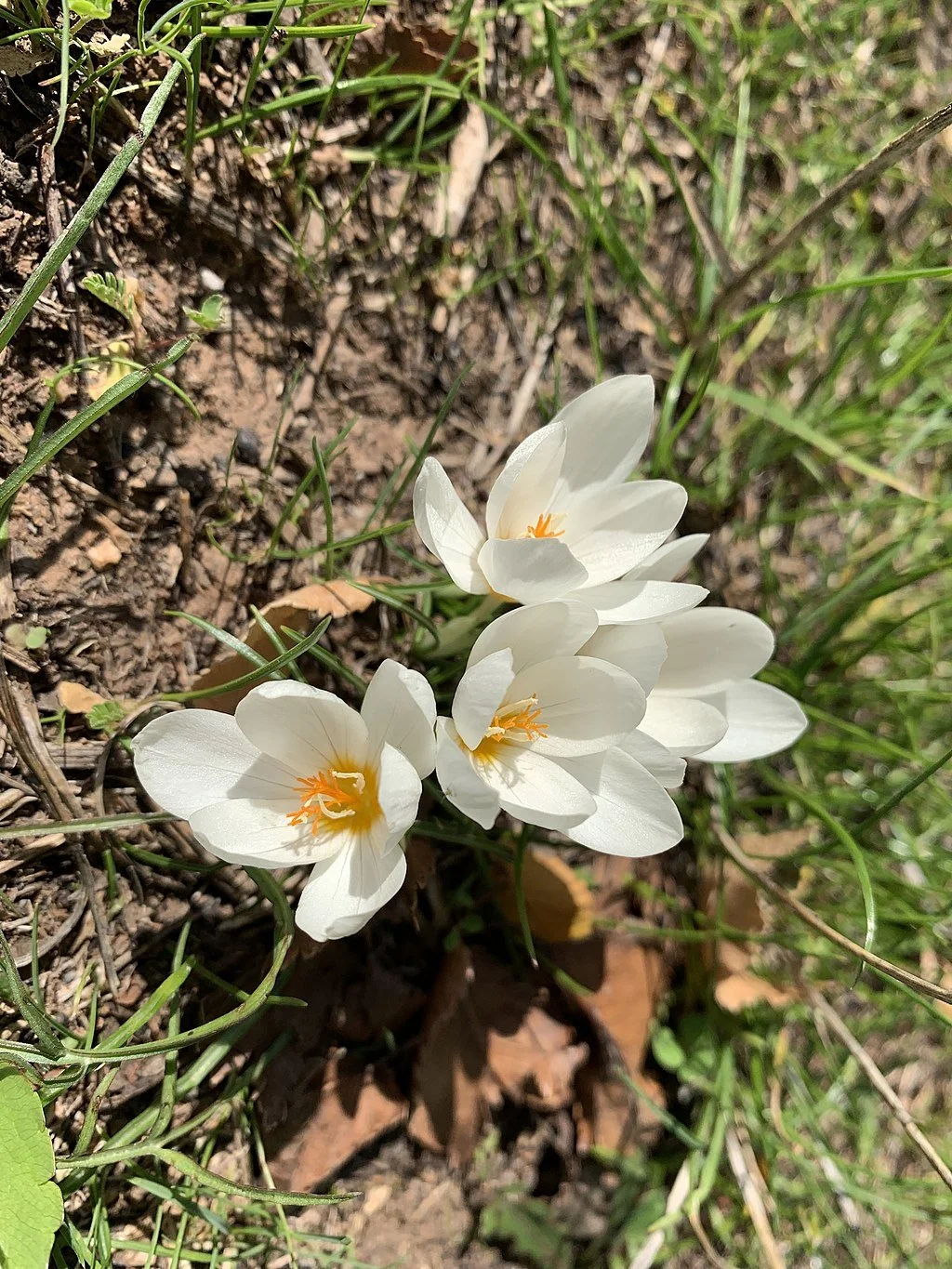
C. boryi, Photo by pavlaki1968, CC BY 4.0 via Wikimedia Commons
LEAF and Bloom CHARACTER
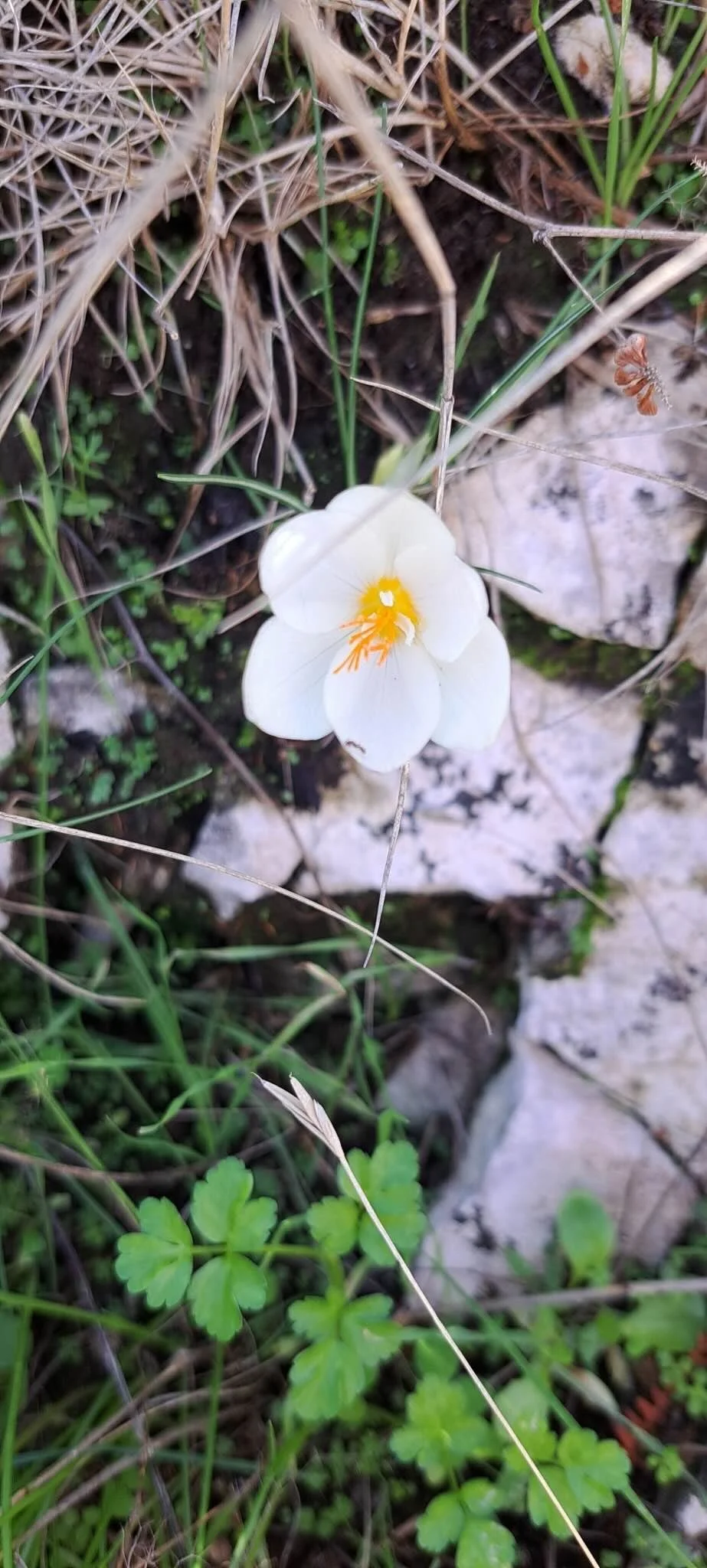
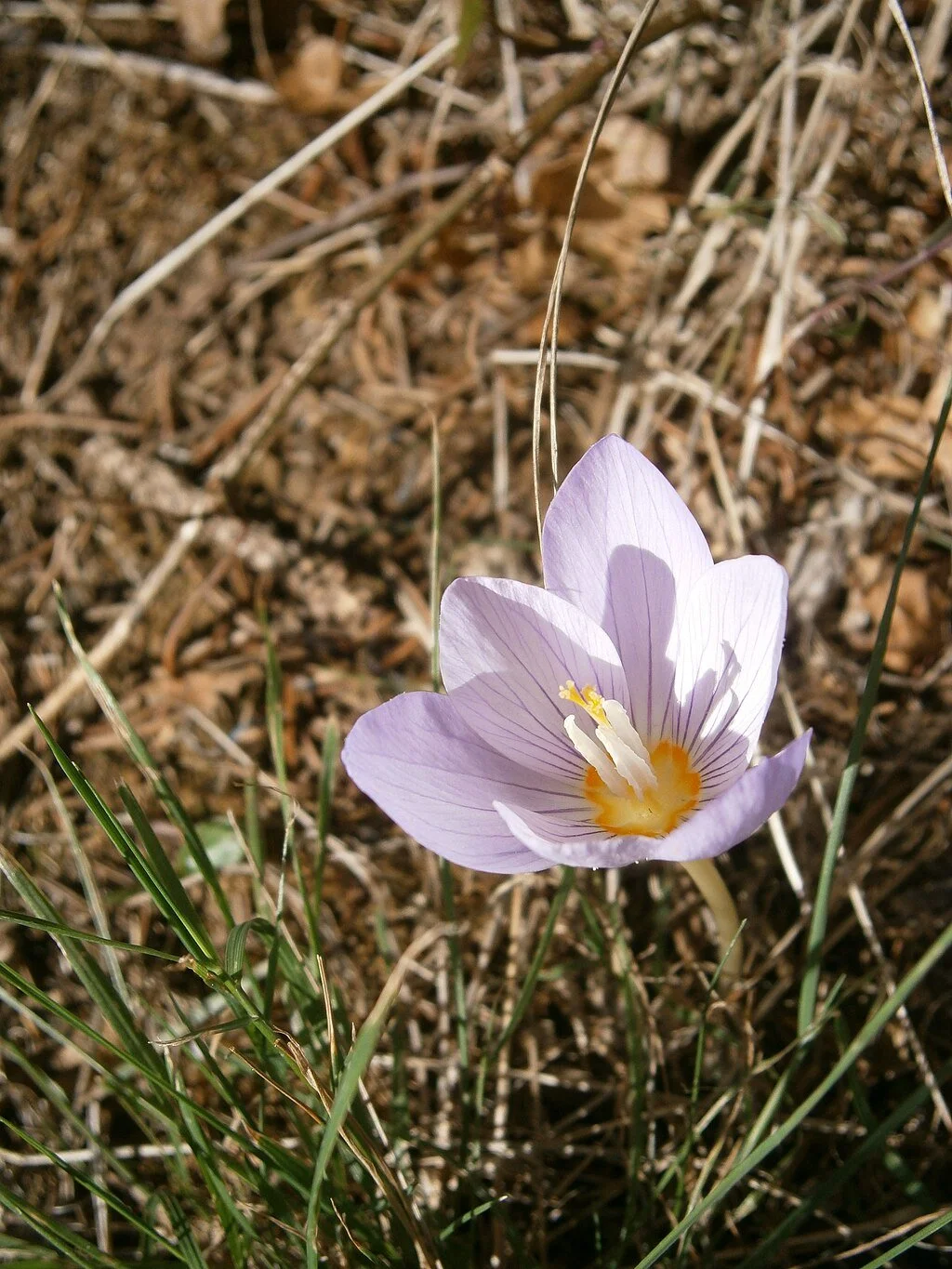
Hermaphroditic flower typically possessing 6 tepals, 3 long stigmas and 3 stamens; flowers bloom in different seasons, depending on the species (either in late-summer to early-autumn or late-winter to early-spring); flowers can be either white, lilac, blue, yellow, or pink
Care In the Garden
Depends on the species; many enjoy full sun, low watering, and periods of cold temperatures in winter
Commercial Saffron Cultivation
Saffron Crocus (C. sativus) is a sterile, cultivated species of Crocus from which the red stigmas are hand-harvested, dried, and sold for culinary, medicinal, and cosmetic use as Saffron.
It takes approximately 200,000 Crocus flowers to produce 1 kilo (2.2 lbs) of Saffron. And according to Rachel Dewan’s article, “about 400 hours of labour is needed to produce just one kilogram of saffron” as the entire process must be done by hand. Saffron is therefore the most expensive spice per kilo in the world, averaging 6 to 12 Euros per gram as of 2026.
Saffron Crocus is grown primarily in Iran, Afghanistan, India, Spain, Morocco, and, of course, Greece. Specifically, Krokos Kozanis is a Protected Designation of Origin (PDO) Saffron that is grown, harvested, and packaged in the Kozani region of Western Macedonia, Greece.
SAFETY CONSIDERATIONS
Most parts of the Crocus plant are mildly toxic to humans and animals when ingested; only the stigmas of the Saffron Crocus (C. sativus) are edible. Culinary doses of Saffron seem to be fine for most people. However, therapeutic doses may impact mood disorders, blood disorders, pregnancy, or surgery, so do your research before embarking on a relationship with Crocus.
Crocus also has a highly toxic autumn-blooming lookalike, known as Autumn Crocus (Colchicum spp.). Despite its name, it is not a true Crocus and the consumption of Colchicum can potentially lead to death.
The Crocus in Greek Mythology
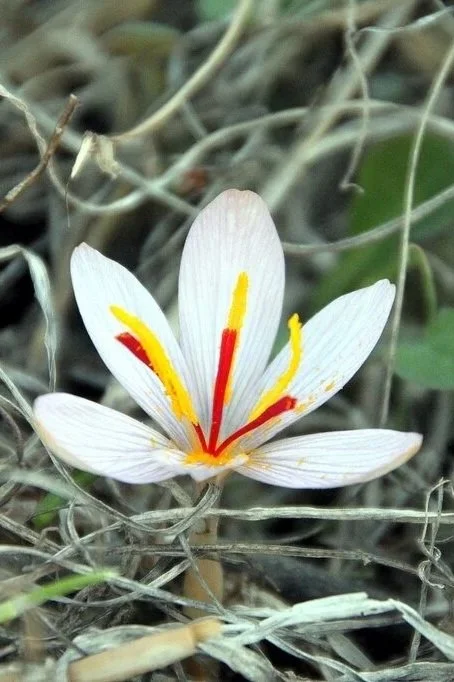
Photo by Klearchos Kapoutsis of Crocus from Santorini, Greece, CC BY 2.0, via Wikimedia Commons
The Metamorphosis of Smilax & Crocus
Not much is known about their metamorphosis, but both Ovid and Pliny the Elder tell the story of Smilax, whose unrequited or complicated love for Krokos (Crocus) transformed her into the Rough Bindweed vine (Smilax aspera). Krokos, who was unsatisfied in his love for Smilax, was also transformed into the short, flowering perennial we know as Crocus.
The Rough Bindweed is an evergreen, climbing vine; the Crocus is a stout, short-lived flower that grows close to the ground. It is easy to understand how a relationship between these two seemingly opposite plants would be problematic.
Crocus, Companion to Hermes
Some stories tell of Crocus, the beloved mortal companion to the god Hermes, who was fatally wounded by the god during a discus competition. Where Crocus died, three drops of his blood fell upon the earth and became the three red stigmas of the Crocus flower. This myth mirrors a similar story of the god Apollo and his lover Hyacinthus, who was similarly killed by a wayward discus and whose blood became the Hyacinth flower.
Persephone’s Field of Flowers
According to the Homeric Hymn to Demeter, Persephone was in a field gathering a bouquet of Crocus, Narcissus, Rose, Iris, and Hyacinth when Hades came to steal her to the Underworld.
A bed for Hera and Zeus
In Homer’s Iliad, when Hera protests Zeus’ desire to have sex on a mountainside where any human or god could pass by and see them, Zeus creates a soft bed from Crocus, Lotus, and Hyacinth flowers and shields them from view with golden clouds.
“...the son of Kronos caught his wife in his embrace; whereon the earth sprouted them a cushion of young grass, with dew-bespangled lotus, crocus, and hyacinth, so soft and thick that it raised them well above the ground. Here they laid themselves down and overhead they were covered by a fair cloud of gold, from which there fell glittering dew-drops. Thus, then, did the sire of all things repose peacefully on the crest of Ida, overcome at once by sleep and love, and he held his spouse in his arms.”
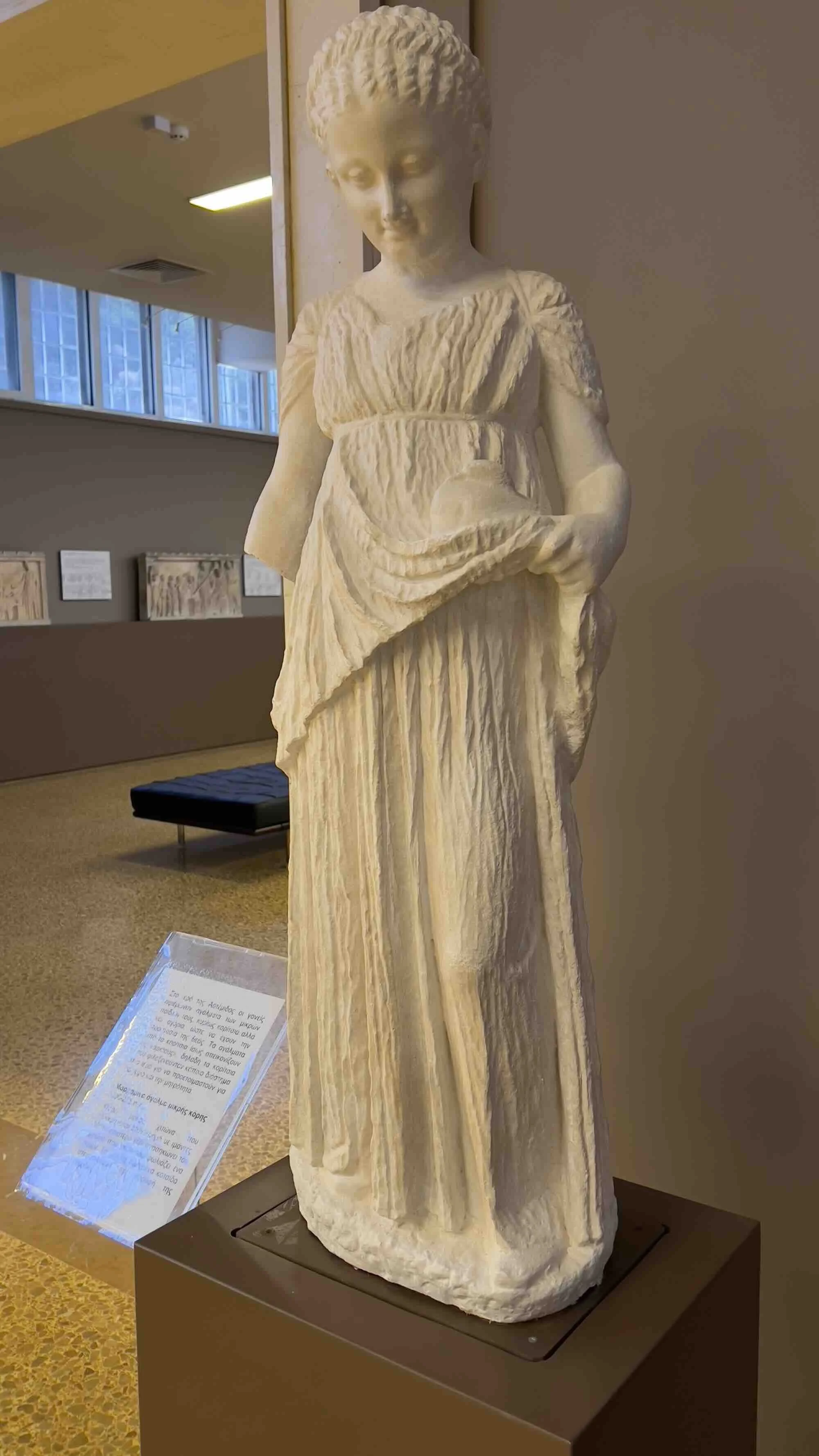
A statue of a young girl from the temple of Artemis in Vravrona (Brauron)
Saffron-Dyed Fabrics & Ritual Garments
The cultivated Crocus was of deep cultural significance to the ancient Greeks. In particular, its stigma — known as Saffron — was used as pigment for the dying of ritual garments. Specifically, the Saffron-dyed garment krokopeplos (κροκόπεπλος) is derived from the words krokos (Crocus) and peplos (meaning robe or garment).
Although the Crocus stigma (Saffron) is a deep, blood-red color, the water-soluble dye it produces is a vibrant yellow-orange. Garments dyed with Saffron were often worn by girls and women as a symbol of fertility and their gender status, particularly as unwed.
It’s also possible that the ancient Greek bridal veil was dyed with Saffron. Some scholars cite Aeschylus' Agamemnon, in which Iphigenia “shed to earth her saffron robe” (238), which is believed by some to be a veil or a robe that signified her status as an unmarried woman.
Young girls would wear Saffron-dyed ritual robes during coming-of-age ceremonies in honor of the goddess Artemis at her sanctuary at Brauron (Vravrona). Dressed as Artemis’ little bears, they would ritually shed their Saffron-dyed garments, much like Iphigenia (who was considered one of the first high priestesses of Vravrona and presided over the Arkteia festival).
The virgin goddess Hekate was also said to wear a Saffron-dyed garment (Orphic Hymns) and Homer waxes poetic about the goddess of the Dawn—Eos—wearing her krokopeplos as she spreads her light across the earth (Iliad 8.1).
The Crocus in Minoan Culture
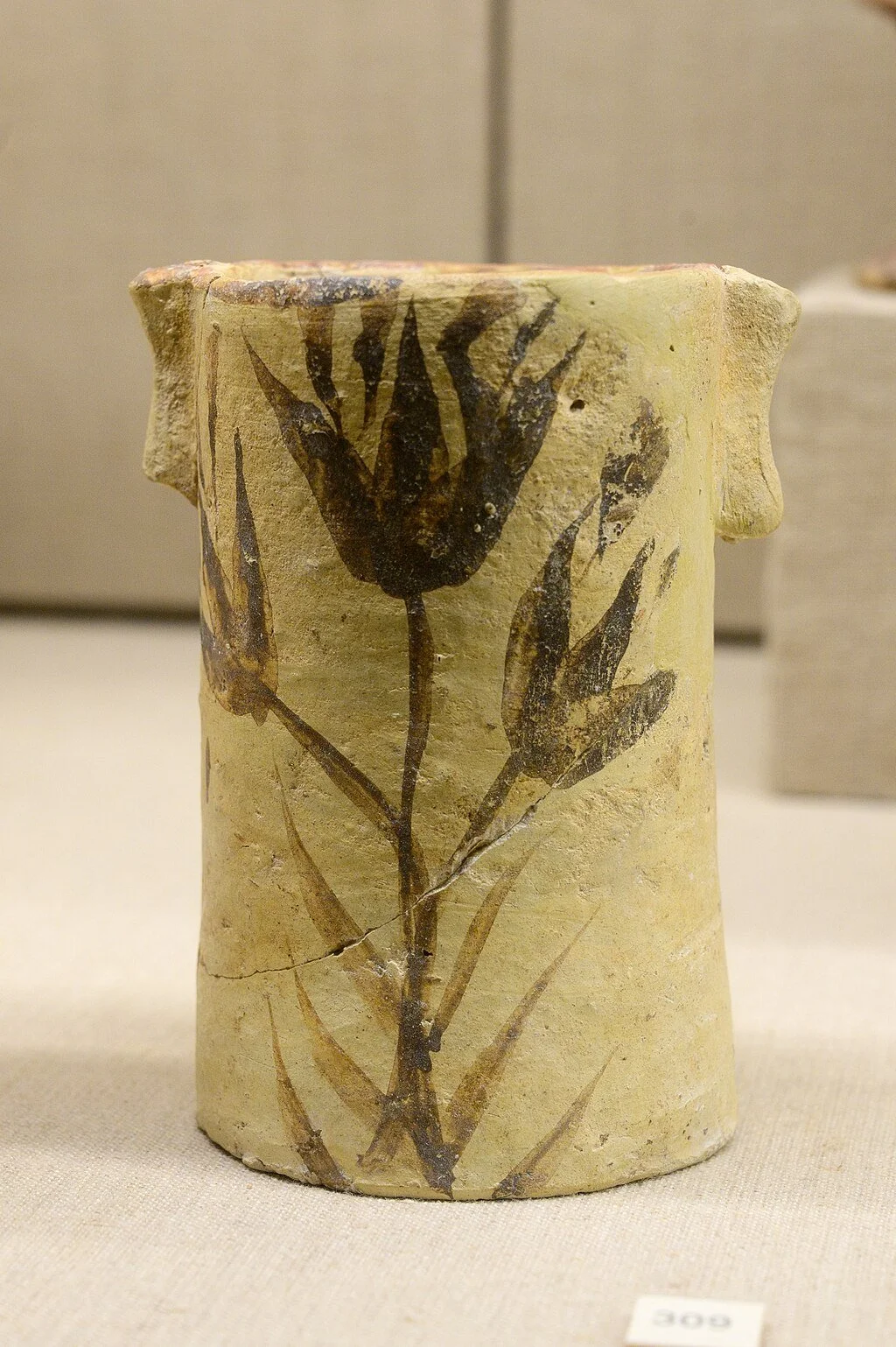
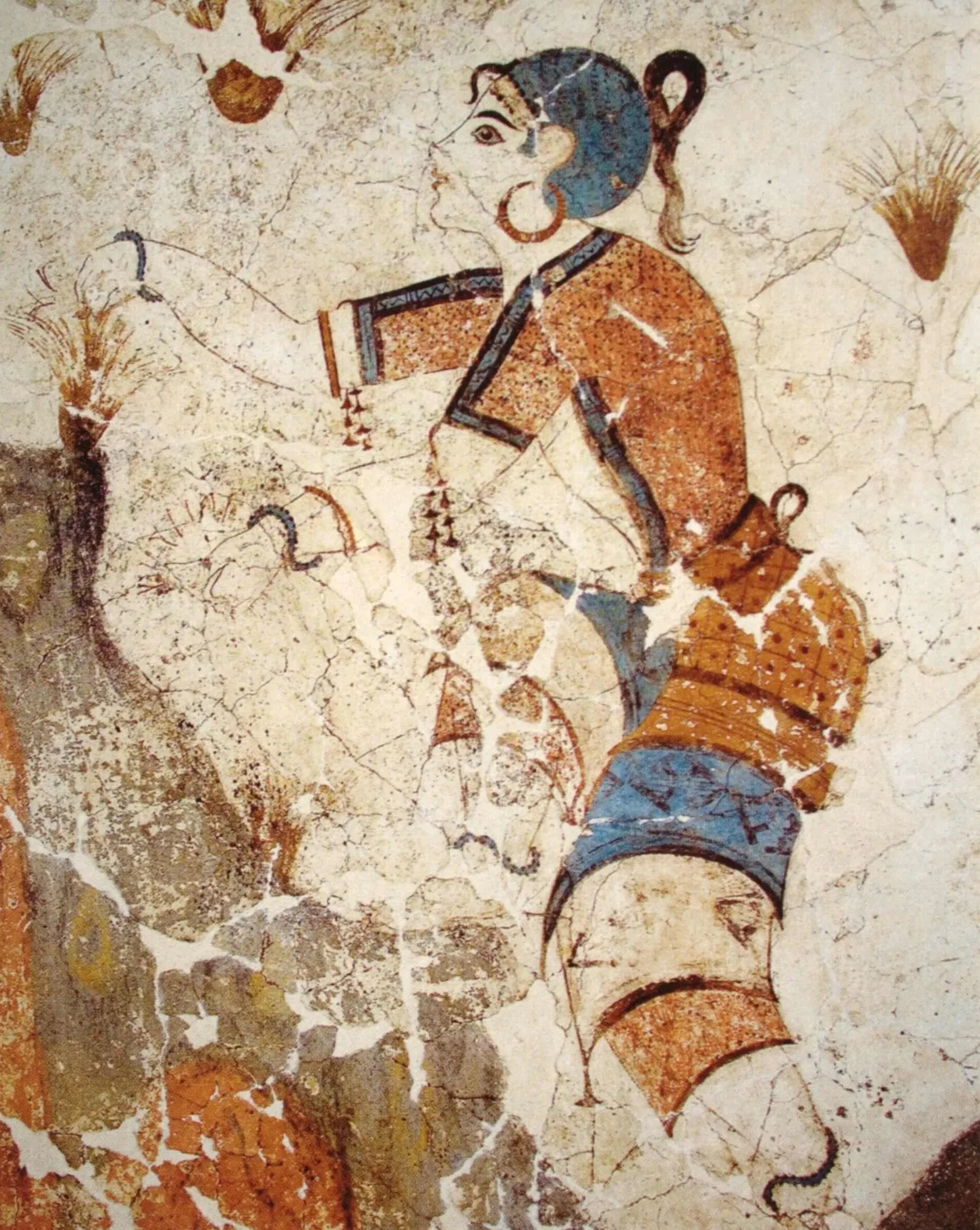
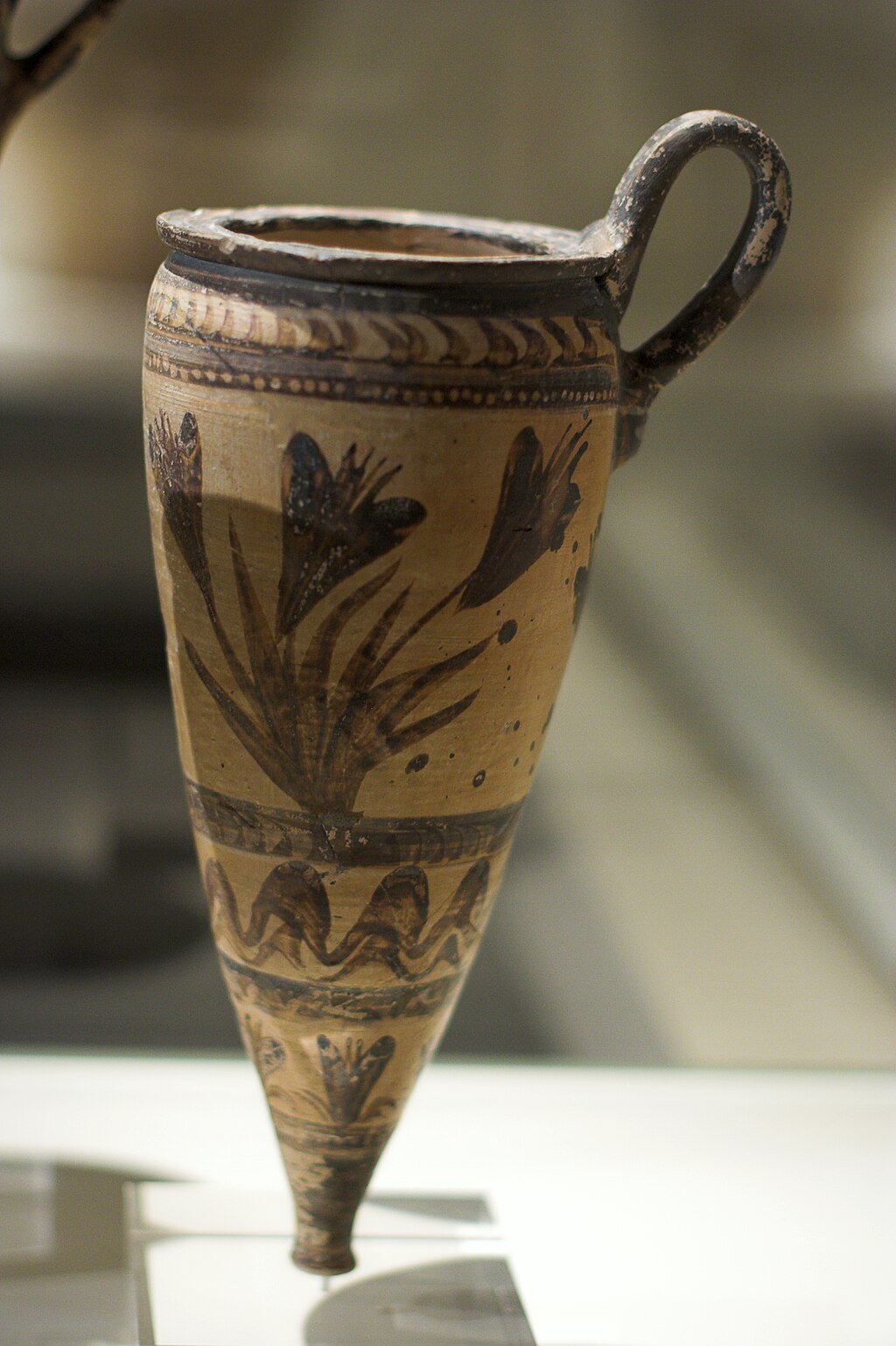
Bronze Age Minoan murals, ceramics, and ritual offerings depict the Crocus flower as a motif or as a central figure in harvest and ritual, particularly in relation to women and girls. Given the flower’s association with menstrual health, this does not come as a surprise.
For more, I suggest reading Rachel Dewan’s 2015 article, Bronze Age Flower Power: The Minoan Use and Social Significance of Saffron and Crocus Flowers.
The Crocus in Ceremony
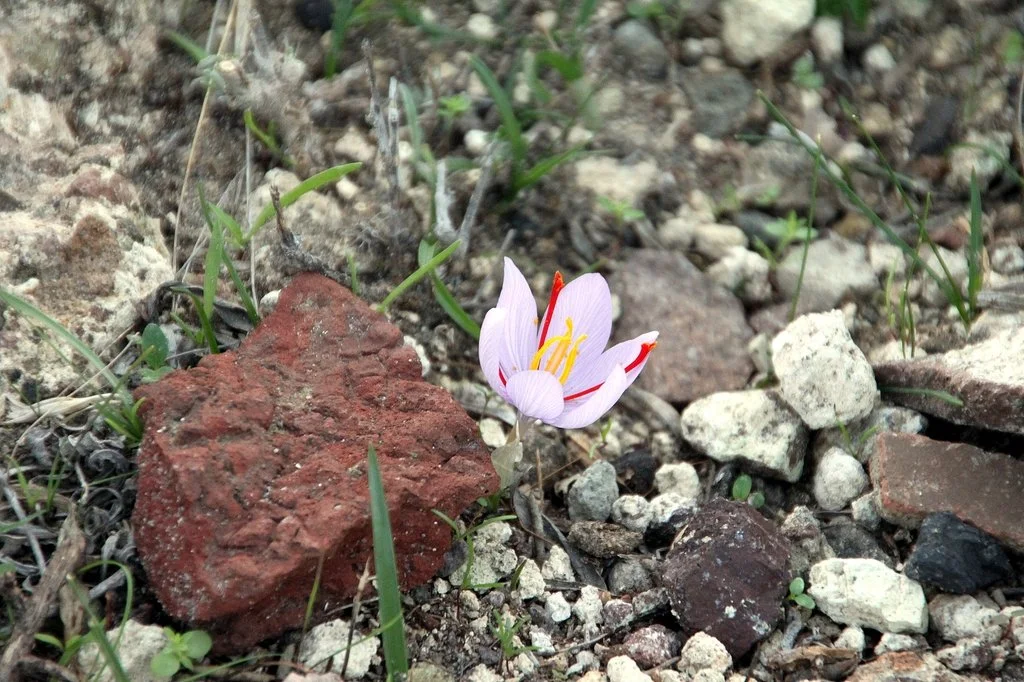
Photo by Klearchos Kapoutsis Crocus from Santorini, Greece, CC BY 2.0, via Wikimedia Commons
Dawning Desire — APHRODISIAC — Coupling
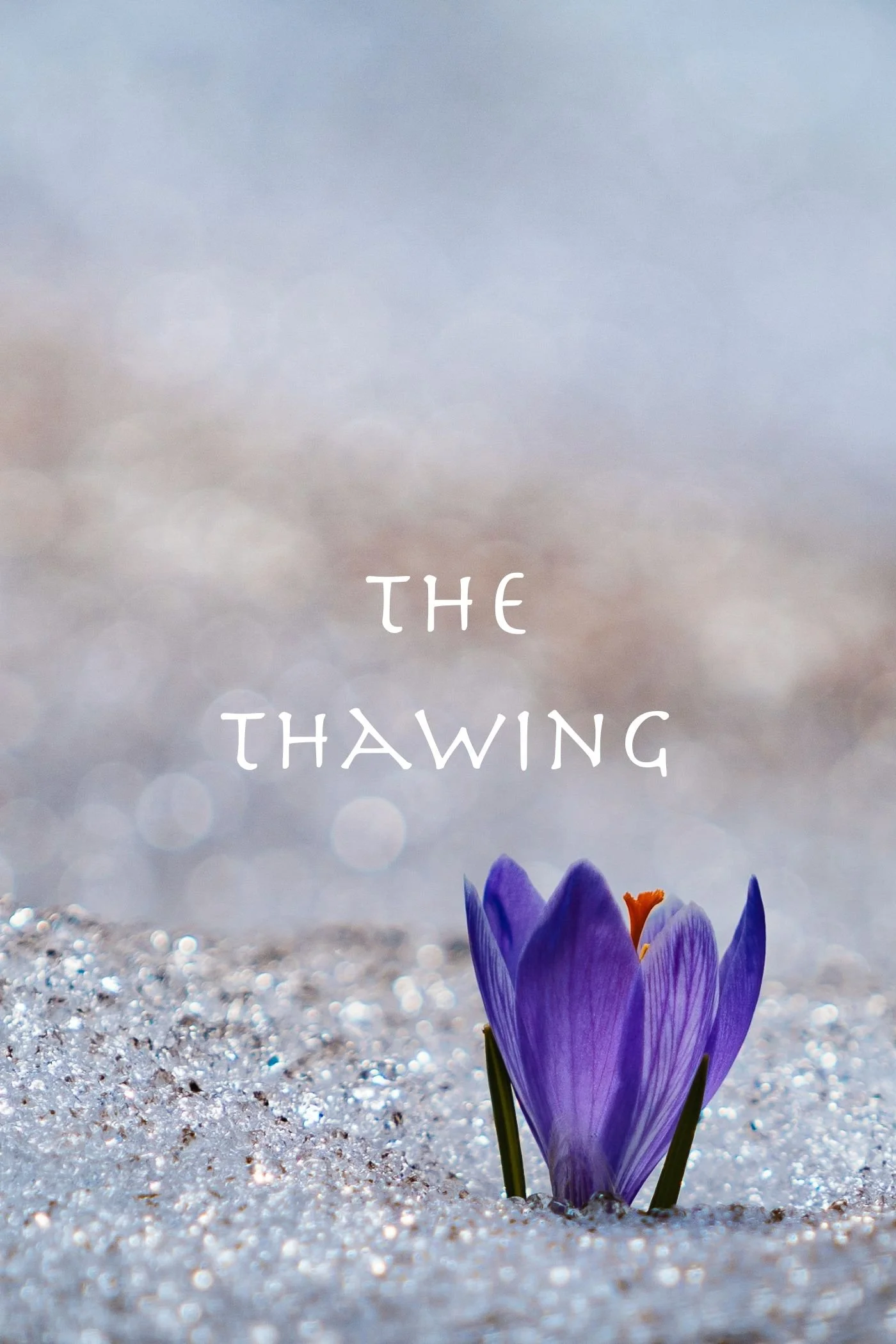
Spring-blooming Crocus is one of the first flowers to show after the cold of winter, sometimes blooming even in the snow. Like the Narcissus, it is a sign that Spring thaw is on the way. Autumn-blooming Crocus, especially the cultivated Saffron, follows a dry, hot summer in the Mediterranean. Its blood-red stigma is a source of vibrant orange-yellow dye, a pigment likened by Homer to the rising sun. These qualities—along with its ritual and medicinal association with love, divine coupling, and youthful fertility—speak to its aphrodisiacal power.
Though the Crocus is a delicate flower—it has a short blooming window, its petals are fragile, and Saffron itself must be harvested by hand—its blood-red produces a vibrant dawn. Like Zeus creating a soft and shielded bed for Hera, the Crocus invites a warm space for us to connect with desire, especially after a period of numbness or drought. Welcome the Crocus into your ceremonies when you wish to reawaken sensation and invite the dawn of new passion into your romantic life.
However, the Crocus does come with a mythic warning in the story of Smilax and Crocus. Their problematic love reminds us not to rush or force bonding where it should not exist. The Rough Bindweed is an evergreen, climbing vine; the Crocus is a stout, short-lived flower that grows close to the ground. Sometimes two entities are just not compatible and it is kinder and wiser to let go and seek coupling elsewhere.
Similar to the Narcissus, Crocus is also a potent companion for coming-of-age ceremonies, especially when transitioning into a new relationship with one’s body and its capacity for pleasure. Just as the ritual shedding of Saffron-dyed robes marked the transition for young Greek girls into womanhood, so too can we craft ceremonies that mark a stepping out of old identities and into new skin.
Parts Used
Stigma of the Saffron Crocus (C. sativus)
Safety
Most parts of the Crocus plant are mildly toxic to humans and animals when ingested; only the stigmas of the Saffron Crocus (C. sativus) are edible. Culinary doses of Saffron seem to be fine for most people. However, therapeutic doses may impact mood disorders, blood disorders, pregnancy, or surgery, so do your research before embarking on a relationship with Crocus.
Crocus also has a highly toxic autumn-blooming lookalike, known as Autumn Crocus (Colchicum spp.). Despite its name, it is not a true Crocus and the consumption of Colchicum can potentially lead to death.
Elemental Correspondence
Seasonal Celebrations
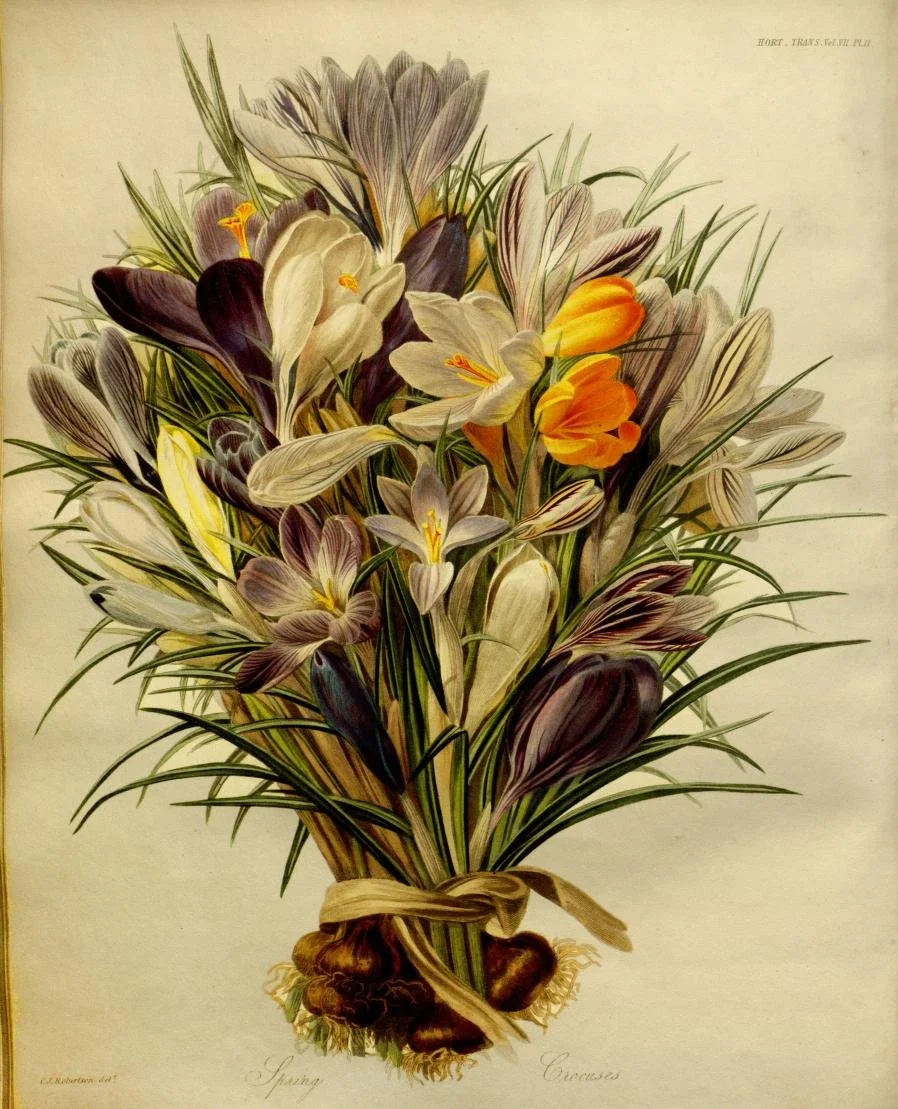
Joseph Sabine, illlustration by C J Robertson, Public domain, via Wikimedia Commons
Altar & Ceremony
Adorn your space with Saffron-dyed linens, items carved with stamens and stigmas, and elixirs made from Saffron-infused teas or wines. Burn red and yellow candles in honor of the Crocus stigma, and, if in season, harvest bouquets of early spring flowers.
If you are awakening from a period of numbness or drought, dress in Dawn-hued garments—red, orange, and yellow—sip a Saffron beverage, craft a Saffron-scented ritual oil or perfume, and reflect on the warming power of love and desire in your life.
Devotion
Whether before your altar or the living flower, say the following:
Crocus, create for me a soft bed
So I may know warmth
And be witness to the dawning
Of new love, new desire, new skin
Back to top
The Crocus in the Kitchen & Apothecary
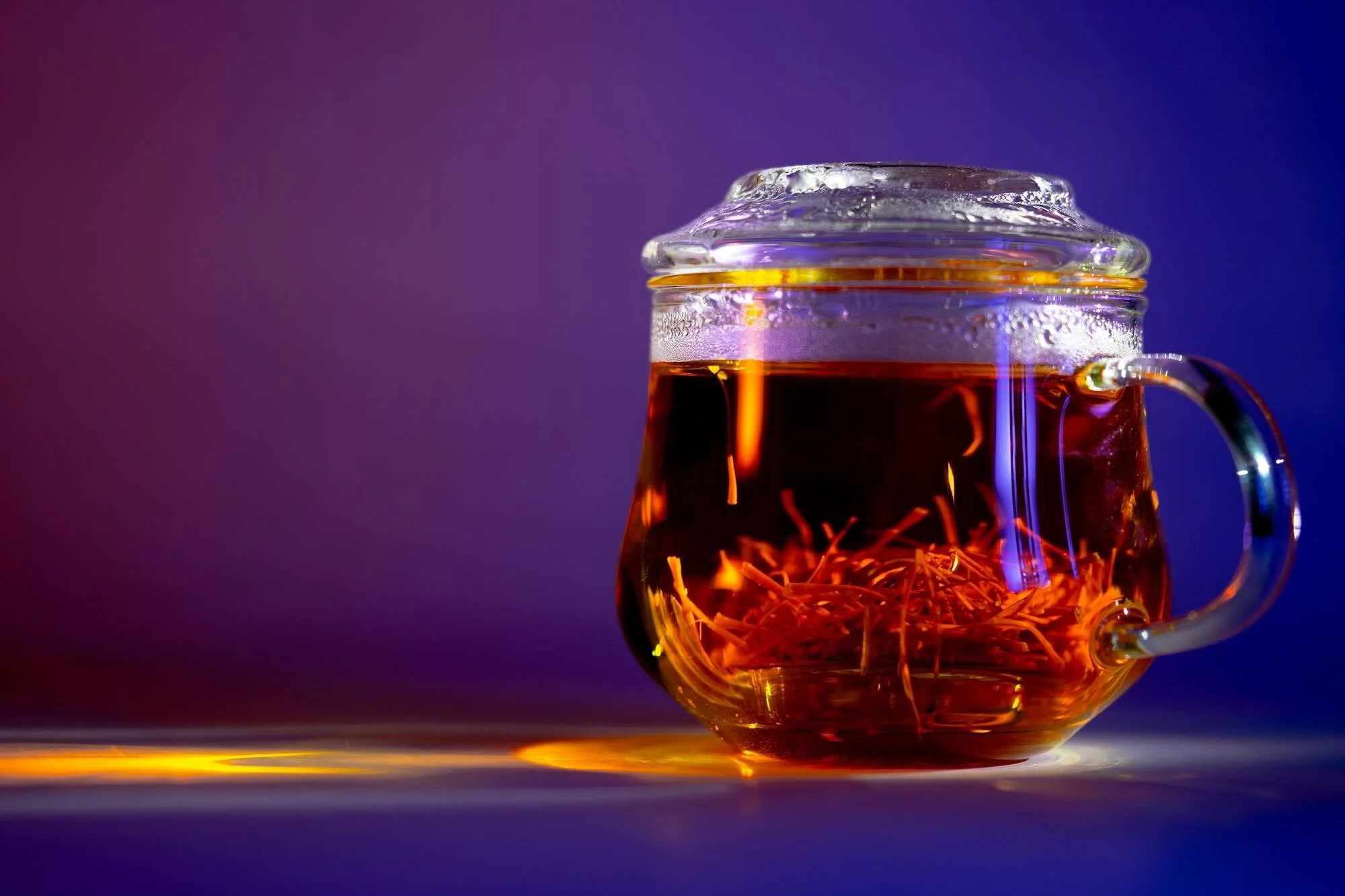
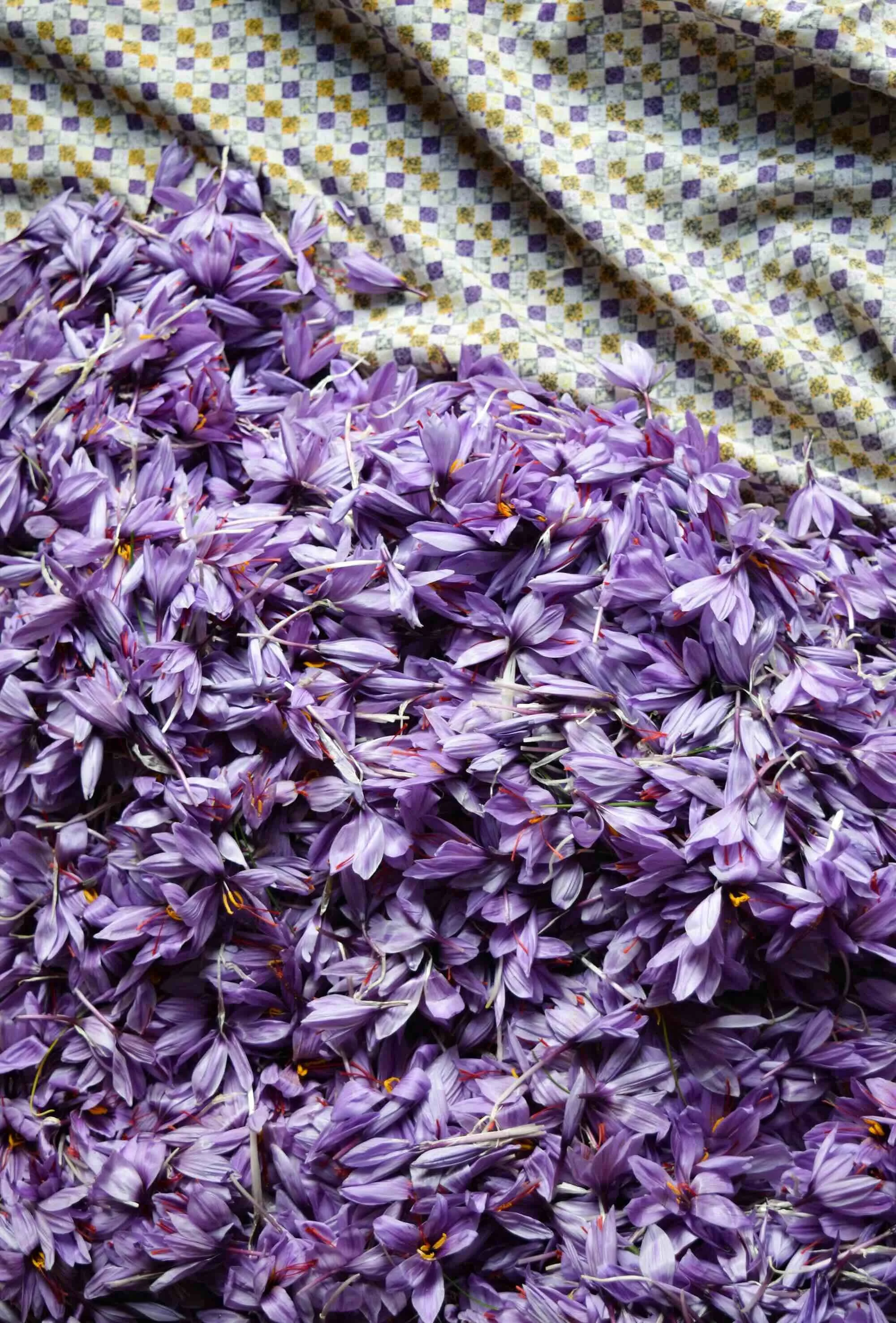
Saffron Crocus (C. sativus) is a sterile, cultivated species of Crocus from which the red stigmas are hand-harvested, dried, and sold for culinary, medicinal, and cosmetic use as Saffron.
It takes approximately 200,000 Crocus flowers to produce 1 kilo (2.2 lbs) of Saffron. And according to Rachel Dewan’s article, “about 400 hours of labour is needed to produce just one kilogram of saffron” as the entire process must be done by hand. Saffron is therefore the most expensive spice per kilo in the world, averaging 6 to 12 Euros per gram as of 2026.
Saffron Crocus is grown primarily in Iran, Afghanistan, India, Spain, Morocco, and, of course, Greece. Specifically, Krokos Kozanis is a Protected Designation of Origin (PDO) Saffron that is grown, harvested, and packaged in the Kozani region of Western Macedonia, Greece.
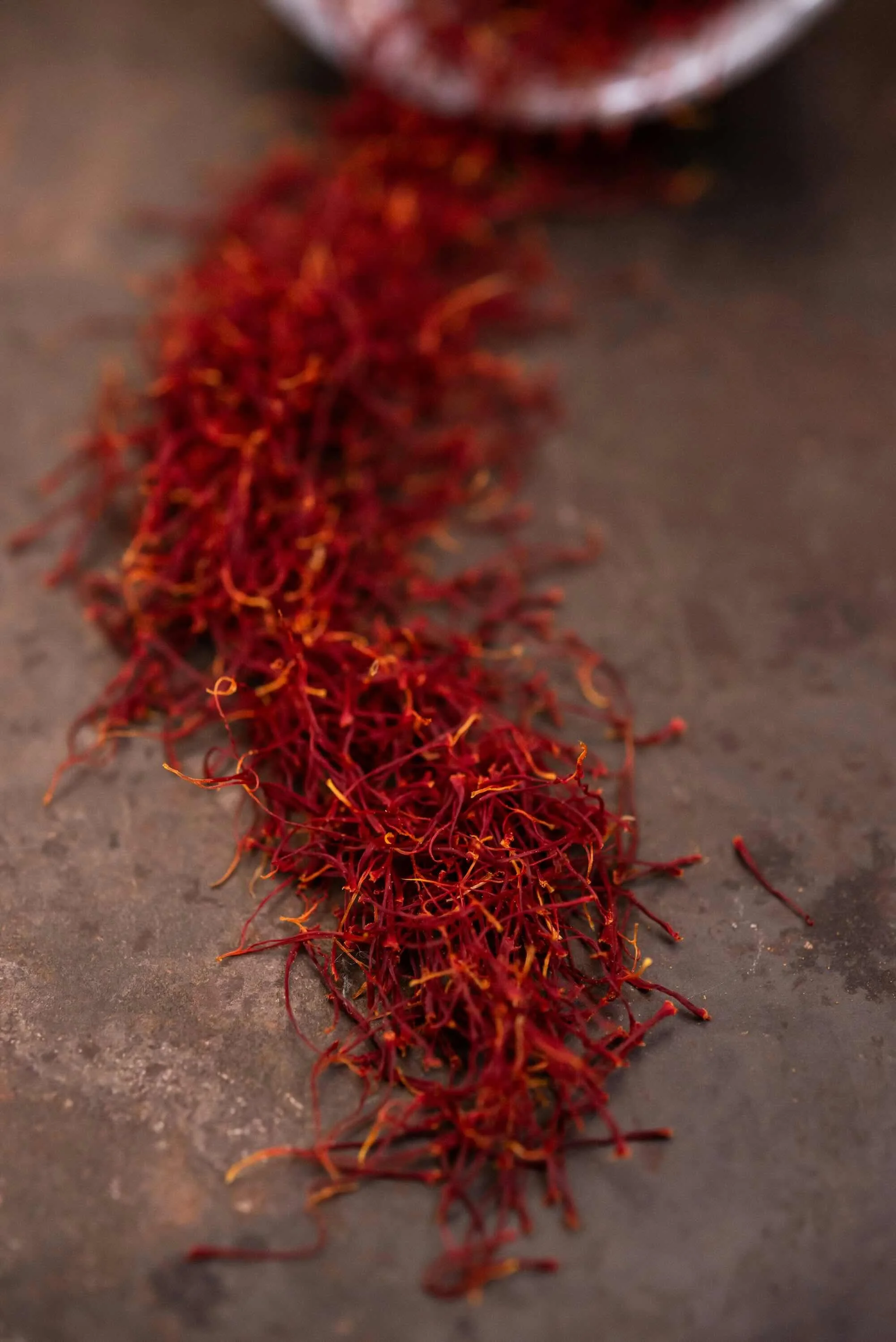
Parts Used
Stigma of the Saffron Crocus (C. sativus)
Traditional Medicinal Applications
Saffron has been traditionally considered a nervine, aphrodisiac, digestive support, and superior treatment for the skin, eyes, and hair. In particular, it has been used for female reproductive health, as an emmenagogue, and even possibly as an abortifacient or birth control. Dioscorides speaks of Saffron’s warming, digestive, and diuretic effects, and gives various recipes for using Crocus for inflammation in a drink, suppository, or poultice (De Materia Medica 1.25-1.26).
Today, Saffron is often used as a nervous system and cardiovascular tonic, lifting the mood, improving blood flow (particularly to the pelvis), and improving sexual function. Saffron is high in the bio compounds crocin, picrocrocin, and safranal which have been identified to have antioxidant, anti-inflammatory, neuroprotective, and anticancer effects.
Culinary Use
Saffron has a warming, woody, slightly bitter flavor and is used in cooking: sauce, tea, milk, syrup, lozenges, and more. Use your Saffron sparingly, as large amounts can be very bitter.
I know of two primary techniques for cooking with Saffron: Blooming and Grinding.
Blooming Saffron: place a pinch of the herb in about a shot glass amount of warm water, milk, or other liquid, and let it steep 10-20 minutes. Then add this liquid (with or without the threads) to your dish, at the end of cooking. Avoid boiling or very hot liquid, as this brings out more of Saffron’s bitter flavor—unless that’s what you’re going for! (I’ve also seen some people use ice or cold water to steep the Saffron.)
Grinding Saffron involves adding a pinch of the spice to a mortar and pestle and grinding the threads to a powder. Then do the same as with Blooming: steep the powder in a bit of warm or cold liquid. This is particularly effective for making milks, lozenges, or any other dish that you’d like the spice more evenly dispersed.
Other Saffron Traditions
Saffron has also historically been used in cosmetics—specifically as makeup to stain the eyebrows, eyes, lips, and hands, and as a hair treatment to brighten or lighten the hair—and in perfumery—in particular, Dioscorides and Pliny the Elder mention mixing it with myrrh.
Safety and Drug Interactions
Most parts of the Crocus plant are mildly toxic to humans and animals when ingested; only the stigmas of the Saffron Crocus (C. sativus) are edible. Culinary doses of Saffron seem to be fine for most people. However, therapeutic doses may impact mood disorders, blood disorders, pregnancy, or surgery, so do your research before embarking on a relationship with Crocus.
Crocus also has a highly toxic autumn-blooming lookalike, known as Autumn Crocus (Colchicum spp.). Despite its name, it is not a true Crocus and the consumption of Colchicum can potentially lead to death.
Back to top
Related Articles



Selected Sources
Aeschylus, Agamemnon
Alibertis, Adonis. Plants of Crete.
Dewan, Rachel. (2015). Bronze Age Flower Power: The Minoan Use and Social Significance of Saffron and Crocus Flowers. 5.
Dioscorides, De Materia Medica
Homer,Iliad
Ovid, Metamorphoses
Papiomitoglou, Vangelis. Wild Flowers of Greece.
Pliny the Elder, The Natural History
Thorogood, Chris. Field Guide to the Wild Flowers of the Eastern Mediterranean.
Find more resources in my Library