Dionysos and the Vines
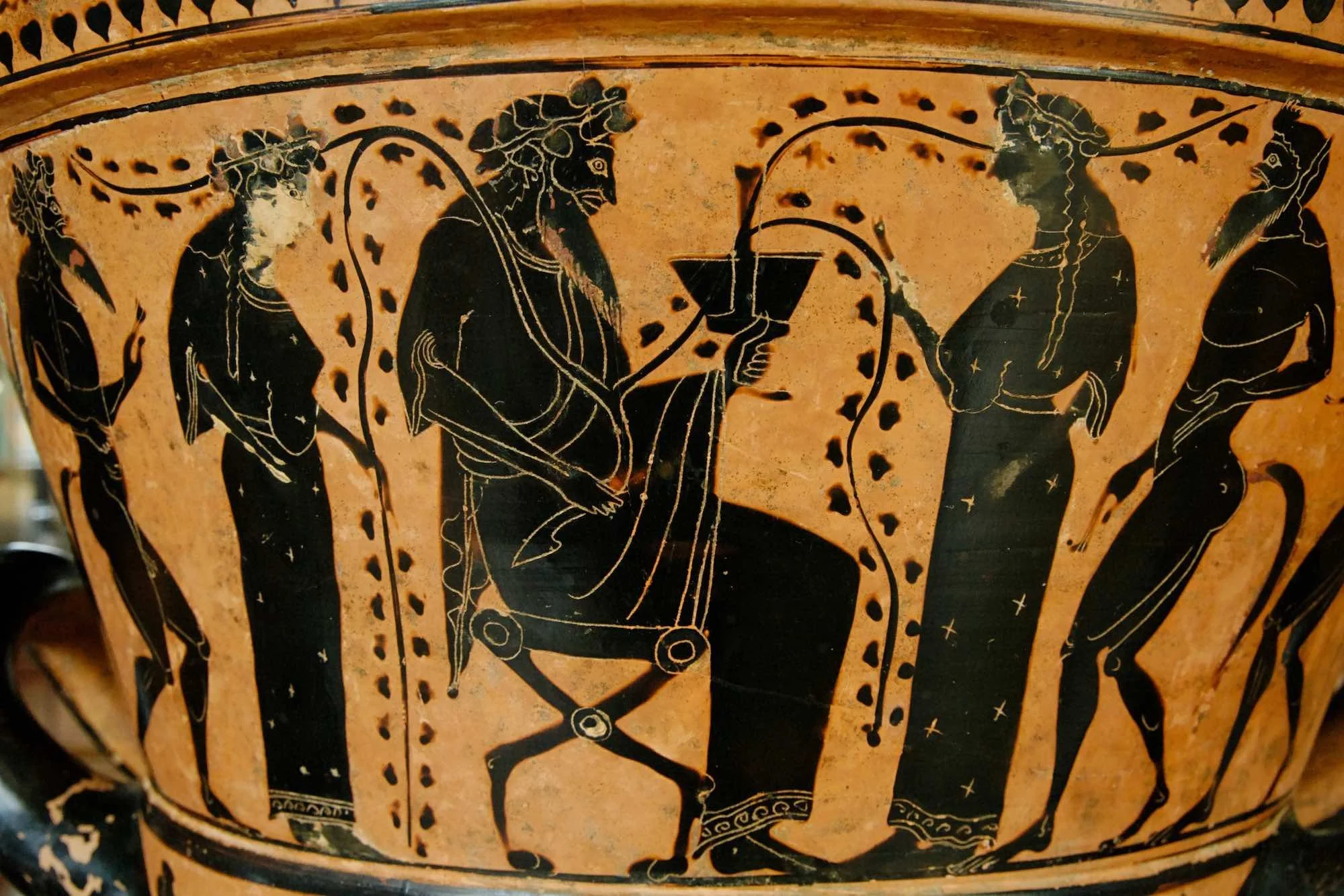
Today, we encounter Dionysos through the lens of his most sacred plants, the Vines — specifically the Ivy, Grape, and Rough Bindweed. We also talk about wine, entheogens, and consciousness-altering brews of the ancient Greek world; the Maenads who danced into ecstatic union; as well as some of the places, mountains, and other herbs sacred to the god of divine madness.
Listen below or with your favorite podcast provider
APPLE | SPOTIFY | Youtube | Amazon | DEEZER | PANDORA
Scroll down for show notes and the transcript.
Mentioned in this Episode
If you or someone you know needs someone to talk to, check out https://findahelpline.com/.
Other Episodes and Posts
Containing the Wild Flame: Ancient Greek Fire Myths
Sobriety and Sacred Brews: Messages from the Grapevine About Consumption, Plant Wisdom, and the Body
A Free Guide to Working with the Maenads
The Library for Resources and Research
Plant Profiles
Other Artists
Placing the Story
Below is a map of some of the places sacred to Dionysos and mentioned in this episode.
Click the play button to interact with the map
Related Articles




Transcript
You're listening to A Temple Wild: Episode 9: Dionysos and the Vines
Hello and welcome to A Temple Wild, where we rediscover the myths of the ancient Greeks through the plants and landscapes that shaped them.
My name is Mira, and today, we encounter the god Dionysos, who among many things is god of revelry, theater, and sacred madness. As a twice-born god, he is celebrated as an embodiment of fertility and wildness, and is also credited with bringing wine cultivation to the Greeks.
Dionysos - or Dionysos as his name is pronounced in Greek - is often depicted amid Grapevines, wearing wreaths of Ivy, and surrounded by his raving female followers, the Maenads, as well as male fertility spirits of the wild, the Satyrs.
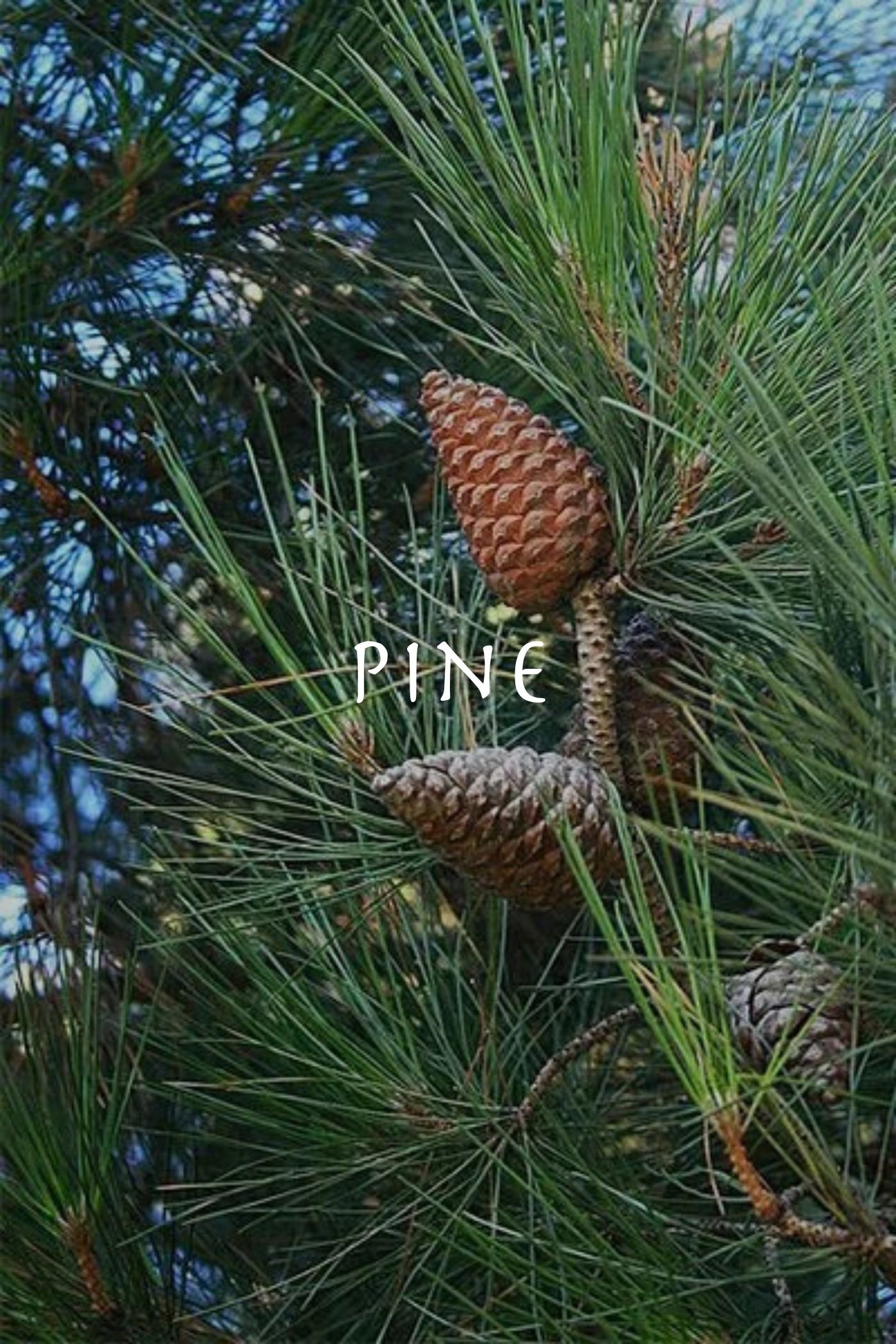
As a god of the mountain and wild places, he is often connected with trees, in particular the Fig, the Poplar, and the Pine.
Some of his other symbols include masks, mirrors, and eyes; phalli, pillars, and collumns; bulls, snakes, and wild cats — like lions, leapords, and panthers — as well as the humble donkey.
But in today’s episode, we’ll be focusing on Dionysos through the lens of his most sacred plants, the Vines — specifically the Ivy, the Grape, and a lesser-known vine called Rough Bindweed or Smilax.
And I think more than any other god, Dionysos - and his Vines - have so much to teach us about ecstasy, divine union, and joyful communion.
So I think as you can probably guess from my psuedonym, Ekstasy Vine, this is one of my favorite topics. And this has also the hardest episode for me to record so far, probably because there’s so much to say about Dionysos — about his implications as a gender-bender and identity-shaker, as patron of the theater, as a god of viticulture and sacred intoxication.
His Vines introduce us to the power of altered states of conscioussness and bring us in touch with the ineffible — inverting and cracking open our socially-accepted views of reality and questioning what it really means to be human.
So, in other words, really simple topics. But I’m going to do my best to at least try to shine a light on some of Dionysos’ wisdom.
So this might also be a good time to warn you that I cover some controversial subjects in this episode, so if you have little ones nearby, or you are sensitive to the topics of sexuality, birth control, altered states of consciousness, mental health, or even suicide, I would suggest choosing a different episode to listen to. I also want to say that I am not a doctor or a mental health professional, and that this episode is just for educational purposes and not to be misconstrued as advice, diagnosis, or treatment. So if you or someone you know is struggling with their mental health, I’ve provided some links in the show notes for some resources for you to find someone to talk to.
With that said, let’s descend into the mythic landscape, and maybe we can come to a new understanding of Dionysos and the ancient Greek wisdom of the Vines.
Since this is A Temple Wild, I want to begin by placing the god: where do we find Dionysos in the Greek landscape?
As with most of the Greek gods, there are often conflicting accounts of his parentage, his upbringing, and his wanderings.
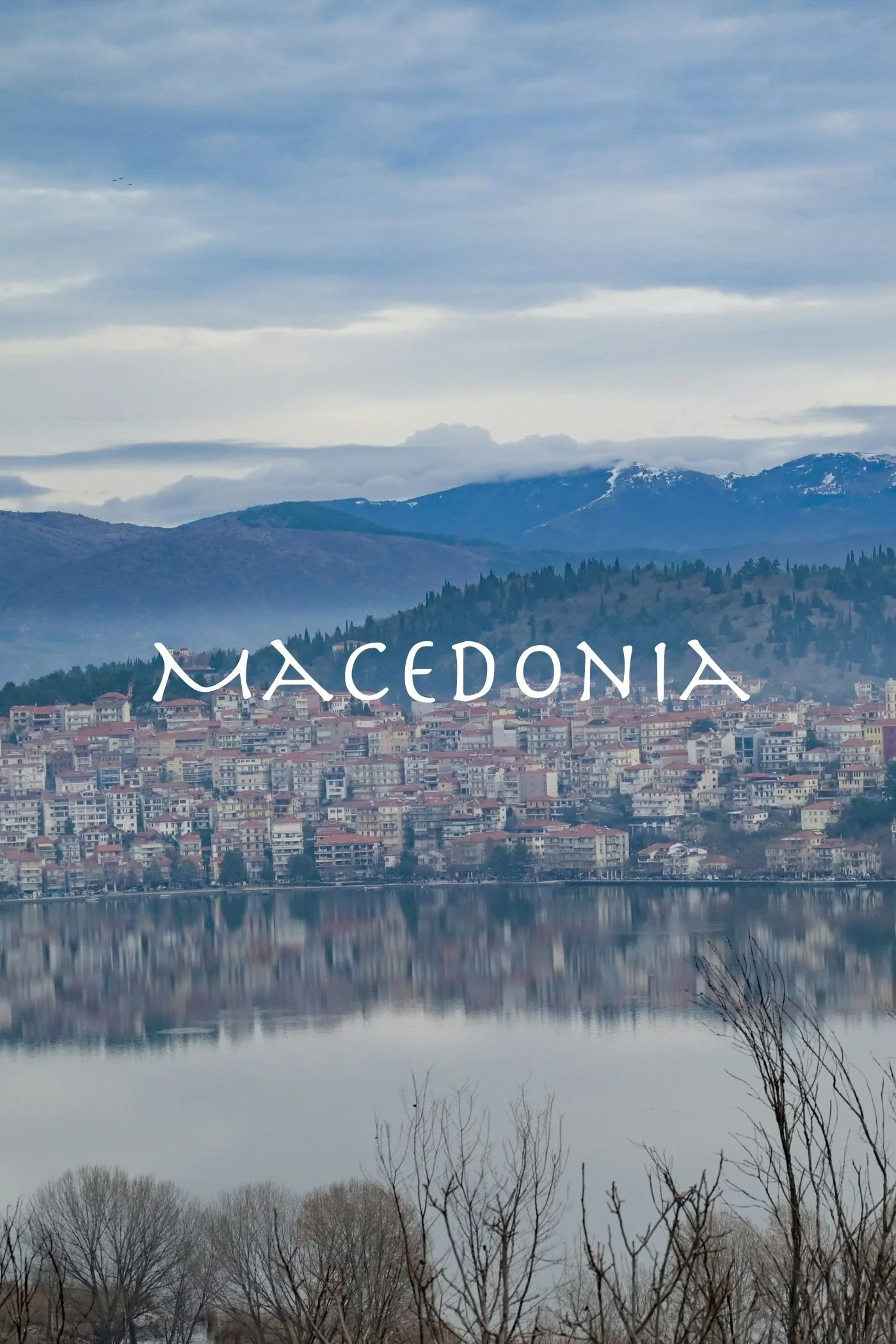
But ome say that his story begins in Thebes, a city in Boeotia in Central Greece (or modern day Sterea Ellada). It’s there that Semele (Σεμέλη), the princess of Thebes, falls in love with the god Zeus.
In one telling of the story, Semele became pregnant with Zeus’s child, and was tricked by Hera into asking Zeus to prove his true nature as a god. Unfortunately, when faced with the awesome and incendiary force of Zeus’s lightning-power, Semele immediately burst into flame. And Zeus pulled their unborn child from her dying body and sewed the fetus into his own thigh, where the child matured for several months, and then was born.
And who was that child? Dionysos, also called the twice-born god — first born from lightning-induced flame and again from his divine father.
So I go into more detail about the birth of Dionysos in Episode 8 — Containing the Wild Flame: Ancient Greek Fire Myths, where I do a deep dive into Dionysos’s special relationship with the Pine tree, as well as the Giant Fennel as a vessel for divine revelation, so I hope you’ll give that episode a listen next.
But after his birth from Zeus’s thigh, it’s said that Dionysos was taken away by Hermes to Mount Nysa, where he was fostered into adulthood.
Some place Mount Nysa in Boiotia, specifically associating it with Mount Kithairon, which you might remember from our story of Narcissus and Echo in episode 1. And it’s there that Dionysos was nursed by a trio of nymphs and fostered by Seilinos (Σειληνός), who was the drunken, elder god of wine-making.
Other accounts say Dionysos was fostered in Evia or Naxos or Sparta or even abroad in Egypt, India, or Phoenicia. But regardless of where he grew up, most stories involve him being fostered or nursed by entitites that were connected to ambelos, the Vine, and so he discovered at a very young age the divine power of the Grape.
But Hera, being the wife of Zeus and therefore jealous of a child born to another woman, drove the young Dionysos mad. And so he began to wander, spreading his knowledge of the Grapevine and wine-making everywhere he went: Libya, Syria, Egypt, India, and Phrygia, and then later, after regaining his sanity, he returned to Greece and began establishing and spreading his own Mysteries, or sacred practices, across the Greek landscape.
As for his Temples, he has a few main sanctuaries, such as on the island of Naxos as well as in Thebes, and amphitheaters were often dedicated to him as the patron god of theatre, such as in Athens and in Epithavros (or Epidaurus).
So not many people know this, but Dionysos also shared the Temple of Delphi with the god Apollo, spending the 3 winter months of each year in Delphi while Apollo was off with the Hyperboreans. So around November of each year, the female followers of Dionysos – usually called Maenads, but in the case of the worshipers of Delphi they were called the Thiades (θυιάδες) — they would come from Athens to run through the forested peaks of Mount Parnassos in frenzied worship of the god of sacred madness.
Now we’ll return to the subject of the maenads in just a moment, but this is a good opportunity to remind you that Dionysos was primarily a god of the wild, so he was associated with the uncivilized and wild environments of the forest-covered mountains. If you’ve ever been to Greece, you’ll understand that that covers quite a bit of ground here, as this is one of the most mountainous regions of the Mediterranean. So in addition to some of the mountains I’ve already mentioned – Mount Kithairon, Mount Parnassos — another mountain that I want to highlight is Mount Paggaio, which is a beautiful area of northern Greece, and also happens to where I’ve been living for the past 5 or 6 years, so I’m a little partial to this particular mountain. And I’ll be talking more about Mount Paggio in some upcoming episodes, but if you’d like to take a look at where exactly this mountain is – or to see any of the other places that I’ve mentioned in this episode – I’ve provided a map in the shownotes on my website, so be sure to check that out at atemplewild.com.
I want to also mention that the other place in the Greek landscape where we find Dionysos is in the Underworld. So some stories say he descended to Hades — the Unseen Realm — to retrieve his mother Semele — or in some accounts, his wife Ariadne - and bring her up to Mount Olympos. We’re going to be exploring the Underworld in another episode, so I’ll wait to go deeper into his chthonic, or underworld, form then. But for now, just keep in mind that Dionysos was first celebrated as a fertility god, and in some accounts his mother was not Semele, but instead either Demeter or Persephone. Some say that he and Hades were even in fact the same god, just two different faces of the same, life-death force of nature.
Now one of the most popular sources referenced for information about Dionysos and his retinue comes from The Bacchae, a play written by Euripides and premiered at the Athenian Theater of Dionysos in the early 4th century BCE. In the story, King Pentheus of Thebes rejects Dionysos’s divinity and is utterly destroyed for his disbelief, torn apart by his own mother and the other raving followers of Dionysos. It’s an incredible play; I highly suggest seeing it or at least reading it. But there are also plenty of other stories about the god that have been passed down to us through time, as well as the visual record — such as statues, mosaics, and of course wine vessels — that give us important clues about the god’s Mysteries.
Most notably, Dionysos is associated with the Vine: both the wild, evergreen Ivy and the cultivated, deciduous Grape. Both vines are perennial — meaning the same plant survives from year to year — but to me, they represent two very different, yet complimentary aspects of the god.
So let’s start, first, with the Grape, which I think most people are familiar with. But I want to encourage you to put aside your assumptions about the Grape and try to learn about the plant as if this were the first time you were hearing about it. I’m going to be speaking specifically about the species Vitis vinifera, which has thousands of varieties in both the wild and cultivation.
Just keep in mind there are dozens of other species of Vitis, including those native to North America and Asia, but the Grape that’s associated with Dionysos is the European or Eurasian Grape, Vitis vinifera.
So the Grape is a climbing vine that uses tendrils to wrap around and climb human-built structures and other plants — such as trees. The stems, over time, harden into woody branches and if you’ve ever seen a very old Grapevine climbing an arbor, it’s quite a mysterious sight: with a thick woody branch almost like a tree trunk with flaky, grey-brown bark.
If left undisturbed, wild vines can reach a height of 15 meters (that’s 50 feet) or more and the roots can reach down as deep as 4.5 meters (or 15 feet). It has small green-white flowers that bloom in May through June, and the fruits ripen in August and September into clusters of edible green, red, purple, or even black berries.
Now the Grape was integral to everyday life for the ancient Greeks as most parts of the plant were enjoyed as food and medicine, and used in sacred rituals.
But you are probably most familiar with Thompson Seedless grapes, which are the most common table grape available at the grocery store. But Thompson Seedless Grapes were developed in the USA in the late 1800s to appeal to those who prefer sweet, mild-flavored grapes. That means that most varieties, including most of the grapes grown by the ancient Greeks, have seeds, which totally change the flavor and are also believed to hold many of the medicinal benefits of the fruit. So I remember when I first moved to Greece and I ate Grapes with seeds for the very first time, I was shocked at the difference in flavor and texture, so I really encourage you to give them a try, to see how the ancients would have been enjoying their Grapes.
Grape leaves are also edible; there’s a famous Greek dish called dolmathakia (ντολμαδάκια) which are rice- and herb-stuffed Grape leaves. And the leaves have also traditionally been used to stop bleeding, to treat diarrhea, rheumatism, and arthritis, and even used as a poultice for tumors.
If you cut the branches of a Grapevine, they drip a clear sap, which has been traditionally used for eye and skin conditions, like eczema or wounds.
I have more information about the Grape and its use in the kitchen and apothecary on my website, so I’ll link to that in the show notes, but let’s not forget that the fruits can also be processed into juice, vinegar, and, of course, wine.
Although not typically known for its wines, Greece has a rich history of viticulture with different regions specializing in particular varieties. Some of the most well-known wines to foreigners are Vinsanto, a sweet wine from Santorini, as well as Retsina (ρετσίνα), which is a Greek white or rosé wine in which the grapes are fermented with resin from the Aleppo Pine, which is a tree also sacred to the god Dionysos.
Distilled Grape spirits or liquors, like tsipouro (τσίπουρο) and Cretan tsikouthia (τσικουδιά) or raki (ρακή), are also popular throughout contemporary Greece, but the distillation of alcohol was not known to the ancient Greeks, so they were drinking Grape wine and not spirits.
But I do want to mention that there’s evidence that the Greeks were making wine from other plants as well, not just Grapes. For example, Pliny the Elder lists Pomegranate, Fig, Apple, Pear, and many other fruits as a source for wine, and it’s possible other non-fruit sources were also used, such as roots, flowers, and even unripened nuts.
But the Pomegranate, specifically, is just as equal a contender as an important source of wine for the ancients as it’s sometimes depicted with Grapes, especially in a funerary context. But we’ll be discussing the link between the Grape and Pomegranate in an upcoming episode on Plants of the Underworld, so be sure to subscribe so you’ll be the first to know when that episode goes live.
But returning to the Vine, Grape wine and vinegar were both considered to have medicinal value and they were also a common medium for administering herbal remedies, tonics, and spiritual brews.
For example, Pine resin was used to seal the inside of ceramic wine vessels, but it was also added intentionally to fermenting grapes. Remember, I mentioned Retsina, that resinous white wine you can still buy today.
But in addition to Pine, many other herbs were also added to wine, including Thyme, Rue, Ivy, Valerian, Juniper, Rose, Myrrh, Poppy, Coriander, and so many more — for their flavor, as well as for their medicinal and spiritual properties.
Wine was rarely drunk neat, but instead was diluted with water in a 1:3, 2:3 or 3:5 ratio. As Carl A. P. Ruck points out in his article, “Entheogens in Ancient Times: Wine and the Rituals of Dionysus,” ancient Greek wine would have had a maximum potency of about 14%, which is similar to today. Now, we all know that alcohol has the ability to dissolve our boundaries and free our inhibitions. Yet, by ancient accounts, drinking only 400 mL of diluted Greek wine over several hours could result in “complete mental derangement or narcosis” (pg 345). Again, only 400 mL of diluted Greek wine drunk over several hours could result in “complete mental derangement or narcosis” (pg 345).
Given that, as well as recent discoveries in the fields of archaeobotany and residue testing of ancient vessels, it becomes clear that potent herbs were likely added to the wine before drinking in order to elicit particular changes in consciousness or effects in the body.
Visual representations of Dionysos often include Grapevines and clusters of Grapes, as well as a retinue of Maenads and Satyrs in scenes of drinking, dancing, music-making, and ecstasy. And given the evidence, I believe that ancient Greek wine was intentionally infused with consciousness-altering botanicals, particularly when drunk as part of the Dionysian Mysteries. Not only would the alcohol soften and dissolve boundaries, but any herbs, mushrooms, or venoms added to the wine would aid worshipers in reaching ecstatic communion with their god.
So this is the wisdom, for me, of the Grape: It is a plant of merriment, celebration, and communion, specifically communion via consumption. So much like Dionysos himself, the Grapevine teaches us about union, fertility, and the joyful release that accompanies the lack of inhibition.
But the Grape is not the only Vine sacred to Dionysos, and so we encounter my favorite plant of the Greek landscape, the Ivy.
Known by the scientific name Hedera helix and called Κισσός in Greek, the Ivy is a hardy, evergreen vine with dark green leaves. It grows quickly and vigorously, reaching up to 25 meters (that’s 80 feet) or more in length, and is often considered invasive in non-native regions. Mature vines can become woody and thick, almost like a tree trunk, much like the Grape, and often form large shrubs on the structures that they climb.
Contrary to popular belief, Ivy is not parasitic and it rarely poses a direct threat to the trees it climbs. The greatest danger is that the Ivy becomes so heavy in its shrub-like form that the weight can snap upper tree branches — or it blocks out the tree’s access to light.
In the forest, the Ivy plays a vital roll to the ecology of the landscape, not only providing shelter for nesting and roosting birds, but also insects. Greenish-yellow flowers form spherical umbels in October and November and provide a vital source of late autumn pollen and nectar for pollinators such as bees, wasps, and flies. The purple-black berries ripen and provide winter food for birds, who disperse the seeds.
Many sources will list Ivy as toxic to humans and animals, however, this is not fully accurate. Like many other herbs, Ivy can cause nausea and vomiting when taken in large doses, and the leaves can also cause contact dermatitis in some people, but the Ivy has been traditionally used as medicine when administered — with the correct preparation and dosage — for a long list of ailments, including skin infections and ulcers, rheumatism, respiratory issues, parasites, and jaundice.
The leaves were traditionally boiled in water, wine, or vinegar, and then either drunk or used as an external wash, or the berries were powdered and ingested. But according to the ancient herbalist Dioscorides, Ivy can cause sterility and induce menstruation, so caution is definitely advised.
Now since the flowers bloom in October and November, Ivy honey is one of the last honeys produced by bees before winter hibernation and it’s traditionally used for treating congestion and respiratory ailments. If you intend to use Ivy Honey, just be sure to acquire it from consciouss sources as Ivy honey can be vital for helping bees get through their winter.
So I think it’s interesting that as the Grape harvest is ending and the Grape leaves begin to brown, the Ivy begins to flower. And when the Grape leaves drop and their deciduous vines go dormant for winter, the Ivy remains evergreen and is full of dark berries through the cold, winter months. In spring, as the Ivy berries disappear to birds and the ground, the Grape returns and begins to leaf out and then flower. Just like the twice-born god of fertility himself, the two vines provide a year-long, complimentary ebb-and-flow of growth and decay, in an unending, perenial cycle.
And if we also reflect on what I shared before about how Dionysos takes over the temple of Apollo at Delphi for the winter months, coming around November. That’s also when the Ivy is flowering and making its fruits, so I think that that’s a very interesting connection as well.
And I also think that it’s interesting that the Ivy is flowering in October and November, just as the Pomegranates are ripening and being harvested, which, if we’re thinking about Dionysos’ connection with the Underworld and Persephone as his possible mother, it’s a very interesting connection, and something that we’ll be talking more about in the upcoming episode on Plants of the Underworld.
So like the Grape, the Ivy features in nearly all iconography of Dionysos and his retinue: it’s worn as crowns, wrapped around the sacred thyrsus, and possibly even consumed by the Maenads and Satyrs in celebration of the Dionysian Mysteries.
OK, so I’ve mentioned the Maenads and Satyrs quite a few times, so let’s pause for a minute and introduce you to these Dionysian worshipers.
So Satyrs (Σάτυροι) are fertility spirits of the wild often depicted as balding men with pug noses, equine ears and tails, and prominent erections. The Satyrs are often carrying drinking cups, dancing harmoniously with or harassing Maenads, playing instruments, or supporting a drunken man (usually Silenos, who if you remember from the introduction was Dionysos’ foster father and also said to be the father or grandfather of the Satyrs).
The Maenads (Μαινάδες) are the human female followers of the god Dionysos. Their name literally means “raving ones” — as in raving mad — and they enter divine trance states via movement — specifically, dancing and running, exerting themselves physcially, through the mountains.
They are most often depicted bearing a thyrsus (which is an Ivy-wrapped Giant Fennel stalk, which we talked at length about in Episode 8 on Greek Fire Myths). They’re often wearing deer or wildcat skin, crowned with Ivy wreaths or bull helms, and handling and wearing serpents.
They are usually dancing or depicted with their heads thrown back and their bodies in ecstatic states, sometimes holding krotala κρόταλον (a type of castanet or rattle) or a timpanum (a frame drum).
Now it’s unclear if the ancient Maenads were drinking or not, but they were using physical exertion – running wild through the mountain — dancing to trance-inducing instruments like the drum, flute, and castanets or rattle — and all of this often during wintertime — to experience altered states of consciousness. These were human women who were wholly transformed by their frenzied devotion to their god, leaving behind social etiquette and “proper behavior” to become primal and free.
Another important aspect of the Maenads’ ecstatic transformation is sparagmos — their superhuman ability to tear apart wild animals or even other humans — and omophagia — their consuming of raw, bloody meat.
Various scholars have theorized what these abilities actually “mean” and whether these descriptions of maenadic behaviour should be taken literally or symbolically (either as a representation of the crushing and rending of Grapes, the juice running red like blood, or as a connection to the “dying and reviving” god principle as embodied in the twice-born god, Dionysos).
Some scholars, namely Ruck who I’ve mentioned before, also argue that the Maenads used the hollow Giant Fennel thyrsus as a vessel for collecting and/or mixing entheogenic herbs, venoms, and mushrooms.
Now an entheogen is defined as any psychoactive substance, either in its whole form or derived from plants, fungi, or animal secretions, that’s ingested — and I would also add applied topically or via supository — in order to experience mystical states, such as inducing visions, communing with a deity, or experiencing the dissolving of the self.
In ancient Greece, it’s theorized that these herbal concoctions would have been either ingested (for example, in an herb-infused wine) or applied internally as an anal or vaginal suppository (probably by using a phallus-shaped applicator). One of my favorite wine vessels actually features a woman squatting over a dildo while pointing another phallus which has an eye on it, toward her mouth, which if you remember from the intro, both phalli and eyes were also associated with Dionysos. If you’d like to see what I’m talking about, I include the image in my plant profile for the Ivy on my website.
Now it’s unclear exactly how the Ivy would have been a part of these entheogenic mixtures, but much like a witches’ flying ointment of the Medieval period, it’s possible that the Ivy would have been included in a recipe for experiencing ecstatic union with the divine.
Dioscorides, in his ancient herbal encyclopedia De Materia Medica, lists several medicinal uses of the Ivy, among which include applying a leaf-and-honey vaginal suppository as an abortifacient and to induce menstruation. He also tells us that “the juice and clusters [of fruit] (taken as a drink) cause sterility, and taken in too great an amount trouble the mind.”
So given Ivy’s traditional use as a contraceptive, it does not surprise me to see it in Dionysos’s retinue, especially when wrapped around the Giant Fennel, which was also said to have contraceptive and abortifacient properties.
So I wonder, personally: is it possible that the Maenads — who embodied (albeit temporary) freedom from social norms, particularly the traditional roles of womanhood and motherhood — were they using Ivy as a form of birth control (either alone or combined with other plants, such as Giant Fennel or other Ferula species)? And if this is true, how might the thyrsus, as a sacred ritual tool of a fertility god like Dionysos, represent sexual freedom and female agency?
Now I also think it’s interesting that in myths when the Dionysiac Mysteries were rejected and the god’s divinity was questioned (such as with King Pentheus in the Bacchae or King Lycurgos or King Minyas’s daughters or Perseus), that Dionysos drove the women (and sometimes men) of their families or cities insane. Their madness almost always resulted in their murdering or devouring their own children or — in the myth of Ikarios and Erigone, in which Ikarios is wrongly murdered by villagers who misunderstood the power of the Grape — Dionysos drives all young Athenian maidens to commit suicide.
So what did this ecstatic experience of divine union do for and to the women, the maenads, who practiced the Dionysian mysteries? What kind of healing or deeper wisdom did they embody during or after such rites? And how was that experience so important to ancient social cohesion that the myths repeatedly warn ancient leaders not to deny women access to those sacred rituals, lest they go mad?
To be clear, I’ve not before seen this theory that the Ivy and Giant Fennel’s combined contraceptive properties were the reason for their use by the Maenads, but based on what I’ve been reading about ancient contraceptives — combined with the iconography and the myths of the Maenads — I think it’s an interesting theory to explore. (So if you’re interested in more resources on ancient Greek contraceptives, I’ll provide a link in the show notes to my Library, where I list some of my favorite Books and Academic Articles.)
So returning to the Ivy, sacred to the god Dionysos and his retinue, we can understand that Ivy, Kissos, is a vine of ecstatic release and abandon. Worn as crowns, wrapped around the sacred thyrsus, and possibly even ingested by the ancients in ecstatic, freedom rituals to experience union with the divine.
So I believe this is the Ivy’s wisdom: it encourages the abandonment of social convention, the leaving behind of “sane” behavior, and the expansion of what we would consider reality. Given its connection to the Mysteries of Dionysos — whose symbols also included the mask, the mirror, and eyes — the Ivy has the potential to change the way we perceive reality, breaking us from the confines of socially acceptable behavior to experience true freedom.
These mysteries may not be for the faint of heart, as they can bring you to the very edge of who and what you think you are. Just as the Maenads are said to tear apart and consume wild animals, so does the Ivy’s wisdom tear apart our sense of reality, the very fabric of our perceived and known universe.
Especially when combined with the Grapevine — whose essence is one of communion — the Vines of Dionysos both speak to us about experiencing altered states of consciousness as a way to more deeply encounter the unifying principle. Together, they dissolve all boundaries of the self, tear apart our limited sense of reality, and merge us with the divine mysteries of the cosmos.
Amazing, right? However, you may not want to remain in an ecstatic state at all times. Without boundaries, or a sense of self, it’s very challenging to engage in everyday, social life.
So, in order to offer us some grounding and boundary wisdom, I want to introduce you to a little lesser-known vine that is also sacred to Dionysos, called Rough Bindweed or Smilax.
The Rough Bindweed - like Ivy - is a perennial, evergreen vine. It has heart- or dart-shaped green leaves, spines on the stem, and bright red berries that ripen to black in winter.
It’s also interesting to note that the berries grow in clusters that very closely resemble the Grape, and similar to the Grape, Rough Bindweed is a vine of union. But while the Grape encourages the dissolution of boundaries in communion, the Rough Bindweed teaches us to maintain our boundaries, especially in mortal relationships.
So there is an interesting myth about the Rough Bindweed (or Smilax, as its also called.) Both Ovid and Pliny the Elder tell the story of Smilax, who was a nymph whose unrequited or complicated love for Crocus (Krokos) transformed her into the vine bearing her name. Crocus, who was unsatisfied by his love for Smilax, was also transformed into the short, flowering perennial bulb of the same name. The Rough Bindweed is an evergreen, climbing vine, and the Crocus is a stout, short-lived flower that grows close to the ground, so it’s easy to understand how a relationship between the two seemingly opposite plants would be problematic.
Like the Grapevine and the Ivy, the Rough Bindweed is a vine that climbs and entwines with a lover’s embrace. Though the heart was not used by the ancients as a symbol of love as it is today, the heart-shape of the Rough Bindweed leaves and the evergreen nature of the Vine can be a reminder to us of perennial love and bonding. But the thorny leaf sides and stem of the Rough Bindweed are protective edges; it shows us to be careful not to squeeze too hard or we may strangle that which we love.
So its spiny nature – combined with the warning myth of Smilax and Crocus – is a reminder to tread carefully when entwining with another. Sometimes two entities are just not compatible. And so the wisdom of this Vine is in treading the line between entwining with another and maintaining healthy barriers, between holding on and letting go.
Also, according to Dioscorides, a Rough Bindweed decoction was believed to be “an antidote for deadly poisons” and could be “taken as a drink beforehand.” Now this would imply to me that people were ingesting poisons intentionally, otherwise, why would they be drinking an antidote “beforehand”? So I wonder, is it possible that Rough Bindweed was included in sacred brews to counter the more toxic effects of the mind-altering herbs that the ancient Greeks were ingesting in their Dionysiac rites?
Either way, Rough Bindweed’s wisdom, to me, is in establishing and maintaining healthy boundaries. So while the Grape and Ivy teach us the wisdom of dissolving boundaries and entering into ecstatic states in order to experience boundless union with the divine, Dionysos’s other Vine, the Rough Bindweed, can teach us to reestablish boundaries of the self when that ecstatic state “ends” and we must reenter our everyday lives. That way, we can take with us all the new, expanded awarenesses that divine ecstasy has given us, while also returning to our shared reality with deeper respect for the role that boundaries play in the cosmos.
So for this reason, you may want to consider inviting Rough Bindweed into your ceremonies as a reminder of reestablishing boundaries upon reentry from altered states. However, please be cautious as the Rough Bindweed or Smilax resembles several other poisonous vines.
In fact, ingesting or handling a plant is not always necessary in order to experience its wisdom. I know most of this episode has been about the Dionysian Mysteries and ingesting plants and their brews in order to experience altered states, however most of my own path with plants has been through other, non-ingested ways of communing with the Vines.
So instead, the plants can be drawn or carved into ritual tools or on paper, called upon through poetry or invocation, sat beside during meditation or ritual, or simply held in the mind’s eye as a means to connect in an intentional way, without needing to ingest or even touch the plant.
So I was recently invited to lead a Wine meditation during a Harvest ceremony with the beautiful Linda Pappa, who is an artist based in Crete. I’m going to share a link to her work in the show notes. And ironically, I’m not much of a drinker. In fact, I’ve never even been drunk. So except for one experience in my early thirties with cannabis (and a brief foray with my own mullein blends), I also don’t smoke. I’ve never ingested Tobacco or Peyote or Psylicibin or Ayahuasca or Opium or LSD or (despite my name) Ecstasy. I don’t even drink Coffee or Cacao. So when given the choice between a sacred brew or a meditative dance, I would choose dance every time. So being invited to lead the Wine meditation had me revisiting my choices around sobriety and my relationship with alcohol, and I had some really interesting experiences both before, during, and after the ceremony. So I’ve written more about that experience in a private post in Alsos, which is the patron-only area of my website and the essay is called "Sobriety and Sacred Brews: Messages from the Grapevine About Consumption, Plant Wisdom, and the Body.” So I’ll provide a link in the show notes if you’re interested to check that out; I think my conclusions might surprise you a little bit.
Especially because I know this is a really hot topic right now, there’s some amazing healing being done through the ingesting of sacred brews and plant medicine all over the world — I know ayahuasca is a very popular brew — but for those of us with European ancestry, you know I think there’s a tendency to look to other cultures and to plants of another continent, when we here in Europe, especially in the Mediterranean, we have our own history of this kind of plant medicine. So I hope this episode has given you some new threads to follow, if this is a subject that interests you.
In another episode, we’re going to be encountering Dionysos again — as well as another sacred brew of the ancient world, the barley drink of the Eleusinian Mysteries — when we explore the Plants of the Underworld.
But until then, if you’d like to go deeper into these three Vines — the Grape, Ivy, and Rough Bindweed — or any of the other plants that I’ve mentioned in this episode, like the Pine or Giant Fennel, be sure to check out the show notes where I link to several other episodes as well as plant profiles on my website, atemplewild.com. I also have a free guide for connecting and communing with the Maenads, so be sure to check that out as well.
And while you’re there, be sure to join my free newsletter, The Full Moon Parchments, so you’re always notified when new writings, episodes, offerings, and art are published.
If you enjoyed this episode, please share it with your community. And if you’d like to support the show, and my ability to keep making new episodes, I hope you’ll join as a monthly patron. Even just $3 a month makes a really big difference in keeping my work live on the web. As a monthly patron, you’ll gain access to Alsos, which is a members-only area of my website where I post offerings that I don’t share anywhere else, including private posts like the “Sobriety and Sacred Brews” essay that I mentioned earlier, bonus content, and behind-the-scenes stories. You’ll also receive my patron-only newsletter with each New Moon, you’ll be the first to know about upcoming projects, and receive a monthly 10%-off coupon code for the shop, to which I’m actually planning to add some fun new merch to in the next few months, so keep your eyes open for that. You can find all the details on my website, atemplewild.com/patron.
I thank you so much for joining me today on this journey through the mythic landscapes. I hope this episode has given you some new ways to encounter and commune with Dionysos and the Vines. So have a beautiful day and I will see you next time.