Coming Home to Greece
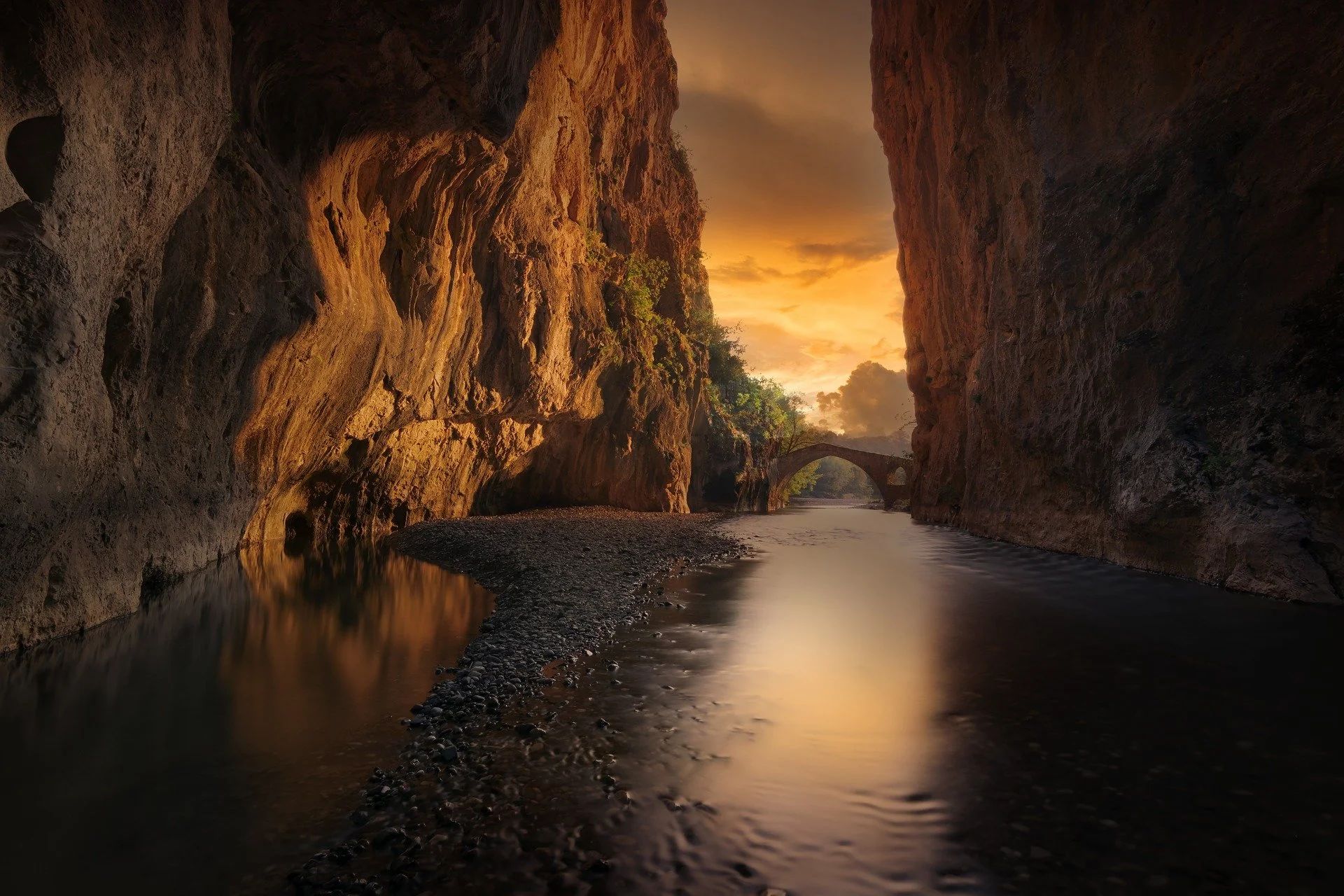
For those living abroad or without any living relatives in Greece, it can be difficult to find ways to connect with your Greek roots. So in this episode, I share some unique ideas to connect with your Greek ancestry that do not involve genealogy. Instead, I’m going to suggest some other practices for coming home to Greece, even if you are unable to visit in person. If you’re not of Greek heritage, but you feel a deep affinity to Greek culture or mythology, these techniques can also deepen your connection with the mythic Greek landscape.
Listen below or with your favorite podcast provider
APPLE | SPOTIFY | Youtube | Amazon | DEEZER | PANDORA
Scroll down for show notes and the transcript.
Mentioned in this Episode
Episode 5: Nostimon Imar: The Taste of Coming Home
Materia Mythica: Greek Plant Profiles
Your Plant Familiar: A Guide for Meeting and Bonding with Your Plant Ally
A Guide to Ancient Greek Instruments
What Did Ancient Greek Music Sound Like?
Tsai Tou Vounou: The Quintessential Greek Tea
SEIKILO: Ancient World Music (YouTube)
Transcript
You’re listening to A Temple Wild episode 11: How to Come Home to Greece.
Hello and welcome to A Temple Wild, where we rediscover the myths of the ancient Greeks through the plants and landscapes that shaped them.
My name is Mira and I received a message from a listener a few months ago. They had listened to Episode 5: Nostimon Imar: The Taste of Coming Home, in which I spoke about my feeling disconnected from my Greek heritage and my search for belonging in the Greek landscape. And the listener was also Greek-American and said they felt a similar longing, and was wondering if I could speak more on how to “come home” to the land, especially for those who don’t have any living relatives in Greece and are living abroad.
So in today’s episode, I’m going to share a few ideas of how you can connect with the Mediterranean, even if you are not of Greek heritage, maybe you just really feel a deep affinity to Greek history and mythology, these are some ways that you can deepen your connection with the mythic Greek landscape.
Now if you do have Greek blood in your lineage, there are resources, if you’re interested, for diving into your genealogy. But that is not what this episode is about. I’m going to assume you don’t know anything about your ancestors, other than their being Greek, and for whatever reason you can’t or don’t want to get into genealogy. Instead, I’m going to suggest some other ways of coming home to Greece, even if you are unable to visit here.
So the first is to choose one of your favorite Greek myths or deities, and then use them as an entry point for connecting with the land. So hopefully if you’ve been listening to the show and following along on my newsletter, you’ll know by now that the Greek myths, gods, and nymphs can actually be located in the Mediterranean landscape. They are connected with mountains, lakes, caves, forests, rivers, and specific regions of this land. So you can use that connection to find your own way into a deep communion with the landscape.
For example, let’s say you feel a particular love for the goddess Artemis. You could start by learning where in Greece Artemis was most often celebrated, and then choose one of those places to go deeper. So you might choose her temple at Brauron, also known as Vravrona, just east of Athens. You could spend some time learning about that temple and the surrounding area. What was the geography like where her temple was built? Was it built on a hill or with a view of a particular mountain? What kinds of springs, rivers, or forests grew around or near that temple? With the example of Brauron, Artemis’s temple was built where a river meets the sea, so there’s a very special ecosystem there. Can you imagine how that might have influenced the rituals or celebrations that were held there over time?
Get out a map and take a look at the surrounding area, using street view if possible, to get a closer look. Find photographs or travel blogs or videos of people who’ve been to the temple and the surrounding area. What kind of impressions or information can you get from this exploration? Can you imagine what it would feel like to move through that landscape, to stand beside the spring, to wander through the reeds along the marsh?
If you’d like some inspiration for this kind of landscape exploration, I’ve provided a link in the show notes for an essay I wrote about my visit to Brauron.
If choosing a deity or myth doesn’t suit you, you could instead choose a natural landmark that you know of in Greece as a starting point. One obvious choice might by Mount Olympus, where the gods were said to dwell in its peaks. Or the River Acheron (also called Acherontas), which, as we learned in Episode 10: Plants of the Underworld, was said to be one of the entrances to Hades. Or if you feel a connection to the islands, maybe the Santorini caldera, the volcanic crater of that famous Aegean island, sparks your interest. Whatever it is, take that opportunity to really immerse yourself in that particular area, engaging all of your senses in the exploration.
For those first two ideas — either following the thread of your favorite deity or discovering more about a natural landmark — the goal is to learn as much as you can about the geography and the ecology of that particular area. Greece is relatively small country, but it can be overwhelming if you think that you need to learn everything about everywhere, especially because the landscape here really is so diverse. So the point of using your favorite myth or landmark is to shrink down your focus, so you’re really becoming intimate with one place, one area, one small piece of the Greek landscape.
And get to know it really well, see if you can discover a secret treasure or hidden fact about the area that no one else knows. Then bring aspects of the landscape into your daily life by keeping photographs where you can see them (like as a background on your phone or on your computer). Try to find audio recordings of a river or waterfall or the birds of the forest or any other natural sounds from that area, and then listen to those when you’re cooking or studying or reading or even set them as your alarm on your phone. Learn about two or three plants or animals that are vital to the ecology of that area and see if you can find them, or their relatives, in your own neighborhood or region.
If visualization or meditation is a practice you’re comfortable with, you could take inspiration from the images and videos you’ve seen and then close your eyes and imagine yourself there, walking around, interacting with the landscape, and seeing what sorts of sensations or impressions come to you. The key is to make the place come alive in your imagination and in your life by bringing aspects of the landscape into your daily awareness.
Another way to come home to the Greek landscape is through cultivating a relationship with a particular Greek plant. Maybe you have a favorite Mediterranean herb or tree — like Asphodel or Olive or Pomegranate. Learn everything you can about that plant in relationship to ancient and modern Greek life. A good place to start is on my website, atemplewild.com, where I have a growing collection of free plant profiles for some of the most well-known herbs in Greek mythology. But you can also start with common Greek culinary herbs, like Oregano or Bay Laurel. See if you can grow that herb in a pot on your windowsill, or if you have the space and the right climate, cultivate it in your garden. Learn a few Greek recipes that include that herb. If possible, make an herbal remedy or a ritual incense with the herb. Make a talisman or jewelry that you can wear every day as a reminder of your connection to the Mediterranean.
If you want more ideas about cultivating a relationship with a particular Greek plant, I have a detailed guide in my shop for identifying and communing with your Plant Familiar, also known as a Plant Ally, which is a specific plant with which you share a powerful connection. I’ll provide a link in the show notes if you’d like to learn more about that.
Another way to come home to the Greek landscape is through listening to ancient Greek music. Now this might seem a little less obvious than the other suggestions because music isn’t often thought of as something coming from the land. However, the earliest instruments were made from materials found in and on the Greek landscape: hide-covered drums, lyres made from turtle-shells strung with gut strings, reeds carved into flutes, castanets made from wood or seashell.
Not only are the instruments coming from the land, but so is the music itself. The sounds themselves often seem to mimic sounds from nature — the drone of bees, the wind through leaves, the rumble of thunder. And even the lyrics – particularly of Greek folk songs – often pay homage to the sea or flowers or trees or mountains.
Different regions of Greece will have different flavors of sound, so if you’re drawn to a particular region, try to find music that really reflects that sense of being on the land. You could learn to sing a Greek song or even learn to play a Greek instrument.
I’d recommend starting with the YouTube channel SEIKILO, I’ll put a link in the show notes; they have some amazing musicians on there, often playing replicas of ancient Greek instruments. And for those of you who are monthly patrons, I also have two posts in Alsos — the patron portal — one on the instruments of Ancient Greece, and another where I curated a few of my favorite videos of ancient Greek music, so those links are also in the show notes.
Another suggestion for coming home to Greece without traveling or learning about your genealogy is to host a Greek celebration for your friends or your family. Cook a few Greek dishes, play or sing or dance to Greek music, decorate your home with images of the landscape that you’ve been learning about, and take the chance to really share about the Mediterranean with the people that you love.
If you’re introverted or the idea of hosting a gathering is too overwhelming, invite one friend over for tea, make them a cup of tsai tou vounou, that Greek mountain tea, and share with them a few things you’ve learned about the Greek landscape: both its beauty and its struggles.
If in your research you’ve come across an environmental issue that’s important to you – for example, reducing trash dumpage on mountainsides or increasing awareness about water pollution or promoting that saving of heritage seeds – find ways to get involved from abroad and share what you’re learning with your community.
My final suggestion to come home to the Greek landscape is to spend intentional time with your own body. So even if you can’t visit Greece, you carry it within your cells. The Mediterranean land fed and watered your ancestors; it provided medicine, tools, shelter, instruments, and clothing. It inspired their song and story, formed their culinary traditions, crafted their myths and their religions. You are the living culmination of that lineage, which means your body, your cells, have been shaped and nourished by the Mediterranean.
Even if you’ve never been there, you hold inside yourself the Mediterranean landscape, and whenever you honor your own skin, bones, and blood, you’re honoring the soil, the stone, and the waters that formed and sustained your ancestors. And if you had ancestors in Greece, their bodies have likely disintegrated and returned to the soil that sustained them. So the land remembers your ancestors, just as your cells remember the land.
Every time you speak or sing, every time you dance, every time you laugh or cry, every moment you simply exist, you are embodying the land. So all that’s necessary to feel that connection, to truly come home to the landscape, is to bring your awareness to your own body, to your breath, to your incredible complexity and beauty, to your organic, messy, and mortal relationship with the earth.
I hope today’s episode was inspiring and gave you some new ways to come home to Greece. If you’d like to stay connected to the mythic landscape, I invite you to join my free newsletter, where twice a month — on the New and Full moon — I send out updates from the Greek landscape, including free plant profiles, podcast episodes about the Greek myths, botanical and landscape photography from my travels all over Greece, as well as essays, poetry, and art inspired by the mythic Greek landscape.
I want to send a big thank you to all the Patrons who are supporting this show; your support is what makes this episode possible. If you, too would like to support my ability to keep making episodes like this, as well as all the other offerings I create and share, please join as a monthly patron. You’ll gain access to a members-only area of my website where I share private posts and you’ll also receive a discount for my shop. You can find all the details at atemplewild.com/patron.
That’s all for today; I hope you have a beautiful day, and I will see you next time.