Meet the Greek Herbalist: Greek Herbal Tours with Maria Christodoulou
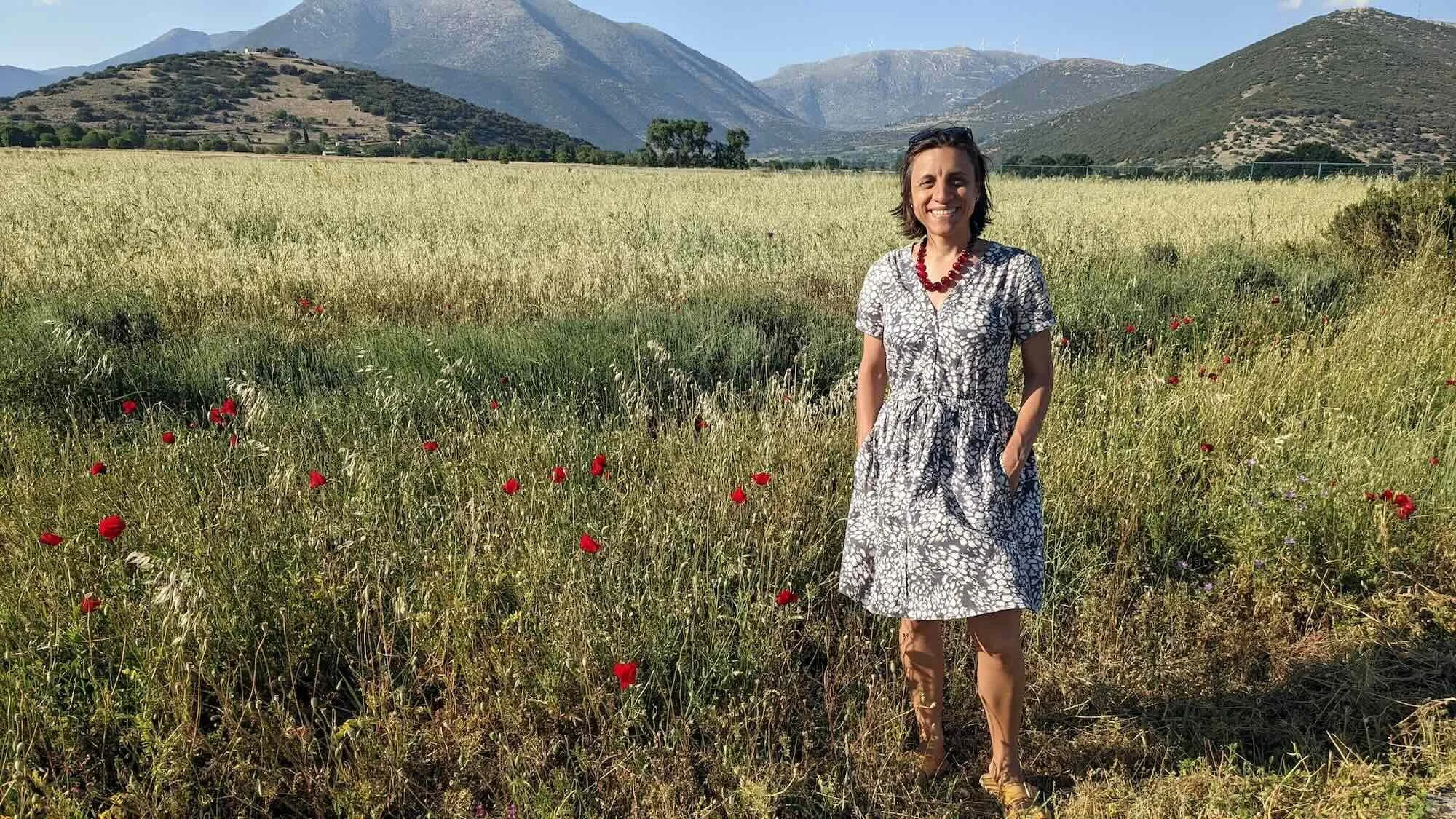
In today’s special episode, we meet The Greek Herbalist, Maria Christodoulou. We discuss her experiences as a first generation Greek-American, what it was like encountering the Greek landscape for the first time, how she went from a classics major to studying herbalism to now living in Greece and, among many things, leading the way in herbal immersion tours all over the country.
In her own words, Maria is a clinical herbalist exploring the wisdom and whimsy of ancient Greek herbal medicine. In a previous lifetime she lived on a farm in ancient Greece and found the cure for plagues. Maria teaches and writes about medicinal plants featured in fantastical myths, ancient medical texts, and surviving artwork. She offers educational herbal tours throughout Greece and is the author of "The Greek Herbalist's Guide to the National Garden" and "The Greek Herbalist's Guide to the Mountain." For more adventures through antiquity, visit www.thegreekherbalist.com.
Listen below or with your favorite podcast provider
APPLE | SPOTIFY | Youtube | Amazon | DEEZER | PANDORA
Scroll down for show notes and the transcript.
Transcript
In this special episode of A Temple Wild…
Mira: When you came to Greece, you know, in high school, how was it for you?
Maria: My gosh. When I went to Mytilene, I went to the village, I was just like, Oh my God, where am I? The landscape was so foreign to me. I didn't know where, I was like, am I on Mars? Everything is dry. It was in the summer so everything is brown. It's hot. It's just rocky. It's, I was like, I don't understand why people come here. I considered it like landscape shock, like seeing a landscape that was completely foreign and unreal to me. The next time I came to Greece, I did a semester abroad in Athens and that really changed my relationship to Greece because I could learn about the landscape of Greece more. I learned about ancient history. I was a classics major. So I was learning about the history of Greece and seeing it, also, I could live it. So I just understood it better.
Mira: Hello and welcome to A Temple Wild, where we rediscover the myths of the ancient Greeks through the plants and landscapes that shaped them. My name is Mira and today I have a very special guest on the show, The Greek Herbalist, Maria Christodoulou.
Maria is a clinical herbalist and in today’s episode we talk about her experiences as a first generation Greek-American, what it was like for her encountering the Greek landscape for the very first time, how she went from a classics major to studying herbalism to now living in Greece and, among many things, leading the way in herbal immersion tours all over the country. She also shares with us two of her favorite Greek medicinal plants.
I wanted to have her on the show because it’s so exciting to me when I meet other people who have this dual passion for the plants and for ancient Greece. And the thing I love about Maria is that she really shares her knowledge of herbal medicine — not only how the ancients did it — but also how we, today, can bring the herbs into our own practices of holistic self-care.
Another reason why I wanted to invite her onto the show is because we will be co-hosting two tours in Greece in 2024. So in both tours, we’re heading to parts of the country that, in my opinion, are the most beautiful regions of Greece.
The first tour takes place in Northern Greece, where I’ve been living for the last 6 years, specifically to Mount Pangaion (which is an area sacred to the god Dionysos) as well as to the picturesque Rodopi Mountains. We’ll be celebrating the Fall Equinox together, with a very special focus on the significance of the harvest in our everyday lives.
And the second tour is in Epirus and takes us to the traditional stone villages of Metsovo and Zagori, as well as the ancient Oracle of Dodona. So this tour is in mid-October and has a special focus on ancient Greek oracular traditions.
Both tours include hiking, hands-on herbal medicine workshops, ceremonies honoring ancient Greek herbal traditions, and more. So you can find all the details on my website at atemplewild.com/tours.
So with that, let’s jump into the interview, where you’ll get a chance to meet the Greek Herbalist, Maria Christodoulou, and hear more about her experiences with the mythic Greek landscape.
Mira: Hello, Maria. Welcome to the show.
Maria: Thank you. It's so nice to be here.
Mira: It's so nice to have you here. So you're Greek American, like me, but both of your parents are from Greece, right? Tell me a little bit about what that was like being, you know, first generation. Were you raised with, like, stories about Greece? I mean, was Greece in your awareness as a child, or what was that like?
Maria: Yeah, absolutely. So both my parents were born on the island of Lesbos, which people refer to now mainly as Mytilene and they moved to New York in the seventies when there was a big influx of people coming over from Greece and Greece, Greek, everything about it was part of growing up. Both my parents spoke Greek in the household. I was never very good at speaking Greek, so I kind of shied away with it, shied away from it as a child, but, we had Greek home decor in the living room, my dad has a plaque of Pericles orating to the Athenians and that was like the, the highlight of the living room. We had statues of like Athena and like other gods and goddesses, which I think, you know, was typical for other people, or at least my friends, my other Greek friends who, you know, I grew up with. And Greece to them was sort of a distant place. They kept in touch, but it wasn't common to, you know, call and text or, you know, it was maybe once a month my parents would call their relatives back in the village. So it was sort of a distant place to me. And the first time I visited Greece wasn't until I was in high school, so I didn't grow up coming to Greece regularly, it was not, it was not part of my childhood.
Mira: And so, you said you had Greek friends. I mean, does that mean you were part of, like, a Greek American community in New York? I mean, how was that? Yeah? Like, Greek church and, like, the whole thing?
Maria: The whole thing, the whole thing. So my high school, I probably, there were probably 10 Greek-Americans in my grade, at least. So we had a very big Greek community. I was, my family was involved in church. We just, and we just had a strong, network of Greek-Americans. I grew up on Long Island in the suburbs of New York City, and all of New York is a very big Greek-American population. A lot of people from Greece settled in New York. And, it was just normal, in my childhood to be around other Greek-Americans. So, also, it was nice to have that as part of my childhood.
Mira: You said your parents moved over like in the 70s, like, why did they leave Greece? Because like my father came to the United States because of junta I mean, he was basically like leaving the situation there, so like was there kind of negative associations with your parents leaving or was it positive?
Maria: Yeah, so in the 70s, so both my parents were from a very, very small village, and there weren't a lot of opportunities for work. So unless you wanted to become a farmer, which was definitely possible, it was hard to work anywhere else. And, you know, my dad didn't want to work as a farmer. He wanted to learn computers. And his parents also had visited, had come to the States for a little bit of time to work, so it was already, there was already an avenue to New York and my parents married very young, they got married in the village and then they moved to New York for for work opportunities, essentially. Yeah, there was just nothing, nothing really available at that time.
Mira: And were your family farmers historically? I mean, do you come from families…Yes. So they were already involved with the land and the earth and, you know, growing
Maria: Exactly. Exactly. Yes. So, my parents both have olive groves, that they share with their siblings. So, eventually at some point in the future, hopefully far away, I will inherit some olive trees. So, there is definitely that connection to the earth and olive oil production in particular.
Mira: Yeah. And so when you came to Greece, you know, in high school, you said you were, that was how old you were when you first came. Were you coming and experiencing the landscape? I mean, how, how was it for you coming to Greece? Did it feel like, oh, familiar? Did it feel foreign?
Maria: My gosh. When I went to Mytilene, I went to the village, I was just like, Oh my God, where am I? The landscape was so foreign to me. I was just, I was, it was like, I didn't know where I was like, am I on Mars? Like, everything is dry. Was in the summer. So there's like, everything is brown. It's hot. It's just rocky. It's, I was like, I don't understand why people come here.
Mira: I mean, obviously that changed at some point because you –
Maria: Yes.
Mira: — moved to Greece, right? And like, you're an herbalist and your work is connected with the landscape. So like, how, how did that transformation happen? Was it as you got older or was it that summer while you were there that you kind of like, like, how did that change kind of shift for you?
Maria: Yeah. So I considered it like landscape shock, like seeing a landscape that was completely foreign and unreal to me. And I think the next time I came to Greece, I did a semester abroad in Athens during college in my junior year, and I lived in Athens, and then I got to also travel with my classmates to different parts of Greece, and that really changed my relationship to Greece because I could learn about the landscape of Greece more. I could connect with it more. I learned about ancient history. I was a classics major. So I was learning about the history of Greece and seeing it, also I could live it. So I just understood it better.
Mira: Yeah. And why did you choose classics in the first place? I mean, was that because of sort of this immersion as a child in Greek culture?
Maria: I was very unexpected. I think when you had to choose a major, I was like, Oh, well, that's funny. Like ancient Greek history is a major. Let me just do that. So I didn't know before I went to college that that you could study that. So I was like, that sounds great. Let me, let me do that.
Mira: And you didn't speak the language though, right? I mean, you didn't speak Greek at this point. No.
Maria: I, I understood it better than I can speak it. So I learned ancient Greek, I learned the alphabet, I learned how to read it, so that eventually, that did help my modern Greek skills. And I also learned Latin andI really enjoyed studying ancient Greek history and connecting it with the land. So, you go to these places and you're like, oh, I know the story behind this place, and you just can develop a deeper connection to it. So, I got hooked into this area, which I was also connected to in my ancestral history. So, it felt very good for me to do that.
Mira: Yeah, and so then how did that lead you to herbalism? Like, how did you get from classics and studying to, you know, to the earth and to the plants?
Maria: After I graduated college, I got a Master's in library science, and then I fell into the non profit field. So I worked in the non profit field for about 15 years, and that was my career, and I really felt that I couldn't really enjoy it. I was good at it, but I couldn't really enjoy sitting at a desk for that long every day. And that was it. Like, you just sit there, and you do computer work all day. And there was nothing that was exciting for me. Like, there's only so much you can learn in that field. And I just kept getting sick, and I was tired all the time. And I was like, there has to be another way for me to live, to be happier in what I'm doing.
So I was living in New York at the time, and I was like, okay, well, what should I do? What, what is available? So I think I googled naturopathic school or herbal school, and there was one that popped up in New York City. It was fairly new, and I was considering it, and I was talking to friends, and I was debating, and then I was just like, you know what? I'm gonna just try it. And I was hooked, and I slowly shifted away from the non-profit work, which was fulfilling in its own way, but not for much longer, physically and mentally, I couldn't... I couldn't do it anymore.
So I went to herbal school, it was a three year program, and I was, wondering, okay, how am I going to stand out as an herbalist after I'm done with herbal school? Because it's really important to choose something you enjoy doing in the field of herbalism, and to enjoy it, and to stand out. So, that's how you become happy in life. You do something you love to do and people know you as that person. So COVID hit, I was living in New York city at the time. So I had time to create a website, start building my offerings and start writing about ancient Greek herbal medicine. So it was during COVID times, there was, you know, it was like the giant pause in the world. So it was a time, for me, I had time to think about these things. And I was like, this is a great opportunity. I'm going to take advantage of this time. And I really just started sprinting with it.
Mira: Amazing. And so, I'm curious, when you were in herbal school, was there an emphasis at all on Greek herbs or Greek plants? Or, no. Okay.
Maria: Nothing. And I was, I, we had one class where a visiting teacher mentioned the four humors. And she mentioned, you know, Greek medicine, you know, involved the four humors. And I was like, oh my gosh. Why don't you say more about this? I don't know any of this. So it was nothing, we talked, nothing of European herbal history.
Mira: Oh, wow.
Maria: During Materia Medica, in the notes, some of it would, you know, mention Hippocrates, or would mention Pliny the Elder or Galen, but it wasn't, it wasn't a whole, a class by itself where it's like, these are the herbalists from ancient Mediterranean region and these are the writings and the texts that we have that we can still read today and refer to them. And I think that, I think it's really important to learn about these topics because they influenced western herbal medicine immensely.
Mira: Definitely. Yeah, and so, I mean, you're, you're writing a lot about that. You're doing talks about that. I mean, you're able to bring together your classics knowledge, right? And your sort of access into this, you know, ancient history and then also the herbalism and then also your own ancestral connection. And it's like you're bringing, you're bringing all these things together. It's amazing.
Maria: Yeah. Thank you. I really do enjoy it.
Mira: Do you have specific herbs or trees or plants plants that you, they're like your go to, you know, that, Greek specifically, or Mediterranean at least, that you, you feel like they're, always in your apothecary, they're always a piece of, you know, your, your practice, and what are, what are those?
Maria: So currently I am in love with Hawthorn.
Mira: Mm.
Maria: And Hawthorn is a fantastic tree. It's, it grows in Greece and it grows in, you can find it in the U. S. I'm, I'm pretty sure. It's very good for the heart. I also find it very good for creativity. It's sweet, so it's nourishing, it brings a little sweetness to my morning. And I like to use the flowers and leaves you buy in combination. And then I also like to put in the berries. And I mix it with other herbs, of course, when I'm making an herbal tea blend. So that's definitely one herb I really am enjoying at the moment.
The other herb that has been a good plant ally for me has been Olive, which might seem obvious, I'm living in Greece, but olive has such a varied, and strong history throughout the Mediterranean region that it carries so many memories. And it's just, it's like the, it's like the container of history. And it lives for so long. It lives for thousands of years. So it has witnessed thousands of years of history generations of people. And it's a container for that.
So, I also throw in some olive leaves in an herbal tea blend with hawthorn. And it's also very good for the heart, strength, wisdom. It was the. plant associated with Athena, who is the goddess of wisdom and strength. I like to blend in the knowledge I have of herbs, when I'm making a tea blend and I'm like, okay, like, how am I feeling today? What do I need? And those two trees in particular.
Trees have been, I'm more drawn to trees. I wrote a, a sacred tree meditation that I give at the end of a, my plant walk in the National Garden in Athens. People just love it because it just, it connects you to these trees. And typically we just, we don't pay a lot of attention to our natural surroundings, but we don't really connect with the trees around us. And they're really important actually for many reasons.
Mira: Yeah, I remember reading there, there was a, I think a sociologist or something who had this term they came up with green blindness, I think, or plant blindness in the sense that like you look out at the landscape at the horizon, it just looks like one green mass. Like you don't see individual trees as individual, as individuals, you know, or you don't you can't pick out. And I remember being like that myself too when I was younger, like, you know, I would look at the forest and it was just like green, you know, or I would look down at the ground and that still sometimes happens to me like it takes focus I think to look down at a group of plants and to be able to pick out individual Individuals, individual species, you know, and, and, yeah.
And so how has that been for you? I mean, with, with botany, for example, or plant identification, is that something, like, now that you're here in Greece and you're actually seeing the plants in their native environment and, like, meeting them more, you know, has that been a simple or easy process for you to kind of get to know them better?
Maria: It's definitely been a learning process. There are a lot of plants in Greece that are not front and center in the States where I was living. And so it's like seeing them out in nature, sometimes I use a plant identification app. I have a giant book that also has photos and descriptions. And, you know, it's do I know this plant? What does it look like? Do I not know it? And do I want to know it? so I have learned a lot.
Mira: I’m glad you're saying that. Yeah, yeah, because I think, especially as herbalists, I think sometimes there's this feeling like we have to know all the plants or we're expected to understand, to be able to look and just identify it immediately, you know, and I think for people who are just getting into herbalism or just getting into a relationship with the landscape, it can feel so daunting and to hear people who this is their profession, this is what they do, you know, you know, and it's It's still a learning experience and you're always, getting out the resources and meeting the plants one on one and, you know, having these experiences. So I'm glad to hear that.
Maria: Absolutely. And there's, there's so many species that it's, you, it's impossible to know everything. It's impossible. So yeah, I, I forgive myself for not knowing everything.
Mira: That's good. That's really good. So when exactly did you move to Greece? Like, you came pretty, pretty recently, like, the last couple years, right? Like, post COVID.
Maria: I came two and a half years ago during COVID, but after Greece's second lock down.
Mira: Okay.
Maria: So, Greece was in lock down a couple times, hardcore, and I was like, okay, I'm gonna wait. And, I just, I was living in New York City in Brooklyn at the time, for about six years, seven years, and COVID hit New York City, was hit just very badly. It was, it was, not a good situation at all. And so I was like, okay, well, this is not the place I want to be anymore. I was already thinking about moving to Europe and it was just, it was the time. Well, it was time.
Mira: Yeah. Yeah. Yeah. And so now you live in Athens, right?
Maria: Yes, I'm in Athens. It's great to be here.
Mira: And you're, you're leading the way in terms of herbal immersion tours in Greece. If you go to your website, you have an amazing assortment of all these tours all over the country, and you're collaborating with herbalists and creatives and yoga teachers and people, you know, all over the place. So, can you talk a little bit about that? What are the tours like? Why did you first of all start doing them? And also, what can people expect if they go on one of these tours with you?
Maria: Yeah, I'm so excited that this coming year in 2024, I have a whole menu of options. And what inspired me to create these tours is that they, no one is, no one is doing them. And through my writing and my research, I've learned that Greece is a hotspot for biodiversity. Greece is the most biodiverse country in all of Europe. And there are, it has many native species here, Greece is 80 percent mountains, you have the sea, it was just an opportunity for me to elevate Greece's environmental bounty, botanical bounty and the things that I have seen in the past couple years that I've been here I've you know I've traveled to different places within Greece and I just thought wow like Greece is so beautiful and it's not just the beach. People come on vacation and all they know is the beach because that's the image they have of Greece, which is fine. But there is so much more. So I was determined and, inspired to create herbal tours. And last year I, I, hosted a couple of them and they went fantastic and people can expect to have a jam packed schedule of goodness. So wherever we are, depending on which, you know, tour people choose, there will be daily activities. We'll meet with locals, we'll learn about traditions in that specific area. If there's a mountain, we'll go hike it. If there's a sea, we'll swim in it. If there's a particular specialty about that area, there's a special herb or a special food or a tradition, I really wanted to incorporate as much as I could into each tour so people could get a sense of this specific place and expand their view of what Greece is.
Mira: I love that. I love that so much.
Maria: Yeah.
Mira: And we're doing, we're doing two tours together next autumn, which is amazing, and both are up in the northern areas of Greece.
Maria: I'm so excited for both of them and the autumn is the perfect time to be up there. It's just so beautiful. Everything is is still green. There's plants and berries to harvest. Oh, I'm so excited.
Mira: Yeah. Yeah. And I remember also we were talking about how the Hawthorn berries will probably be, speaking of Hawthorn, probably be ripe and ready to pick. And also I see the picture behind you, you have, is that rose hips?
Maria: Yes. Yes, they will also be ripe for us.
Mira: Yeah.
Maria: Next autumn. So we'll pick some.
Mira: Definitely. And you were telling me about an oxymel that you made with the hawthorn and the rose hips that you harvested last time you went to Zagori, right?
Maria: Yes. I made a fresh rosehip oxymel and I didn't have a lot of rosehips, so I made just a small batch of it and it was, it was just like having a tablespoon of happiness. Rosehips are known to just bring you happiness. They're a heart opening herb and if, you know, you need this in your life. This rose hips can really brighten things up.
Mira: Yeah. That's beautiful. You were saying that you, you feel a real connection to the trees here. Are there, is there a specific landscape that you feel a particular connection to, like a specific area of Greece, or even just a general part of the landscape that you feel an affinity with?
Maria: I'm in Athens, so it's not like I can, like, walk to the forest, but forest landscapes I really am drawn to, and it's like, you know, you put yourself in the forest and you're surrounded by trees, and there's just a peace and quiet, and the smell, the scent of pine trees, the scent of the earth, it just is very grounding. The ancient Greeks used to do ceremonies in the forest, and certain trees were very sacred to them, so it, the trees, you know, stand as a testament to healing because they were such an important part of Greek religion and medicine, they are still accessible to us. So, forest landscapes I particularly enjoy, just to, you know, hang out with the trees.
Mira: Yeah. Yeah. And you, you already mentioned, but you also do tours in the National Garden in Athens, right? So if people are coming to Athens and they don't necessarily want to do like a, a full tour with you, they can also do like a day, a little mini workshop basically with you, right?
Maria: Exactly, exactly. Yeah, so this tour is the Myths and Medicine Plant Walk in the National Garden. The National Garden is located in the center of Athens in Syntagma, right next to the Parliament building. And it is free, open sunrise to sunset, and my tours are two hours, and I talk about ten plants there, give or take, depending on time. And I start with the mulberry tree, I talk about its importance in Greek history, I talk about a myth, how we use it as medicine, how it used to be used as medicine, so it's really just ordinary plants that you can find in different, you know, in the U. S. especially, and just bring them to life.
Mira: Amazing.
Maria: You know, there's not just a tree in the corner. It has lots of things to, to tell you. I think I did a head count the other day just to see, like, how many times have I done this tour and how many people? I think I've, I've offered it to about 250 people in the past two years.
Mira: Amazing. That's so exciting. I love that, that you're spreading, you know, this love and this appreciation for the plants to so many people that are
Maria: Yeah.
Mira: That's amazing.
Maria: Yeah. So I'm really, I'm really proud of that. cause I, I was just determined to develop a plant walk in the garden and, and it has come together really beautifully.
Mira: And now you also work with, is it Herbalists Without Borders? Can you talk a little bit about that? Like what's organization —
Maria: Sure.
Mira: — and what's the work that you do with them?
Maria: Sure. So Herbalists Without Borders is a U. S. based nonprofit organization and you can create a chapter wherever you are based. Most of the chapters are based in the States. And I decided to create a chapter here as an avenue of creating or offering an event or a workshop with the legitimacy of the organization. So, I do have to fundraise for it, but a lot of the projects, or a lot of the events that I have done for Herbalists Without Borders for the Athens, Greece chapter has been with children in a garden space. We've planted herbs, we've watered the plants. Like, it's just been a very hands on activity with children. So it's been very fulfilling to be able to develop this chapter and this garden.
And one of the projects that I'm working on now is fundraising for a Dioscorides garden project in Athens. So I'm really excited about that. The current garden space I have is very small, but it's located next to the National Garden, so it's in the center of Athens. And I have a vision of creating a garden with plants that Dioscorides talks about in his ancient medical text, called De Materia Medica. And so his text was very popular for about 1500 years, and it's one of the texts that I refer to often in my work. I really enjoy reading his descriptions of how they used the plants. So that's my next project.
So we'll see, spring 2024, maybe there'll be a garden planting event and I'll have, expanded garden with plants that he talked about, which are all local. So, I'm very excited about that.
Mira: Yeah, yeah. Are there any other projects you want to tell us about? Anything else that's coming up that you, that you want to mention?
Maria: Well, I'm always juggling many different projects.
Mira: As it is for most herbalists, right?
Maria: Yeah.
Mira: Yeah.
Maria: Well, I can talk about the two guidebooks that I have written, in case anyone is interested in getting a taste of, you know, what I talk about on my tours. The first guidebook that I wrote was on the National Garden, and it's based on the tours that I do there, and it has a map, it has 15 plants that I talk about, and the, and the, pretty much the script that I deliver during the plant walks.
So, The Greek Herbalist's Guide to the National Garden is the first guidebook I wrote, and then the second one is called The Greek Herbalist's Guide to the Mountain. And, as I mentioned earlier, Greece, the landscape of Greece is mountainous. It's, like, Greece is a mountain. Like, all of it. So, I picked 13 mountains in Greece that have historical significance, special herb or plants that are native to that mountainside, and any traditional events that continue to happen there. So this was a fun book to write. And my goal is to write a new book every year. So the next one we'll, I'll start writing in January and it's long and arduous process, but…
Mira: Do you know what the topic is yet or are you keeping that secret.
Maria: I have a list of topics, but I think it will be about rituals.
Mira: Oh, fantastic.
Maria: I think that's what I've settled on. So, yeah, yeah.
Mira: Excellent. I'm very excited for that.
Maria: Yeah, yeah, thank you. And then the other thing that I recently launched is a product, an elderberry oxymel, and surprisingly, this is not a common herbal remedy to find in Greece, even though it's an ancient remedy. So it's very common in the States to find elderberry syrup, elderberry oxymel, different kinds of oxymel. And so I worked with a food lab, and I produced an elderberry oxymel, and now it's out in the world and people can purchase it. So it's with Greek honey, which is amazing, and some other flavorful and nutritious herbs.
Mira: For people who don't know what an oxymel is, because I think we've mentioned it a couple times, but do you want to just say, like, what's a, what is an oxymel for someone who's new, completely new to that?
Maria: Of course. So the word oxymel is Greek, of course, oxy means acid or vinegar and mel stands for μέλη, which is honey. So it's a vinegar and honey blend. And oxymels are made by taking apple cider vinegar, honey, and herbs and infusing them for about one month. And every day you shake it a little bit, you sing it some songs, you know, give it some good vibes. And at the end of the month, you extract the liquid part, which is your oxymel, you take out the herbs, and you take, I say a sip a day to keep you strong and healthy. They're usually high in vitamin C, very good for the immune system, especially in the wintertime. So, it's a very good on hand remedy to have in your kitchen all year round, pretty much.
Mira: Beautiful. And, and you know, you mentioned how elderberry oxymels, for example, they're not very well known or used in Greece. And I've actually found that generally herbal, I mean, people drink a lot of herbal teas, but herbal medicine isn't necessarily considered like a thing here in Greece, the same way it is in the United States. Do you want to talk a little bit, I mean, as an herbalist, as a medicinal herbalist, you know, what's that like for you coming here? Do you feel like, there's kind of like a gap or something between talking to people about plants and talking about herbal medicine and, you know, how does that, how does that bridge happen here for you?
Maria: Yeah, that's a fantastic question. So when I first moved here, I was so excited. I was like, Oh, I'm gonna like there's gonna be a community of herbalists. It's gonna be so cool. We can talk about plants all the time. And really, I came to realize that there is not a community of herbalists. Because it is not a thing, and it's, it's not trendy yet, maybe another 10 years it'll become trendy, you know, who knows. But the difference between Greece and the States is that in the States, you can go to herbal school and learn how to be an herbalist. You can take online classes, you can go in person. In Greece, you are not allowed legally to be a clinical herbalist or even to be a naturopath. So there are no schools to teach you about herbal medicine. There, there are programs that you can, you know, enroll in and you can learn traditional Chinese medicine or, you know, about some of the herbs, but it's nothing at the extent where you will finish and become confident in your skills to be a clinical herbalist.
Mira: Right.
Maria: It was a pretty disappointing moment for me to realize that, but there are herbalists here that I have met who went to herbal school outside of Greece, and then they came back and they're practicing so we, there are some of us, there are a few of us here, and you know, people have emailed me and says, they're like, Oh, I'm coming to Greece, I'd love to meet herbalists and do all these herbal things. And I have to tell them like, well, there's, you're not going to find a big community. So, hopefully, as. herbal medicine becomes more popular in Greece, as it should, this will change and, you know, I think there's so much about the history and the medicine and the plants that are here. There's so many opportunities for learning.
Mira: Yeah. Yeah. And I think a lot of that knowledge is usually in the older generations like the yiayias and the papous, you know, who know about the plants. They know, they know like, okay, this random herb, it can be used for this, but they don't, you know, it's not necessarily something the younger generations know as much, and, yeah, I find that really sad and heartbreaking and, you know, that it could die off. You know, this knowledge and this information is going to die off. Yeah.
Maria: Right. Yeah. Yeah, exactly. Yeah. Most people are they don't live in the village. They live in the city and it's not cool to live in the village. So there's no one for these grandparents to tell to pass on the knowledge. And I think it's a big, it's a big problem, from my perspective that we're losing this connection to the landscape because people are getting older and passing away. So, one of the dream projects would be to travel all over Greece and meet with people in villages and video and record them, you know, record their stories, write them down, take video, and just try to preserve it at least in some format.
Mira: Yeah. Well, you are doing a little bit of that. I mean, with your tours, right? I mean, you're reaching out to different parts of the country and like connecting with people in different areas. I think over time those connections get built, you know, and like communities start to form. It's amazing the work that you're doing here. So thank you.
Maria: Thank you.
Mira: I’m so glad that you're here, that we're both in the same country and get to participate in like this herbal community that's, that's growing. And you know, I, I think that's, that's fantastic.
Maria: Yeah, I'm so excited about all of these tours next year and seeing where the meeting people who want to come and learn alongside us. And learn Greece on a whole new level.
Mira: Definitely. Definitely. Well, thank you so much for coming on the show. Is there anything else you want to maybe tell people what your website is, how they can find you, get more information about what you're doing?
Maria: Yeah. So my website is thegreekherbalist.com. I call myself The Greek Herbalist, so you can find me on Instagram, Facebook, so definitely reach out if you have any questions and hopefully see you all in Greece next year.
Mira: Fabulous. Thank you so much, Maria.
Maria: Thanks Mira.
Mira: Bye.
Maria: Bye.
Mira: Thank you so much for tuning in to today’s interview with Maria. To find out more about the tours Maria and I are hosting together in 2024, head to atemplewild.com/tours. And while you’re there be sure to join my free newsletter, the Moon Parchments, which comes out every New and Full Moon. It’s the best way to stay up to date with all the Greek-inspired offerings that I release each month, including this podcast, photography of the gorgeous Greek landscape, free plant profiles, poetry, essays, and more.
Thank you again for joining us, and I hope you have a beautiful day, and I will see you next time.