Nostimon Imar: The Taste of Coming Home

Like many Greeks, I come from a family steeped in olive oil. My grandmother’s family tended olives in a small village near Kalamata, the city in the southern Peloponnese famous for its Olive of the same name. In this episode, I get a bit more personal than usual and share how I came to live here in Greece - and how I now find belonging and meaning in the Mediterranean landscape.
Listen below or with your favorite podcast provider
Scroll down for show notes and the transcript.
Related Articles


Transcript
You're listening to A Temple Wild: Episode 5: Nostimon Imar: The Taste of Coming Home
Nevertheless I long — I pine, all my days
to travel home and see the dawn of my return.
- Homer's Odyssey v. 219-220 (tr. Robert Fagles)
Hello and welcome to A Temple Wild, where we rediscover the myths of the ancient Greeks through the plants and landscapes that shaped them.
My name is Ekstasy and as many of you know, each month I publish a new Materia Mythica entry on A Temple Wild, celebrating a Greek flower, herb or tree, and we explore the myths, temples, and gods that honor them, as well as learn to welcome the plants into our own home, garden and ceremonies. And as next month's Materia Mythica entry will be the olive tree, I've been reflecting a lot lately on the olive and its role in the history of my family.
So today's episode is going to be a bit more personal than usual, as I wanted to share with you just a little bit about my own experience of the Greek landscape: how I came to live here in Greece and why I started A Temple Wild - a piece of my own personal mythology.
Like many Greeks, I come from a family steeped in olive oil. My grandmother’s family tended olives in a small village near Kalamata, the city in southern Peloponnesos famous for its olive of the same name. But when my grandparents moved from their village to Athens at the end of the 1930s, they arrived in the city just in time for the beginning of World War II and the total economic collapse that followed, rendering their money useless and throwing them swiftly into poverty.
But they were able to pay their rent with canisters of olive oil from my grandmother’s olive groves, and they literally used the fruit of my ancestors’ roots as liquid currency, barely keeping my father’s family alive through national famine and war.
And so I have a really deep respect for the olive tree. It has kept my ancestors alive and nourished for centuries, and it is, quite possibly one of the main reasons why my father even survived his childhood and much later made his way to north America, where he met my mother.
But I was not raised like most Greek-Americans. Forget everything you’ve seen in “My Big Fat Greek Wedding" - I did not have a large extended family, nor were we part of a Greek-American community where I grew up in Massachusetts. I was not raised to speak Greek and my father, being an atheist, did not celebrate any of the Orthodox festivals. I did not go to Greek school, my father rarely cooked traditional Greek food at home, and I was not even really taught the modern history of my father's homeland.
Instead, Greece was a very private place for my father, a piece of his history that he did not often share with me. And I was aware of his very deep love for ancient Greek and Byzantine history, but I was not told stories about his personal history - all of that I learned much later, as an adult.
And what I learned was that my father had come, alone, to the United States at the age of 28, leaving Greece in the wake of a military coup, barely escaping the junta that followed. And in his attempt to assimilate to the United States and avoid the painful memories of his life in Greece (which had included intense poverty, foreign occupation, and civil war), Greece became a distant place, somewhere “over there," across the ocean, where things of great importance had once happened.
And so I think that for those reasons, my father did not actively locate himself – or me, for that matter – in Greece's history or culture.
So instead, my sense of “Greekness” was largely self-discovered during sporadic summer visits to Greece with my non-Greek mother. She would take me alone to Athens, to Loutraki, to Rhodes and other places, where she would try to facilitate a connection to my roots because I think she could sense that I didn’t feel like I belonged in the United States.
And as a young person, I felt very lonely. I struggled with anxiety and depression and I never really felt like I fit in among my American peers. And since I didn't grow up with a sense of any ancestry - of connection to a specific people or a culture - I felt even more isolated, adrift and unsure of to whom or to what I really belonged.
And so I loved those summer trips with my mother to Greece: it was a break from the bullying and the exhaustion that I felt at school and a chance for me to visit a place that held such rich, ancient symbolism and pagan lore.
I truly think going to Greece kept me alive during those seemingly unending years of childhood loneliness and teenage depression, and I am eternally grateful that we had the money and the time to be able to visit Greece as sporadically as we did.
And at the same time, I never felt quite “Greek enough” to fit in there, either. I was unable to speak the language, unable to understand the culture, unable to deeply connect with the people or identify with my relatives, who shared my nose and my depressive disposition, but as far as I could tell, not really much else.
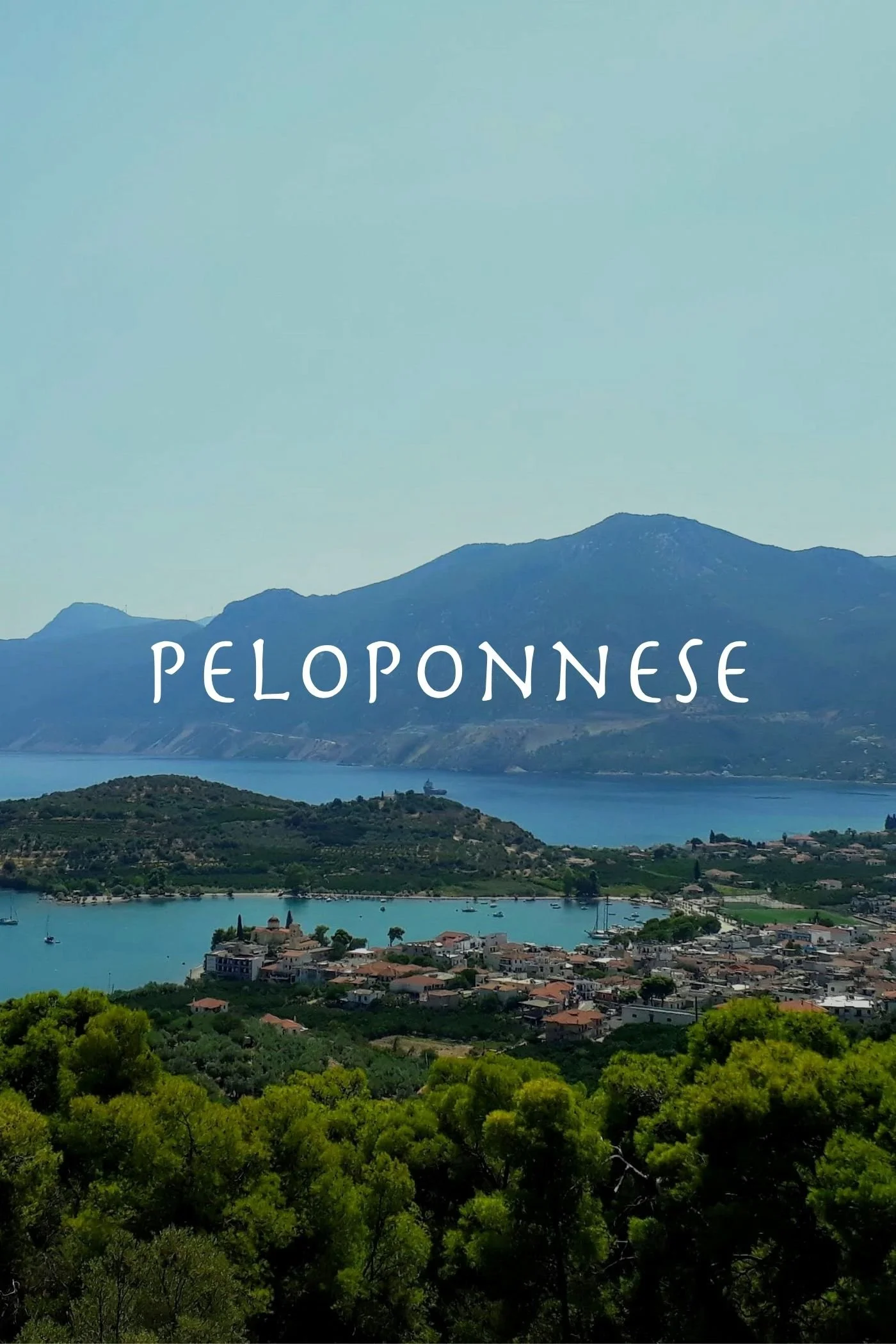
And yet I did feel a connection with the landscape: sun-scorched mountains, silver-grey valleys of olives, the blue sea foaming on rocks, the scent of wild oregano and sun-warmed pine needles. I would sit down to a feast of horta, boiled wild greens, and fresh figs and thick yoghurt drizzled with thyme honey, and something about the land smelled - and tasted - so familiar to me.
In Homer's Odyssey, Odysseus, separated from his home and aching for the "day of his return," uses the phrase nostimon imar to express the idea of his homecoming. Today, when something is delicious, modern Greeks use the word νόστιμο, meaning "tasty." This word shares its root with the verb νοσταλγώ, which means to feel nostalgia - the painful longing for home that Odysseus felt.
So in the Greek language, the experience of coming home is tightly connected with the familiar, νόστιμο, tasty flavors of the soil: the herbs, the fruits, the vegetables that grow from one's homeland.
As a child, I think that's what coming to the landscapes of Greece felt like for me: sitting down to a home-cooked meal. My body felt nourished by the land and after our summer visits, I would always return back to the United States, filled up, satiated, at least for a few weeks, until the sea salt smell had faded from my clothes and the sun had left my skin.
Given my affinity for the Mediterranean, you'd think I would have come running here the moment I was old enough to support myself, but I actually spent the next 13 years after high school circumambulating this place, moving frequently between states, changing jobs, coming for summer visits, but never setting down roots, always searching for a sense of home.
Just before my father died, I remember him admitting to me that he wasn't sure where he belonged anymore, where home was for him. He had left the Mediterranean as a young person and had spent the rest of his life in the United States: he didn't really feel Greek anymore, but he didn't really feel American, either.
So I do think part of my own move to Greece 5 years ago was a way of returning to my roots and to my father - to try to locate him somewhere in the land, in history, and in me. And I now find myself in a very similar position to my father at the end of his life. I am still not "Greek enough" to fit in here: my grasp of the language is elementary, I am not Orthodox, so the religious festivals don't hold any familiarity for me, and I am often totally perplexed by modern Greek culture.
But this land feels, smells, and tastes like home: when I walk on the mountain where I live, among the wild cistus, thyme, and euphorbia, or when I sit beside the running water beneath ancient plane trees, I can feel the pulse of belonging in my veins. I can feel a deep connection, if not to the modern culture, then to the plants and the places that my father's ancestors have indeed called home for generations.
But on some level, I still feel a yearning, a deep aching for home that I cannot seem to quell. And perhaps I will always feel on some level that I don't truly belong here, or really anywhere. Greece is, after all, only half of my story: my mother's people were British colonizers, travellers who left their homeland for foreign lands and, for good or for bad, their history is also in my blood.
But even the root of my name - Ekstasy - ek-stasis - it means "displaced" or "outside of where it stands" and so I think the question of what it means to belong - to a place, to a people, even to my own body - is truly the deep work of my life.
And so I'm curious: what about you? What is your relationship to Greece, to the ancient stories, to the landscape of the Mediterranean? What draws you here? What pulse do you feel from the land? I would truly love to know
In our next episode, we'll be turning our attention to that ancient goddess that so many of you know: Athena and her gift to the city of Athens, the olive tree, which won her the honor of being the city's patron.
So until then, if you enjoyed today's episode, I hope you'll consider becoming a patron, as it's your regular financial support that really makes this show and all the other art, essays, and stories that I share on A Temple Wild even possible.
For more information about becoming a patron, or if you'd like to leave a one-time tip in the tip jar, subscribe to my monthly newsletter, or send me a personal message, you can do that on atemplewild.com.
Thank you so much for listening today; I hope you have a wonderful day and I will see you next time.