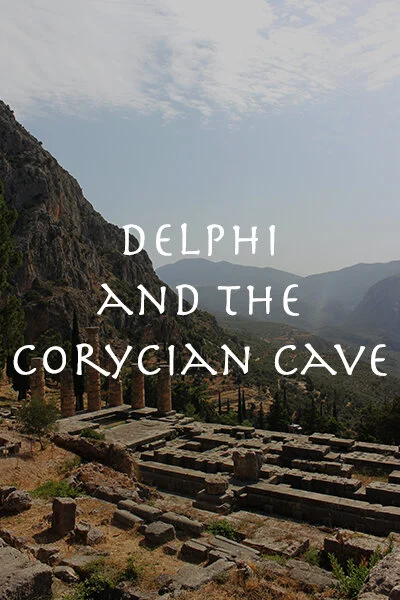
Cypress

Cupressus sempervirens
Grief - Mourning - Holding Vigil - Remembrance
The Cypress is an evergreen conifer tree with dense, scale-like leaves and ovoid cones. Native to the eastern Mediterranean, the Cypress is associated primarily with the gods Apollo, Artemis, and Hades. However, the most well-known myth of the Cypress is that of Kyparrisos, the youth who accidentally killed his favorite stag and, desiring to mourn forever, transformed into a Cypress tree. The tree is thus associated with grief and lamentation, and often found near burial grounds or entrances to the Underworld. Like many evergreens, the leaves are highly aromatic and offer antimicrobial, anti-inflammatory, and expectorant properties. As a sacred emblem of holding vigil, invite the Cypress into your ceremonies for grief, mourning, and lamenting that which has died. Keep reading below to learn more about the Cypress.
Index
The Cypress in the Wild & Garden
LATIN BINOMIAL
Cupressus sempervirens
PLANT FAMILY
Cupressaceae
COMMON ENGLISH NAMES
Cypress, Mediterranean Cypress, Italian Cypress
COMMON GREEK NAMES
Κυπαρίσσι, Κυπάρισσος
CHARACTERISTICS
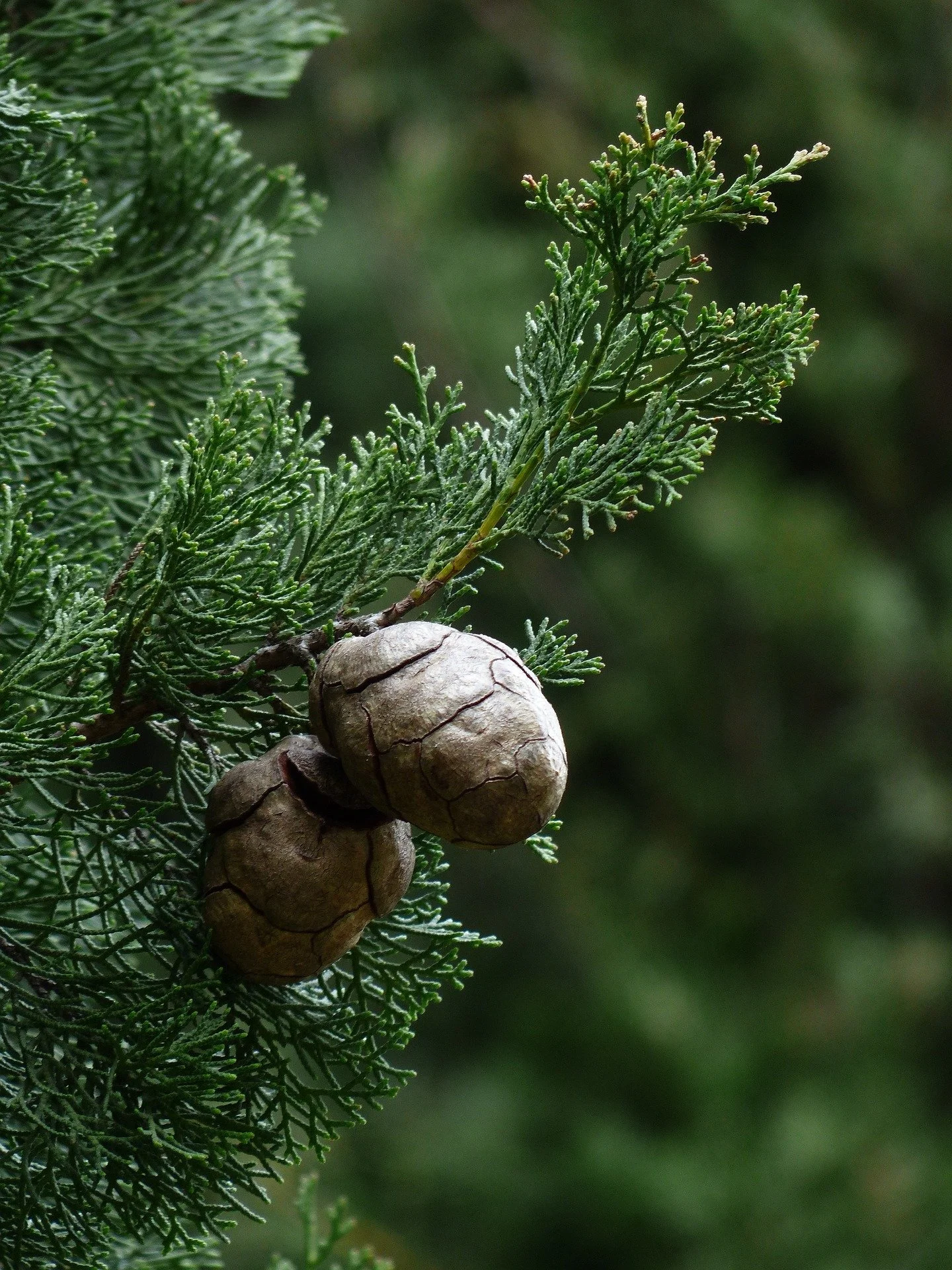
Coniferous evergreen tree with dense, scale-like leaves and ovoid cones. Relatively fire resistant as compared to other Mediterranean trees. (1) (2) (3)
NATIVE HABITAT
Eastern Mediterranean
PREFERRED CLIMATE & CONDITIONS
Prefers full sun and well-draining soil. Drought tolerant once established. Prefers protection from cold winds. Hardy in Zones 7 to 10.
TYPICAL HEIGHT AND SPREAD
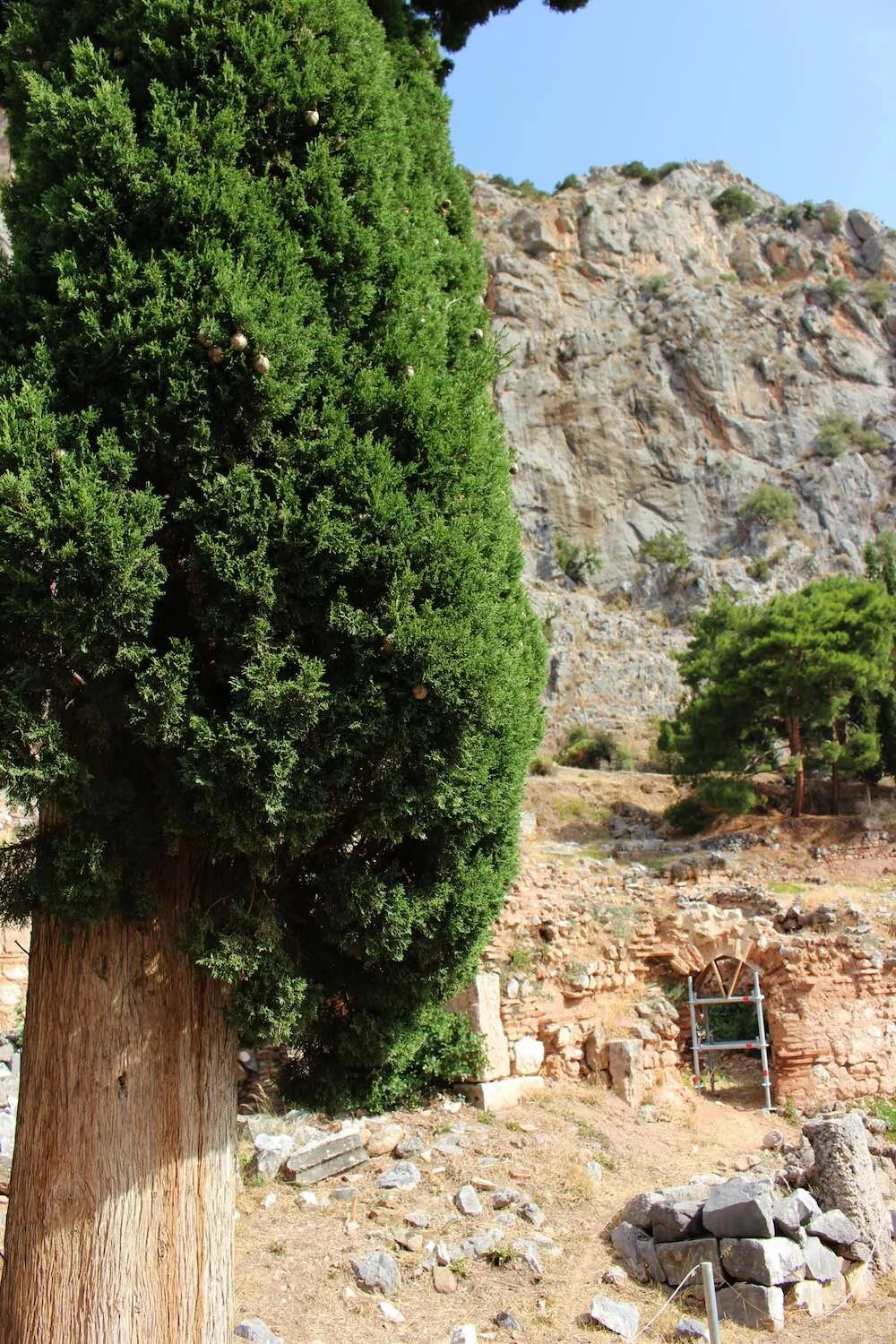
Up to 38 meters (125 feet) in height. Typically up to 6 meters (20 feet) in width, often forming a narrow, columnar shape.


How to tell the difference between a Pine, Fir, Spruce, and Cypress tree?
Many people, myself included, have a hard time differentiating between the many Mediterranean evergreen conifers. Read my short guide here to learn how to tell the difference between the Pine, Fir, Spruce, and Cypress.
Back to top
The Cypress in Greek Mythology
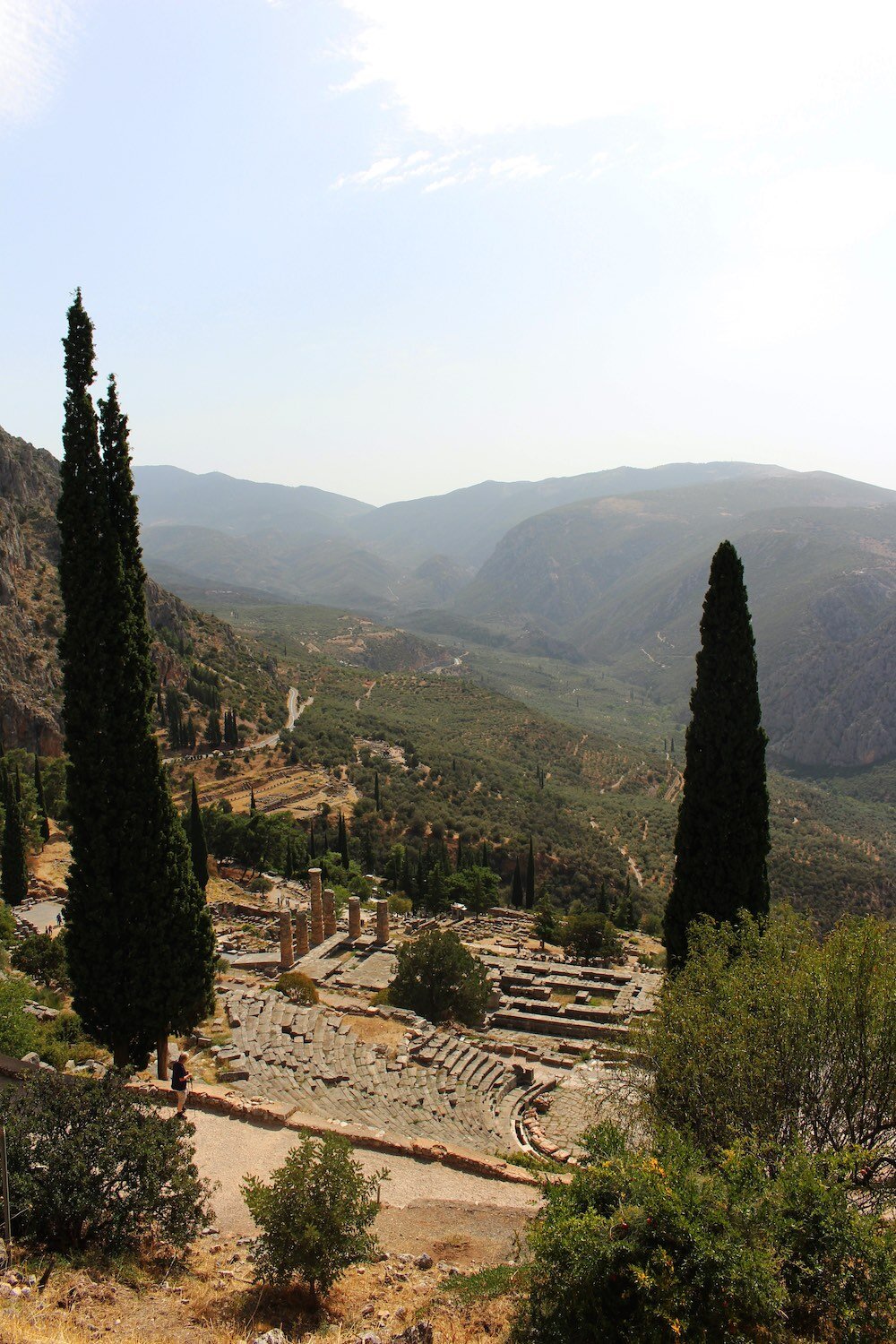
Cypress tress at the Oracle of Delphi, Temple of Apollo
Apollo and Artemis
The Cypress is often associated with the gods Apollo and Artemis. According to Strabo, the goddess Leto gave birth to the divine twins near a Cypress grove on the island of Ortygia. One of the most well-known myths of the Cypress involves a youth who was adored by Apollo (more below). And according to Pausanius, several of Artemis’s temples were amidst sacred Cypress groves.
Hades and rituals of the Dead
The Cypress has also been connected with Hades, god of the Underworld. In ancient times, the trees were found in sacred temple groves, as well as near burial grounds, ritual sites honoring the dead, and entrances to the Underworld. Some say that Cypress wood was also used for coffins, and branches were burned and carried by those in mourning. Even in modern-day, Orthodox Christian Greece, the tree is still planted at cemeteries and grave sites.
The Mourning of Kyparissos
Perhaps the most well-known myth of the Cypress comes to us via Roman literature and art. In Ovid’s telling, there was a Greek youth named Kyparissos who was beloved by the god Apollo. On the island where Kyparissos lived, there was a stag with golden antlers, adorned in jewelry, gems, and pearls. Tame and fearless, the stag would visit those it knew and allowed strangers to pet it.
Kyparissos, in particular, adored the stag; he would often lead it to water and pasture, weave garlands for its antlers, and even ride it. One hot summer day, under the sun sign of Cancer, Kyparissos was practicing with his javelin when he accidentally killed the stag where it lay resting in the shade. Utterly heartbroken, Kyparissos lamented, desiring to kill himself. Apollo tried to comfort him, but Kyparissos could not be consoled. Consumed by his grief, Kyparissos dissolved and transformed into a Cypress tree.
In some versions of the story, the stag was actually a gift to Kyparissos from Apollo. After Kyparissos accidentally killed the stag, he begged Apollo to transform him into a Cypress tree so that he would be allowed to mourn his beloved stag forever.
“But still the lad lamented, and with groans implored the Gods that he might mourn forever. His life force exhausted by long weeping, now his limbs began to take a green tint, and his hair, which overhung his snow-white brow, turned up into a bristling crest; and he became a stiff tree with a slender top and pointed up to the starry heavens. And the god [Apollo], groaning with sorrow, said; ‘You shall be mourned sincerely by me, surely as you mourn for others, and forever you shall stand in grief, where others grieve.’”
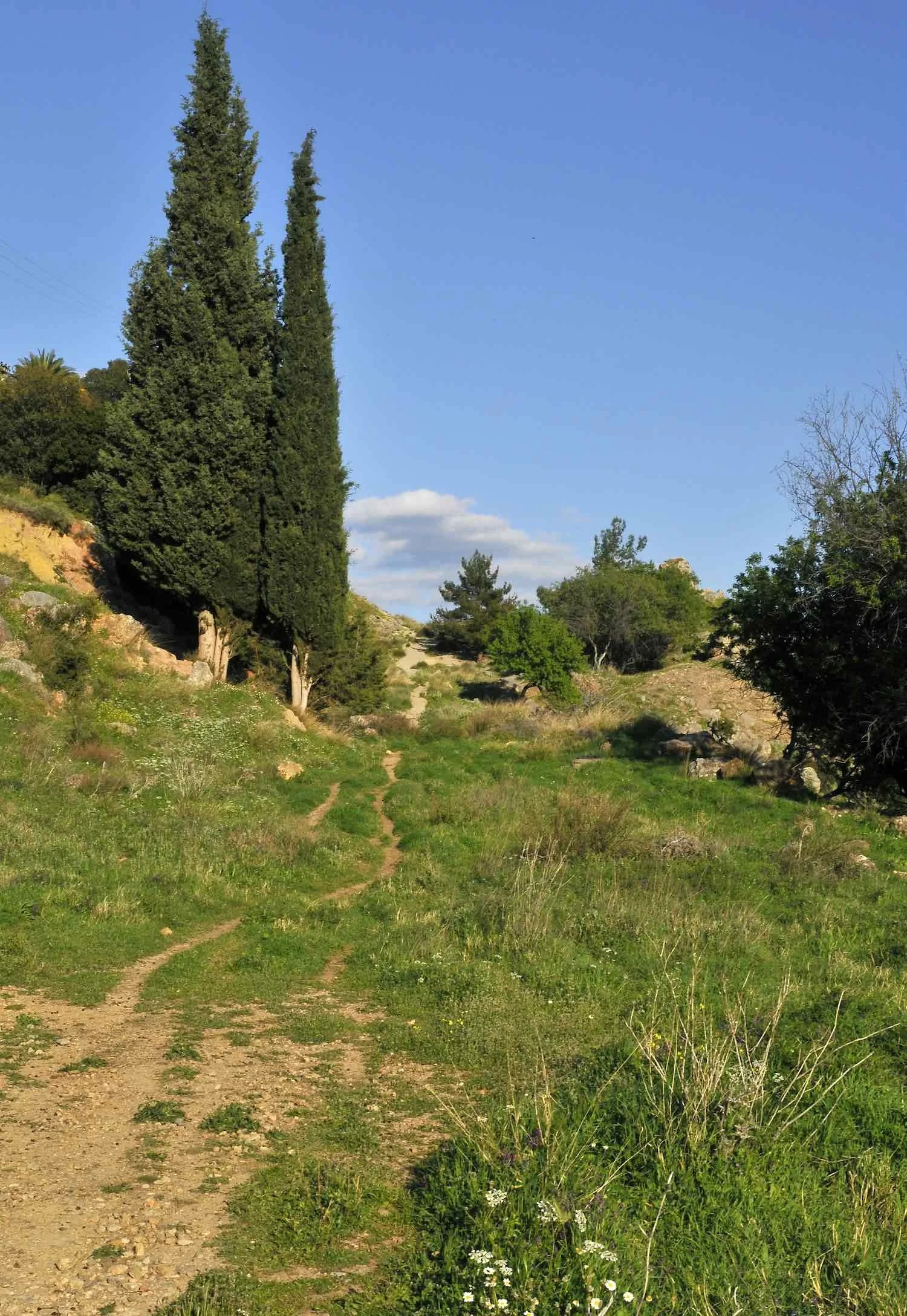
Cypress trees beside a path near Delphi. Photo by LBM1948, CC BY-SA 4.0, via Wikimedia Commons
Xoanon and Wooden Sculptures
According to ancient Greek writers, the earliest Greeks honored wooden representations of the gods made from Cypress, Olive, Oak, Juniper, and other sacred trees (depending on the god being honored). Called xoanon (plural: xoana) by the ancient writers, these sacred icons were sometimes simple pieces of wood, while other times they were carved and anthropomorphic in shape. The statues were often given a place of importance in the temple, bathed, adorned, fed, and also carried in processions.
Sometimes wood cut from a sacred grove also acted as a frame or base that would then be plated in gold or ivory, such as the famous statue of Athena Parthenos in the Parthenon of Athens, which was likely built around Cypress wood.
Back to top
The Cypress in Ceremony
Grief - Mourning - Holding Vigil

In the origin story of the Cypress, Kyparissos adores his stag. He demonstrates his love with acts of devotion; he cares for it, makes gifts for it, leads it to places of nourishment and rest.
After discovering he has accidentally killed his beloved stag, Kyparissos at first wants to end his own life — to have the pain simply be over. But instead, he allows his mourning to transform him.
Much like his love for the stag, his grief is an action — an act of devotion for his beloved — as he lives on in his new, tree form.
So this is the wisdom of Cypress: Grief is a practice, an action. It is something we do, not something we passively experience. It is an act of devotion. Like loving, it is a skill that we must learn to perform while living.
Many of us have been raised to believe that grief is a feeling or an event — something that happens to us, in stages. We have been taught that grief is something that might last a long time, but there is still the expectation that it will be over at some point, that our grief will (ironically) someday come to an end.
But the nature of being human means that we are in a constant dance with death: the death of life (whether human, animal, or plant), the death of identities, the death of relationships, of plans, of dreams. Every passing second is the death of the present moment, the transforming of what is into what was.
And so grief is the art of attending both life and death — of loving what is and what was — of standing vigil and bearing witness to that which is no more, while still living. It is an act of devotion, of remembrance. It is an act of love.
“Loving and grieving are joined at the hip, for all the beauty, soul, and travail that brings. Grief is a way of loving what has slipped from view. Love is a way of grieving that which has not yet done so. We would do well to say this aloud for many days, to help get it learned: Grief is a way of loving, love is a way of grieving. They need each other in order to be themselves.”
Much like the Cypress stands vigil on the landscape, evergreen in its presence, so can our mourning — our act of grief — be a way to love and honor that which is no more. Not as a static monument, but as a lamentation — an on-going process of living in the moment, of acknowledging the mortality of that which we love or have loved.
Parts Used
needles, twigs, wood, cones
Safety
Generally considered safe to use.
Elemental Correspondence
Seasonal Celebrations
Metal Season through Chaos Season
Altar
Adorn your altar with sprigs of Cypress leaves and collected cones. Set collected Cypress wood in a place of importance on your altar, either in its natural form or carved into a representation, like the xoanon of the past. Burn Cypress needles as incense or anoint a candle with Cypress-infused oil and keep it burning on your altar in vigil to honor that which has died.
CEREMONY
Include Cypress in any rituals to mourn the dead — whether it be a human, animal, identity, or relationship that has died. As the Cypress is associated with Hades, with entrances to the Underworld, and with funerary rituals, you can also invoke the power of the Cypress in your burial ceremonies.
Plant the tree in a place of mourning, where you can visit frequently to remember and grieve. Leave offerings at its roots in remembrance, such as Pomegranate seeds or Asphodel flowers. Hold a vigil for your dead, burning candles anointed with Cypress-infused oil. Lament, cry out, shake the branches of the Cypress. Let your grief be an act of devotion, a heartfelt acknowledgment of that which is no more. Even if what has died was a marriage, a dream, or the person you used to be, honor the love you had.
Devotion
Whether before your altar or the living tree, read the following:
Cypress, evergreen of lamentation,
I mourn that which once was.
Teach me how to grieve, to love,
to be present in each moment’s ending.
Back to top
The Cypress in the Kitchen & Apothecary

Cypress tree overlooking the valley in Delphi, Temple of Apollo. Photo by LBM1948, CC BY-SA 4.0, via Wikimedia Commons
Parts Used
needles, twigs
Traditional Medicinal Applications
Cypress leaves are known to have antimicrobial, anti-inflammatory, and expectorant properties and are often used for respiratory, circulatory, and muscular conditions. Like many other evergreens, such as the Pine, the needles can be infused in oil for body or chest rubs, simmered in water for air purification or as a steam inhalation for congestion, or burned as a cleansing incense, especially during cold and flu season.
Safety and Drug Interactions
Generally considered safe to use.