Something’s Off in Delphi: The Corycian Cave and A Channel Blocked
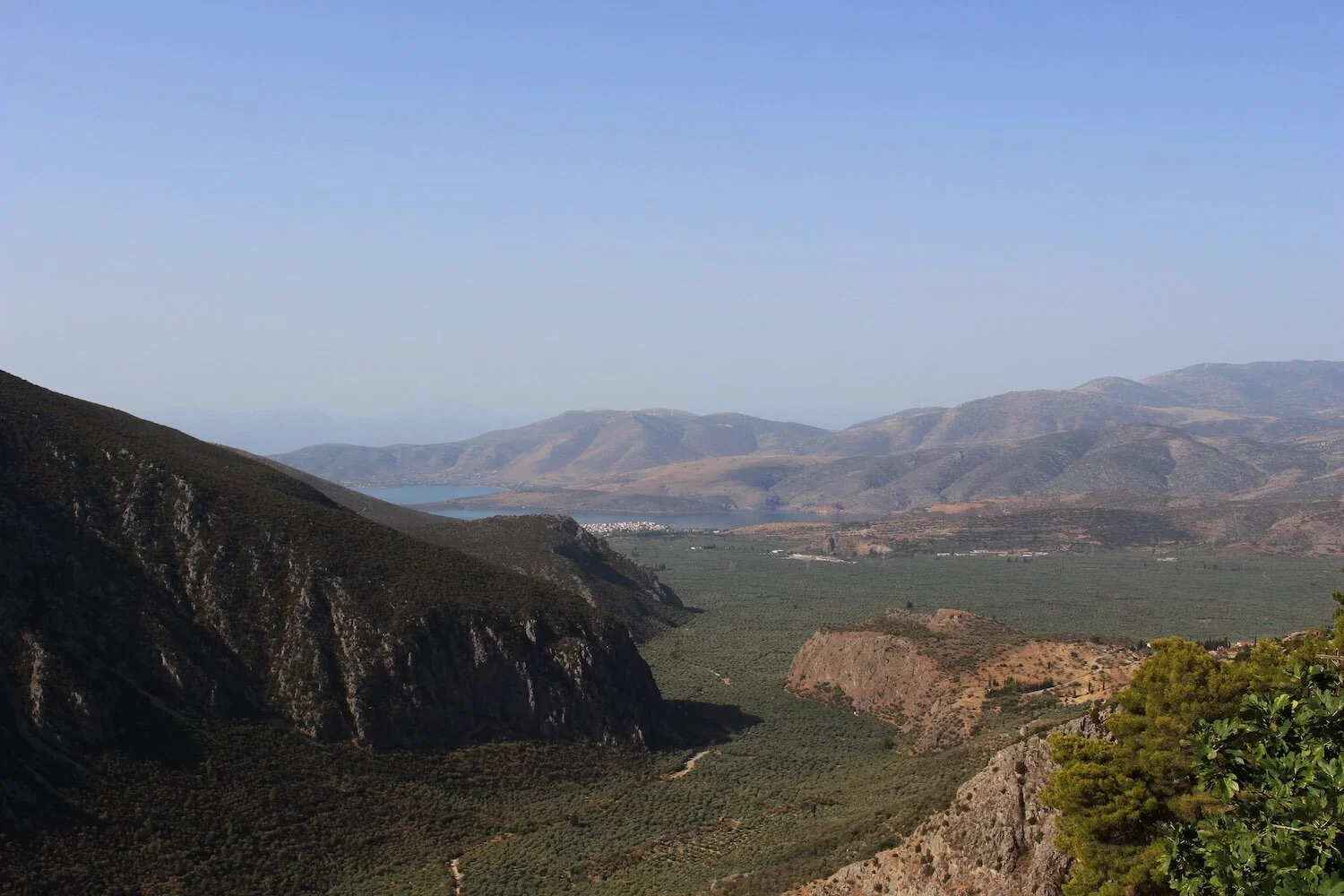
We arrived in Delphi in the dark and awoke the next morning to stunning views of the mountains, the Olive-filled valley, and the sea. It had been over fifteen years since the last time I’d been to the sacred site, but I clearly remembered the way Apollo’s temple complex nestled against the side of Mount Parnassos — and I was looking forward to walking the sacred way again.
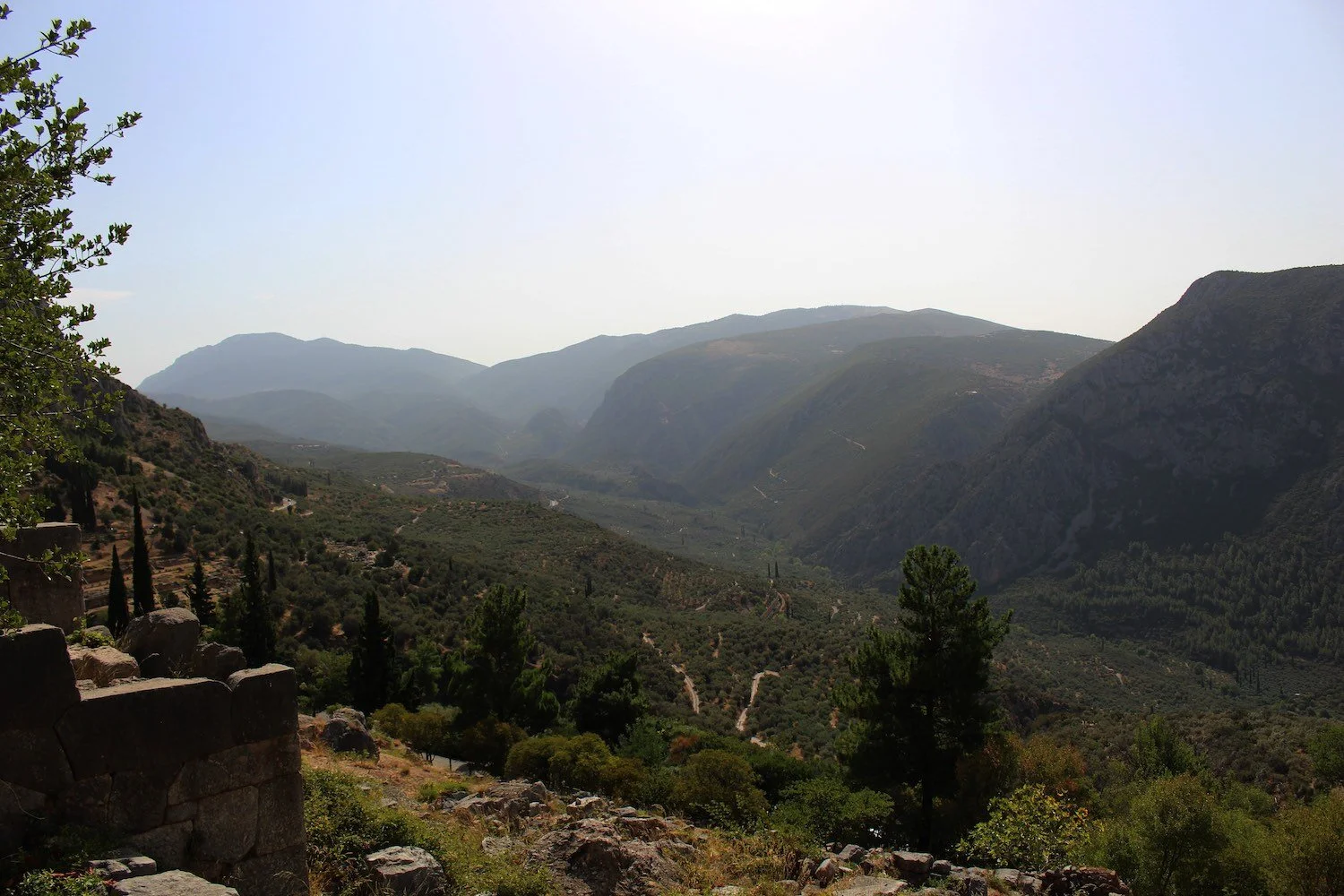
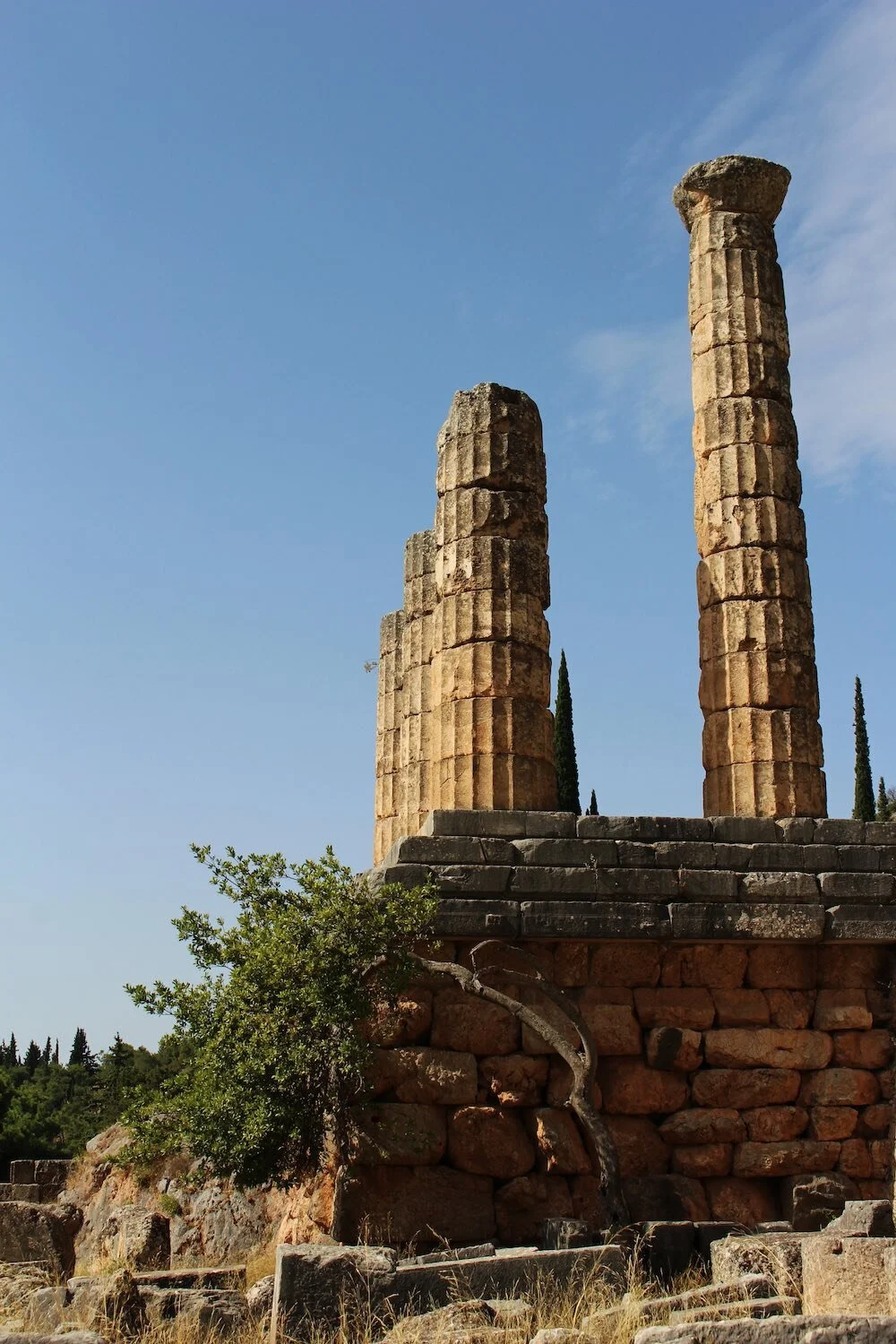
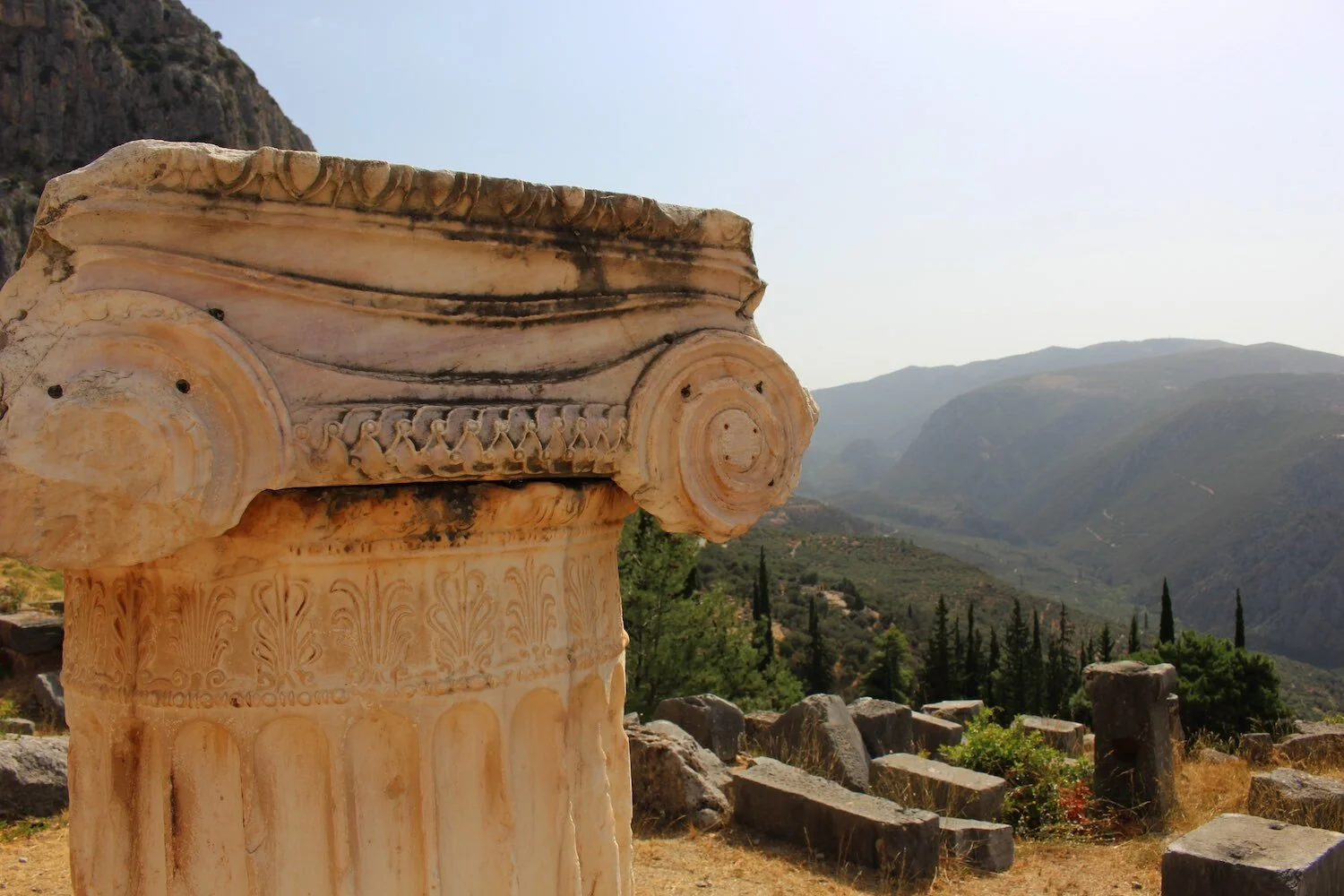
As we wandered the path winding up the slope, everything was familiar to me: the decaying treasuries, the weather-worn stones, the towering columns. This was my third time making pilgrimage here, and each time I have felt incredible awe at the artistry of the temples and their apparent synergy with the land.
Like many, Delphi’s history as an Oracular site has enthralled me. I knew of the fault line that passes close to the site; geologists and archaeologists theorize that the Pythia — the Oracle of Delphi — once sat above a chasm in the earth on a tripod, ingesting Bay Laurel and inhaling subterranean fumes that emitted from the rock cleft beneath her. Entering into a state of ecstasy, she would divine the future and share the Earth’s wisdom in the form of poetic riddles, which would then be interpreted by the temple’s priests and querents.
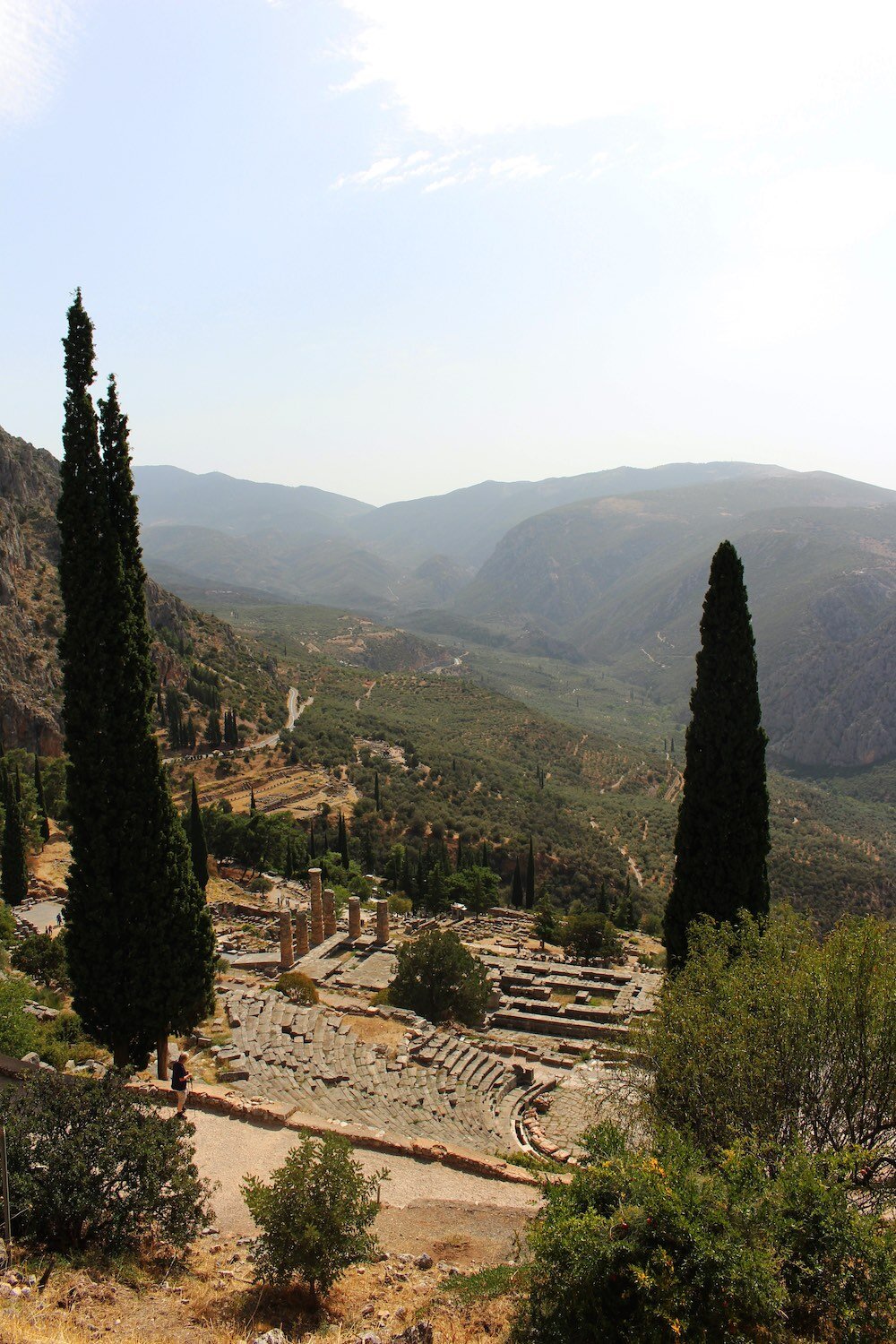
As such, the Oracle of Delphi held significant power to guide the course of history; many famous prophecies were uttered by her (including that of Oedipus, the outcome of the Persian war, and countless others) and her wisdom was used to make political decisions.
But before the Pythia was an Apollonian prophetess for the elite and politically powerful, her roots were firmly planted in the earth practices of the local people. It is said that three oracular Bee nymphs (one of whom was called Daphnis, which means “bay laurel” in Greek) lived in a cave on the slopes of Mount Parnassos. And it was those three Melissae who taught Apollo the art of divination. In fact, Daphnis was said to be the first oracle of Gaia at Delphi before Apollo’s arrival — and the Pythia’s later use of the Bay Laurel in divination is possibly a thread from those older practices. The Pythia was even referred to as "The Delphic Bee," a nod to her origins as one of the original oracular Melissae.
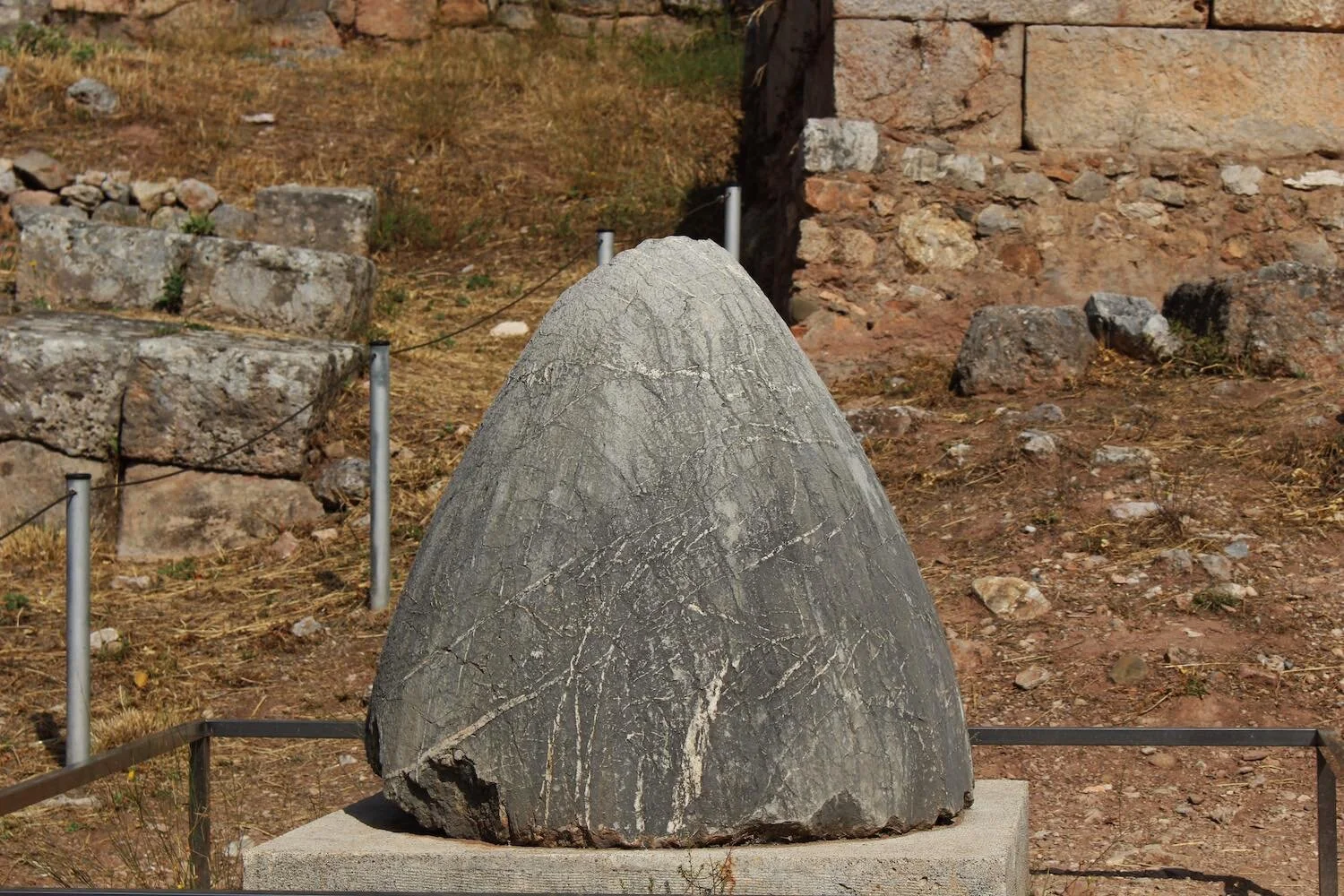
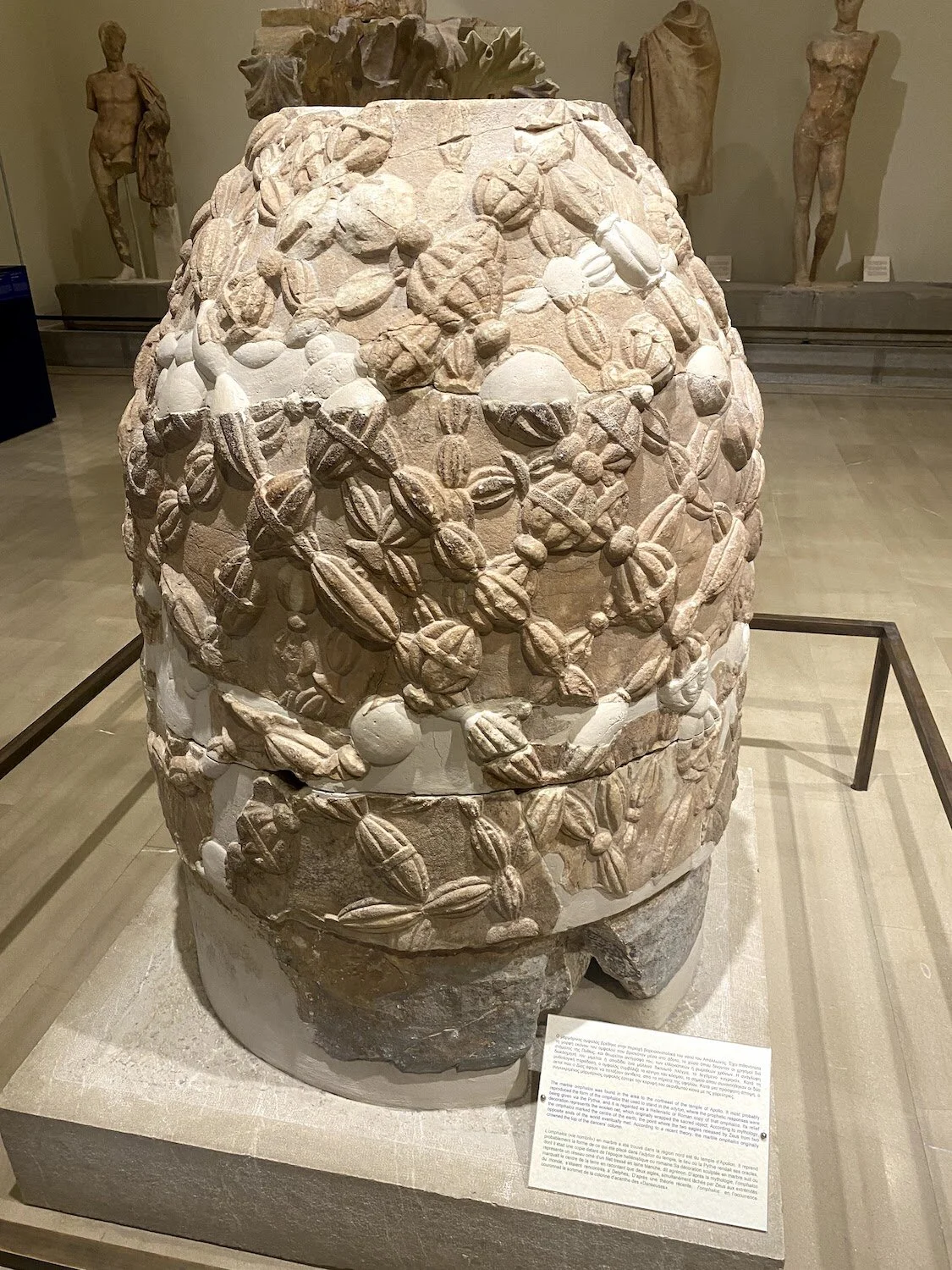
To many ancient Greeks, Delphi was considered the navel (ομφαλός) of the Earth. There is a story that Zeus — trying to determine the center of the earth — released two eagles simultaneously from the ends of the earth and at the point where they crossed paths, he dropped a sacred stone, called the Omphalos. (Some say the Omphalos is in fact the same stone that Zeus’s mother, Rhea, used in order to deceive Cronos by swaddling it in blankets and giving it to Cronos to devour in Zeus’s stead).
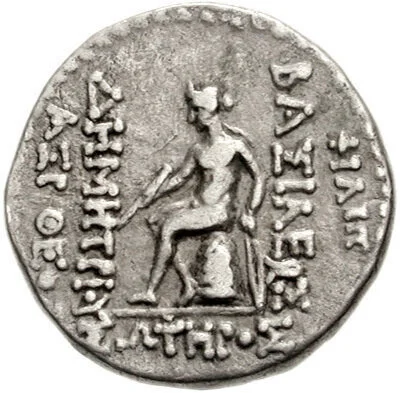
Many images and coins depict the Pythia or Apollo sitting directly on the stone or on a tripod set above it, while other images depict figures making libations upon the stone. It was said to have been frequently draped in sacred woven netting of wool and precious stones. In one coin depiction, Zeus’ two eagles flank the stone, which sits atop what appears to be a dolphin. The term “Delphi” itself may be related to the Greek word δελφίνι, meaning “dolphin,” as there is a myth in which Apollo transformed himself into a dolphin and landed on the deck of a Cretan ship, guiding its sailors to the coast beneath the sacred mountain, encouraging them to build his temple there.
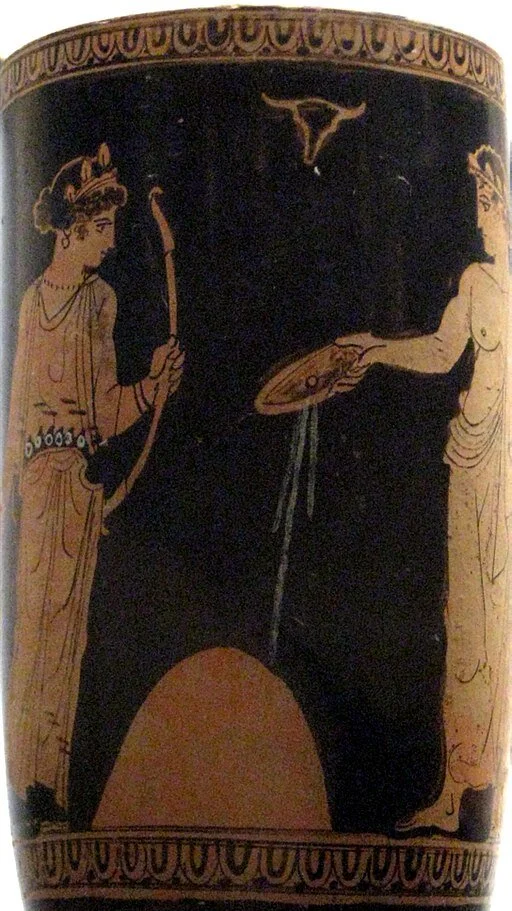

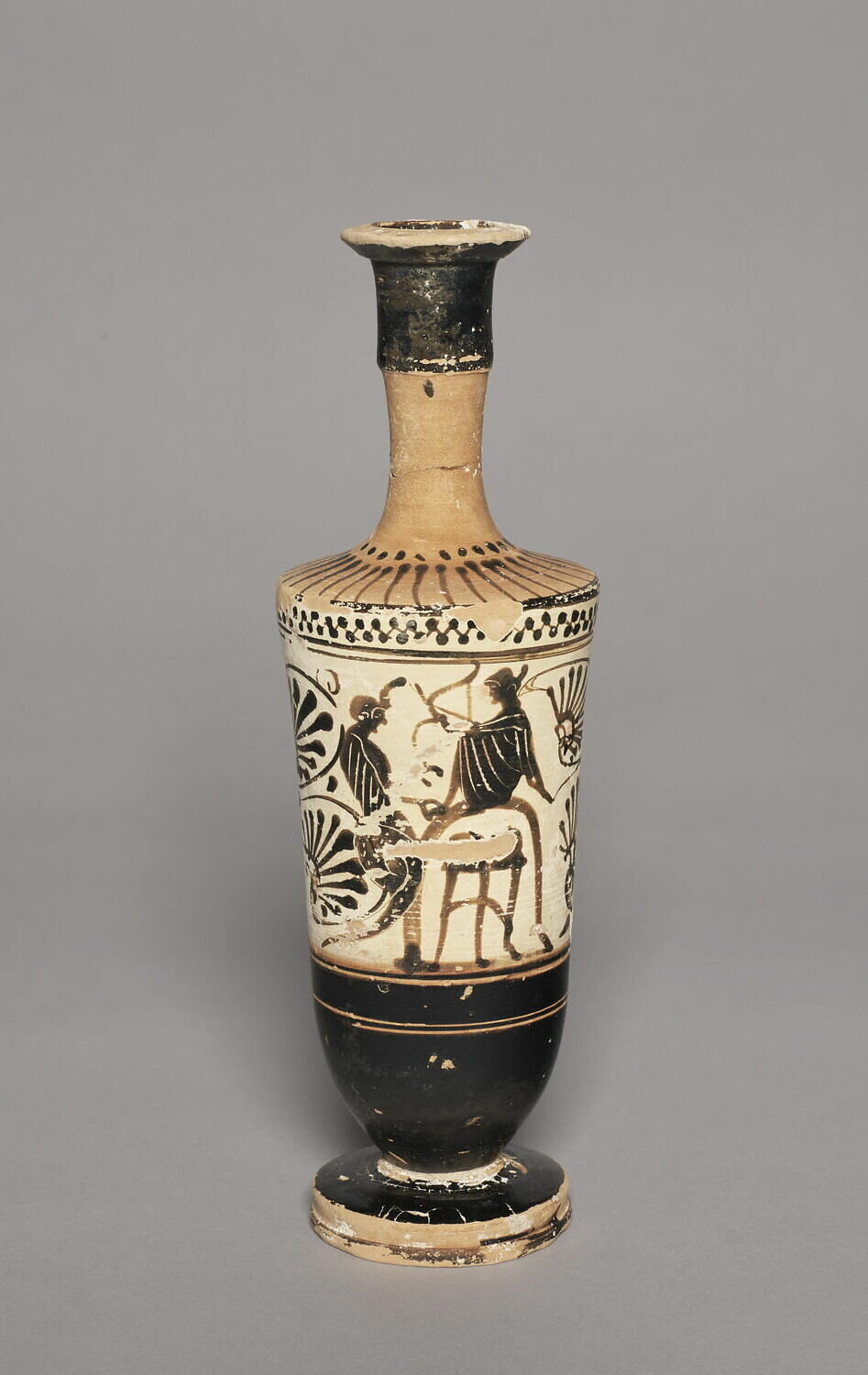
A black figure lekythos depicting Apollo possibly seated upon the Omphalos (containing a tripod) and facing the serpent dragon of Delphi. Via the Louvre accessed on 6 October 2021.
But the term “Delphi” may also come from the name Delphyne, who was said to be the monstrous serpent-dragon who dwelt at or near the site — and guarded it — long before the coming of Apollo. Others say that the great serpent’s name was Pytho (meaning “rotten one”), the child of the primordial earth goddess Gaia. Similar to the monstrous Echidna, Delphyne was described as a half-maiden, half-serpent dragon (drakon), while Pytho (or Python) was referred to as both a male or female dragon.
Regardless of the serpent’s name, when the young god Apollo arrived at Delphi with a desire to craft himself a place of worship, Apollo killed the serpent and claimed Delphi as his own sacred center. (Learn more about Apollo’s claiming of the site, and its rich connection to the Bay nymph Daphne, here).
I always anticipate feeling an ancient connection in Delphi; it seems almost required that a Greek-American pagan like myself should be able to hear the voice of the Deep Earth in a place as magnificent — and with such a rich connection to the primordial Earth serpents — as Delphi.
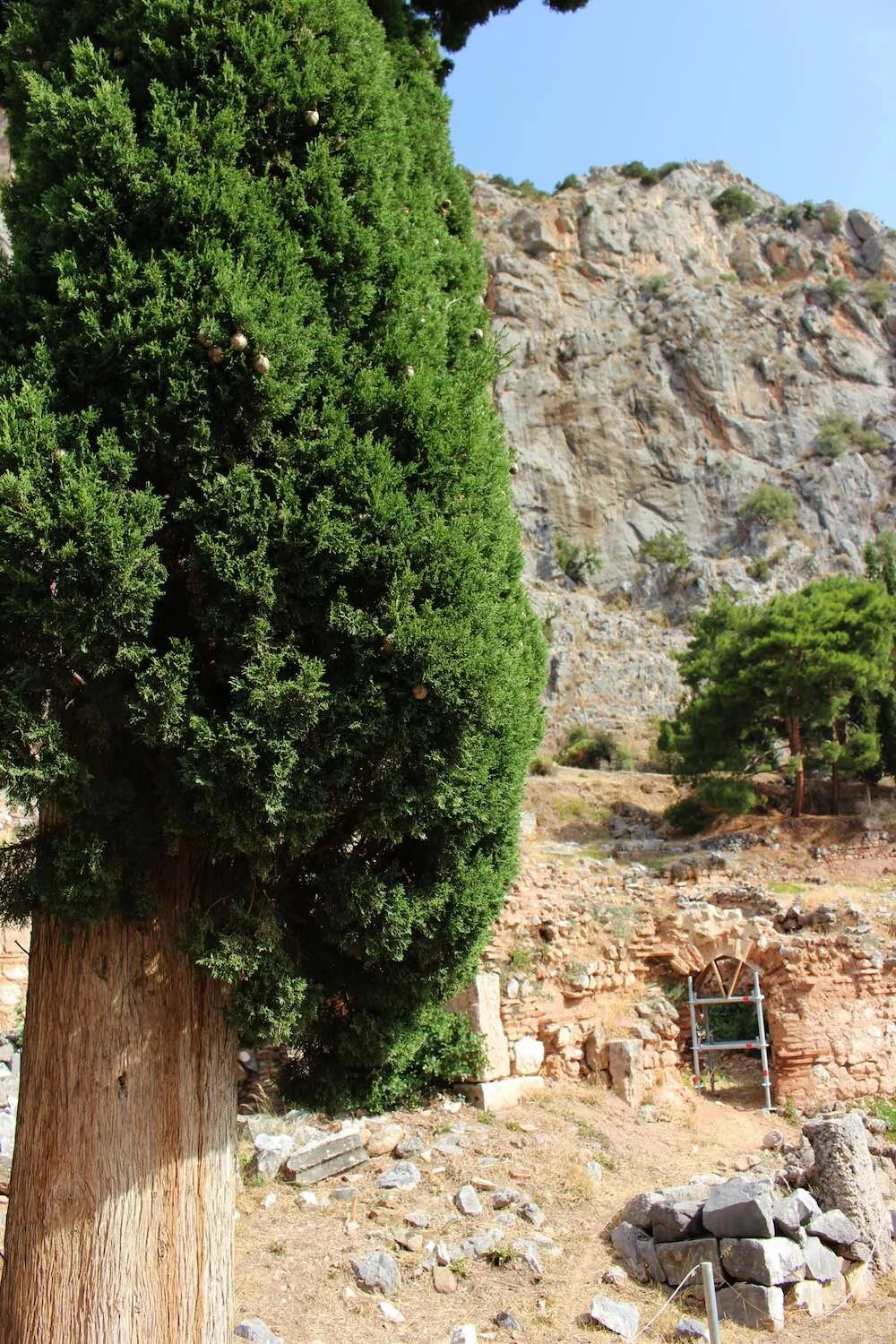
But each time I have visited the site in person, something has always felt a bit…off. I feel a strange hollowness — a pressing vacancy — a lack of the energetic flow that so many other people seem to sense here. And after all these years, I had yet to put my finger on exactly why.
So this time, I resolve to spend more time attuning to the landscape: the majesty of the rock face and its amphitheatrical shape; the clusters of Pine along the hillside; the solitary Cypress trees dotted amongst the ruins. I imagine the flow of a stream that once ran through the site, before an ancient earthquake diverted its course. In my mind’s eye, I strip away the remains of the temples and try to see this place before the coming of Apollo — before the building of the temple — when the great serpent guarded the oracular site.
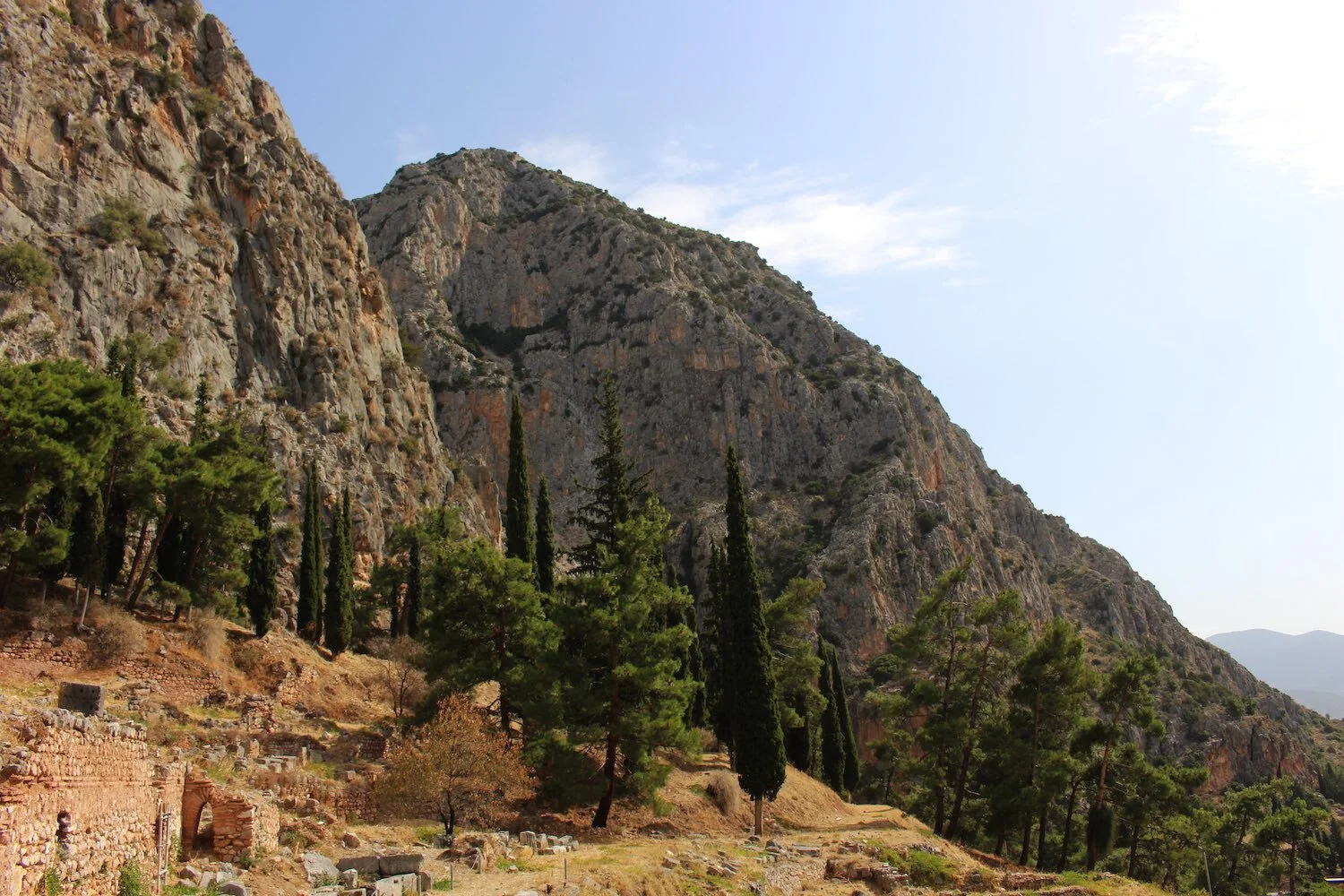
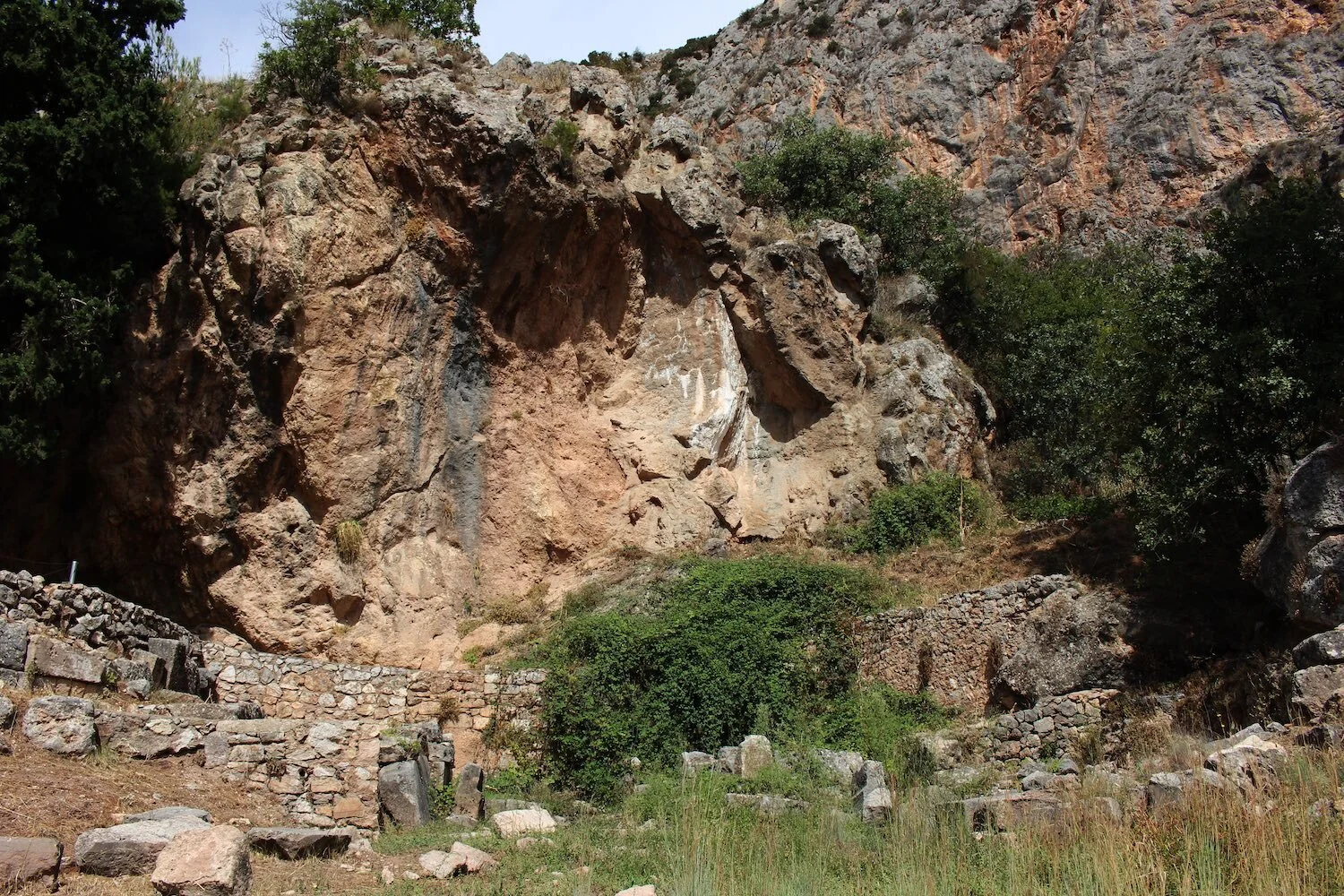
Yet still I feel that same emptiness. It follows me around the site like a spectre and even into the next day, when we drive our way through the neighboring village of Arachova, and up into the higher altitudes of Mount Parnassos to seek the Corycian Cave (Κωρύκιον άντρον).
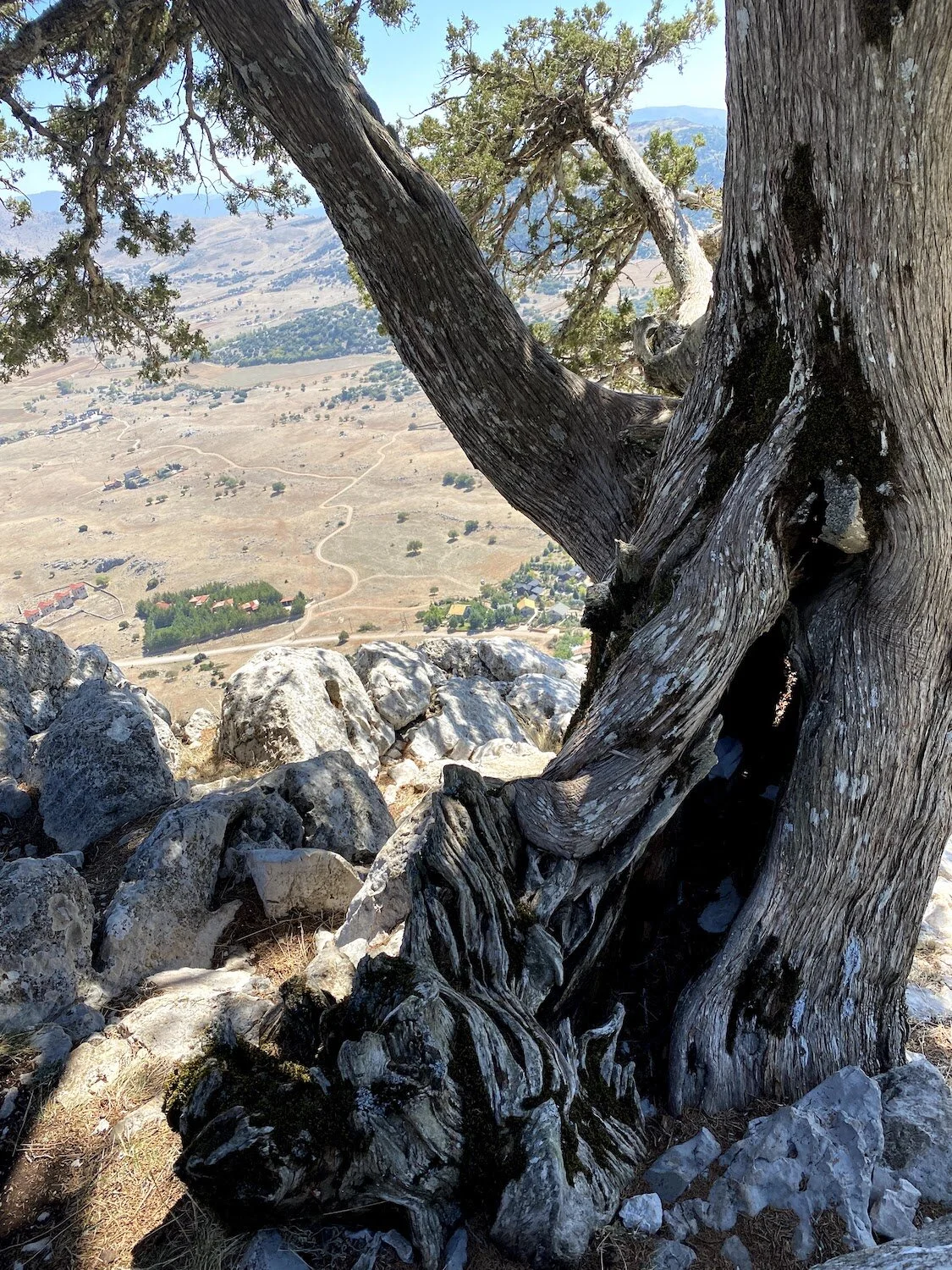
A photograph of a tree growing near the Corycian Cave, with a view of the Livadi valley in the background. Photograph taken by Erin Bernstein.
I’d learned about the Corycian Cave just a year or two ago, when I was delving deeper into the history of Delphi, the oracle, and the nymphs of Parnassos. I’d discovered that while Delphi was an oracular site for political leaders, citygoers, and the elite, the Corycian Cave probably acted as a connection to the divine for those who could not afford (or perhaps preferred not to) consult Apollo’s Oracle priestess in Delphi.
The 25,000 knuckle bones that had been found in the cave seem to confirm that this was a site for the people’s divination (since the tossing and reading of animal bones was considered a “lesser” form of divination, as compared to the direct revelation of the temple’s Pythia). And according to Jennifer Larson, there’s also strong evidence that the Corycian nymphs (after whom the cave is named) were in fact the three Bee nymphs I mentioned earlier — the ones who taught Apollo the more humble forms of divination (such as bone tossing). Apollo then passed those divination techniques on to Hermes — who was himself probably first associated with the Corycian Cave before it became Pan’s dominion, that wild god of herders and hunters.
So this was my first time to the Korykion Andron (as the cave is called by locals) and we have three options for visiting: a 4-hour hike from Delphi, a 45-minute trek from Livadi, or a drive up a dirt road fit only for 4-wheel drive. We opt for the steep 45-minute hike, scrambling our way over rocks along a narrow path between prickling oak shrubs.
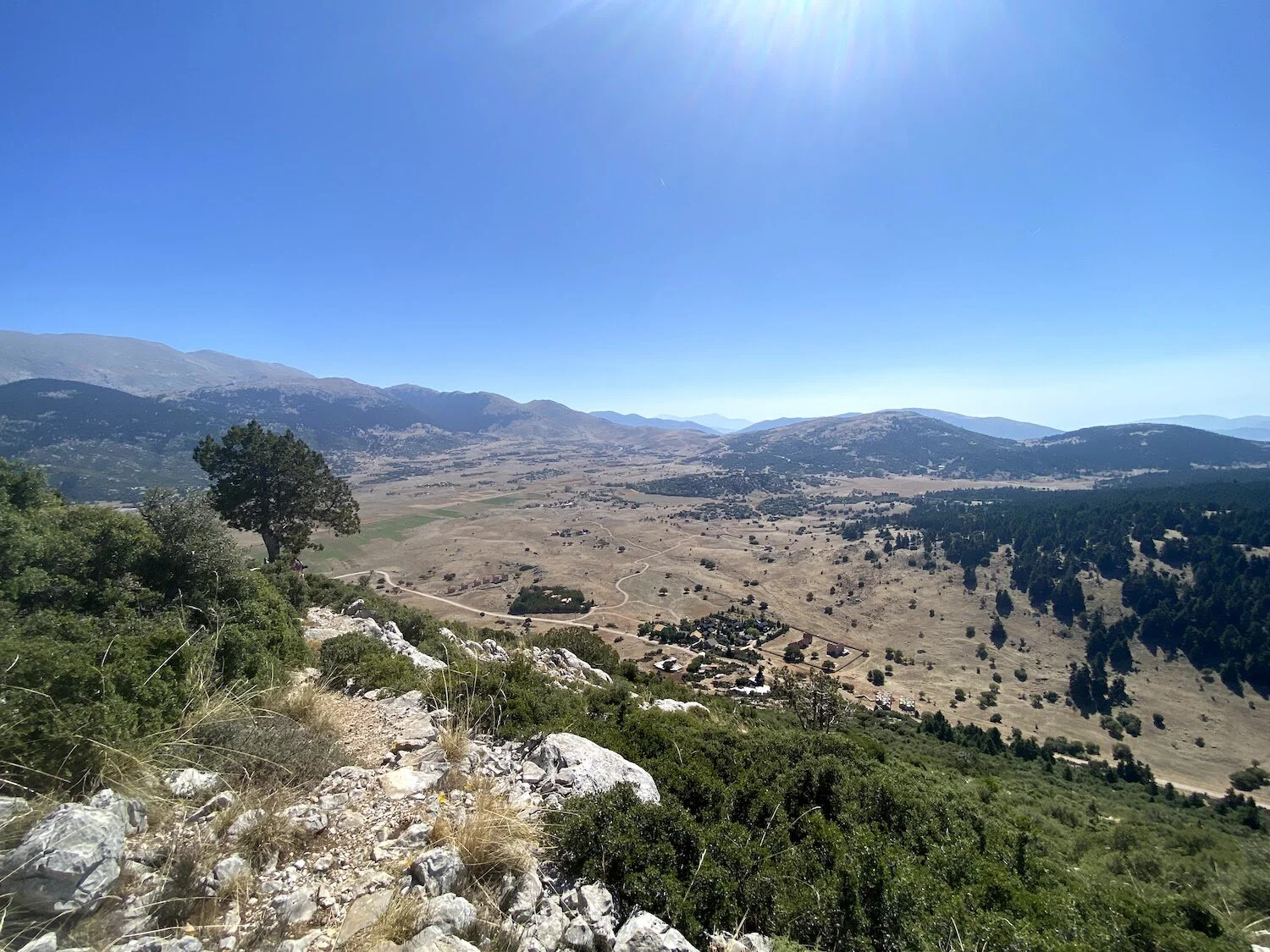
A photograph of the valley of Livadi, surrounded by mountains, taken at the Corycian Cave. Photograph taken by Erin Bernstein.
With striking views of the valley — speckled with modern chalets and clusters of cattle grazing — it is easy to imagine that the Corycian Cave had once been sacred to cattleherds and goatherds, a place to honor their rustic gods and nymphs of the mountains.
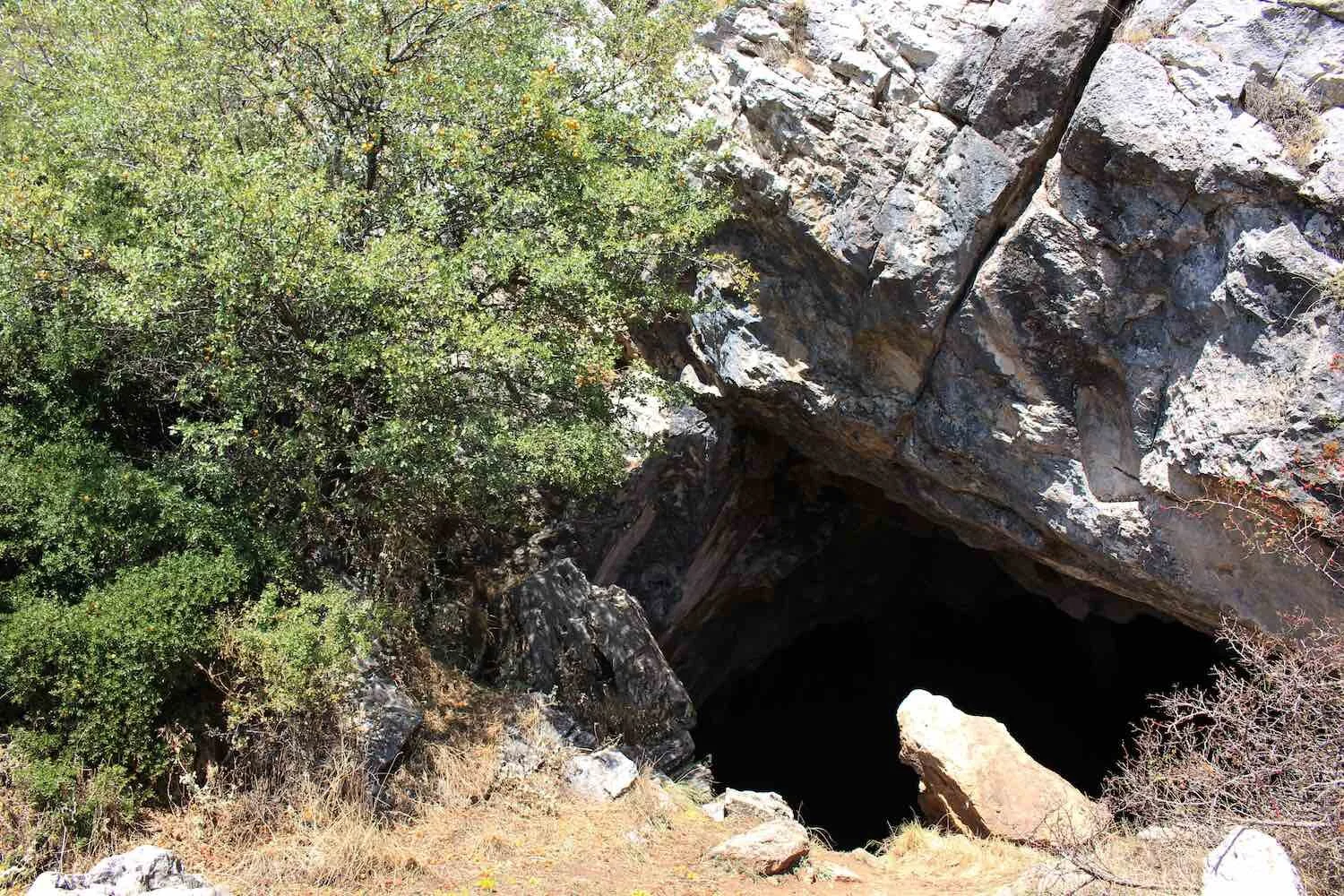
Entering the cave, the moist stone is a welcome embrace after the heat of mid-September. I had seen photographs before our arrival, but they did not prepare me for the awe of stepping inside the main chamber. Exploring the cave, we find small votive candles and modern offerings of wine, bracelets, and coins. We exchange looks and gasps of wonder at the hidden corners and sloping stones that lead up and deeper, into unexplored chambers.
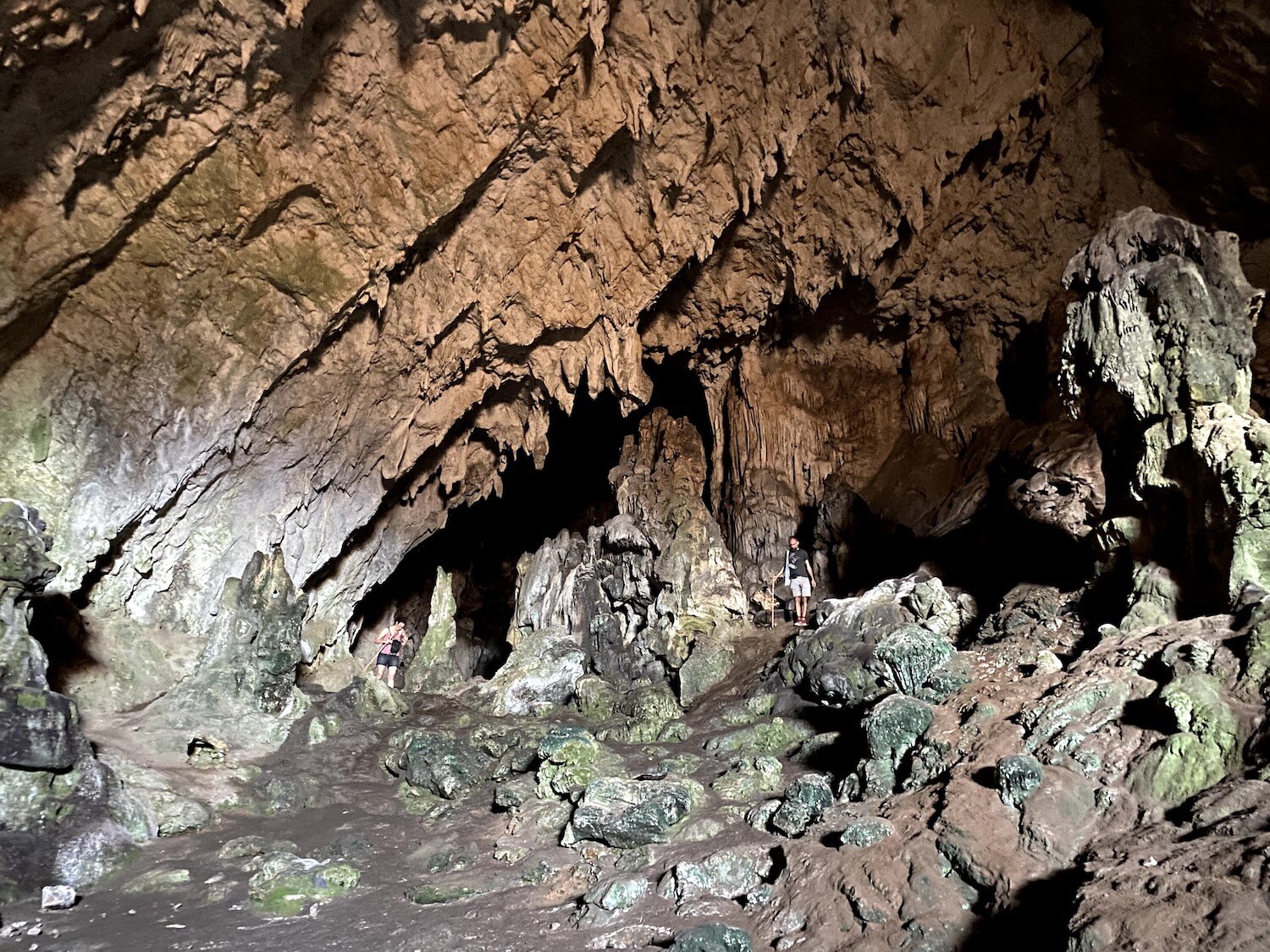
A photograph of the interior of the Corycian Cave, with me and my partner appearing so small we seem to be blending into the rock formations. Photograph taken by Erin Bernstein.
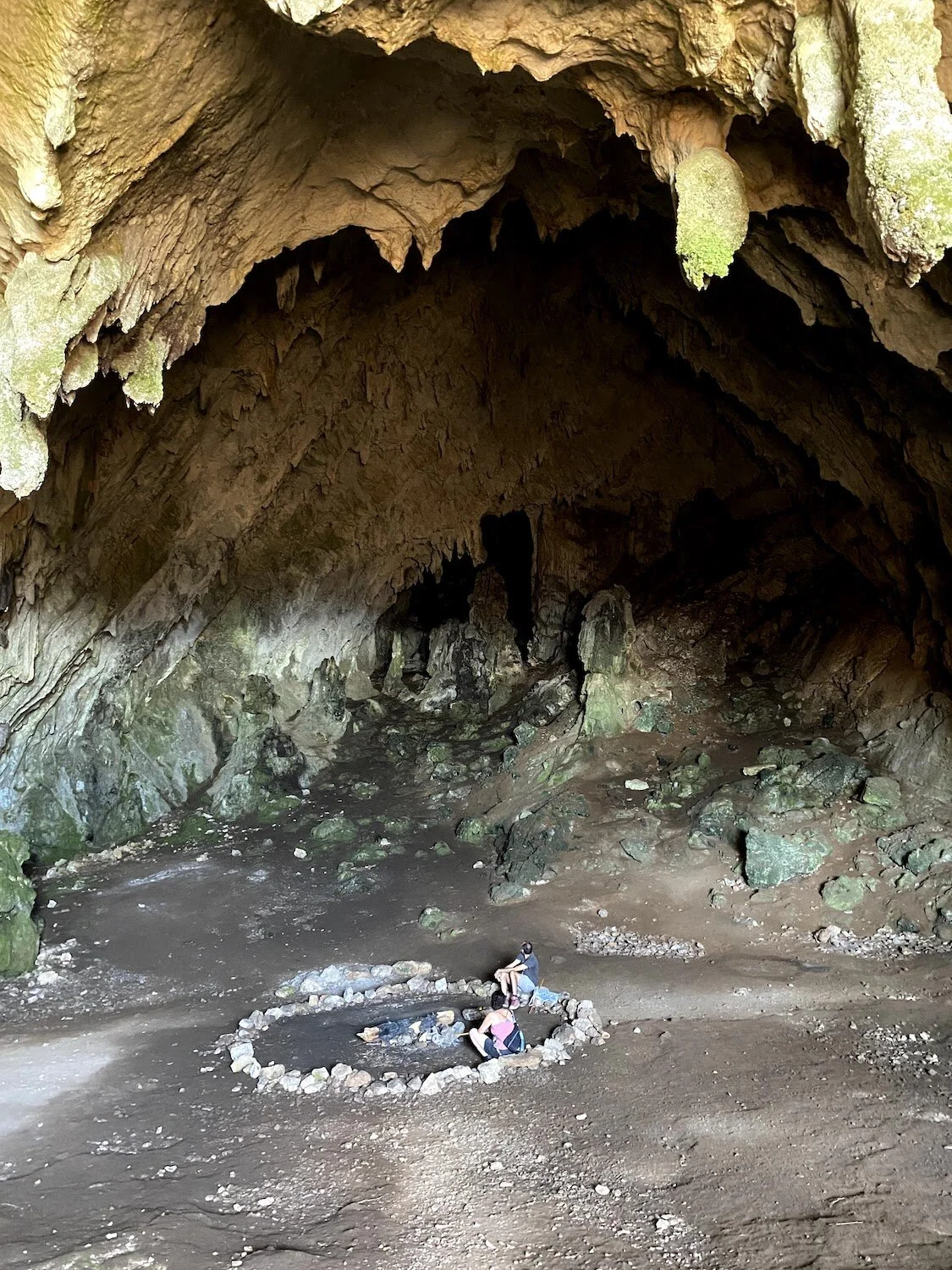
A photograph taken from the entrance of the Corycian Cave, showing the stone circle where I sit with my partner around an extinguished fire. Photograph taken by Erin Bernstein.
I sit in the center of the main chamber on stones formed around an extinguished fire and imagine the ancients making offerings, divining their future, and, later, hiding in the cave’s depths during foreign occupation and war. I vocalize a gentle melody, listen to my own voice echoing through the cavern, and feel the heavy silence that follows. And that’s when I finally realize exactly what feels so “wrong” for me at the Delphic ruins less than 12 kilometers away.
You know that hollow, muffled sound of being inside a cave? That is what being in Delphi feels like to me: dampened silence. As though a channel has been cut off.
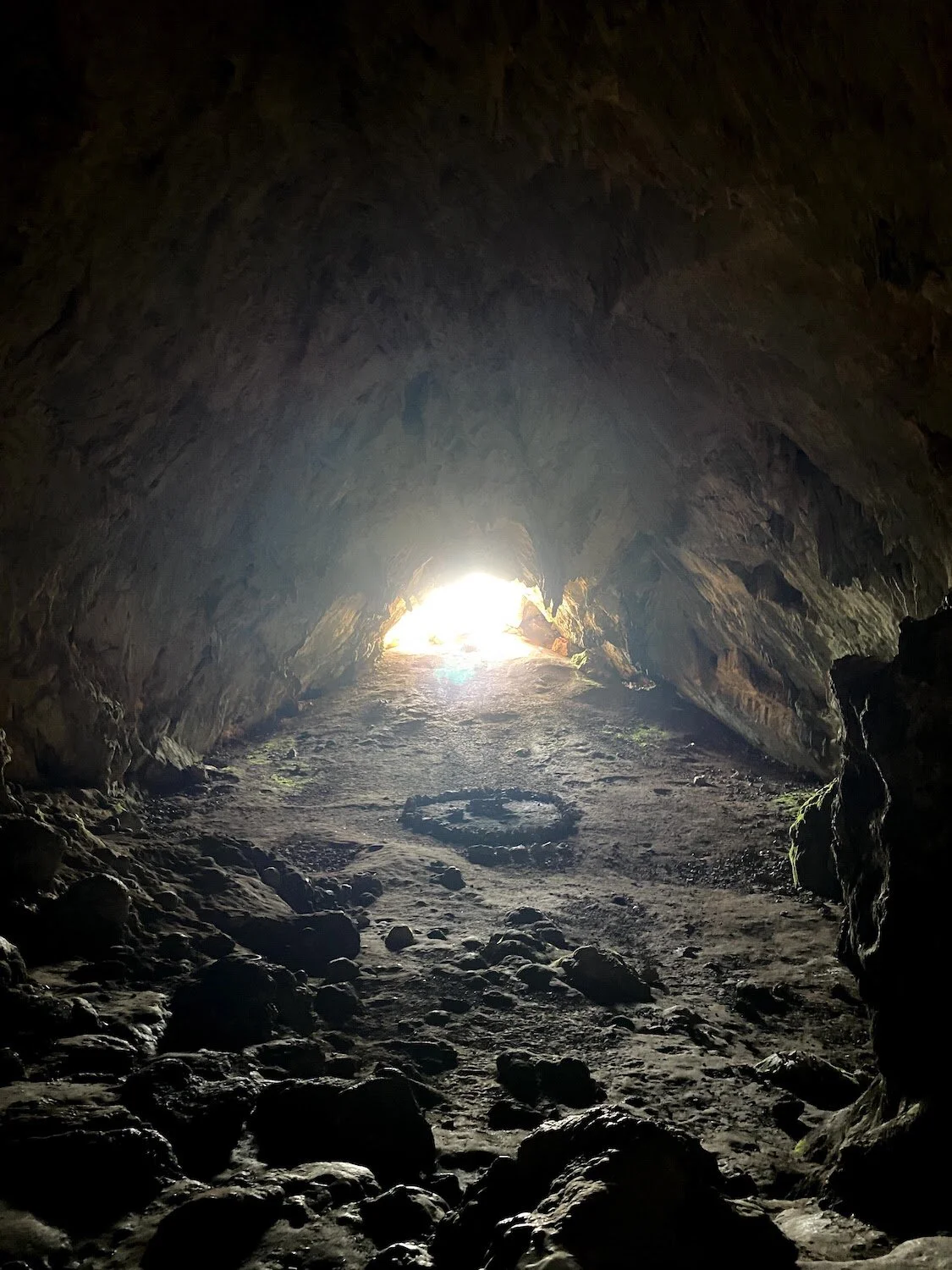
A photograph taken from the back of the first chamber of the Corycian Cave, showing the entrance illuminated by sunlight. Photograph taken by Erin Bernstein.
This makes sense as the Delphic Oracle has been silenced by geology, as much as by the shifting of cultures and the passage of time. The chasm from which the consciousness-altering fumes that Apollo’s priestess had inhaled to utter her prophecies has been blocked, a result of earthquakes and shifting stones altering the rock. And the sacred Omphalos — the navel stone, once dressed in wool garlands and offered libations — now sits behind metal railings and museum doors.
There is nothing “wrong” with this. Channels open and close, waters shift and divert, rock slides and conceals. This is the natural way of Landscape: change is constant and no pathway is open (or closed) forever.
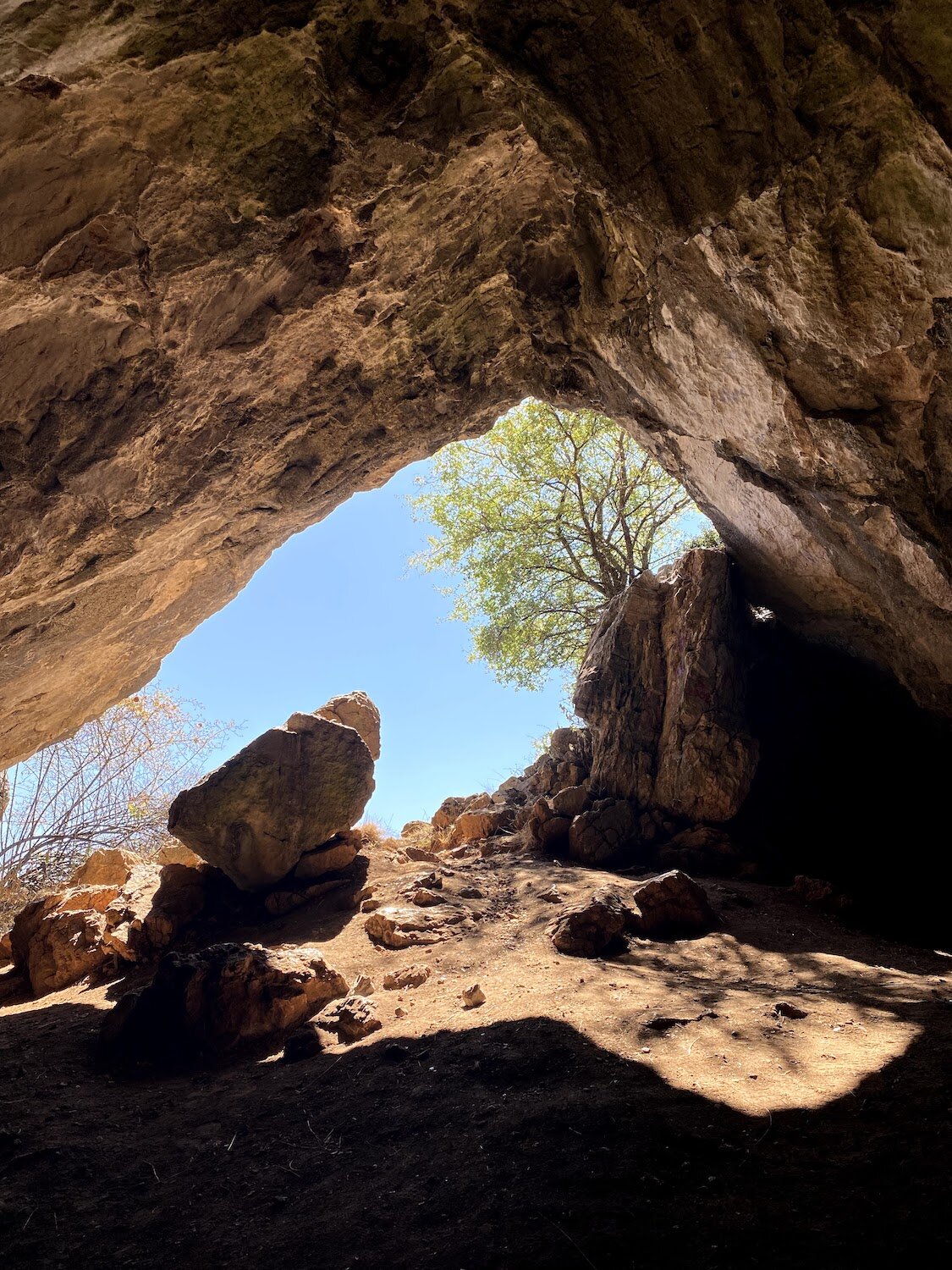
A photograph of the entrance to the Corycian Cave, as seen from the inside. Photograph taken by Erin Bernstein.
But I think that is what creates such an emptiness inside me when I visit Delphi. It is as though a portal to the Deep Earth has been shut there, and I am visiting the sealed entryway, pressing my ear to solid stone, expecting to hear what once came through an unimpeded doorway.
And I realize that is exactly how I’ve been feeling about my life this last season — and it’s perhaps why the hollow silence I feel when visiting Delphi finally makes sense to me this time.
The old channels of my life — the ways of being that once moved easily, flowed effortlessly — have been blocked. I’ve experienced my own rock slides, my own diverting of streams, this year; it is an uncomfortable state to be in. I want nothing more than to force things back to how they once were, but the landscape of my life has changed, and I cannot move the boulders out of the way.
But as they say, when one door closes, another opens. Somewhere.
And instead of trying to muscle my way through a portal that has been shut, I will take a lesson from Delphi and the Corycian Cave. I will pay homage to the old ways of being — leave offerings of gratitude at the door — and then wait in that still and heavy silence, gathering strength, ready for another voice to arise, pulling me in another direction.
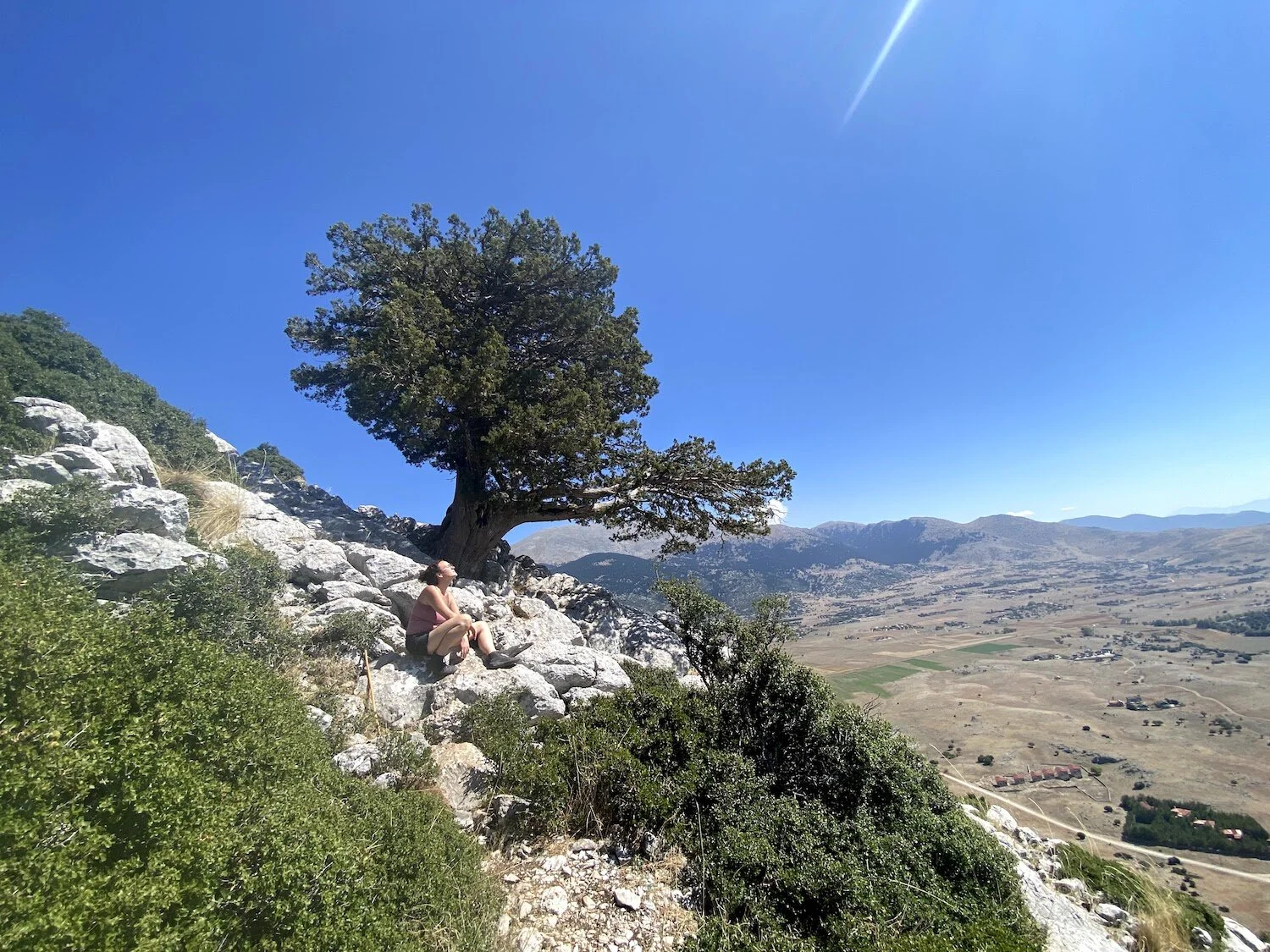
A photograph of me, Ekstasy, sitting on the rocks outside of the Corycian Cave, looking up at the sky with a view of the Livadi valley in the background. Photograph taken by Erin Bernstein.