All Offerings
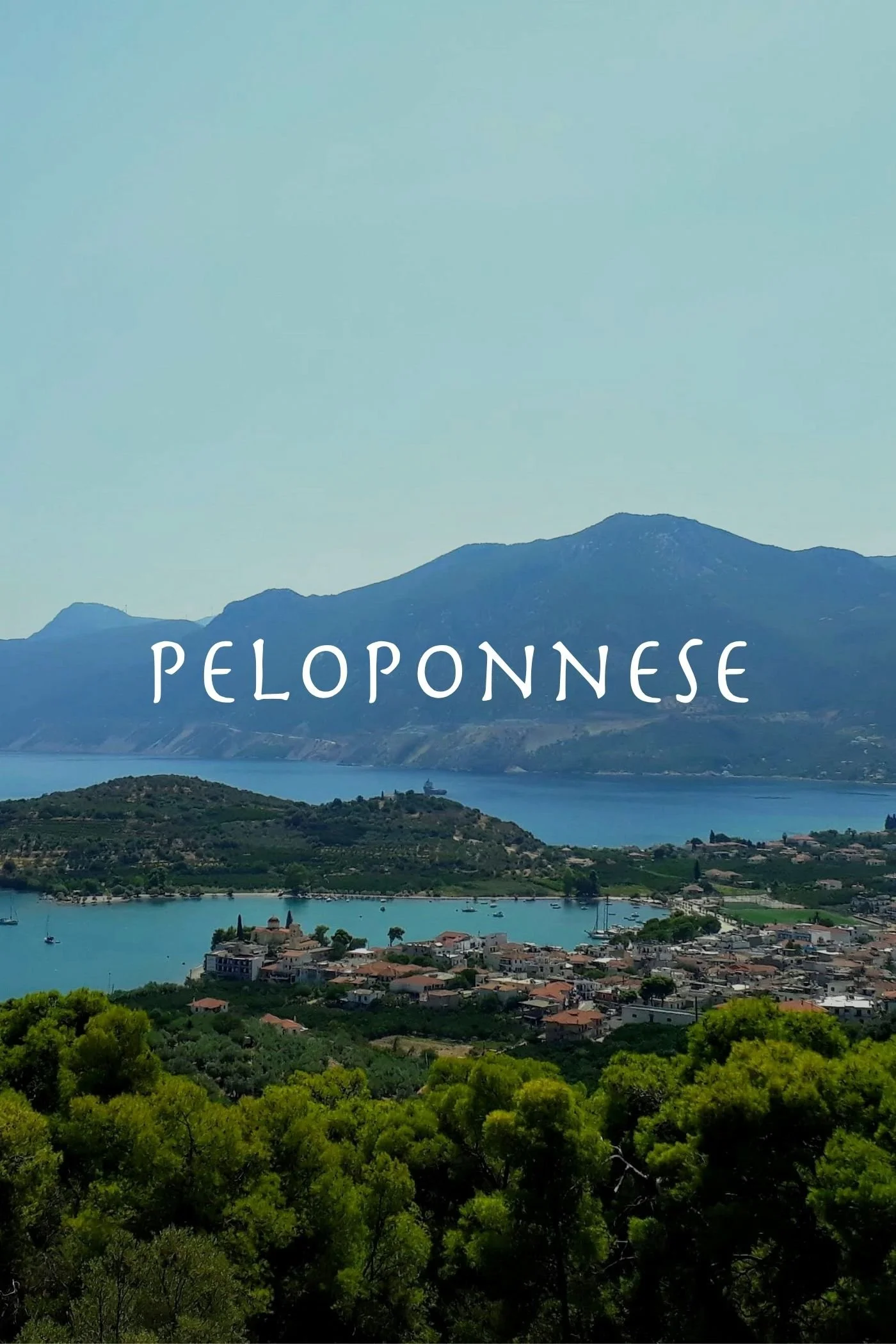
Peloponnese
The Peloponnese is the southernmost peninsula of mainland Greece, a mountainous region linked to the rest of the country only by a narrow strip of land. It is one of the most important regions for lovers of ancient Greece, home to the sacred and cultural sites of Epidaurus, Corinth, Olympia, Mycenae, Sparta, and more. Beyond its classical heritage, there are also many exquisite Byzantine centers to explore, such as Monemvasia and Mystras, not to mention its outstanding natural beauty and awe-inspiring horizons.

Evergreen Trees of Greek Mythology
Learn the difference between the most common evergreen conifers of the mythic Greek landscape: the Pine, Spruce, Fir, and Cypress. Then we’ll look at a few other evergreens that you might come across in the Mediterranean (like the Juniper, Strawberry Tree, Yew, and more). And of course, along the way, we’ll touch on the myths, gods, and goddesses that are sacred to each of them.

Athena and the Gift of the Olive
For the ancient Greeks, the Olive was a sacred symbol of divine blessing and wisdom associated particularly with the goddess Athena, as well as with Zeus and the patron of human culture, Aristaeus. In this podcast episode, we discuss the ancient uses of the Olive, as well as discuss the Olive as a teacher of perspective and a reminder of the ancestral gifts of awe, gratitude and humility.

Olive
Despite over 5,000 years under human cultivation, the Olea europaea remains wild-looking and ancient, with some trees surpassing 1,000 or 2,000 years of age. Surviving fires, drought, and even a complete cutting back to the stump, the olive tree will just not give up. This is a formidable, primordial, and powerful tree, a teacher of perspective, and a reminder of the ancestral gifts of awe, gratitude and humility. Associated with the goddess Athena as well as Zeus and the patron of human culture, Aristaeus, the Olive was a sacred symbol of divine blessing and wisdom.

Nostimon Imar: The Taste of Coming Home
Like many Greeks, I come from a family steeped in olive oil. My grandmother’s family tended olives in a small village near Kalamata, the city in the southern Peloponnese famous for its olive of the same name. And as next month's Materia Mythica entry will be the olive tree, I wanted to share with you a little about my own experience of the Greek landscape - a piece of my personal mythology.


