Oak
Quercus spp.
Wise Council - Values - Conviction
The Oak is a polymorphic evergreen or deciduous tree that produces acorns; four main species are found growing throughout Greece. Associated with Zeus, god of the sky and just rulership, the Oak is a steadfast ally in our search for wisdom and strength of conviction. One of the most important sites of the sacred Oak is the Oracle of Dodona, where pilgrims sought its wise counsel. From its rot-resistant hardwood to its astringent properties to its nutrient-dense acorn, the Oak is a formidable elder and can be called upon when we are unsure of — or are doubting — our path forward. Keep reading below to learn more about the Oak.
Index
The Oak in the Wild & Garden

Downy Oak (Quercus pubescens) photograph by Franz Xaver, CC BY-SA 3.0 via Wikimedia Commons
LATIN BINOMIAL
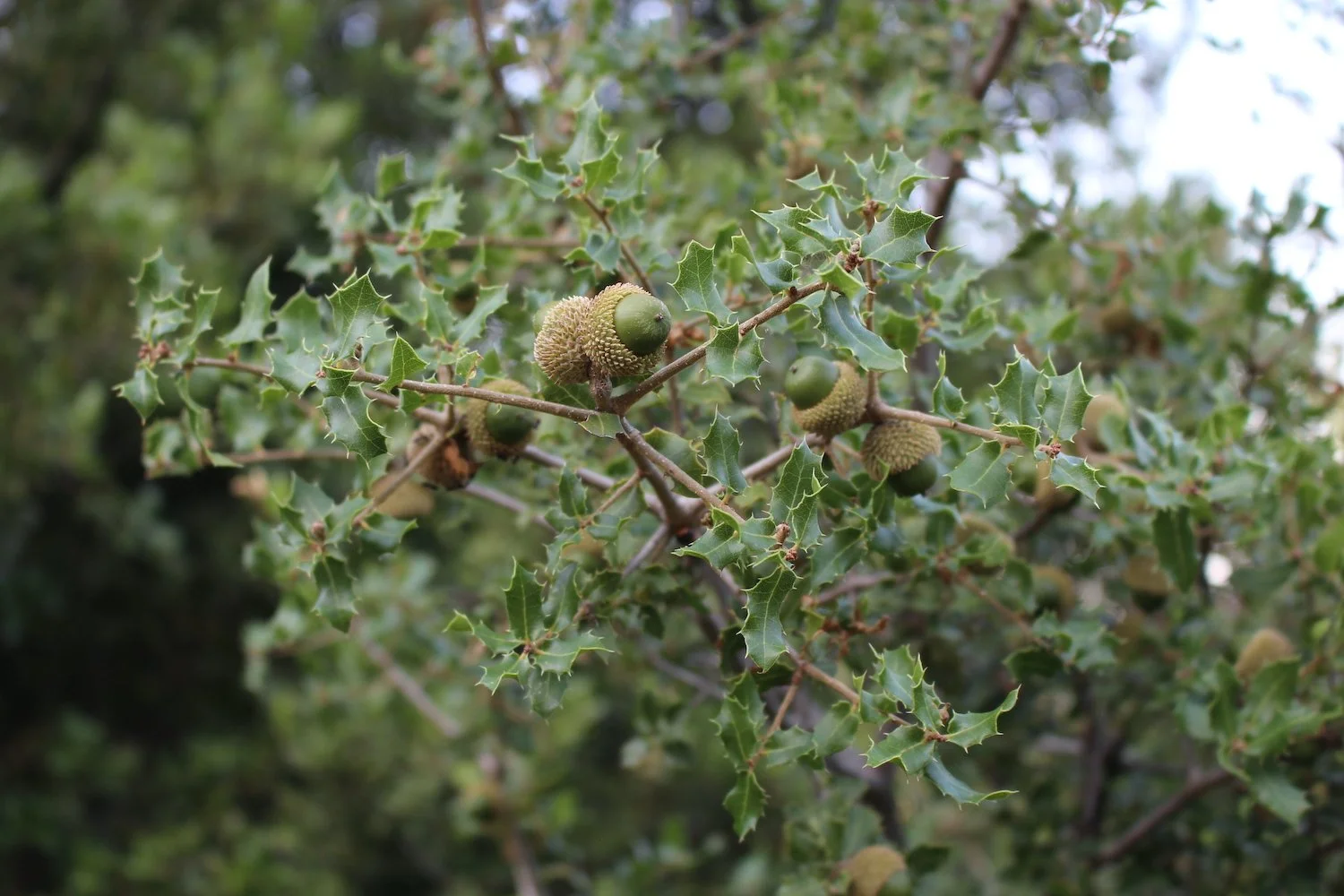
Quercus spp. The main species in Greece are Q. coccifera (Kermes Oak), Q. ilex (Holm or Holly Oak), Q. pubescens (Downy or Broad-Leaved Oak), and Q. ithaburensis ssp. macrolepis (Valonia Oak)
PLANT FAMILY
Fagaceae
COMMON ENGLISH NAMES
Oak
COMMON GREEK NAMES
Βελανιδιά, Δρυς, Πουρνάρι
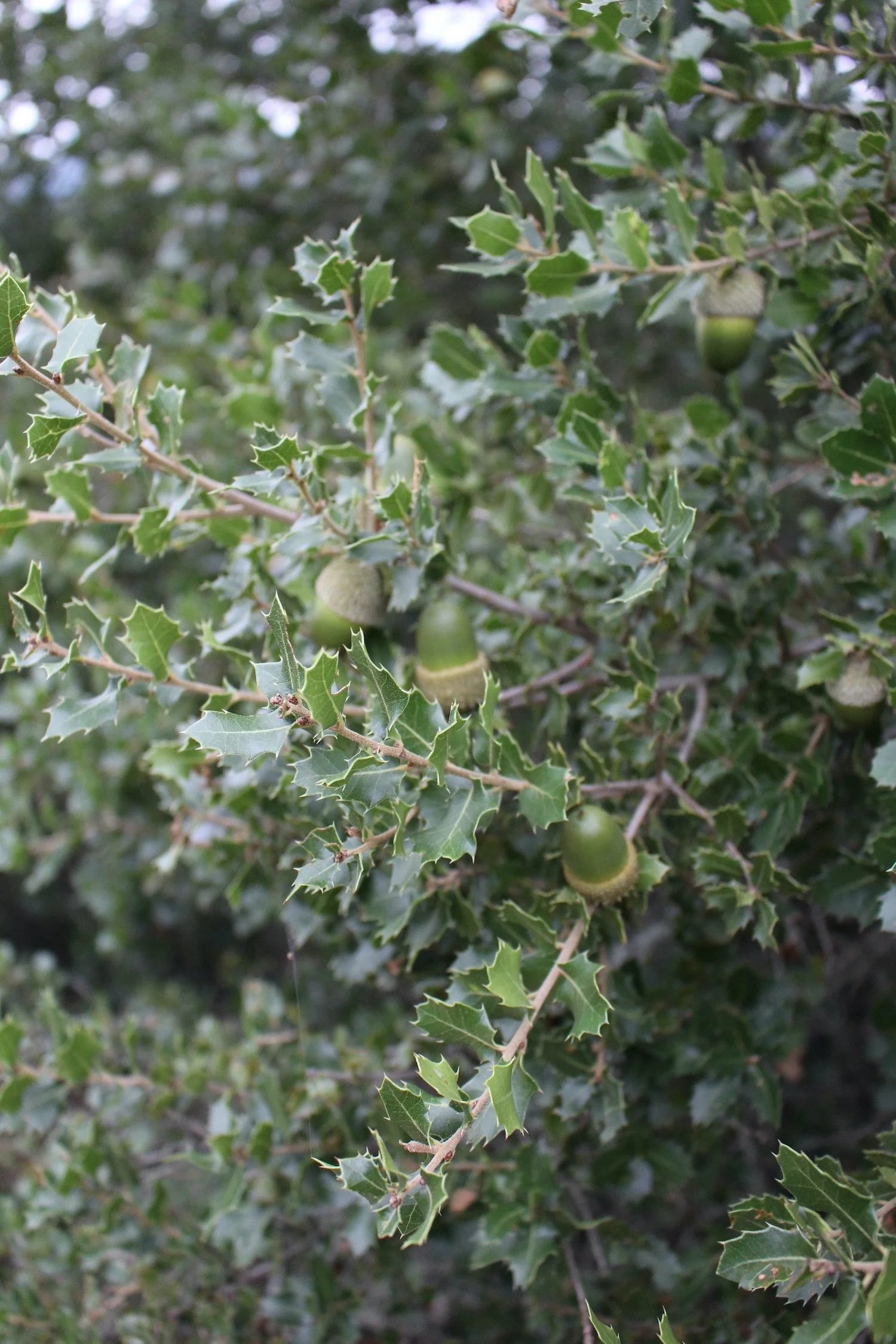
Kermes Oak (Quercus coccifera). Photograph by ekstasy vine.
CHARACTERISTICS
Depending on the species, can be polymorphic (taking the shape of a shurb or a tree) as well as evergreen or deciduous
NATIVE HABITAT
Varies, but most Greek species are native to the Mediterranean
PREFERRED CLIMATE & CONDITIONS
Q. coccifera (Kermes Oak) forms an evergreen bush (sometimes a tree) found in scrub and maquis up to 1500 meters above sea level. Drought tolerant and hardy, can withstand extreme heat and wind. Often forming thickets and populations with other trees and shrubs.
Q. ilex (Holm or Holly Oak) is an evergreen tree found near streams, along gorges, and in maquis up to 2000 meters above sea level.
Q. pubescens (Downy or Broad-Leaved Oak) is a deciduous tree found in forests and mountainsides up to 1300 meters above sea level.
Q. ithaburensis ssp. macrolepis (Valonia Oak), sometimes referred to as Q. aegliops, is a semi-evergreen tree growing on hills and slopes, mostly on the islands.

Holm Oak (Q. ilex). Photography by Giancarlo Dessì, CC BY-SA 3.0, via Wikimedia Commons
TYPICAL HEIGHT AND SPREAD
Varies, depending on species, but reaching anywhere between 2 and 25 meters (6.5 - 82 feet) in height. Q. coccifera (Kermes Oak), when heavily grazed by sheep and goats, can even form a groundcover or very low shrub less than 1 meter (3 feet) in height.
LEAF AND ACORN CHARACTER
Q. coccifera (Kermes Oak) has thorny and toothy evergreen leaves with pointy-spined acorn caps. The Kermes vermillio scale insect is found on the leaves and is used to produce crimson (a red dye).
Q. ilex (Holm or Holly Oak) has evergreen, ovate leaves up to 7cm long with soft scaled acorn caps.
Q. pubescens (Downy or Broad-Leaved Oak) has deciduous lobed leaves with dense, scaled acorn caps.
Q. ithaburensis ssp. macrolepis (Valonia Oak) has semi-evergreen elongated leaves reaching 6-12cm in length with serrated edges.


The Oak in Greek Mythology
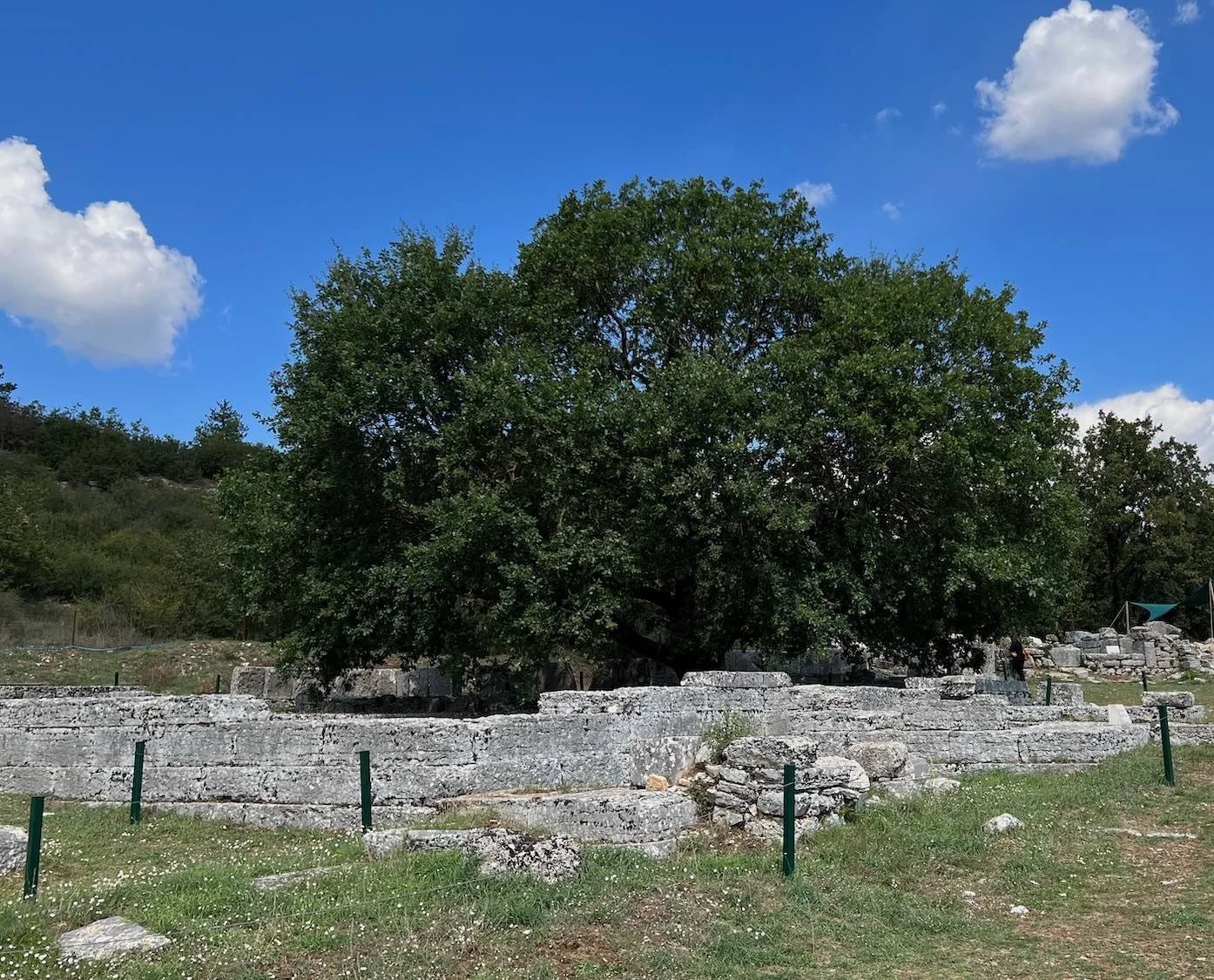
A sacred Oak tree, growing at the Oracle of Dodona in Epirus, Greece
Zeus and The Oracle of Dodona
A source of wise council and longevity, the Oak tree is sacred to the god Zeus. As the King of Mount Olympus, Zeus oversaw law, rulership, justice, order, and fate. His animal familiar was the eagle — a regal bird if there ever was one — and his sacred trees were the Oak and the Olive (both trees associated with wisdom and wise council). Zeus was also god of the sky and all its weather phenomena: most notably thunder and lightning. He was often depicted holding a lightning bolt, a tangible symbol of his quick and fiery justice.
One of the most important sites of Zeus and the sacred Oak is the Oracle of Dodona (Δωδώνα), located in the region of Epirus in northwestern Greece at the foot of Mount Tomaros (Τόμαρος) in a valley lush with natural springs and made fertile by frequent thunderstorms. Dodona is believed to be the oldest oracle in ancient Greece and later became second in importance only to Delphi.

A Downy Oak (Quercus pubescens) growing in Dodona. Photograph by Fingalo, CC BY-SA 2.0 DE, via Wikimedia Commons
The sacred Oak of Dodona provided oracular wisdom to the pilgrims who sought its counsel. At various points in time, there was either a grove of Oaks or a single Oak that acted as the oracle. The priestesses or priests of the sacred site would query the gods and then listen to the sacred Oak, interpreting the answers given through the tree(s).
There are many theories given by modern historians: some believe the ancients listened to and interpreted either the rustling of the leaves, the patterns and calls of birds that nested in the trees, or the ringing of wind chimes that may have hung amidst the branches. Or it’s very possible that the ancients were communicating directly with the trees themselves.
It’s interesting to note that at Dodona, Zeus was honored as Zeus Naios, god of the freshwater spring. Many historians believe that the ancient site was first dedicated to an earth goddess named Dione (Διώνη), and worship of Zeus was later added at the site in an attempt to supplant her dominance. But by the Mycenaean period, both Zeus Naios and Dione Naia were honored there – literally two sides to one coin, as both were featured on the coinage of the region.
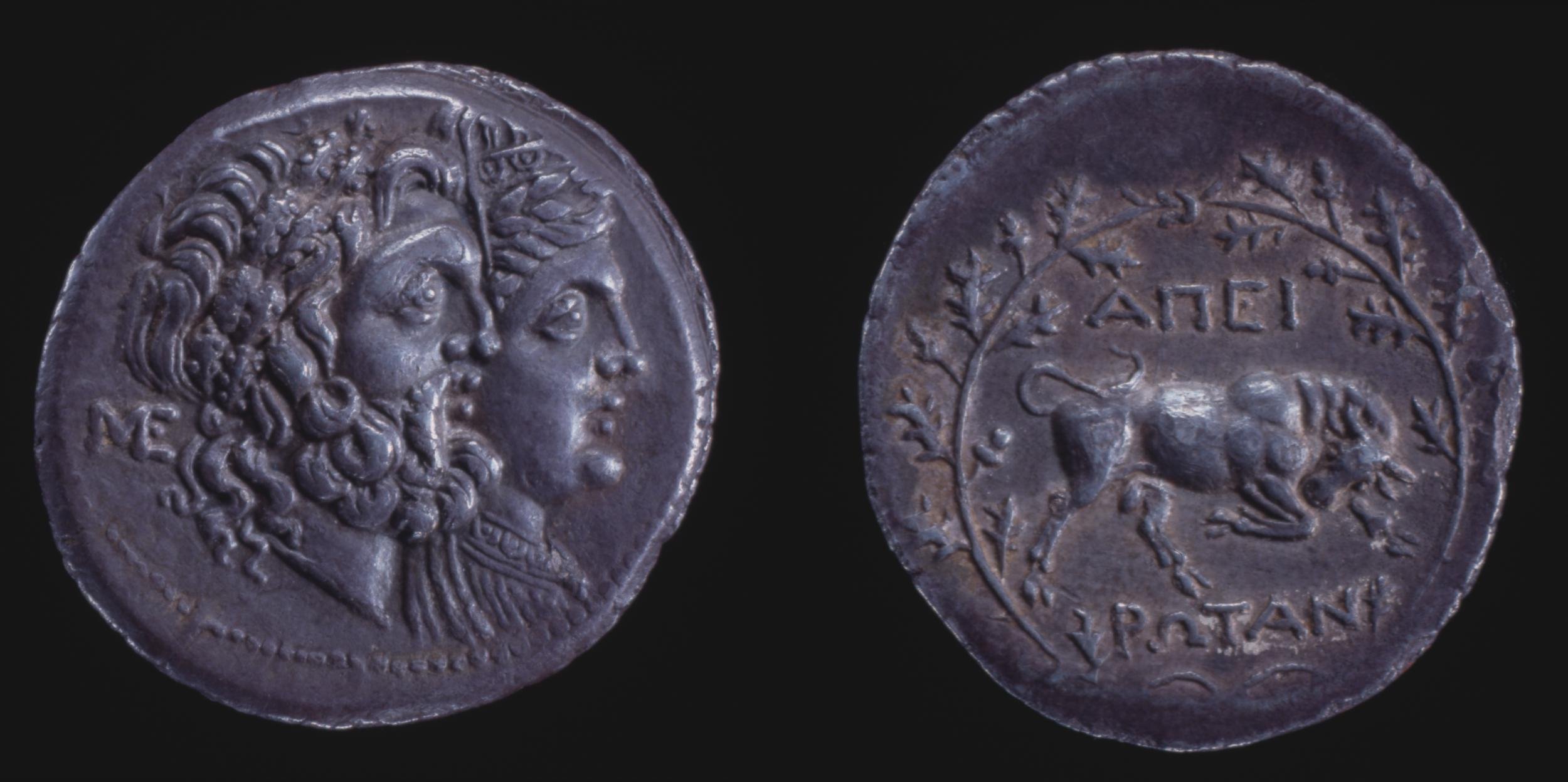
Epirus Coin depicting Zeus and Dione. Zeus wears a crown of oak leaves; Dione is crowned in Bay Laurel. the bull on the opposite side is wreathed in oak. © The Trustees of the British Museum via The British MuseuM website, CC BY-NC-SA 4.0.
Today, standing at the sacred site, with the great dome of the sky arching overhead and the lush valley surrounding you, it is easy to understand why the ancients would have chosen this landscape as a place to honor gods of the sky and fertile springs. I imagine the thunderstorms, when striking through the valley, are an awesome sight: illuminating the sky and filling the rivers to rushing.
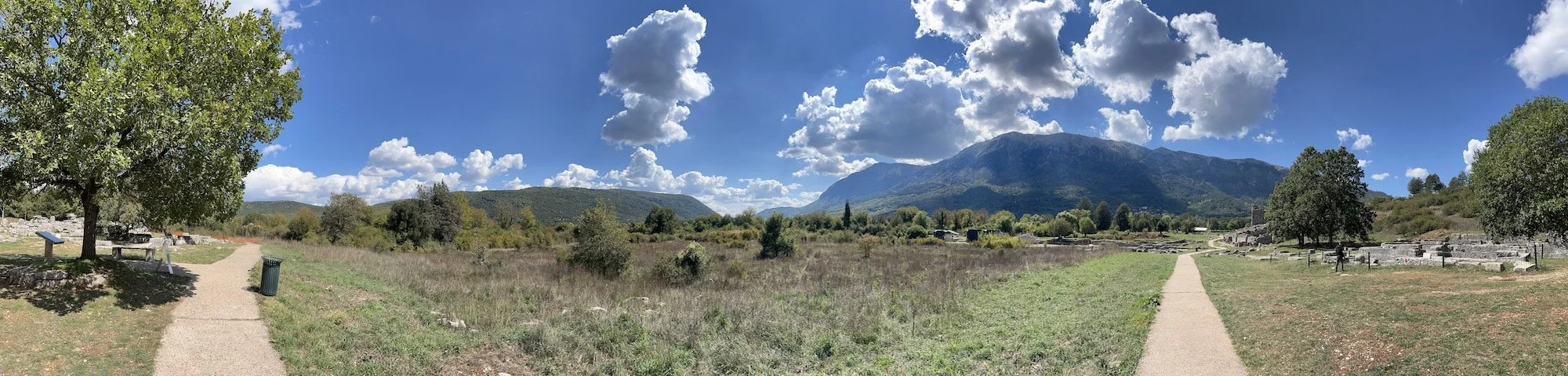
A panorama of Dodona and Mount Tomaros
Jason and the Argonauts
It was said that the Golden Fleece was spread over an Oak tree in a sacred grove of the god Ares and guarded by a giant serpent – the Colchian Dragon (Drakon Kholkikos).
When Jason embarked on his journey to seek the Golden Fleece, the goddess Athena added Oak wood from the Oracle of Dodona to Jason’s ship – the Argo. Zeus spoke to Jason through the sacred Oak wood, giving wise council as Jason navigated through various trials on his way to steal the fleece.
“The plain of Ares and the god’s sacred grove, where the snake kept watch and ward over the fleece, spread on the leafy branches of an oak.”
The Dryads and Balanos

Holm Oak (Quercus ilex) Photography by macrolepis, CC BY 3.0, via Wikimedia Commons
The Dryads are nymphs who nurture, protect, and embody the essence of trees. Their health and vitality is wholly dependent on the health and vitality of the tree with which they share a symbiosis. Although the term dryad (δρυάς) has come to mean any tree nymph (whether Pine, Oak, Olive, Poplar, or some other tree), the term dryad was also specifically used for nymphs of the Oak tree.
According to Athenaeus, the nymph of the acorn-bearing Oak was the Hamadryad named Balanos (Βαλανός). We can follow this thread in today’s language: in modern Greek, a word for Oak is βελανιδιά (or βαλανιδιά) and the word for acorn is βελανίδι (or βαλανίδι).
For more guidance in connecting with the Dryads, I invite you to explore this guide.
Back to top
The Oak in Ceremony

Wise Council - Values - Conviction
From its rot-resistant hardwood to its astringent properties to its nutrient-dense acorn, the Oak is a formidable elder. Known for its hardiness and longevity, the Oak is a steadfast ally in our search for wisdom and strength of conviction.
As a tree sacred to the god of just rulership and wise counsel, the Oak can be called upon when we are unsure of — or are doubting — our path forward. For most of us, our values serve as guideposts in decision-making: when we know what we hold sacred, then in times of confusion or weakness, we can rely on that inner compass to direct us. But if we are unsure of our values, we can stall, waver, or even self-sabotage our purpose and path.
Just as the Oak trees at the Oracle of Dodona provided clarity of direction to pilgrims (and Jason), so can we call on the wisdom of Oak to unearth our values and provide us with the orientation — and strength — to navigate life’s challenges. Especially if we face opposition (whether from internal fear or from external forces), the Oak can remind us to remain true to our values and take right action in any given moment.
The Oak is also a strong ally for those involved in leadership, justice, the law, or any situation where a judgment or verdict is called for.
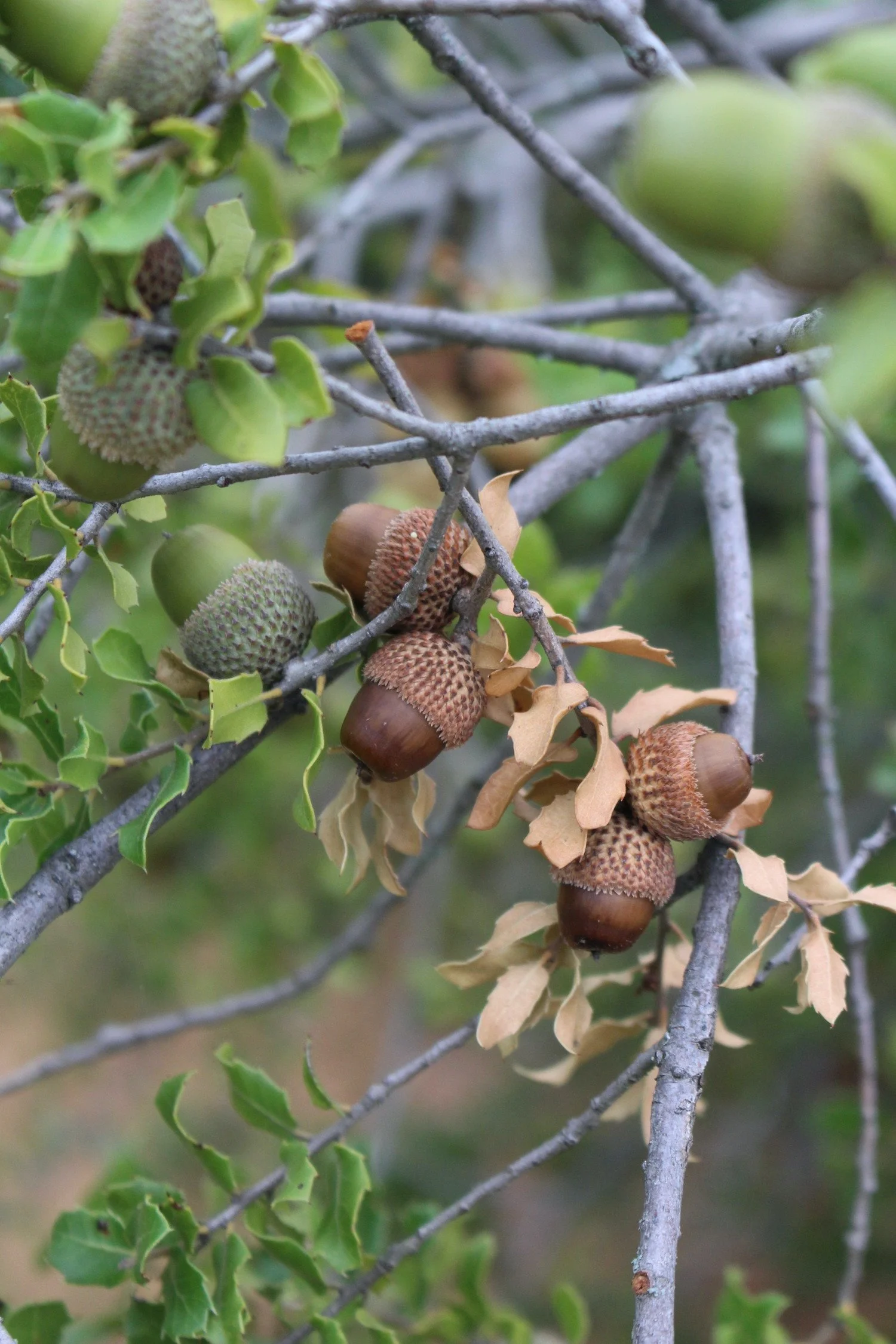
Parts Used
nut, leaf, wood, bark
Safety
Generally considered safe to use
Elemental Correspondence
Seasonal Celebrations
Altar
Oak wood can be carved to form an altar table or surface and — just like our values — create a foundation for our practice. Other items carved from Oak can also be included on the altar, such as bowls and cups. A wreath of Oak leaves or a talisman of dried acorns can serve as a tangible devotion to our values.
Ceremony
Include the Oak in your ceremonies for strength of conviction and clarity of purpose.
When doing any work concerning your values — whether facing an external force of opposition or an internal doubt of purpose — call upon Oak for wise counsel. Craft a divination cloth and toss acorns to receive an answer to your query. Sit beneath an Oak tree and request its guidance when grappling with a moral decision. Reflect on your values and whether they guide your daily choices; if necessary, commit to making new life choices that are better aligned with your convictions.
Especially when combined with the ancestral wisdom of Olive and the resilient protection of Pine, the Oak can provide us with steadfast direction: the inner strength to choose and follow the just path, no matter how challenging the (internal or external) opposition.
Devotion
Whether before your altar or the living tree, read the following:
Oaken elder,
steadfast heartwood,
with just conviction and values rooted,
guide me to right action.
For more guidance in connecting with the Dryads, the nymphs of the Oak and other trees, I invite you to explore this guide.

Valonia Oak (Q. ithaburensis ssp. macrolepis) Photography by macrolepis, CC BY 3.0, via Wikimedia Commons
The Oak in the Kitchen & Apothecary

Parts Used
acorns, leaves, bark, galls, Kermes Oak scaled beetle (Kermes vermillio), wood
Culinary Flavor and Use
Acorns have been eaten for thousands of years. Though often considered a food more suitable for famine, they can be powdered and then soaked for a lengthy time to remove their bitter tannins before being used in baking bread and thickening stews.
Acorns were also used as fodder for domesticated pigs.
Traditional Medicinal Applications
The Oak is astringent and antimicrobial in nature and has been used traditionally as a treatment for various ailments, including dysentery, hemorrhages, diarrhea, and eczema. Typically, the bark or leaves are employed in tinctures, washes, and oils, but the powdered acorns (used either raw or first roasted) are also used.
In antiquity, Valonia Oak oil was used for the skin and hair, as well as to treat earache and headache. And the Kermes Oak roots were used as a tonic, sedative, and antispasmodic.
Dyes, Tannins, and Building Materials
The Kermes scaled beetle (Kermes vermillio) is often found on the Kermes Oak and is collected to produce crimson, a red coloring used for dyeing fabrics. According to Plants of Crete by Adonis Alibertis, Theseus used crimson to dye his sales red on his journey to slay the Minotaur, and Spartans used it to camouflage blood stains on their war clothes.
Oak bark was also used for dyeing hair. Oak galls — which are irregular plant growths formed by the interaction of plant hormones and insect chemicals — were similarly used for producing black dye. And Oak’s high tannin content makes it a traditional ingredient in tanning leathers.
In ancient Greece, the strong, rot-resistant Oak hardwood was used for constructing ships, lyres, wine barrels, and houses, for carving offerings, for manufacturing charcoal, as well as for burning as fuel.
Safety and Drug Interactions
Generally considered safe to use.