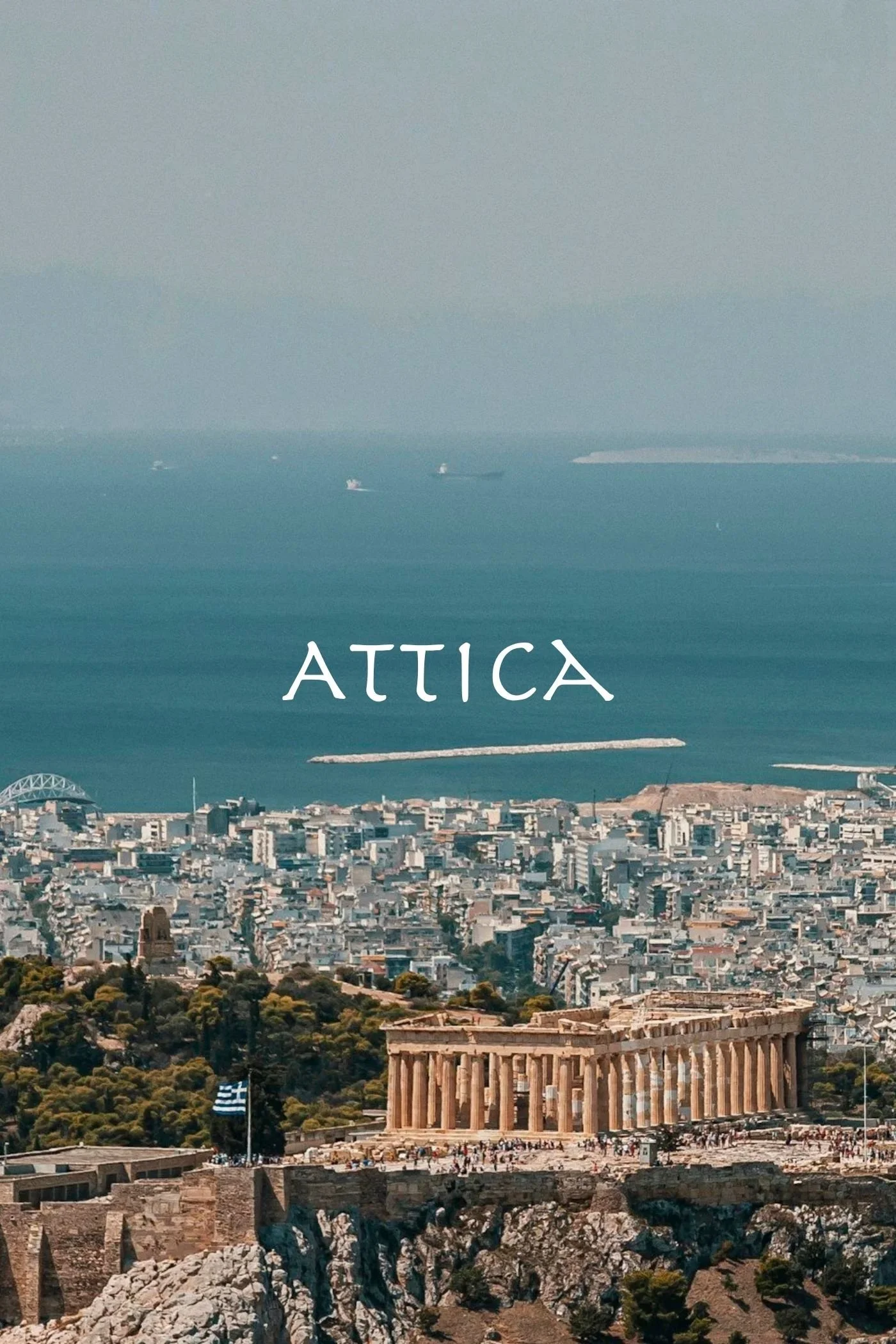
Attica
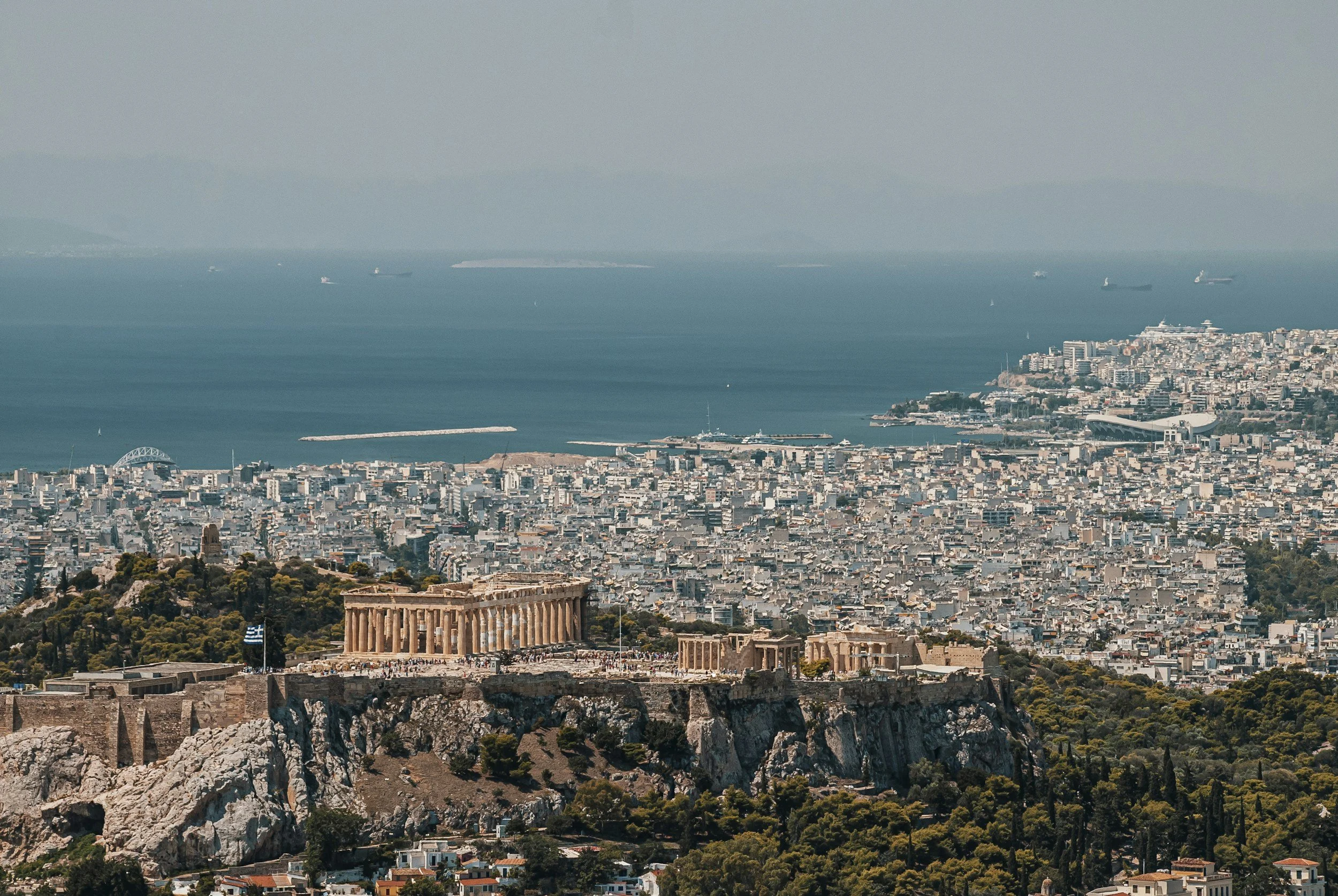
Attica (Αττική) is a peninsula of central Greece reaching into the Aegean Sea. As host to the settlements of Athens, Eleusis, Brauron, and Marathon, the region is one of the most historically significant areas of ancient Greece, with some settlements dating back to prehistoric times. It is bordered to the northwest by the land region of Sterea Ellada, to the northeast by the island of Evia, and connected to the Peloponnese by the Isthmus of Corinth.

The peninsula is naturally divided into three plains by various mountain ranges, the most well-known being the Pine-covered peeks of Mount Hymettus (Υμηττός ) and Mount Parnitha (Πάρνηθα), both of which have been historically mined for marble. Mount Aigaleo (Αιγάλεω) and Mount Penteli (Πεντέλη) are also notable mountains within Attica, and combined with Hymettus and Parnitha, they create a natural cradle around the capital city of Athens.
The river Kifisos or Cephissus (Κήφισσος) runs through the region, although much of the river has now been built over by the sprawling metropolis of Athens. The dammed Lake Marathon (Λίμνη Μαραθώνος) was created in the 1920s as a reservoir for the region.
Many temples and sacred centers are found in Attika, including: the Parthenon and acropolis complex of Athens; the sacred center for the Eleusinian Mysteries at Eleusis (Ελευσίνα); the site for the battle of Marathon (Μαραθώνας) in the northeast; the Temple of Artemis at Brauron (Βραυρώνα) on the eastern coast; and the Temple of Poseidon at Sounio (Σούνιο) at the southernmost tip of Attica.
As host to Athens, Greece’s modern capital and largest city with a population of over 4 billion people, the landscape of Attica has been altered significantly over time by urban development, extensive deforestation, and uncontrolled, human-instigated wildfires. The ports of Piraeus and Rafina act as central hubs for ferries to the islands, and the Eleftherios Venizelos international airport links Greece to foreign lands
Click the play button to interact with the map