Giant Reed
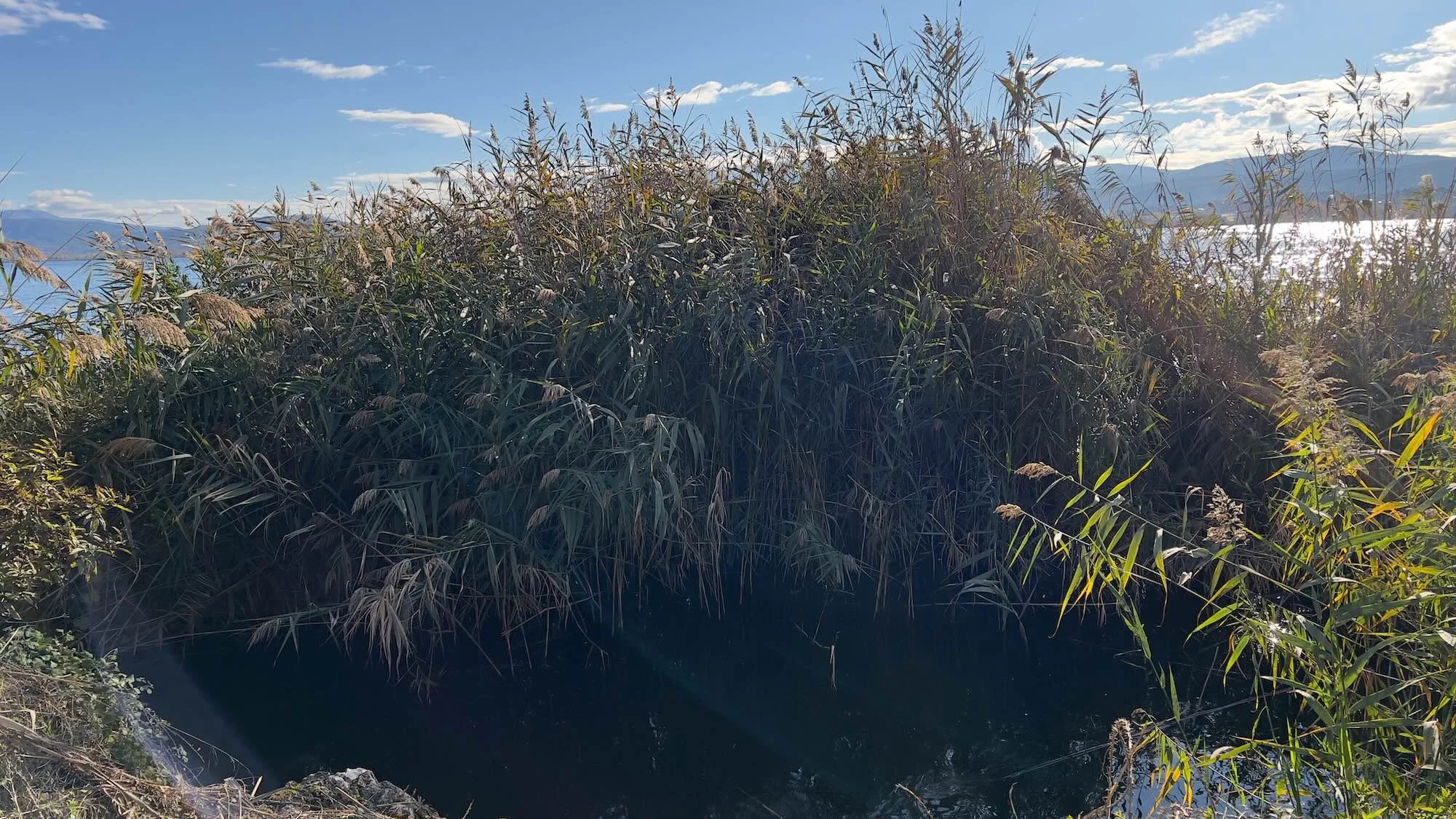
Photo of Giant Reed beside Lake Pamvotida, by Mira Karakitsou
Arundo donax
Resilience — flexibility — Strength in Community
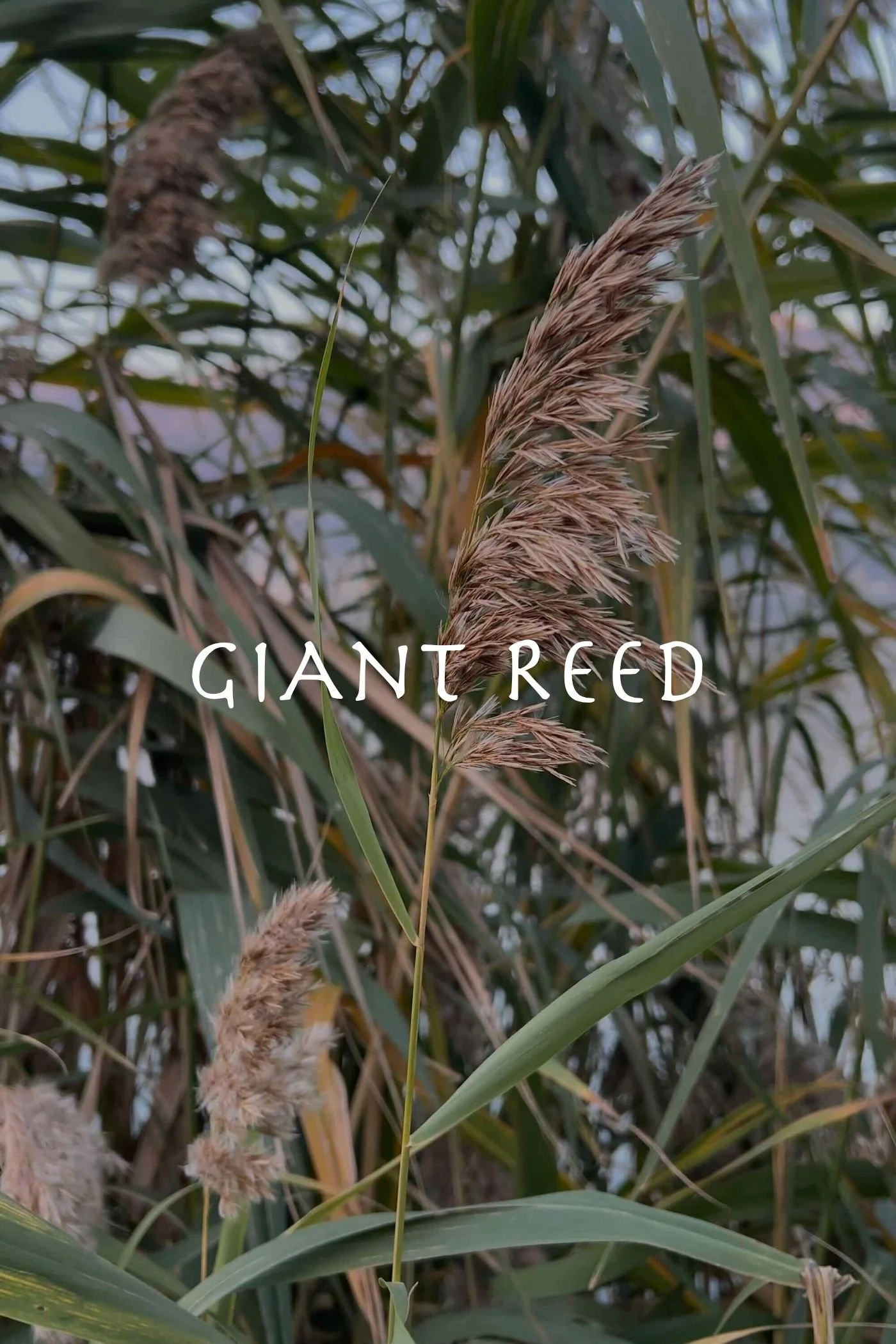
The Giant Reed is a towering perennial grass with strong, hollow stems and feather-like plumes. Preferring damp and waterlogged spaces along riverbanks, lakes, and wetlands, the Reed is a harbinger of freshwater and slightly saline waterways. Beloved by the rustic god Pan, the nymph Syrinx was transformed into a Giant Reed while fleeing from the god, and her body used to craft the first panpipe, an ancient Greek wind instrument that became Pan’s symbol. Harvested since antiquity for supports, braces, rods, and sticks, the Giant Reed lends its strength and flexibility to diverse human crafts, from the arts and medicine to agriculture and construction. Teaching us adaptability, the Reed grows in dense clumps, withstanding wind and heavy rains due to internal resilience, as well as the strength born from community. Keep reading below to learn more about the Giant Reed in ancient Greek myth and culture, and how to invite the Reed into your own ceremonies and traditions.
Index
The Giant Reed in the Wild & Garden
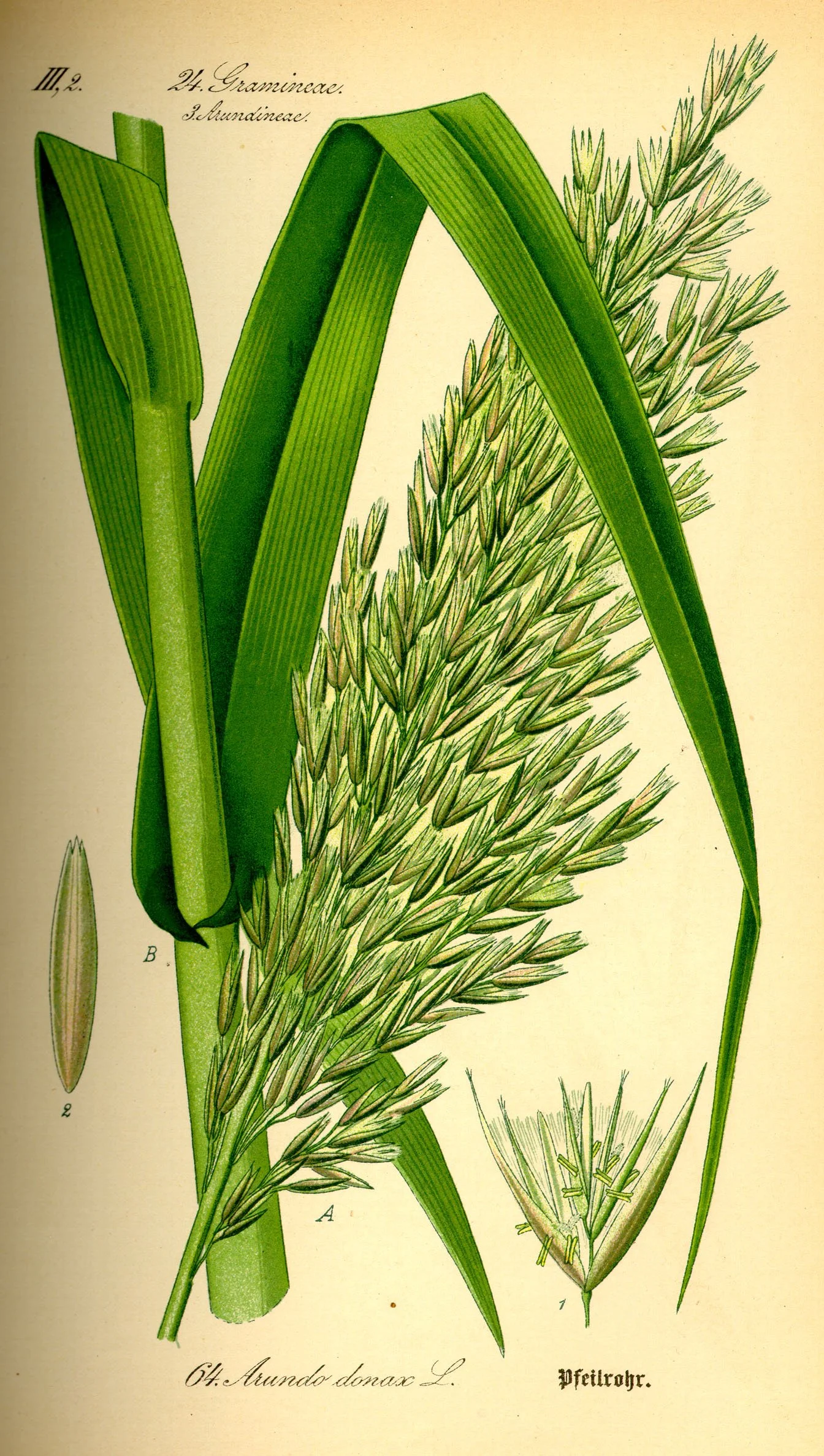
Illustration of Giant Reed, Arundo donax, Public Domain, via Wikimedia commons
LATIN BINOMIAL
Arundo donax
PLANT FAMILY
Gramineae (Poaceae)
COMMON ENGLISH NAMES
Reed
COMMON GREEK NAMES
Καλάμι
CHARACTERISTICS
Tall perennial grass with strong, hollow stems growing in dense clusters and preferring damp soils
NATIVE HABITAT
Middle East
PREFERRED CLIMATE & CONDITIONS
Damp or waterlogged soil in liminal spaces (riparian zones) along riverbanks, lakes, wetlands, ditches, or slightly saline waterways; considered highly invasive in non-native regions
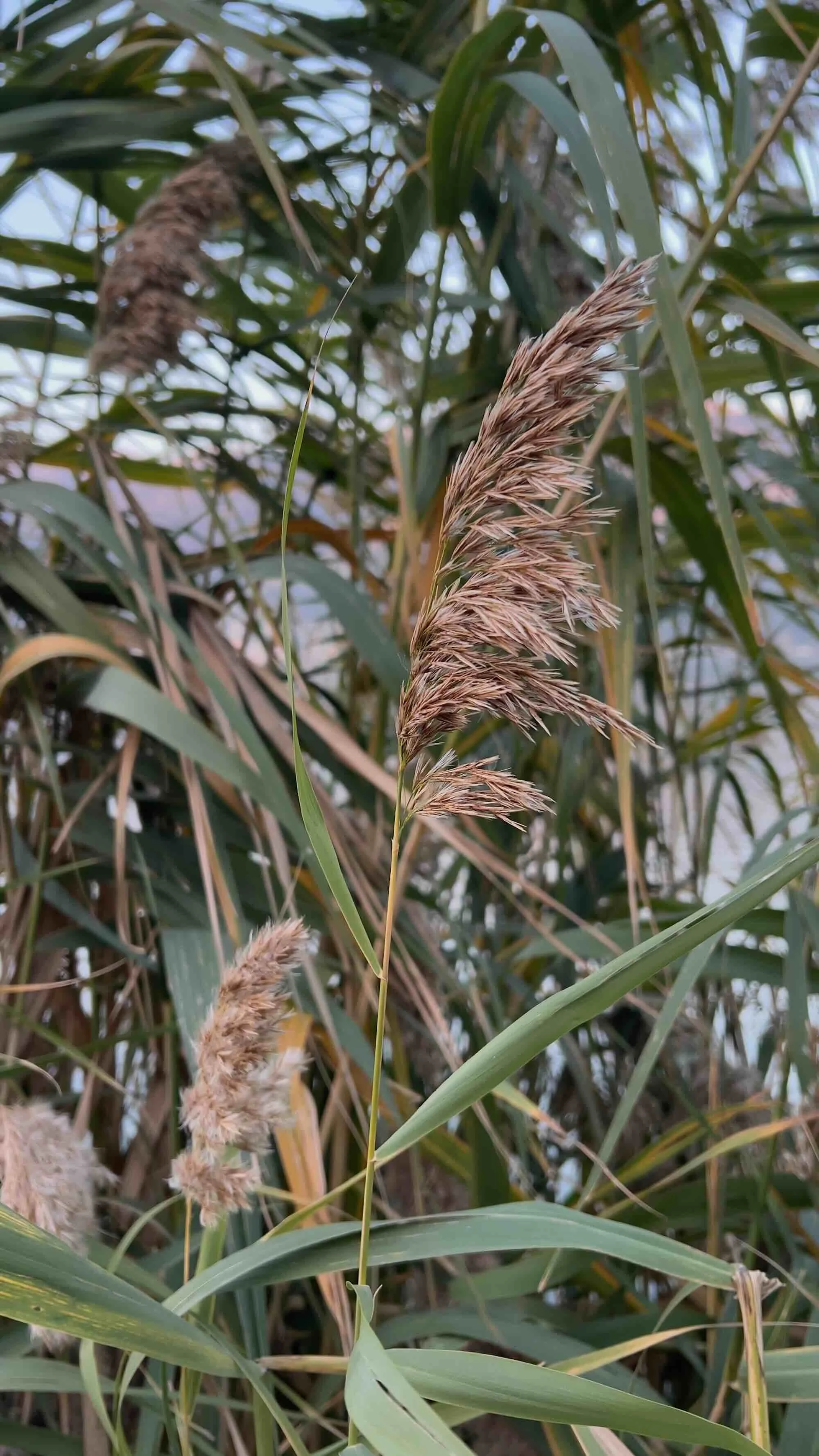
Photo of Giant Reed beside Lake Pamvotida, by Mira Karakitsou
TYPICAL HEIGHT AND SPREAD
Grows 5-6 meters tall (16-20 ft) in dense clumps
Stalk, LEAF and Bloom CHARACTER
Blooms in feathery plumes up to 60 cm (2 ft) in late summer to early autumn; flowers mature from reddish-brown to cream-colored; seeds are often missing or infertile; reproduces primarily via rhizomes, resulting in low genetic diversity; pieces that break and flow downstream create new colonies; flat, long, alternate leaves clasp hollow stems (2-3 cm diameter); highly flammable during Fire Season; not attractive to most pests due to chemical composition
In the Garden or Homestead
The Giant Reed is effective as a windbreak or natural fence, and also supportive in restoring damp areas suffering from soil erosion. Due to its relatively quick and dense growth pattern, as well as its natural pest and disease resistance, the Giant Reed is being considered as a source of renewable biofuel. However, the Giant Reed is a highly invasive species in non-native regions, and is not recommended for planting in North America, Oceania, or parts of South America and Africa.
Back to top
The Giant Reed in Greek Mythology

Photo by Carole Raddato from Frankfurt, Germany, CC BY-SA 2.0, via Wikimedia Commons
Syrinx & Pan
Syrinx (Σύριγξ) was a Peloponnesian Naiad dwelling among Hamadryads near Nonacris. Having pledged virginity like the goddess Artemis, she did her best to avoid the pursuits of local Satyrs.
However, the rustic god Pan — crowned in Pine — ached for her love. He pursued her over the mountains of Arcadia to the River Ladon, where she was cornered and begged her fellow nymphs to save her. Syrinx was thus transformed into a Giant Reed, her sisters hiding her amidst the towering stalks.
Pan, unable to identify her among the dense cluster of Reeds, but hearing the beautiful music that the wind made through her stands, decided to harvest stalks from the Giant Reed and bind them together with Beeswax to make the first panpipe, a wind instrument that became his signature symbol.
“...and Pan, believing he had caught her, held instead some marsh reeds for the body of the Nymph; and while he sighed the moving winds began to utter plaintive music in the reeds, so sweet and voice like that poor Pan exclaimed; ‘Forever this discovery shall remain a sweet communion binding thee to me.’”
The Panpipe & Other Ancient Greek Instruments
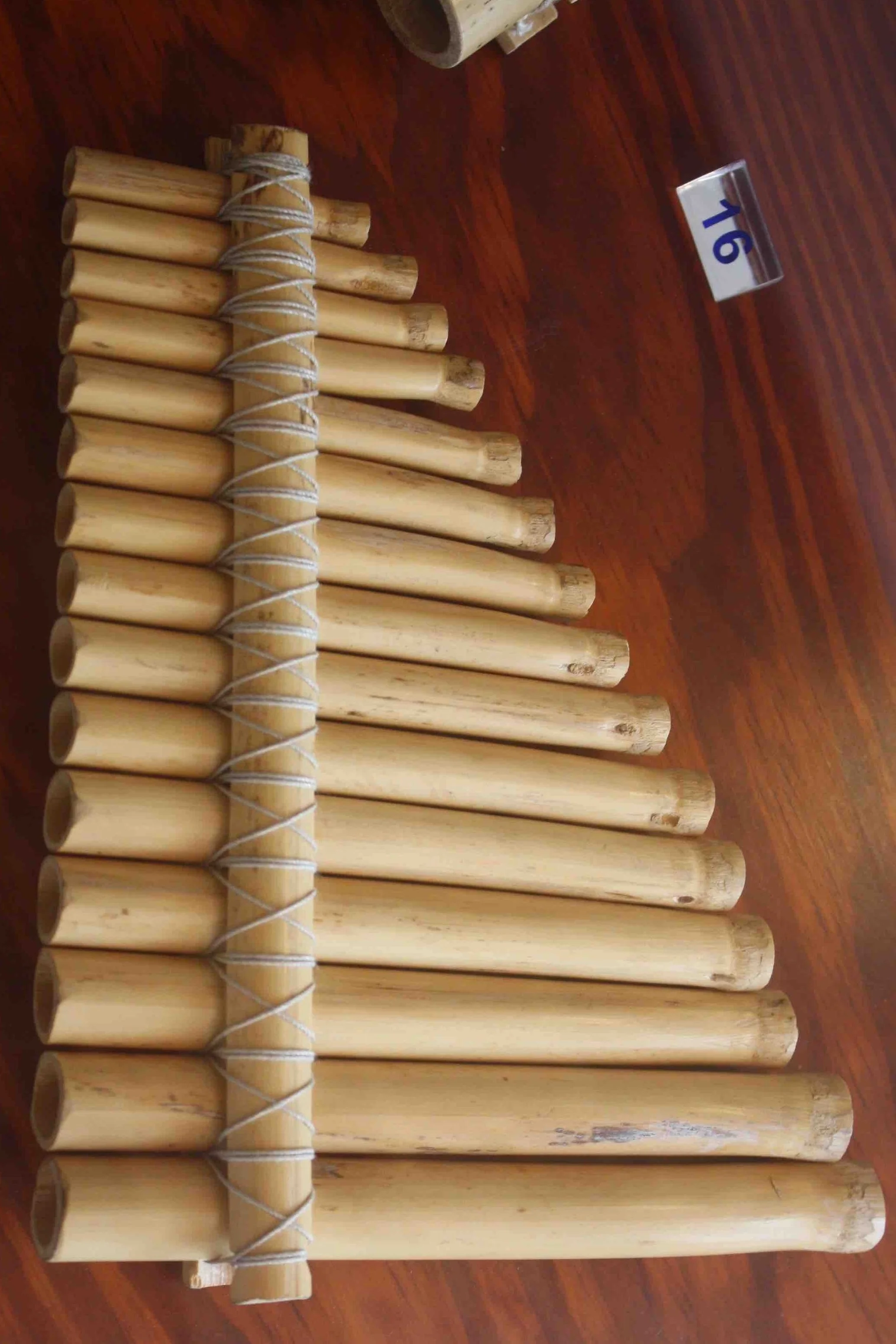
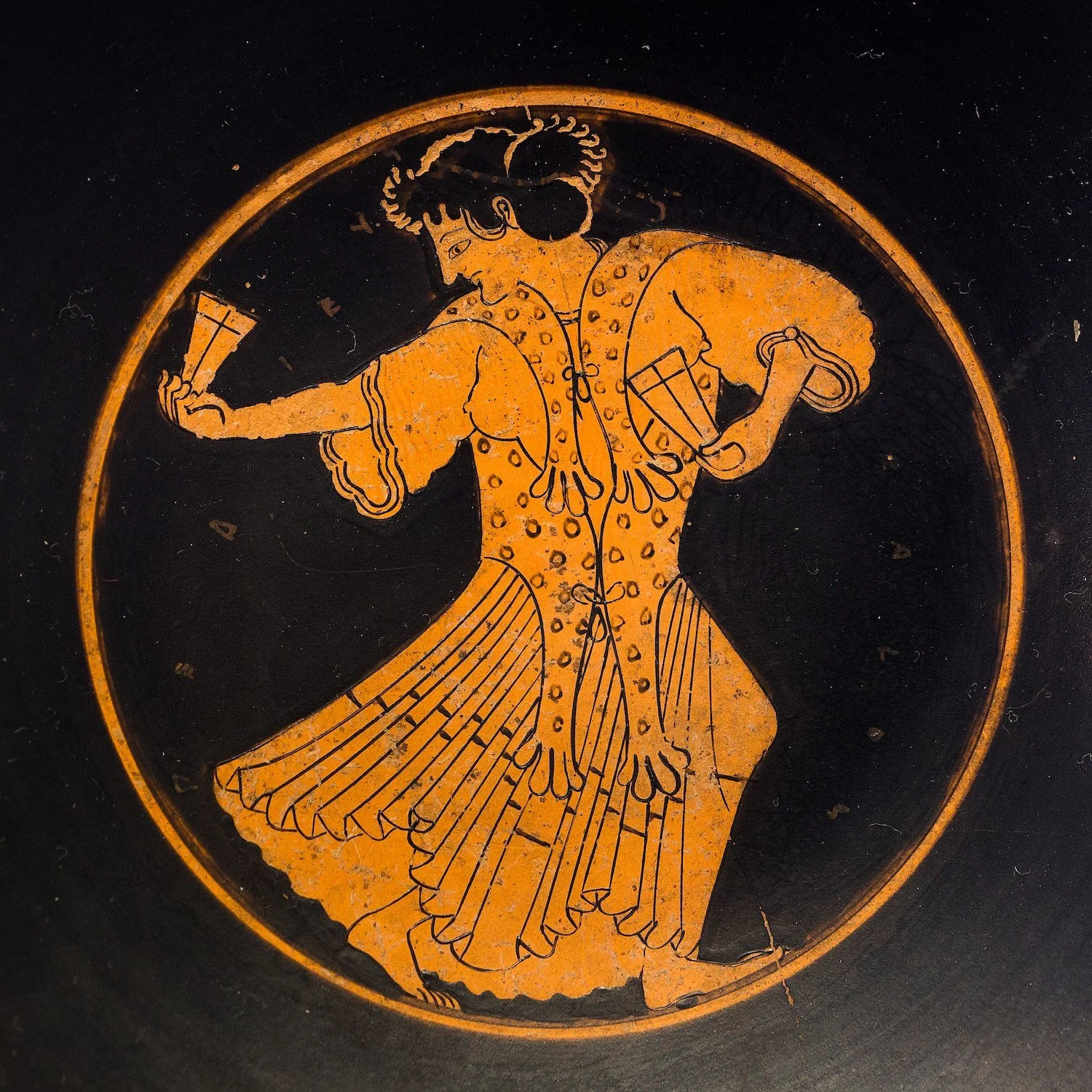
The panpipe or syrinx (σύριγξ) is an ancient Greek wind instrument made from several Giant Reed canes (without any holes on the sides) held together with flax or wax, and it is either cut at various lengths or plugged with wax to adjust each pipe’s tone. As discussed above, one origin story tells of the nymph Syrinx (Σύριγξ) who was transformed into a Reed while trying to escape the god Pan. It is an instrument sacred to the god and was played by shepherds wandering the mountains of Greece.
In the Homeric Hymn to Hermes, the god Hermes used the Giant Reed in the construction of the very first chelys lyre (χέλυς), a stringed instrument with a soundbox traditionally made from a tortoise shell and played by strumming.
The Giant Reed was also used in the construction of other ancient Greek instruments, including the aulos (αυλός)—a wind instrument with two, double-reeded flutes—and crotalum or krotala (κρόταλον)—castanets made from two pieces of reed, cane, shell, wood, or metal held in the hands and clicked together rhythmically. Learn more about ancient Greek musical instruments here.



Reeds near the Temple of Artemis in BrauroN (Vravrona), Photo by Mira Karakitsou
The Giant Reed in Ancient Greek Culture and Modern Language
According to Annette Gieseke in The Mythology of Plants: Botanical Lore from Ancient Greece and Rome, the sturdy, dried Reed was employed for diverse uses in agriculture, construction, and the arts, including “fishing rods, walking sticks, braces for grapevines, supports for vaulting and roofs, writing instruments, arrows, straws through which to administer medication, and handy devices for removing out-of-reach cobwebs” (page 130).
The Greek word syrinx (σύριγξ)—the name of the panpipe created from the hollow Giant Reed—is also the root of our English word syringe.
Back to top
The Giant Reed in Ceremony
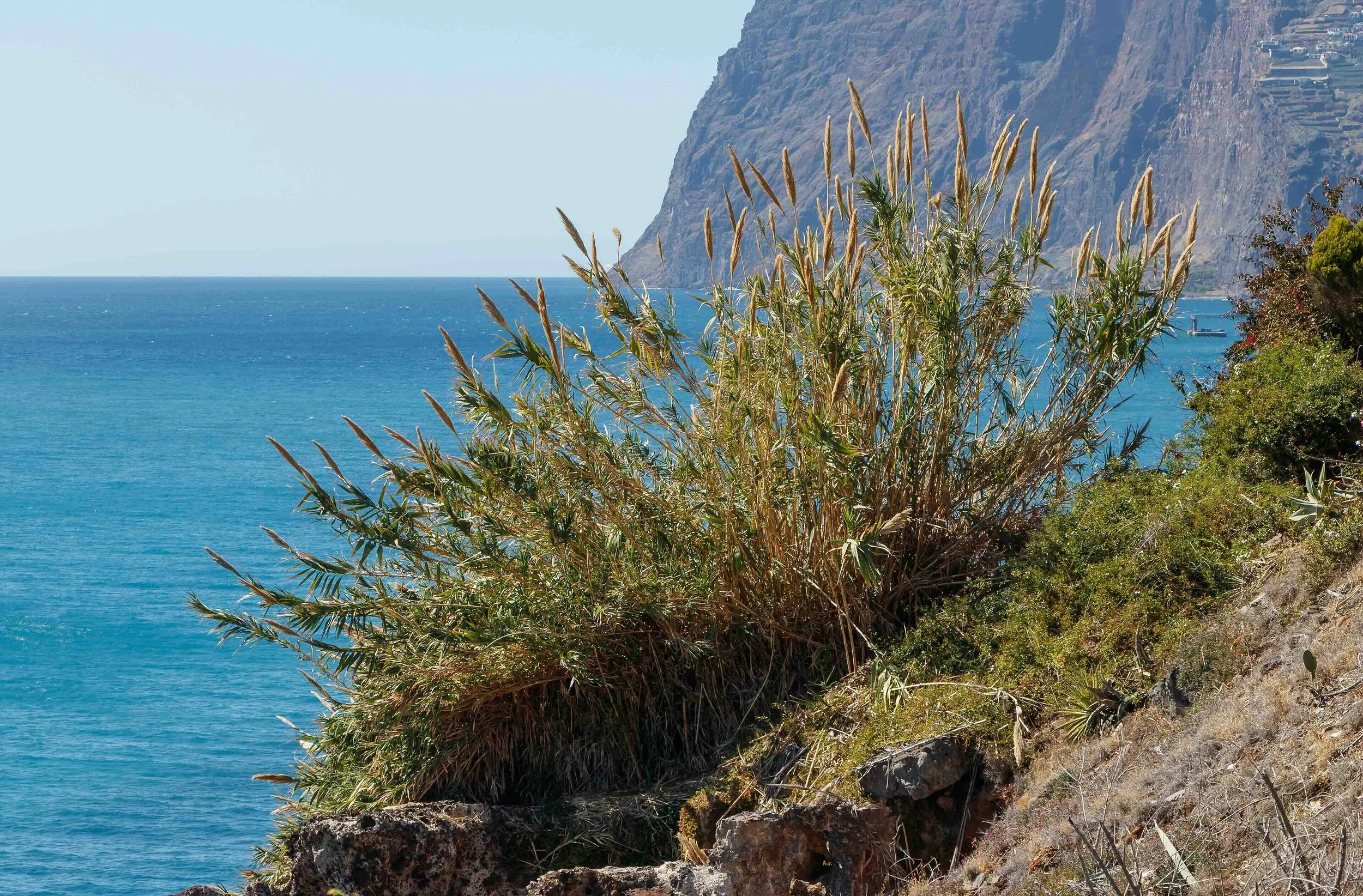
Photo by H. Zell, CC BY-SA 3.0, via Wikimedia Commons
Resilience — flexibility — Strength in Community
The Giant Reed is a teacher of adaptability, flexibility, and the strength that is provided by community.
Towering up to 5 or 6 meters tall (16 to 20 ft), the hollow stalks and feathery plumes are incredibly strong. Despite their rigid structure, feathery flowers, and imposing height, they sway and move with the air, allowing them to withstand heavy winds and rains with ease.
It is their internal framework, yes, but also their community that provides them with protection against the elements. Growing in dense clumps, they form a resilient cluster in the face of storms, fire, and floods. Their collective structure also allows them to bounce back relatively fast from trauma or weather-related destruction.
When we need the structure and safety that community provides, the Giant Reed is there to harbor us, a reminder to seek resiliency in community. Just like in the myth of Syrinx, it is her fellow Naiads who provide her shelter from Pan’s unwanted attention, transforming her into a Giant Reed, hiding her as one among many.
But there is a warning here, too: community is protective, yes, but sameness is also a potential pitfall. Pan, in his desire to possess Syrinx, does not descriminate when he takes the Reed for his panpipe. He cuts stalks randomly, not knowing if he is harvesting his beloved or not.
Similarly, the Giant Reeds’ sameness makes it potentially vulnerable. The Giant Reed produces mostly sterile seeds, preferring to reproduce by rhizome, resulting in low genetic diversity. Many communities of Reed along a stretch of river will be genetically identical—clones—having been propogated by broken pieces of rhizome that have floated downstream during storms to start new colonies elsewhere.
And while their uniformity and dense clusters provide protection from storms, and they are generally very resilient against pests and pathogens, their nature as clones produces a different kind of vulnerability to a future disease that could wipe out an entire population. The Giant Reed is also incredibly invasive in non-native regions, taking over and crowding out native plantlife and causing imbalance in local ecosystems. Their somewhat aggressive sameness becomes a hindrance to other plants in non-native environments, as well as a danger to their own survival everywhere.
The lesson for me when meeting Giant Reed is that strength is born in community, but resiliency is augmented by diversity. Just like the panpipe—crafted from dried Giant Reed and tied together with Beeswax and Flaxen thread—it is the layout of the strong, but hollow stalks cut to different lengths and then combined together, that produces a melody.
Parts Used
Stalk, Flower
Elemental Correspondence
Seasonal Celebrations
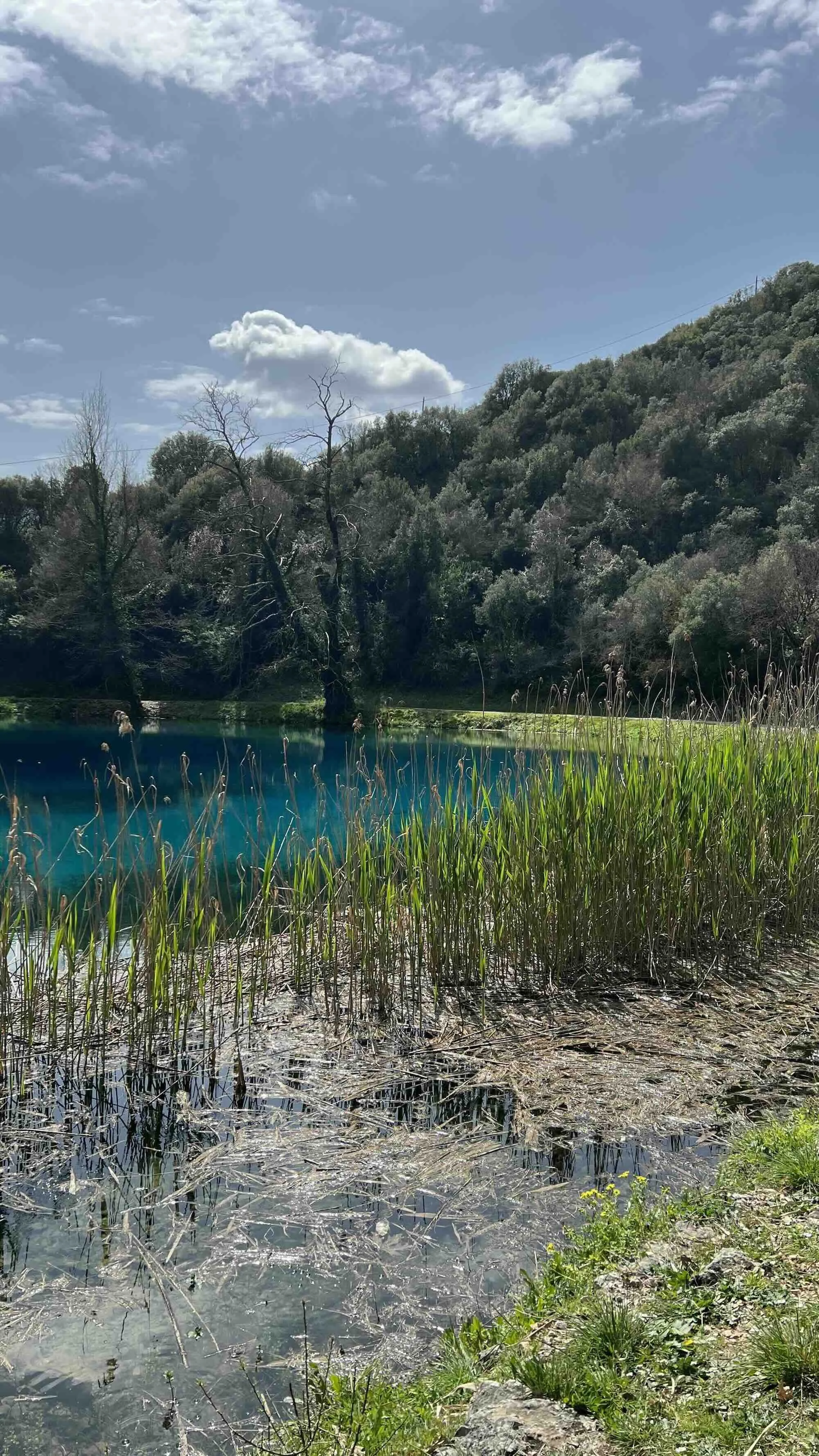
Reeds growing at Louros Spring, Photo by Mira Karakitsou
Altar & Ceremony
Dried Giant Reed stalks can lend strength, structure, and cohesion in the garden or ceremonial circle. Ritual wands and staffs can be dried and decorated for sacred use. Braces, rods, trellises, and even screens or shade roofs, can be constructed for the garden or home as a reminder of the Giant Reed’s strong, but flexible, presence. The stalk can also be dried as a shaft for ritual brooms, woven into baskets or mats, or carved into writing tools. Collect the fresh or dried flower stalks for bouquets; the feathery plumes create a stunning center piece for the altar.
A lover of water, but also with a special affinity for air, the Giant Reed can be invited into rituals that include breath, song, and creative flow. Musical instruments, such as the panpipes, flute, or even wind chimes, can be crafted and included in the ceremonial space to invite the energy of Naiads and Aurae.
Devotion
Whether before your altar or the living Giant Reed, read the following:
Sing to me, Giant Reed,
of resilience and adaptability.
Lend me the strength
that grows from collective support.
Back to top
The Giant Reed in the Kitchen & Apothecary
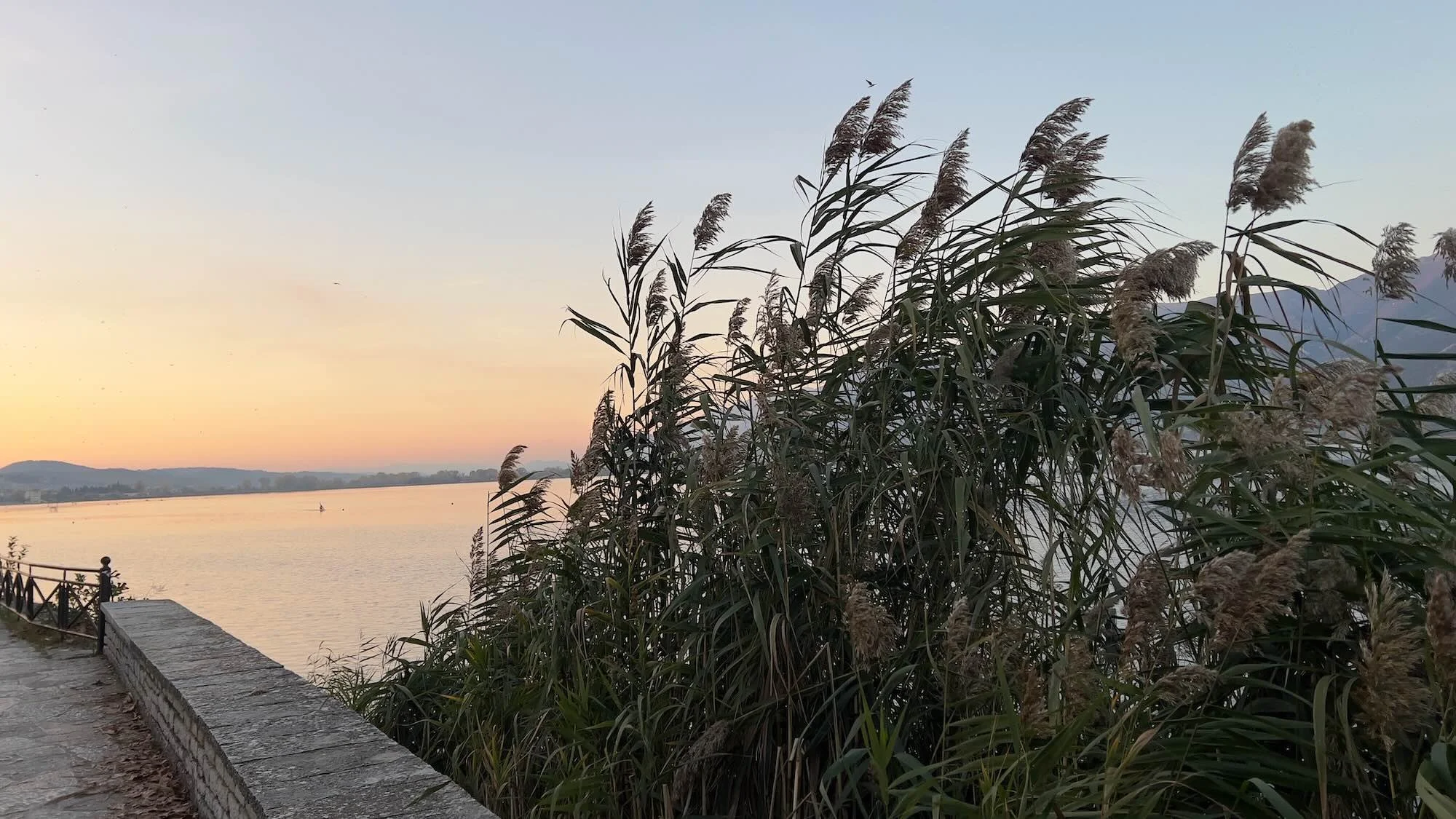
Photo of Giant Reed beside Lake Pamvotida, by Mira Karakitsou
The ancient herbalist Dioscorides mentions the medicinal applications of several varieties of Reed, quite possibly the Arundo donax, although it could be another species altogether, such as Acorus calamus.
Today, the Giant Reed is not used for medicinal or culinary purposes; it is quite bitter and fibrous, with possible toxic compounds.
Human Craft & Homestead Traditions
The Giant Reed has been historically used in the construction of roofs, arrows, agricultural supports, fishing rods, writing tools, and medicinal straws. The term “syringe” has its root in the word σύριγξ, which is also the name of the Nymph who was transformed into the hollow-stemmed Giant Reed.
The Giant Reed is still used today to make reeds for bagpipes, clarinets, and other woodwinds.
Back to top
Related Articles


Selected Sources
Alibertis, Adonis. Plants of Crete
Dioscorides, De Materia Medica
Gieseke, Annette. The Mythology of Plants: Botanical Lore from Ancient Greece and Rome
Ovid, Metamorphoses
Thorogood, Chris. Field Guide to the Wild Flowers of the Eastern Mediterranean
Find more resources in my Library