A Guide to Ancient Greek Instruments
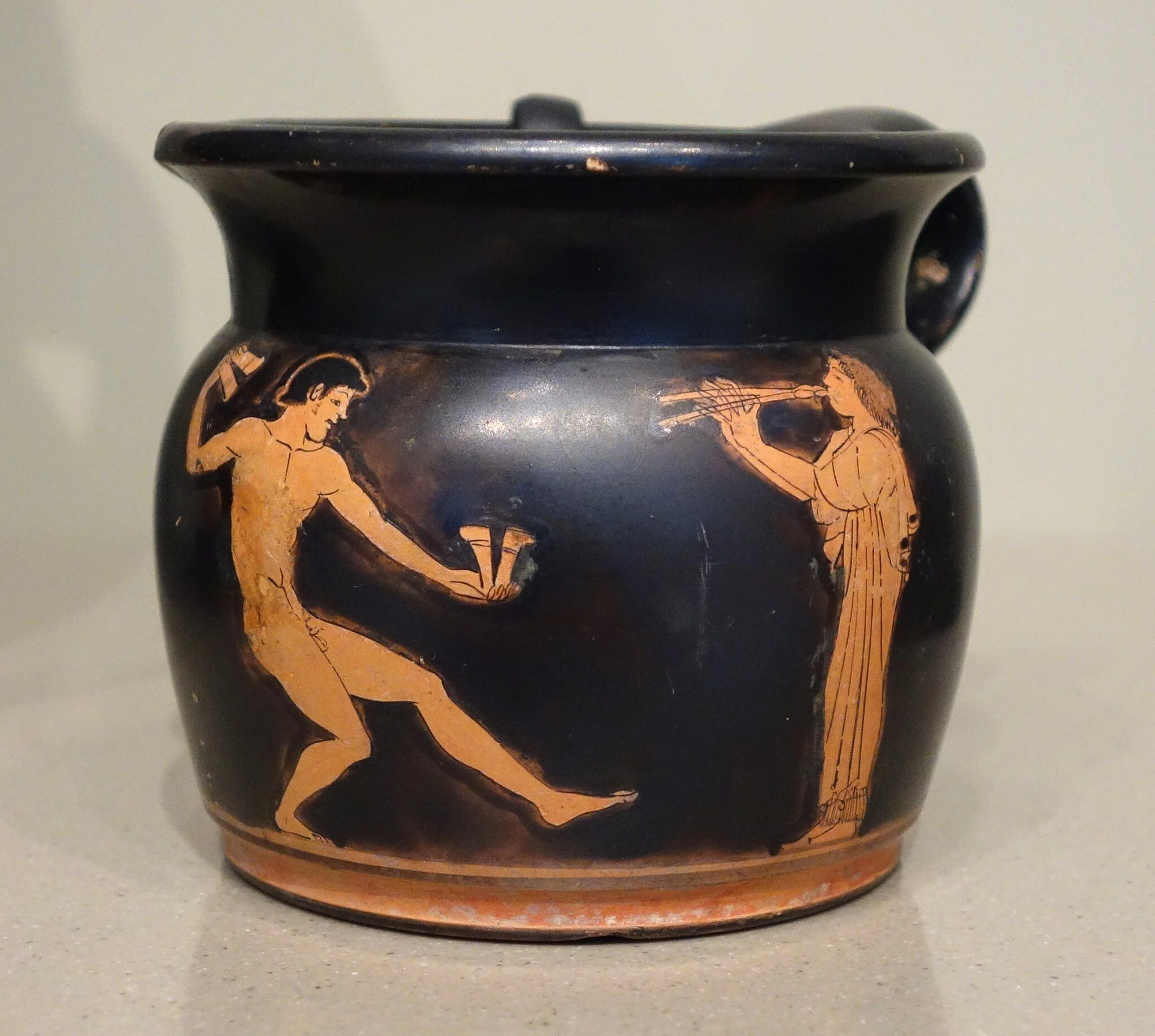
red-figure Attic mug with aulos-player and dancer with krotala, ca. 480 B.C. Image from Mark Landon via Wikimedia Commons
To say music was central to the everyday life of the ancients would be an understatement. Music accompanied most, if not all, rites of passage, communal events, and private life in Greece: processions, religious festivals, athletic ceremonies, the symposium, theatre, funerals, sacrifice and libations, household chores, weddings, military events, and more.
Music usually included the combination of recited poetry (lyrics) and dance. Instruments were a gift of the gods and musicality was a gift of the Muses.
Most of our knowledge comes from the visual record (artwork on pottery, murals, statues, etc) as very few pieces of the ancient instruments themselves remain. Below are a few of the most well-known and important instruments of the ancient world. I’ve also included some origin stories and myths for some instruments — the gods, places, and plants that were connected to the sounds of the ancient landscape.
Ancient Greek String Instruments
The Lyre Family
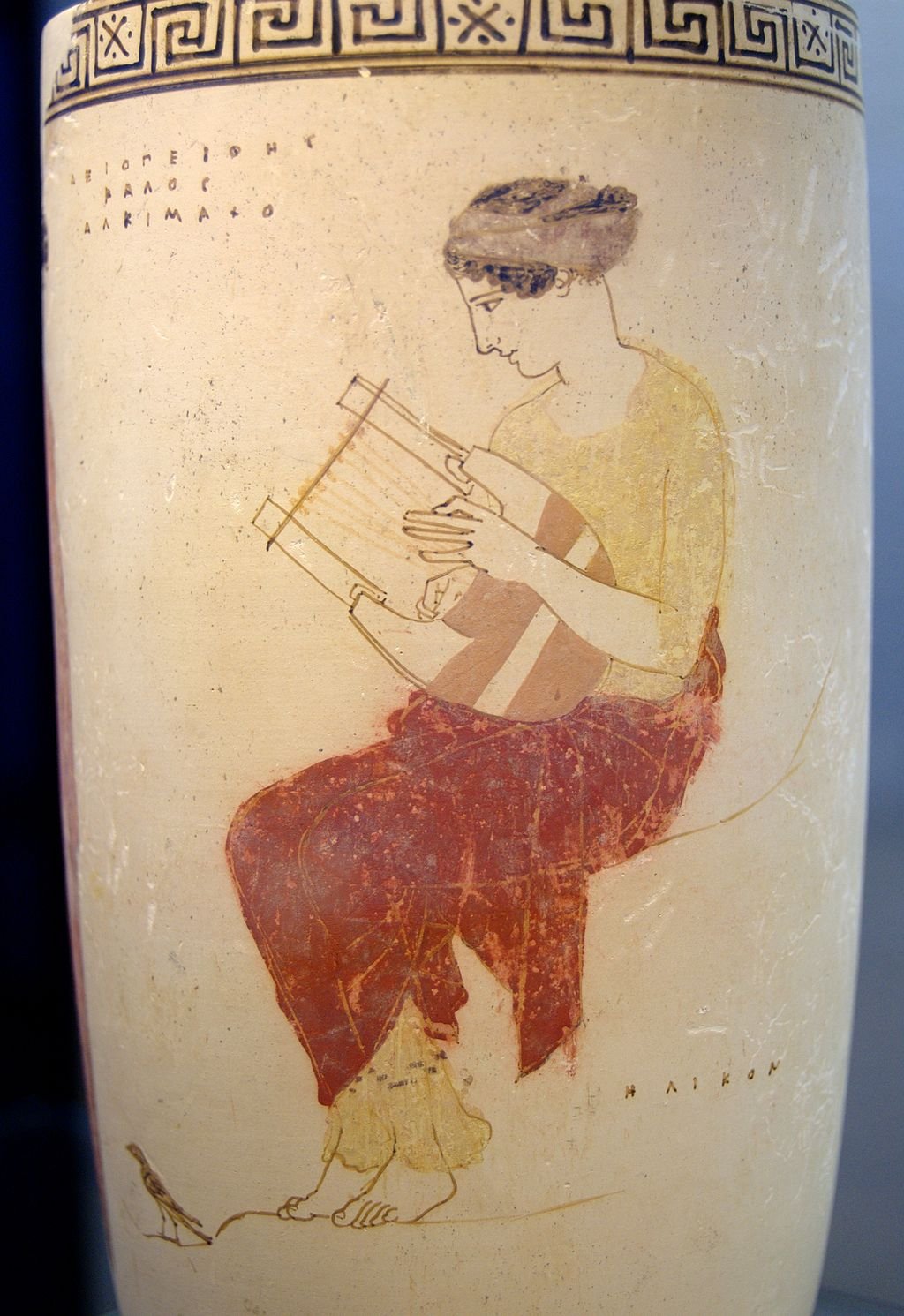
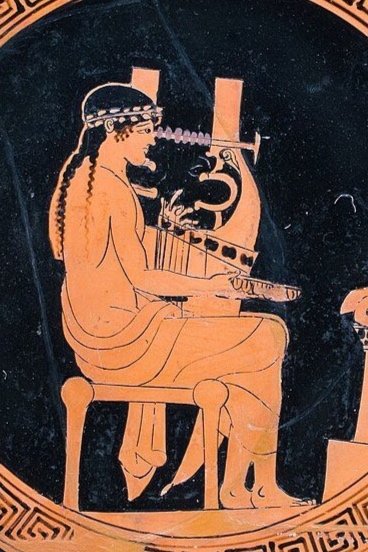
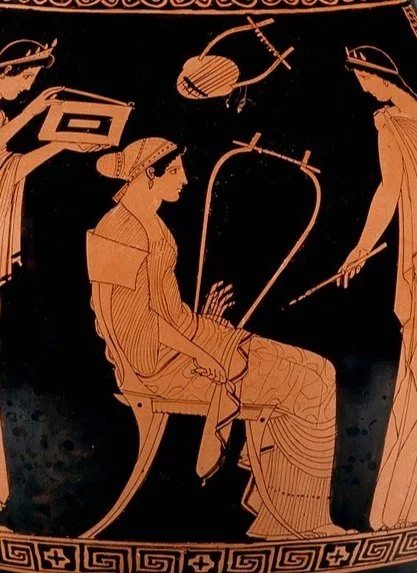
The Lyre is a stringed instrument with roots in the Mediterranean. In ancient Greece, the lyre was usually played by strumming (not plucking) with a plectrum while muting strings with the fingers. Most lyres had seven strings — seven being a sacred number to the ancients and representative of the seven spheres, or planets, that were visible to the naked eye.
The Chelys (χέλυς): a lyre with a soundbox traditionally made from a tortoise shell (turtle in modern Greek is χελώνα). According to Homer, Hermes invented the lyre after being delighted by seeing a tortoise. He crafted the soundbox from its hollowed shell, stretched it with ox hide, and fixed it with horn handles and sheep-gut strings. Later, he stole Apollo’s sacred cows and, through trickery, led Apollo on a wild search for his herd. The sun god, at first angry for being tricked, was later won over by Hermes’s new instrument. Apollo then traded Hermes the lyre for his sacred herd — and thus Hermes became the god of herding and Apollo’s sacred instrument became the lyre.
The Phorminx (φόρμιγξ): a crescent-shaped soundbox with straight arms; the unique construction allows the ability to create portamento and vibrato. (Listen here for a demonstration).
The Kithara (κιθάρα): a square soundbox with curved arms; similar to the phorminx, it has a unique construction that allows the ability to create portamento and vibrato. (Listen here for a demonstration). In modern Greek, κιθάρα means “guitar.”
The Barbiton (βάρβιτον): similar to the chelys, but with longer strings thus producing a deeper sound.

The Harp family
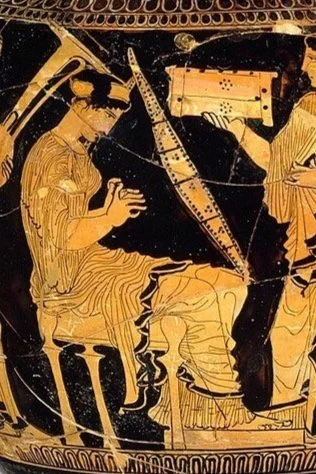
Called a Psalterion (ψαλτήριον), Trigonon (τρίγωνον), and an Epigonion (επιγόνιον), the ancient harp was a stringed instrument held in the lap that (unlike the lyre, which was most often strummed) was plucked with the fingers.

Wind Instruments
Aulos (αυλός): a wind instrument with two, double-reeded flutes. Very similar to the bagpipes in that one flute plays the drone and the other plays the melody. According to one origin story, Marsyas (Μαρσύας), a Phrygian satyr, found the aulos after Athena had invented and discarded it (she was attempting to imitate a Gorgon’s sound, but was displeased with how it made her look like a Gorgon when she played it with cheeks puffed out).
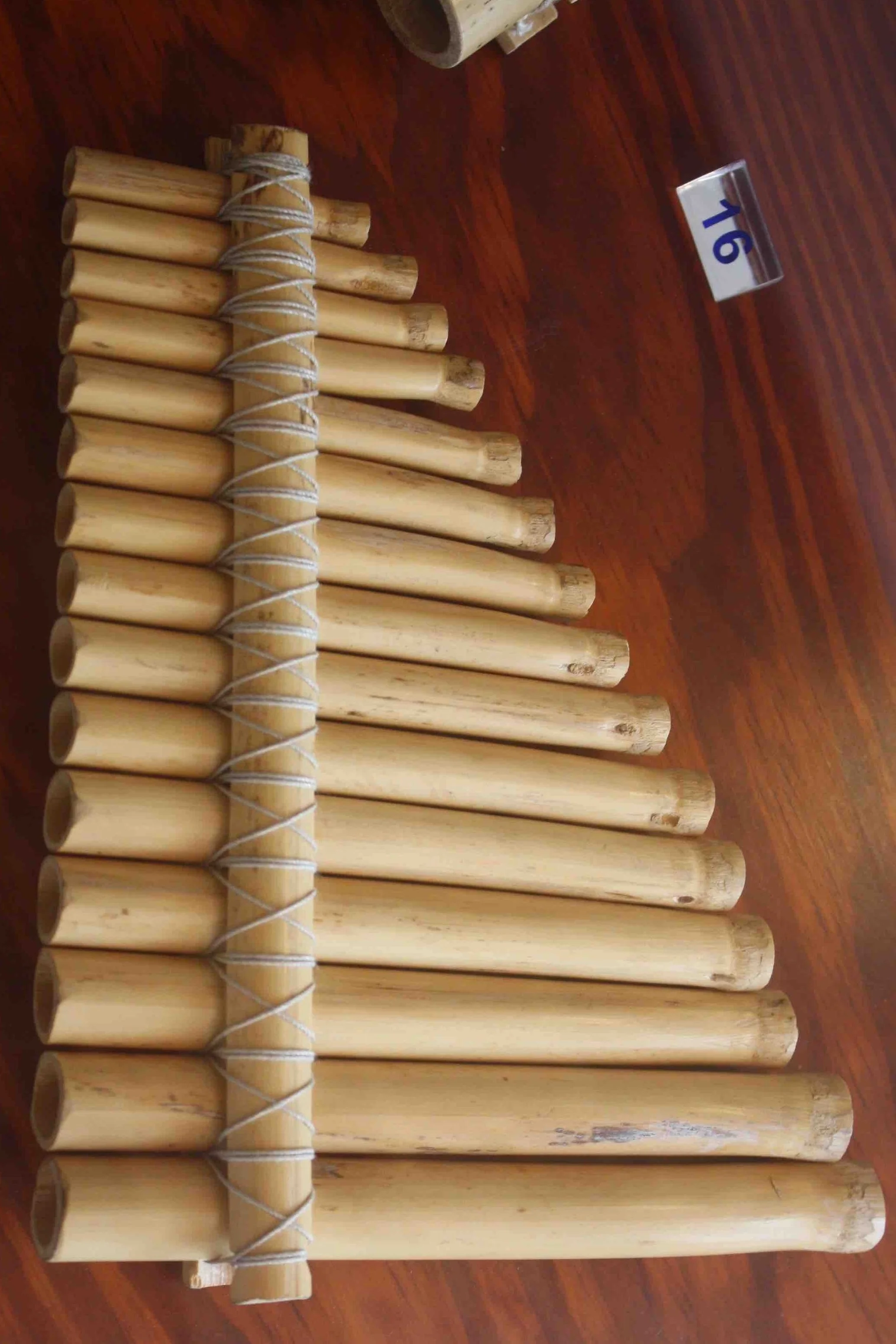
Panpipes or syrinx (σύριγξ): a wind instrument made from several reeds or canes (without any holes on the sides) held together with flax or wax and either cut at various lengths or plugged with wax to adjust their tone. One origin story tells of the nymph Syrinx (Σύριγξ) who was transformed into a reed while trying to escape the shepherd god Pan. Much like Apollo – who cut a branch of Daphne, the nymph who transformed into a Bay Laurel in order to escape Apollo’s advances — the wild god Pan cut several reeds from Syrinx and bound them together to create the first panpipe. It is an instrument sacred to the god Pan and was played by shepherds wandering the mountains of Greece.

Percussion Family
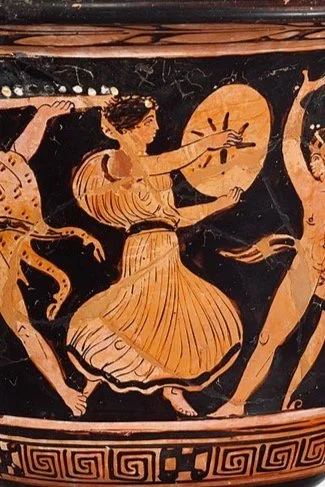
Frame drum or Timpanum (τύμπανον): a single drumhead of animal hide stretched over a round frame with a depth shallower than its width. Played with the hands and occasionally with a stick, the frame drum was most often found in the hands of women, particularly maenads in Dionysos’s retinue. Sometimes cymbals are seen along the rim of the drum, like a tambourine.
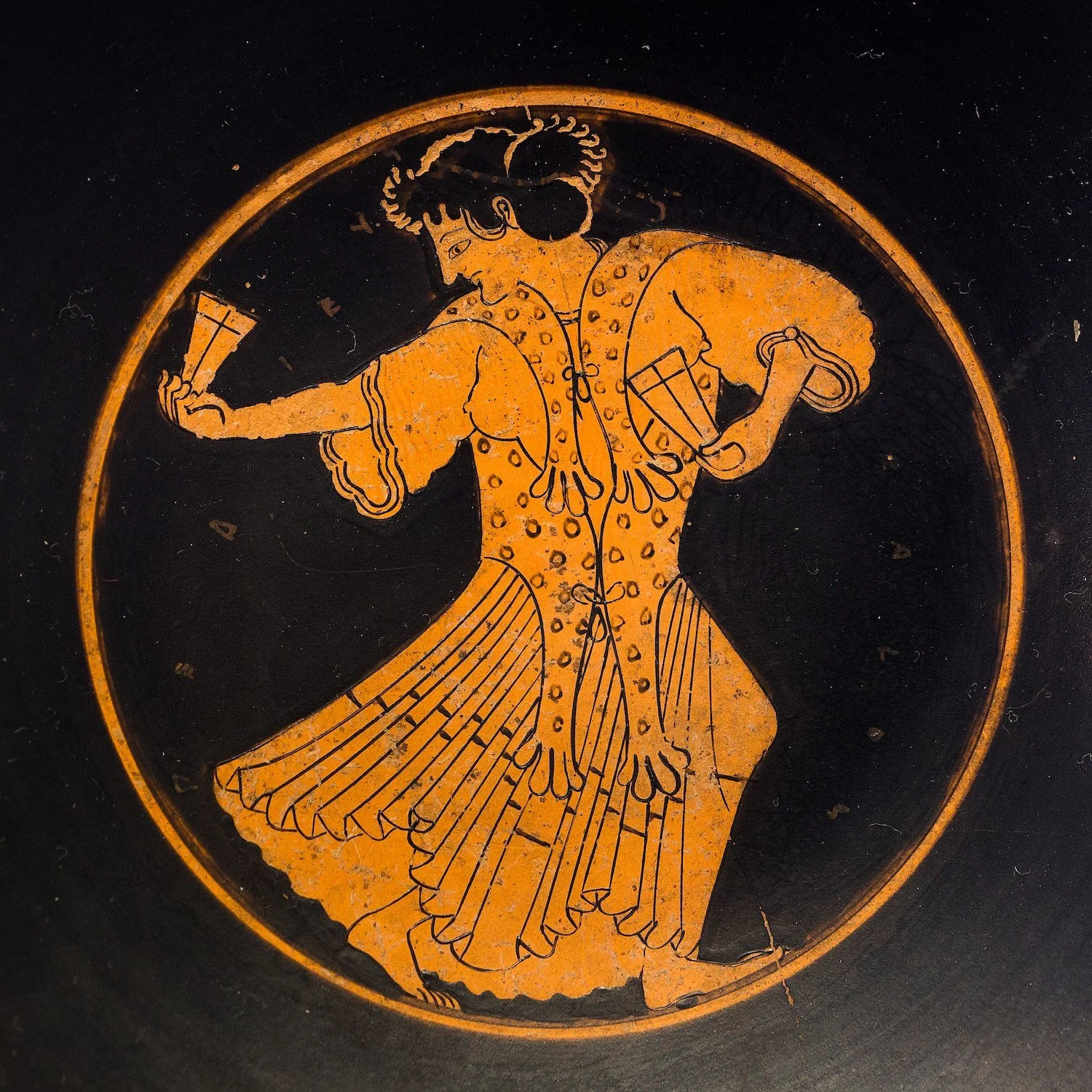
Crotalum or Krotala (κρόταλον): two pieces of cane, reed, shell, wood, or metal held in the hands, then clapped together to create rhythmic clicks, similar to castanets. Some krotala were worn on the fingers. Dancers of all genders were depicted holding castanets. It’s also said that when Hercules was set the task of fighting off a flock of carnivorous birds that hid in the marsh of Stymphalia, he was given a bronze rattle or krotala by the goddess Athena. Crafted by the god Hephaestus, Hercules used the krotala to frighten the birds from their hiding place among the reeds and shot them down, one by one, with his bow and arrow.
There are many more instruments I could mention — including the sistrum, bagpipes, war trumpet, tambourine, and more — but these are the most common in the visual record. If you’re curious what these instruments sound like, take a listen here to a curated selection of modern artists playing the ancient sounds.