The 8 Greek Medicinal Herbs I Always Have in My Apothecary
A few months ago, I had The Greek Herbalist, Maria Christodoulou, on the podcast (listen here). I asked her during the show what herbs she reaches for most often in her herbal practice, and it got me thinking about my favorite plants, as well. So I thought I’d share the Greek medicinal herbs I reach for most often when First Aid or acute health issues arise. (Some of these herbs should be avoided if you’re pregnant, on medication, or have other health issues, so be sure to do your own research before using them.)
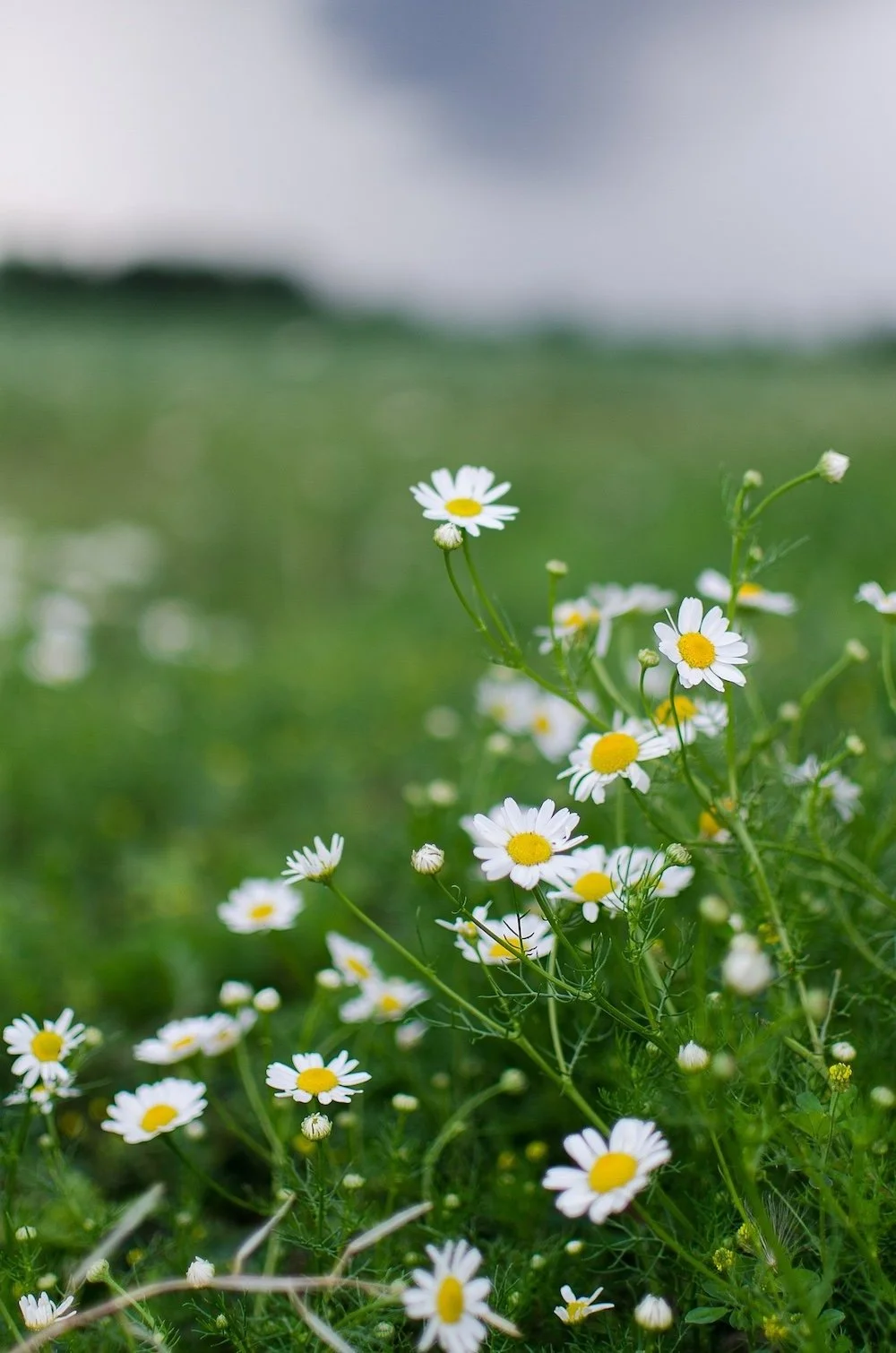
Matricaria chamomillaChamomile — Χαμομήλι
Known best as a sleepy-time herb, dried Chamomile flowers are actually my go-to digestive herb! For gas, bloating, and indigestion, I make a warm infusion (i.e. steep the dried flowers in just-boiled water) for anywhere from 20 minutes to 8 hours (the longer it steeps, the more bitter it becomes, and the more potent its digestive effects. Potent doesn’t necessarily mean better, so experiment to find the potency you like and need).
If I want a soothing tea before bed, I steep the flowers for just 5 minutes for a mild, sweeter, warm cup of relaxation.
My father told me that my Yiayia (grandmother) would use Chamomile-soaked cloth as a remedy for eye infections when he was a child. I’ve also used warm teabags as a compress for inflamed skin.
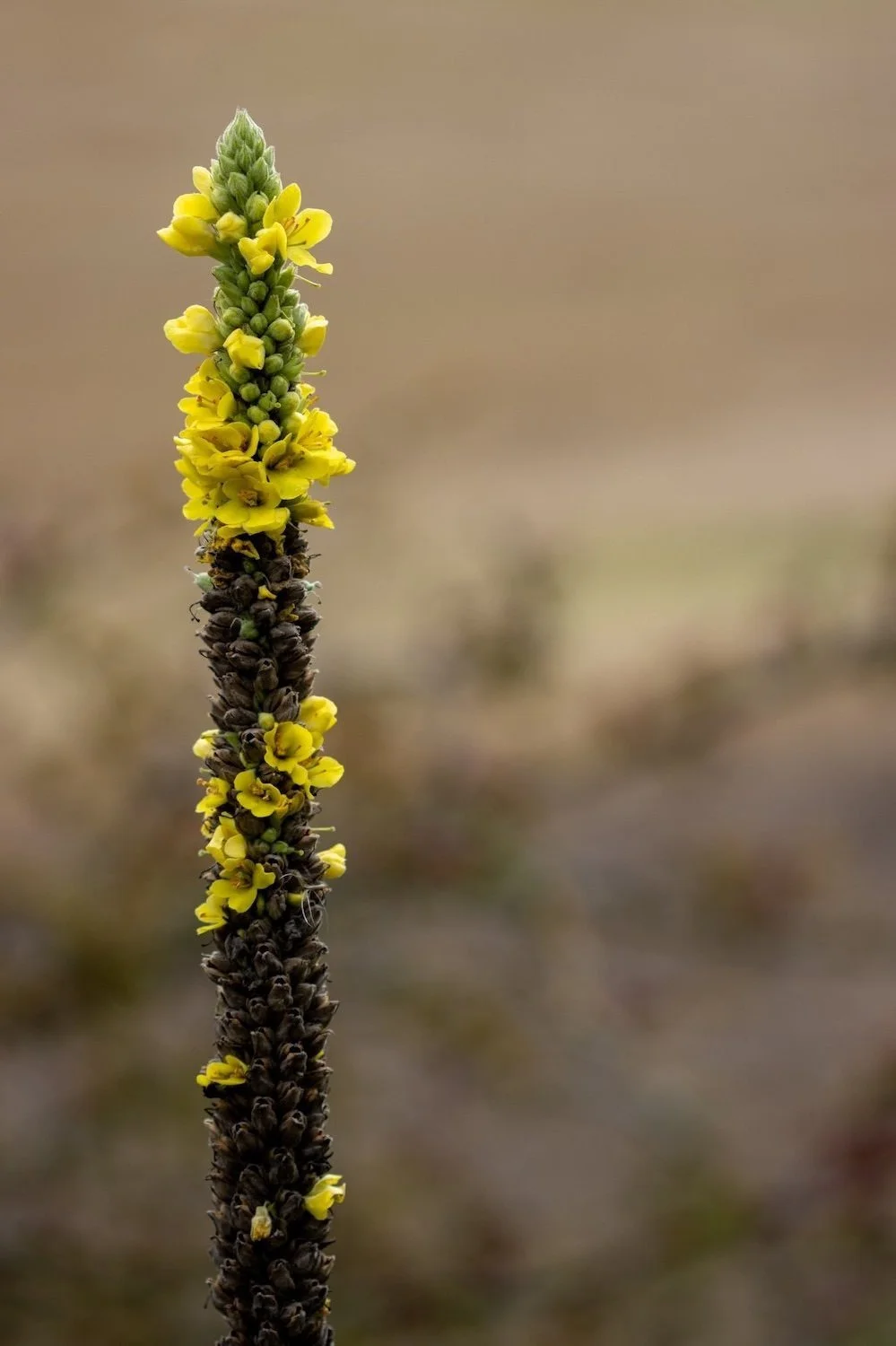
Verbascum thapsusMullein — Βερμπάσκο
I love a warm infusion of dried Mullein leaves for respiratory issues — particularly wet, unproductive coughs (i.e. when you have a phlegmy cough, but nothing comes up). Caution: the dried leaves have tiny hairs that can be irritating, so I always strain the tea through cheesecloth.
Ironically, the leaves can also be smoked as a lung support. Dried, the leaves have a fluffy consistency that is ideal as a base for smoke-blends (especially when combined with plants from the Mint family), particularly for those who are trying to ween off of tobacco cigarettes.
Some herbalists also use the roots and flowers, but I have not tried that.
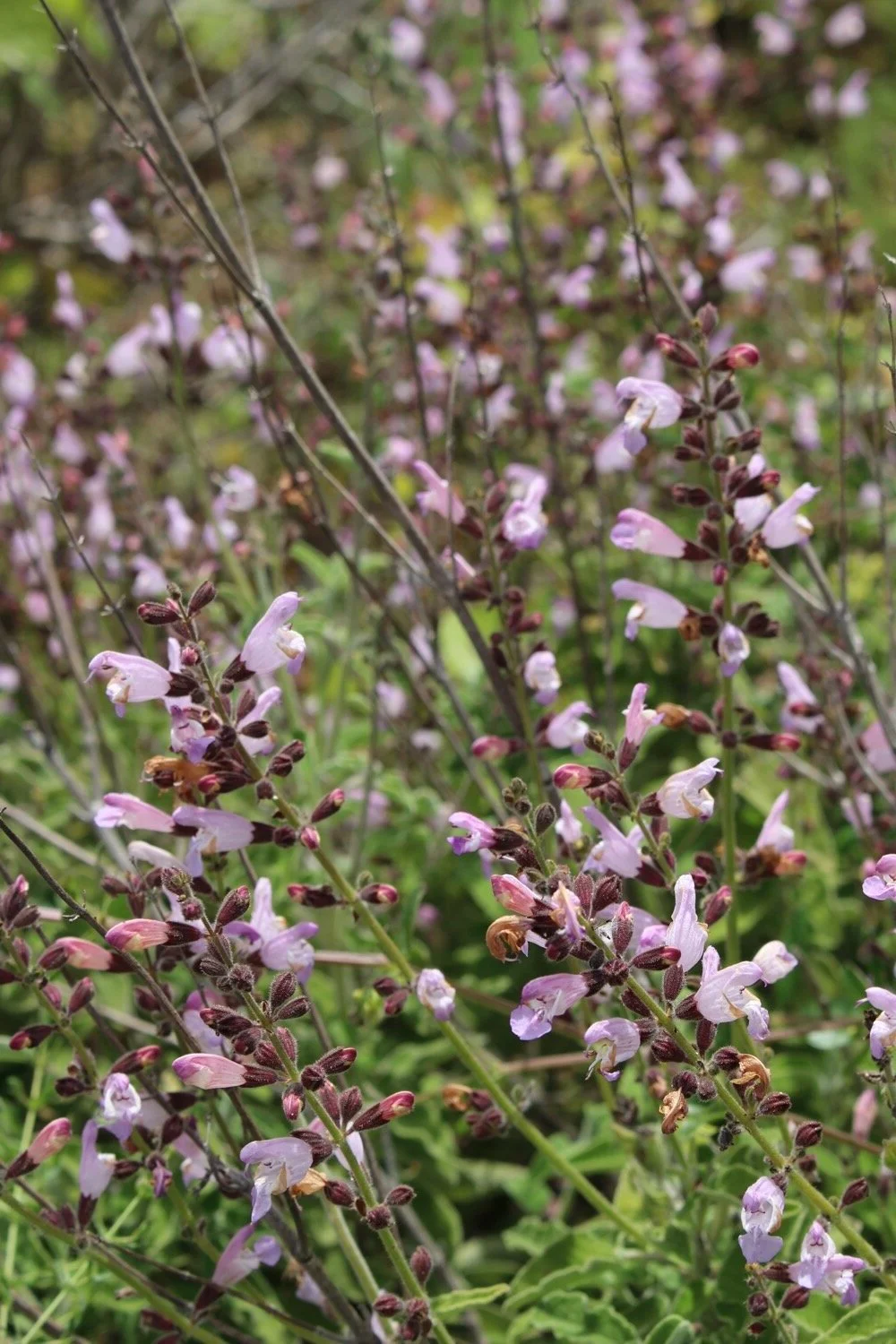
Salvia officinalisSage — Φασκόμηλο
Sage is a wonderful digestive aid and has antimicrobial and anti-inflammatory properties with a special affinity for the throat and mouth. It is the first herb I reach for when I have a sore throat, mouth ulcer, or feel a cold coming on.
I mix Sage in equal parts with Yarrow flower and Elder flower (see below) as a cold and flu tea, especially if I have a fever, as the three herbs together help induce sweating (which cools down the body).
I also make a mouthwash and gargle with a blend of warm Sage tea, sea salt, and apple cider vinegar for sore throats or mouth wounds.
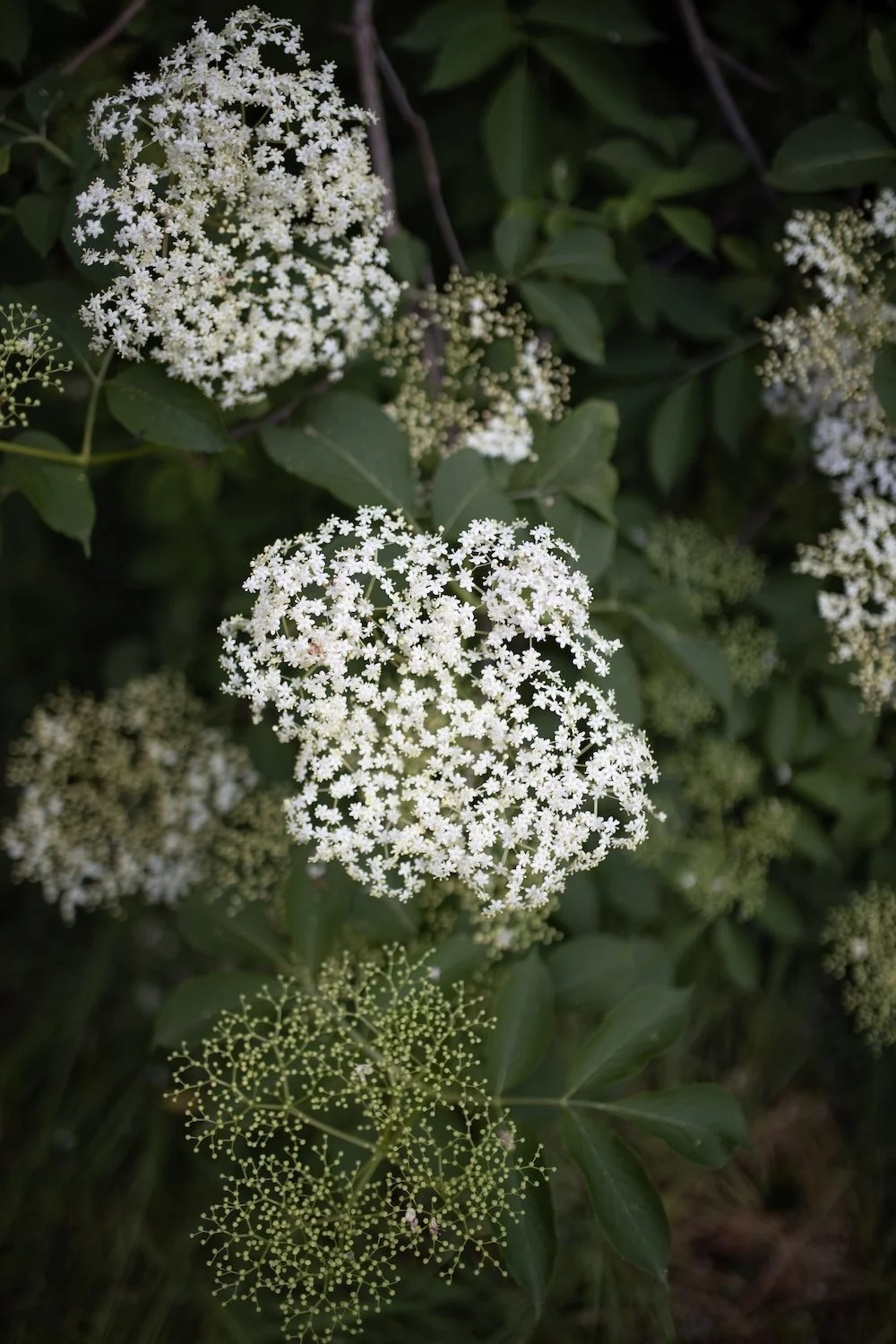
Sambucus nigraElder — Ζαμπούκο
Elder is a beautiful shrub, and both the flowers and the berries have antiviral properties. I include Elder flower in my cold, flu, and fever tea in equal parts with Sage leaf and Yarrow flower (see below).
I’ve also recently started making a face wash with Elder flower to help with my rosacea.
Most Greeks use the flower as a tea, but the berry is also very medicinal. American herbalists often make an Elderberry juice or oxymel and take it daily as an immune support in winter.
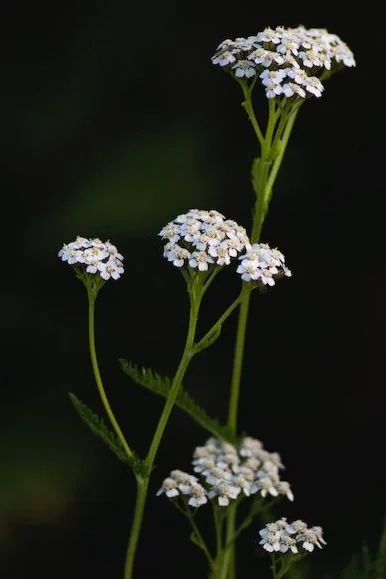
Achillea millefoliumYarrow — Αχιλλέα
Yarrow is one of my go-to herbs for infections and wounds, especially those that are hot and inflamed. I often use Yarrow flowers and Plantain leaf (see below) as a soak or wash for skin wounds and infections. I also drink Yarrow flower tea for colds, flus, UTIs, and other infections (viral and bacterial).
I include Yarrow flower in my cold, flu, and fever tea in equal parts with Sage leaf and Elder flower. I also include Yarrow flower in my skin salve, along with Plantain leaf, Calendula flower, and St John’s Wort flower (see below).
Yarrow resembles several poisonous herbs; please be sure you are positively identifying it if harvesting from the wild. Also, Yarrow is best avoided if pregnant.
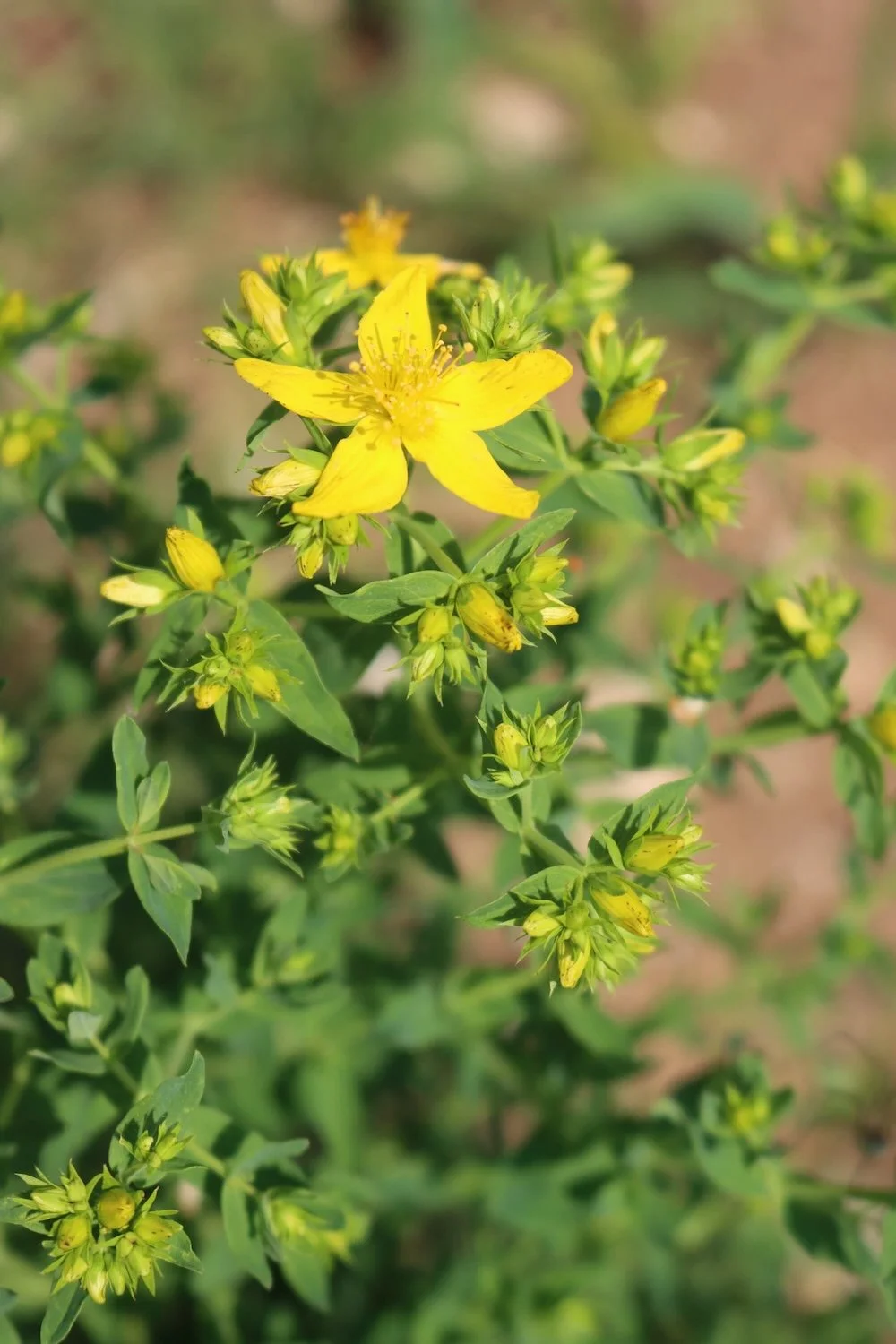
Hypericum perforatum St John’s Wort — Σπαθόχορτο/Βαλσαμόχορτο
A sunny, joyful herb if there ever was one! The herb gained mainstream popularity as a treatment for depression; St John’s Wort indeed has an affinity for the nervous system, including nerve pain. The Greeks use a St-Johns-Wort-infused olive oil externally for skin conditions and internally for digestive inflammation.
When crushed, the buds and flowers exude a dark red stain; when they are picked fresh and steeped in olive oil for four to six weeks, they create a dark, blood-red oil. I use the oil as a topical treatment for cuts, bites, varicose veins, and days-old burns or sunburns. (I don’t put oil on fresh burns; it traps in the heat. Instead, I use Aloe for the first few days to cool and rehydrate, then switch to the oil). I also use St John’s Wort oil as a base for creating a skin salve, along with Yarrow flower, Calendula flower, and Plantain leaf (see below).
St John’s Wort is contraindicated for many pharmaceutical drugs, so do some research about this herb before using it, especially if you are on any medications.
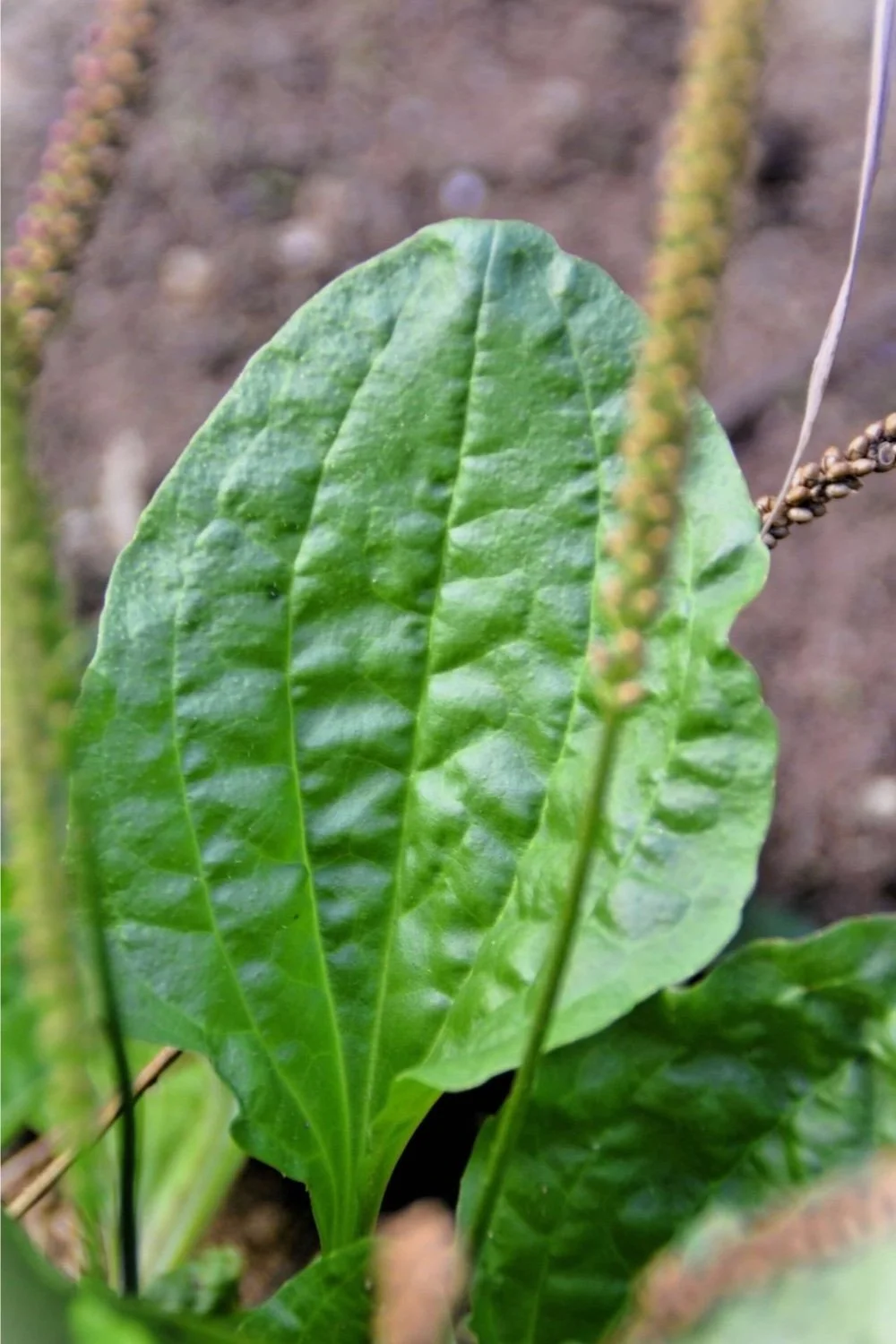
Plantago spp.Plantain — Πεντάνευρο
This little, unassuming weed is one of my favorite soothing, anti-inflammatory, toning (mildly astringent) plants for healing tissues. The fresh leaves can be mashed into a paste and placed directly onto stings, bites, or splinters, as well as made into a poultice for infected pimples, boils, or wounds — in order to draw out the intrusion or infection and to heal the skin. If the fresh leaves aren’t available, I make a strong tea from the dried leaves as a soak or wash for the same purpose. I often combine it with Yarrow flowers when using it as a soak or wash. And I include Plantain in my skin salve, along with St John’s Wort oil, Yarrow flower, and Calendula flower (see below).
I also drink a Plantain leaf tea for soothing inflamed digestive tissues and I use the tincture diluted in oil or water for a mouthwash if my gums are irritated.
I’ve also drunk the tea for a dry, hacking cough (as opposed to Mullein, which is better for wet coughs).
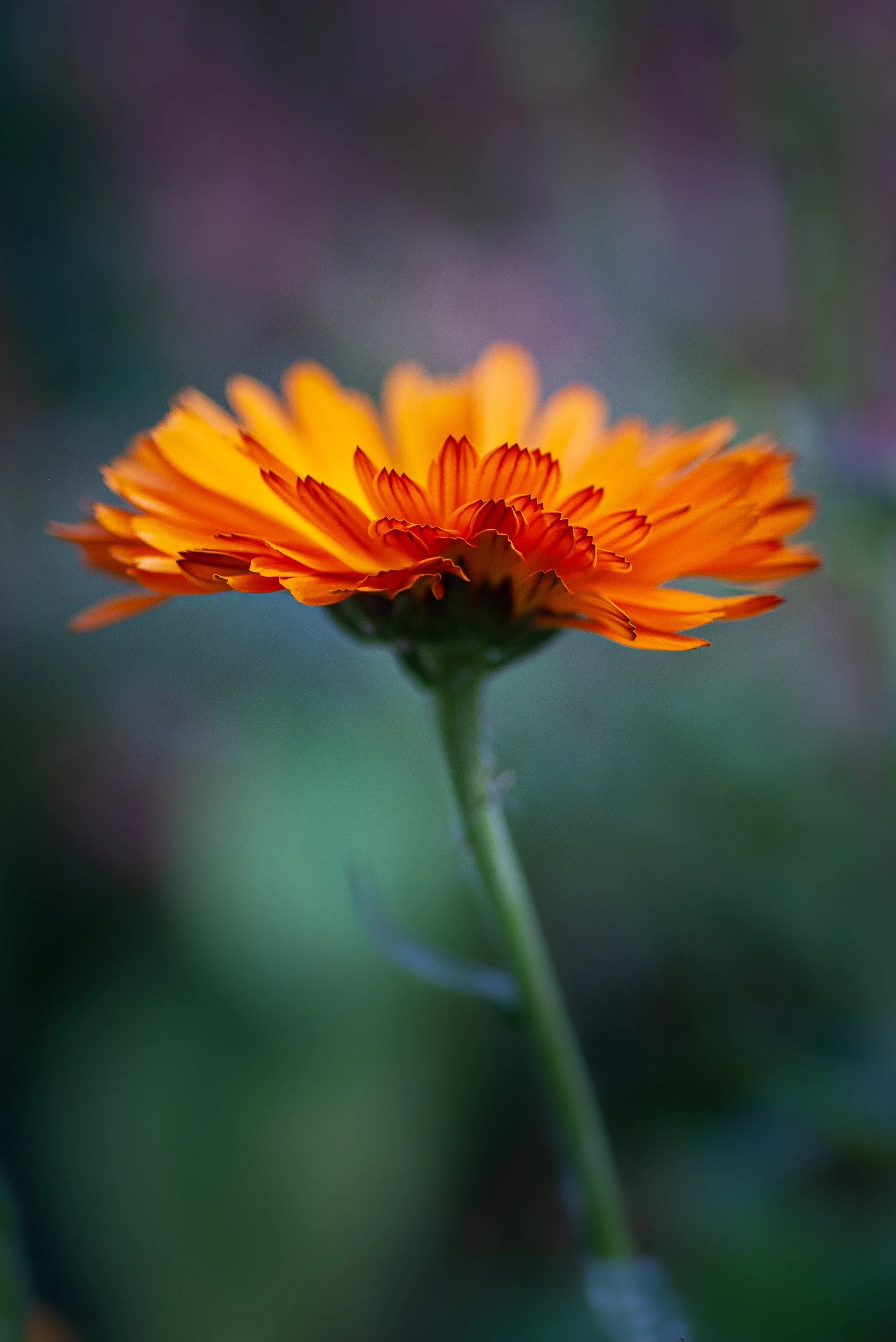
Calendula officinalisCalendula — Καλεντούλα
Although this particular species of Calendula is most often cultivated (rather than found in the wild), I include Calendula flowers in all of my skin salves; it’s a beautiful partner in healing cuts, scrapes, bites, bruises, and days-old burns or sunburns. (As I said above, I don’t put oil on fresh burns. Instead, I use Aloe for the first few days, then switch to a salve).
I find that Calendula combines well with Plantain leaf, Yarrow flower, and St John’s Wort flower for a healing skin salve.
I’ve also included Calendula flower in a tea for digestive tract inflammation, especially when combined with Plantain leaf.