Plants of the Greek Moon Goddesses
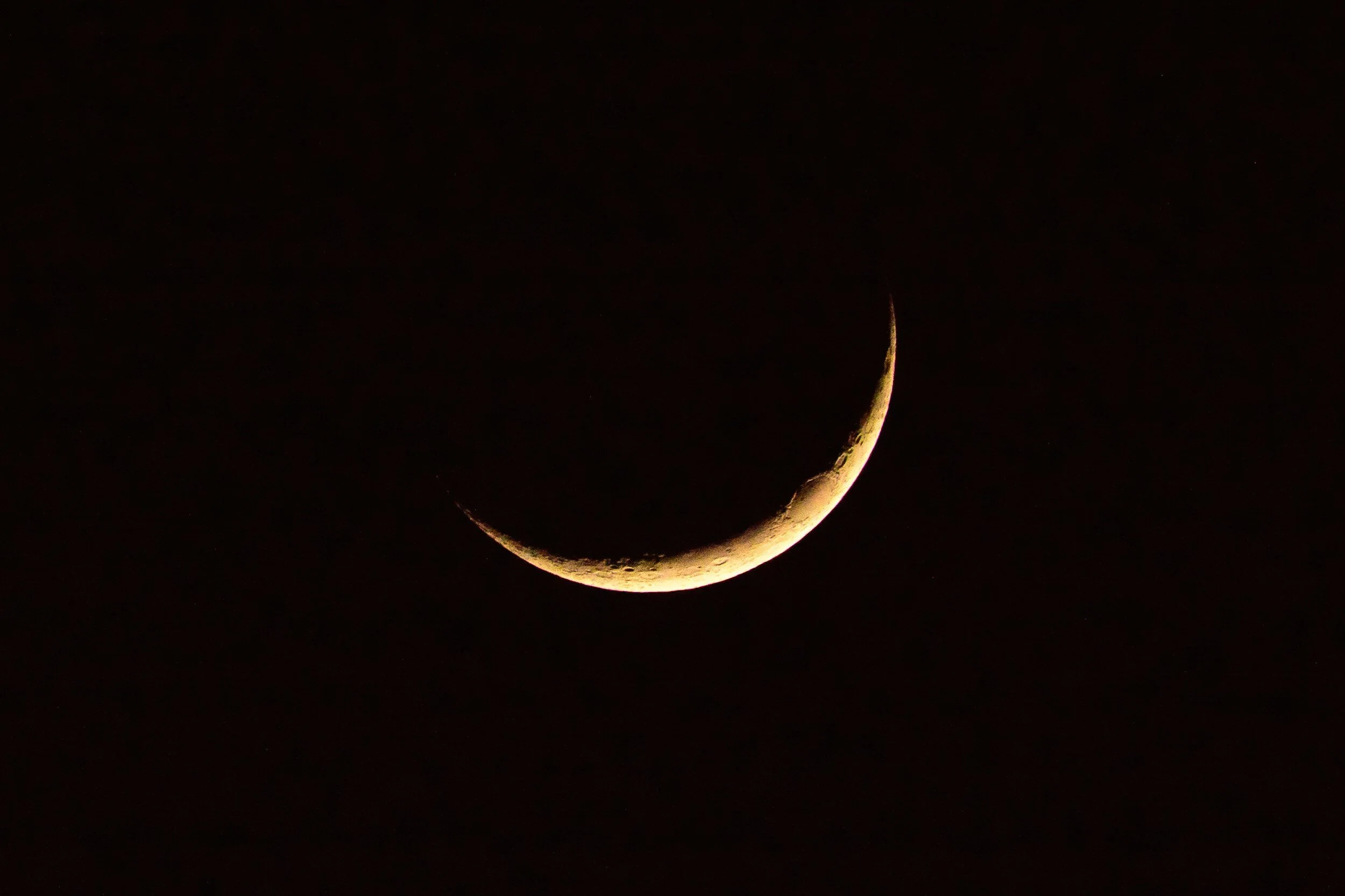
What are the trees and herbs sacred to the Moon in ancient Greece? The answer might surprise you! In today’s episode, we meet the three moon goddesses of the ancient Greek world — Selene, Artemis, and Hekate — and discuss the plants, stones, and other entities to invite into a Moon Garden in honor of ancient Greek lunar power.
Listen below or with your favorite podcast provider
APPLE | SPOTIFY | Youtube | Amazon | DEEZER | PANDORA
Scroll down for show notes and the transcript.
Mentioned in this Episode
Downloads
2024 Solar and Lunar Calendar (Alsos)
Other Episodes and Posts
Tears of the Sun: Helios, Phaethon, the Heliades, and Other Ancient Greek Solar Myths
Find more resources in my Library
Related Articles


Transcript
You're listening to A Temple Wild, episode 16, Plants of the Greek Moon Goddesses.
Hello and welcome to A Temple Wild, where we rediscover the myths of the ancient Greeks through the plants and landscapes that shaped them. My name is Mira and I am coming to you today from my slightly echoey brand new apartment in Ioannina, or Ioannina as the locals call it, which is a city in the region of Epirus in northwestern Greece.
So I literally just moved here about less than three weeks ago, I'm still unpacking and getting settled, but I wanted to record this episode because I know a lot of you have been waiting eagerly. Um, this is a part two of a set of episodes that I promised back around the winter solstice when I published an episode called Tears of the Sun in which we explored Greek solar myths, including the Titans that gave birth to the radiance of the celestial bodies.
And like that episode, today's is a request from a patron, Nathan, who asked me to speak on solar and lunar deities and their plants. So today we're going to be diving into the mythology of the Greek moon goddesses. And Nathan also specifically asked about night blooming flowers. So I'm going to include some suggestions throughout this episode on plants that could be included in a Greek moon garden.
And if you've never heard of a moon garden before, it is a garden that's planted to be enjoyed after sunset. Either because the white or silver flowers or foliage beautifully reflect the moon's light, or because the flowers themselves open only at night and release their fragrance in order to attract night pollinators like moths or bats.
So my hope is that by the end of this episode you'll have some new ideas for honoring the moon in your own garden or sacred space.
Now I want to also remind you that I've created a downloadable solar and lunar calendar which you can use as a reference for the solstices, equinoxes, and moon cycles of this year.
So if you are a patron, you can download yours for free inside of Alsos, which is the members area of my website. And if you're not yet a patron and would like to support the show and get a copy of that calendar, you can join at atemplewild.com/patron for as little as $3 a month.
Now, I'm not sure if any of you are into modern astrology, but I was born in the early morning of June 29th on a new moon. And so my ascendant sign, my sun, moon, venus, and mercury are all in Cancer, which means I was essentially bathed in moon energy when I was born. And that's not to imply that I have any authority or secret knowledge about the moon, but I will say that ever since I was a child I felt a very deep pull to the moon and its cycles.
Now I know I'm not alone in that, and in fact I think more than almost any other celestial body, folks tend to be very passionate and opinionated about the moon and its deities, plants, and general correspondences. So this episode might be a little controversial as I will be debunking some basic assumptions about the moon in ancient Greece.
Most notably that the goddess Artemis is most commonly invoked as a Greek goddess of the moon. However, as I mentioned in the previous episode, Tears of the Sun, like her brother Apollo with the sun, Artemis as "goddess of the moon" was a relatively later development in terms of ancient Greek religion.
And so I'm going to begin first not with the goddess of the wild hunt, but instead with the Titan goddess of the moon herself, Selene.
Selene was the daughter of the Titan Hyperion, or Hyperion, who was the god of cosmic light, and Theia, the goddess of sight and the brilliance of the sky. Selene's brother, Helios, was the sun, and like her brother, she's often depicted driving a chariot across the vaulted sky. Selene's light is often compared to a shining crown, and later depictions show her wearing a crescent moon.
She's also closely linked with the sacred bull, her crescent shape being a reflection of a bull's horns, a representation of virility and power.
And there's actually a myth that Selene shares with Dionysus that speaks to her connection with the bull. So I want to share that with you now.
Ambelos was a young, beautiful satyr whom Dionysus loved.
And in one story, after being coaxed by Ati, the goddess of delusion and folly, Ambelos wanted to ride a wild bull in an attempt to impress Dionysus. As he was riding, he boasted to the moon goddess, "Give me best, Selene, horned driver of cattle. Now I am both, I have horns and I ride a bull". Selene being jealous, sent a gadfly to sting and harass the bull, who then threw Ambelos from his back and killed him.
Dionysus, upon seeing the dead youth, mourned him and poured ambrosia on his wounds so that when Ambelos transformed into a Grapevine, he would pass the ambrosia on through his fruit and thus produce the first wine. And while the Grapevine is not necessarily a lunar plant, perhaps next time you encounter the fruit of the vine, you will remember this story and Selene's hand in the creation of the very first wine grape.
Now the Moonstone was Selene's sacred stone, and although I wasn't able to find as much on the Ancient Greek uses of the Moonstone as I did on her brother's sacred Amber, I think these two together, Amber and Moonstone, would be a potent combination for those wanting to honor the combined energy of Greek solar and lunar powers.
Other than the story about Ambelos, there are not many plant origin stories that I could find, nor very clear ancient botanical affinities with the goddess Selene. However, she is the goddess of the morning dew, and many of the ancient Greeks believed it was her moonlight who nourished the plants.
Combining this knowledge with Selene's associations with the bull, the moon could be thought of as a source of fertility. Selene was also connected with the goddess Mene, who embodied the lunar month, which began with the new moon. And since the phases of pregnancy were also marked by lunar months, Selene and later moon deities were often connected with childbirth.
And for this reason, while the ancient Greeks themselves did not associate them with the moon, I think any Mediterranean herbs or plants connected to the menstrual cycle, to childbirth, and even menopause, could be included in ceremonies honoring the cyclical nature of the moon, such as the Lily or the Chaste Tree. But again, this is strictly my own interpretation.
Now the goddess Artemis, for example, comes to mind here as she was the goddess of midwives. In ancient Greece, she specifically oversaw the transition of young girls into womanhood and acted as protectress of childbirth. It's even said that immediately after her birth, she helped her own mother give birth to her twin brother, Apollo.
But Artemis is primarily a goddess of nature. A huntress and protectress of wild things. She's often depicted with a bow and quiver of arrows, or even hunting spears. And her sacred animals were the deer, various birds, and the bear.
Artemis is a paradox. On one hand, she safeguards young girls and wild animals, acting as a midwife and protectress of life.
On the other hand, she's a bringer of death and exacts unflinching violence on those who break the sacred rules of her forest.
But as I mentioned, her association with the moon came relatively late in terms of Greek religion, and was often confined to particular regions, as most places she was considered first and foremost a goddess of the wild.
Some theorize that her association with the lunar energy came mostly because of her brother's later association with the sun. So when Apollo became a solar deity, it made sense that his twin sister would become a lunar deity.
Now there is a genus of plants called the Artemesias, or Artemesias, which includes mugwort and wormwood, two favorite plants of modern practitioners seeking to honor the moon.
However, despite their scientific name, these herbs were not, as far as we know, sacred to the goddess Artemis in ancient Greece. They were actually named and classified as Artemisia's by the late 18th century taxonomist Carl Linnaeus.
The Artemisias, however, are beautiful plants to include in a moon garden, as their leaves are often silvery and reflect moonlight beautifully. Mugwort, Artemisia vulgaris especially, is a potent guide for dream work.
However, if I were looking for plants used specifically in ancient Greece in connection with honoring or worshiping the moon, the Artemesias and the menstrual plants I mentioned would not necessarily be my first choice since the ancients didn't seem to explicitly connect them with the moon.
So where else can we look for clues about lunar plants in the ancient Greek world? Well, this brings to my mind Hekate or Ekati goddess of magic, witchcraft, necromancy, and the night. She's usually depicted carrying torches and, like Artemis, accompanied by a dog, which I will say, is there anything more iconic than a dog howling at the moon?
You may remember Ekati from the episode on Persephone and the descent to Hades, as she was the one who took up her torches and went seeking the young Persephone in the underworld, where Demeter could not go. Hekate's other symbols include keys, crossroads, and gateways. And it was she, a goddess who literally holds the key to the other realms in her hand, who would open the gate to the Underworld each spring and autumn in order to let Persephone cross the threshold from the land of the living to the land of the dead and back again.
However, like Artemis, Hecate, as goddess of the moon, was a much later development, closer to the Roman period in origin. Now that's not to say that Hecate was not associated with lunar phenomena, and there are quite a few references to her, as well as other witches like Medea and Circe, drawing down the moon. Or, in other words, causing a lunar eclipse, which was an act demonstrating their power over the natural world.
As goddess of witchcraft, many poisonous and entheogenic plants are associated with Hekate, including the herbs we briefly met in Plants of the Underworld episode, including Henbane, Belladonna, Mandrake, and Aconite, as well as the Yew tree and the non poisonous Asphodel.
However, like the Artemisia's and the menstrual plants I mentioned, these plants are not necessarily ancient Greek lunar plants in the same way that we learned in the last episode, Tears of the Sun, that the Poplar is a solar tree.
So one last group of plants I want to investigate in this search for Greek lunar plants would be any night-blooming flowers.
However, I actually don't know of any native Mediterranean night-blooming flowers, because most of those that you might be familiar with, such as Moonflower, Brugmansia, Evening Primrose, Night-Blooming Jasmine, Datura, Night-Blooming Cereus, those plants are all native to the Americas and would therefore not have been known to the Ancient Greeks at all. So while they would also be gorgeous in a moon garden I wouldn't include them here as Greek lunar plants.
Ok, so where does this leave us? It seems like there aren't actually any plants from the ancient Mediterranean world that were explicitly understood by the ancient Greeks as plants of the moon. So I want to return instead to Selene as goddess of the moon and the morning dew, the one who nourishes all plants. This conjures for me a beautiful image of moonlight taking physical form as delicate drops of water lingering like a kiss on every leaf in early morning.
This imagery also highlights for me the relationship between the moon and the fertile waters of our earth. The tides, the liquids in our body, the water flowing through each and every plant. And if we remember Selene's connection with the bull, it's also interesting to note that some of the great river gods of ancient Greece were often depicted with bull horns, that crescent crown, as they rushed forth and nourished the land.
And so for me, it's not necessarily about what specific plants or trees embody lunar energy. But instead, it's about honoring this relationship between the moon and our life giving, nourishing waters. Your own circulation system, a plant's xylem and phloem, the flowing rivers and tidal waters of the ocean, the collected pools and drops of dew, the Greek landscape is saturated, pushed, and pulled by lunar power.
Like the surface of a pool or a lake, the moon is a mirror of the sun's light, reflecting back to us in a cyclical manner, the nourishing ebb and flow of freshwater, saltwater, blood and plant fluids.
So if you're seeking to honor the Greek moon, you could create a moon garden with any of the plants I mentioned in today's episode. The Arttemisias, Lily, Chaste Tree, Henbane, Belladonna, even the Grapevine. You could also include any of the moon's symbols such as the bull's horns or crescent. But I would also invite you to honor and connect more deeply to the waters. of the landscape, of the plants, and of your own body. Create a small pond or water feature in your moon garden or place a bowl of water on your windowsill to collect the moon's light, and then use that water to nourish your plants, or wake in early morning to witness the dew before it evaporates, Selene's rays alighting and lingering like a blessing on each plant.
If you're interested in diving deeper into the mythology and plant lore of ancient Greece, I invite you to explore my website atemplewild.com where I share free and detailed plant profiles, photography of my travels around Greece, as well as essays, poetry, art, and more, all inspired by the mythic Greek landscape.
Today's episode was brought to you by a lovely community of patrons who support my work on a monthly basis. If you'd like to also support the show, you can drop a one time tip in my tip jar. Or, if you'd like to be a regular supporter, I'd love for you to join as a monthly patron. You'll gain access to Alsos, which is a members-only area of my website, where I share private posts and you'll also receive a monthly discount code for my shop. You can find all the details at atemplewild.com/patron. So that's all for today. I hope you have a wonderful day, and I will see you next time.