The Minotaur of Ancient Greek Myth
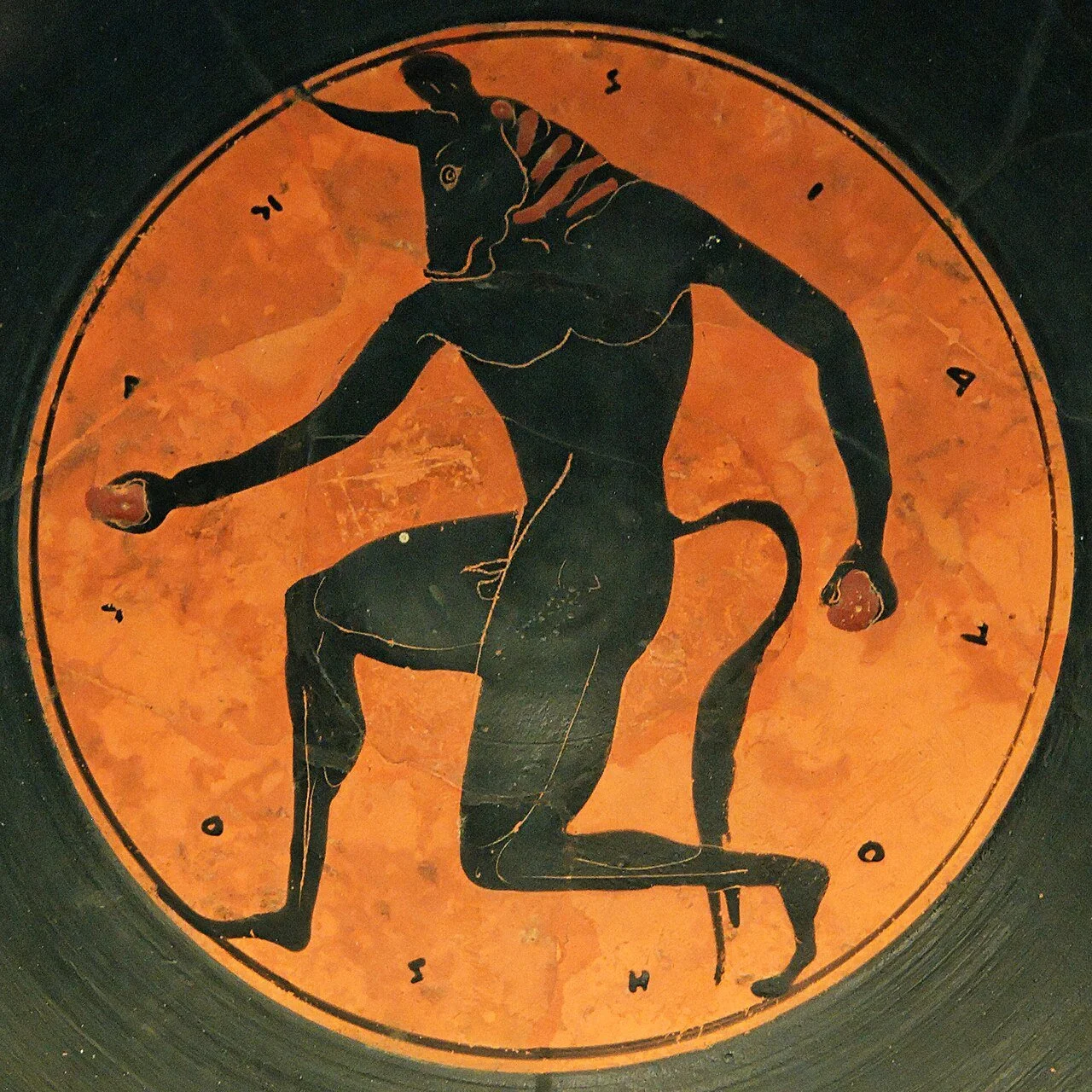
Photo © Marie-Lan Nguyen / Wikimedia Commons / CC-BY 2.5
Minos, hungry for power, was competing for kingship on the island of Crete.
He prayed to Poseidon to send him a sign of the god’s favor—a gorgeous white bull emerging from the sea—so that he could prove his supremacy and secure the throne, with the promise that he would sacrifice the bull in gratitude after his crowning. But after his successful ascension, King Minos kept the beautiful bull in his own herd and made a substitute sacrifice to the god, instead.
Enraged by the blatant disrespect for his blessing, Poseidon cursed Minos’s wife, Queen Pasiphae, with a driving lust for the sacred white bull. Overcome with desire, Queen Pasiphae requested the great architect, Daedalus, to build her a wooden cow to climb inside—a costume she could don so that the snow-white bull would mistake her for a heifer and mate with her in the field.
The resulting child was the Minotaur—a part-bull, part-human monster with a hunger for human flesh. Seeing that the creature was wild and increasingly insatiable, but very useful as a beast to intimidate foreign powers, King Minos instructed Daedalus to build a labyrinth to cage the beast.
Minos would later demand seven young girls and seven young boys be regularly sent from Athens as tribute for his own son’s death, which had occurred on mainland soil. And Minos would send them to their death in the labyrinth, releasing them in the maze for the Minotaur to hunt and devour.
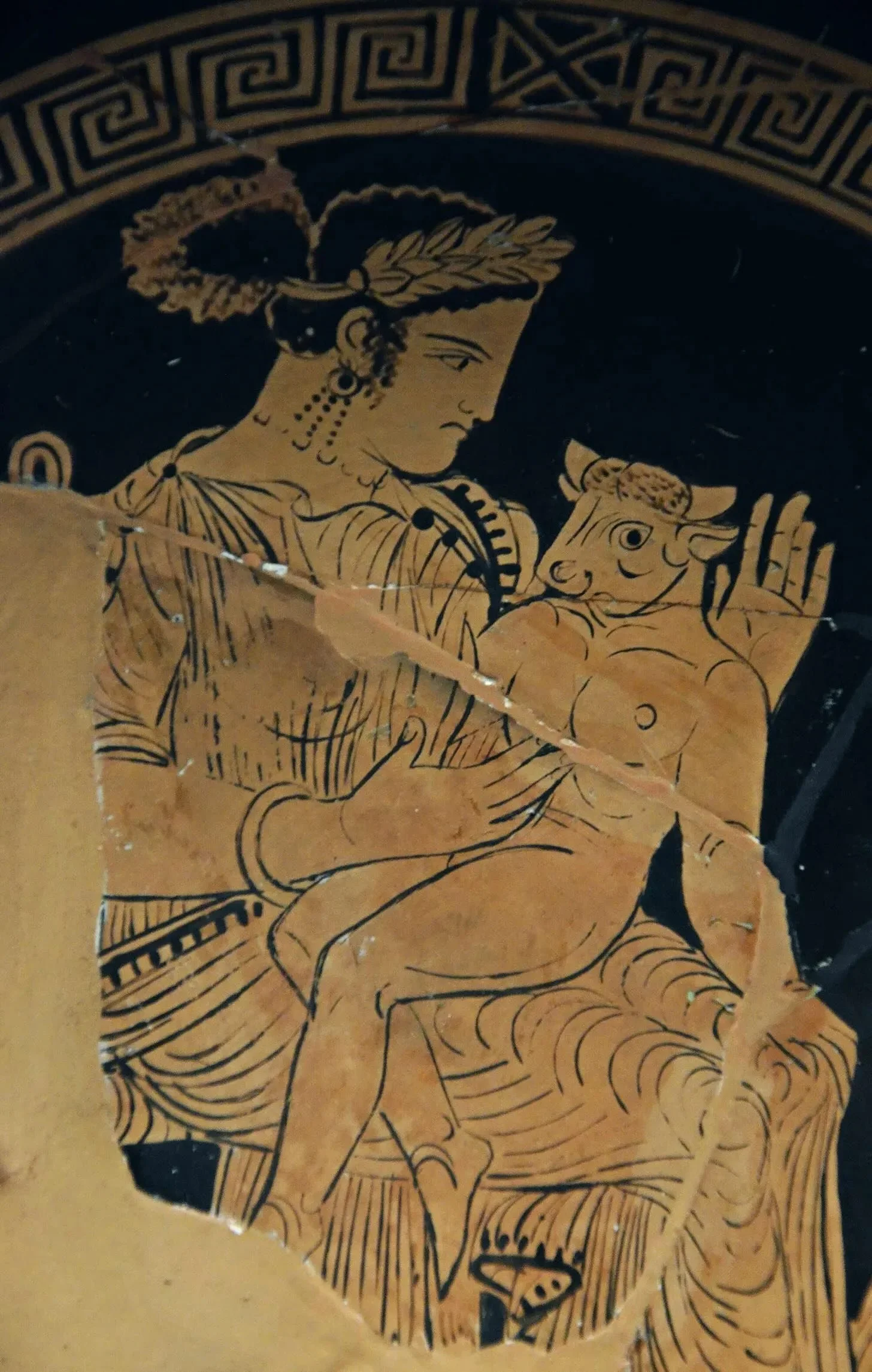
Pasiphae and the Baby Minotaur, Red-figure Kylix 4th century BCE, Photo by Carole Raddato from FRANKFURT, Germany, CC BY-SA 2.0, via Wikimedia Commons
Insatiable
The Minotaur was thus a creature born from a king’s hoarding greed and a mother’s cursed lust, used as a weapon to (quite literally) cow foreign powers.
But there is an ancient kylix drinking cup depicting the Minotaur as a baby, sitting on its mother’s lap as if about to suckle. The image cut me so deep: a small child who knows only hunger, later caged in a dark labyrinth by its own family as punishment for something as natural as a desire to be fed.
I could not get the idea of a blameless, starving Minotaur out of my mind. What must it have been like for such a creature to mature, wandering a dark maze, isolated and starving, waiting to be fed?
And what would it do to try to find a way out of the darkness?
Mapping the Labyrinth
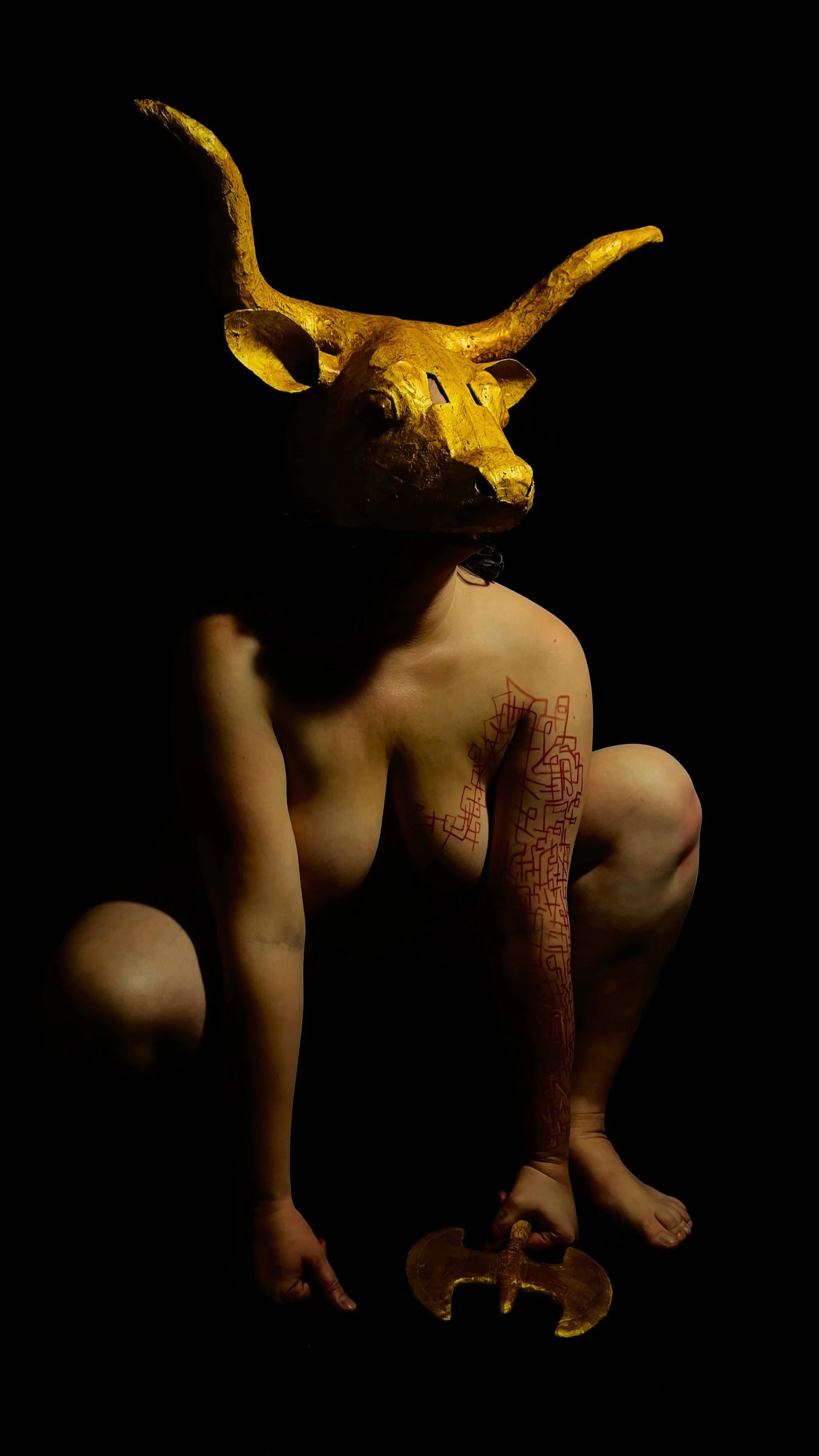
In considering these questions, I turned the camera on myself and the resulting photo series was an exploration both deeply personal and broadly cultural: a deep distrust of my own hunger and my struggle with disordered eating; abdominal scars—the daily reminder of a surgery I had in my teens for a rare digestive disorder that I likely inherited and that, to this day, makes something as natural as swallowing a stressful and shame-filled endeavor; the learned self-denial of my basic needs in order to perform familial and cultural norms of “health” and “beauty.”
This all led me to consider the ways we suffer for our ancestors’ mistakes, how inherited shame might manifest in self-betrayal.
I hand-crafted both a mask and a labrys—a meditation on beauty turned self-destructive. It’s generally believed that the labrys was not a weapon, but instead a sacred tool of ancient Minoan goddesses. But the Minotaur in this series reluctantly turns that sacred tool on itself, resigned to the horror of mutilating its own body with a map of the labyrinth—all in an attempt to remember and navigate a way out of the dark.